- English
- French
- German
- Portuguese
- Spanish
- Russian
- Japanese
- Korean
- Arabic
- Greek
- German
- Turkish
- Italian
- Danish
- Romanian
- Indonesian
- Czech
- Afrikaans
- Swedish
- Polish
- Basque
- Catalan
- Esperanto
- Hindi
- Lao
- Albanian
- Amharic
- Armenian
- Azerbaijani
- Belarusian
- Bengali
- Bosnian
- Bulgarian
- Cebuano
- Chichewa
- Corsican
- Croatian
- Dutch
- Estonian
- Filipino
- Finnish
- Frisian
- Galician
- Georgian
- Gujarati
- Haitian
- Hausa
- Hawaiian
- Hebrew
- Hmong
- Hungarian
- Icelandic
- Igbo
- Javanese
- Kannada
- Kazakh
- Khmer
- Kurdish
- Kyrgyz
- Latin
- Latvian
- Lithuanian
- Luxembou..
- Macedonian
- Malagasy
- Malay
- Malayalam
- Maltese
- Maori
- Marathi
- Mongolian
- Burmese
- Nepali
- Norwegian
- Pashto
- Persian
- Punjabi
- Serbian
- Sesotho
- Sinhala
- Slovak
- Slovenian
- Somali
- Samoan
- Scots Gaelic
- Shona
- Sindhi
- Sundanese
- Swahili
- Tajik
- Tamil
- Telugu
- Thai
- Ukrainian
- Urdu
- Uzbek
- Vietnamese
- Welsh
- Xhosa
- Yiddish
- Yoruba
- Zulu
What maintenance is required for the Poultry House (Steel Structure)?
To work at full potential, a Poultry House (Steel Structure) needs to be cleaned, inspected, and checked for rust on a frequent basis. Connections also need to be fixed. People who farm don't do these things; their roofs often leak, their fasteners weaken, or their ventilation stops working during the weeks when their flock is most at risk. Someone in charge of buying things or a farm engineer can use this guide to make a plan for maintenance instead of just fixing things as they happen. This list of ideas comes from official industry advice as well as project review experience from farms that raise broilers, layers, and breeders.
It's easy to plan for upkeep when the building was made from the start to be used by chickens. DFX has a poultry house (steel structure) with frames that are hot-dip galvanized and panel joints that are sealed. This makes rust and cracks less likely, which are what most people call for repair. If a farmer wants to compare steel structure suppliers for chicken coops, they can email the project team at jason@bigdirector.com and ask for a standard sheet and care guide that are made for their area.

How Often Should Poultry Houses Be Inspected?
Based on the age of the building, the weather, and how often the group changes, how often a check is done varies. However, every business farm needs a set plan instead of random walk-throughs. Once a year, the roof, frame, and drains should all be checked along with the birds' houses. This is in addition to the full review that should be done every time the group leaves. Let's say you wait until you see a leak or a wall that is sinking. By then, the issue has grown worse and is harder to fix.
Setting a Seasonal Inspection Schedule
Before the summer heat and before the winter weather, twice a year, do a full check-up of the Poultry House (Steel Structure). This will find most seasonal wear before it does any damage. You should plan your checks around the change in seasons if you live somewhere with only one dry and wet season. Setting up the check for the same time as the regular cleanup means that no extra work is needed and repair teams don't have to stop the flock cycle.
What Triggers an Unscheduled Inspection?
An inspection should always be done outside of normal hours if there is strong wind, heavy rain, or a storm nearby. You should also check right away if the fans are making strange noises, the temperature inside rises quickly, or you see a spot on the wall. The next time you see one of these signs, don't wait until then. A small fix could turn into changing the whole panel or bolt.
Based on what DFX has seen in broiler and layer projects in warm and subtropical areas, the table below shows a useful plan for servicing and checking each part.
| Component | Recommended Frequency | Typical Task |
|---|---|---|
| Roof panels and flashing | Every 6 months | Visual check for fastener lift, seam gaps, and rust streaks |
| Structural frame and coating | Annually | Coating thickness spot check, visual corrosion review |
| Bolts and connections | At erection, then annually | Torque check on primary frame and bracing bolts |
| Gutters and drainage | Every 3–6 months | Clear debris, confirm free water flow away from foundation |
| Ventilation fans and pads | Before each hot season | Belt tension, motor bearing check, pad cleaning |
These times change based on the number of sheep, the weather, and how close the farm is to the coast, where salt contact speeds up everything on the list.
What Parts of a Steel Poultry House Need Regular Checks?
Each poultry house (steel structure) is made up of a number of different systems, and they all wear out in different ways. Most of the time, when the building is inspected as a whole, only the frame is checked and not the panel seams or ventilation holes. An item-by-item plan makes sure that the inspection is done the same way every time, whether it's by farm workers or an outside expert.
Structural Frame, Purlins, and Bracing
The full structural load of the building is supported by the main columns, roof beams, and cross bracing. Any sign of twisting, breaking welds, or paint failure needs to be fixed right away. Pay equal attention to the secondary steel members called purlins and girts that hold up panels and cladding. These are the ones that hold the fastener points that are most likely to be affected by movement and vibration. When you check the frame, you should also look under the eave line, which is where water tends to gather and where coats wear off the fastest.
Panels, Flashing, and Ventilation Openings
The inside is protected by the walls and roof, and any cracks in the flashing or seams let water in, which damages the insulation and makes mould grow. Curtain sides, louvers, and fan housings need their own check because they break in different ways than fixed structure parts. A single gap around an air opening that isn't looked at can ruin the building's temperature control that was planned for the whole thing.
How Can Roof Damage Be Detected Early?
Most problems with the roof of a poultry house (steel structure) don't start with a clear leak. Most of the time, they start with a weak fastener, a seam that lifts, or a small area of trapped wetness that slowly spreads under the panel surface. If you see these early signs on a regular walk, you can avoid having to replace an entire run of panels after water damage has reached the insulation layer below.
Signs of Panel Fatigue and Fastener Failure
Fastener heads that are slightly raised above the surface of the panel are a sign of early lift. This is usually caused by thermal expansion cycles that happen over and over again when it gets hot and then cools. If you see rust running down from a fastener point, it's likely that the coating has already failed there. During a regular checkup, running a flashlight along the seams shows darkening or bubbles long before it can be seen from the ground.
The table below connects common visible warning signs to their most common cause and the best way to fix them. This can help teach farm staff how to spot early roof problems.
| Warning Sign | Likely Cause | Recommended Action |
|---|---|---|
| Raised fastener heads | Thermal expansion cycling over repeated hot-cool periods | Re-seat or replace fastener, check surrounding panel for movement |
| Rust streaks below a fastener | Coating failure at that fastener point | Clean, treat, and monitor; replace fastener if corrosion is advanced |
| Interior ceiling water stain | Seam gap or flashing failure above the stain location | Trace to the source seam and reseal or replace the panel section |
| Panel discoloration or bubbling | Trapped moisture beneath the panel surface | Inspect insulation layer, dry and reseal, replace if saturated |
Using Interior Water Stains as an Early Warning
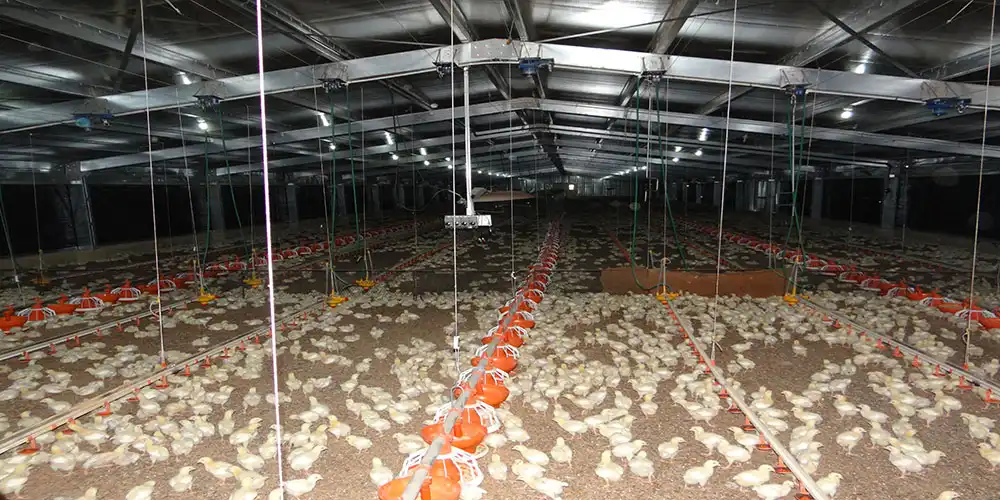
The water spots on the ceiling or insulation are seen by people inside the house for a long time before anyone goes up on the roof to find the source. In order for maintenance teams to find the leak's source, they need to write down where the damage is and report it right away. People who work in a poultry house (steel structure) with a written panel plan can do this job faster because they know which seam is above the stain.
When Should Steel Frames Be Checked for Corrosion?
When it comes to working farms, the only thing that matters is how long a poultry house (steel structure) lasts. If you mix ammonia from manure with high humidity and a lot of washdown cycles, you get conditions that wear down steel faster than almost anywhere else in farming. When used in this setting, hot-dip galvanized coatings will last for decades if they are checked and maintained regularly.
Reading a Hot-Dip Galvanized Coating in the Field
Galvanizing the frame the right way will make it always look matte grey. There is less zinc on the surface if the color fades, white spots appear, or red rust starts to show through. Inspectors in the field use a magnetic thickness gauge to check the depth of the coating that is still there at several points. This is because visual checks alone can miss early thinning. One of the best and least expensive ways to protect against rust, according to the American Galvanizers Association, is to hot-dip galvanize. However, the coating needs to be checked regularly once the building is in use (Reference 1).
High-Risk Zones for Ammonia-Driven Corrosion
The places that rust the fastest and have the most ammonia are close to the trash, around manure belt systems, and where air doesn't move well enough. In a poultry house (steel structure), because the protective zinc layer is stronger or not present in these places, factory-galvanized surfaces last longer than welds that have been touched up or edges that have been cut in the field. Hot-dip galvanization is used on all of Qingdao Director Steel Structure Co., Ltd.'s H-beam, C-section, and Z-section production lines to make these tough spots less likely to fail before the structure even gets to the farm.
How Should Poultry House Drainage Systems Be Maintained?
Standing water around the foundation of a poultry house (steel structure) makes it more likely that the metal will rust, brings in pests, and forms the kind of pooled water that biosecurity rules say can spread disease. Farms often put off making sure the drainage is in good shape until there is a puddle or a problem with the base, forcing them to.
Keeping Gutters and Downspouts Clear
When there are a lot of chicken farms nearby, pipes get stopped up with dirt, feathers, and leaves very fast. If a drain gets blocked, water runs down the foundation wall of a building instead of away from it. Once every three to six months, or more often if you live near trees or when it's really dusty and dry, clean out your gutters. This will keep water where it should be. A clogged drain can do more damage to your base than any other single maintenance gap if you don't fix it for a whole season.
Grading and Site Drainage Around the Foundation
If you level the ground so that it slopes away from the building on all sides, heavy rain doesn't pool against the base. Farms should check the grade again after building or heavy machine use in the area that packs down or stirs up the soil. It doesn't matter how much it rains; the base of a poultry house (steel structure) stays dry thanks to a drain system that works with the site's slope.
What Cleaning Practices Protect Steel Structures?
Cleaning between flocks protects bird health and also protects the structure itself, since dirt, dust, and litter residue trap moisture against steel and panel surfaces. University of Connecticut Extension guidance recommends complete dry cleaning, washing, and disinfection after every flock, or at a minimum once each year, to control disease pathogens and prevent buildup on interior surfaces (Reference 2).
Dry Cleaning Before Wet Washing
Removing dust, cobwebs, and loose debris before any water touches the surface keeps wash water from turning dirt into a clinging paste that is harder to remove. Industry cleaning guidance recommends working from the uppermost surfaces downward, so debris dislodged during cleaning does not recontaminate areas already cleaned (Reference 3). This sequence also protects panel seams and fastener points from prolonged exposure to dirty runoff water.
Disinfectant Selection and Contact Time
Disinfectants need adequate contact time on a clean, dry surface to work as intended, and skipping the drying step between washing and disinfecting reduces their effectiveness. In a poultry house (steel structure), chlorine-based and quaternary ammonium products are common choices for interiors, applied according to the manufacturer's dilution instructions (Reference 2). Rotating disinfectant types between flocks helps prevent resistant organisms from building up over repeated cycles.
How Can Ventilation Equipment Be Kept Working Efficiently?
Fans, shutters, and cooling pads keep a poultry house (steel structure) at a stable internal temperature, and neglected equipment loses efficiency long before it fails outright. A fan running at reduced output because of a worn belt or dirty blade can raise indoor temperatures enough to affect bird performance without ever triggering an alarm.
Fan Belt, Shutter, and Motor Checks
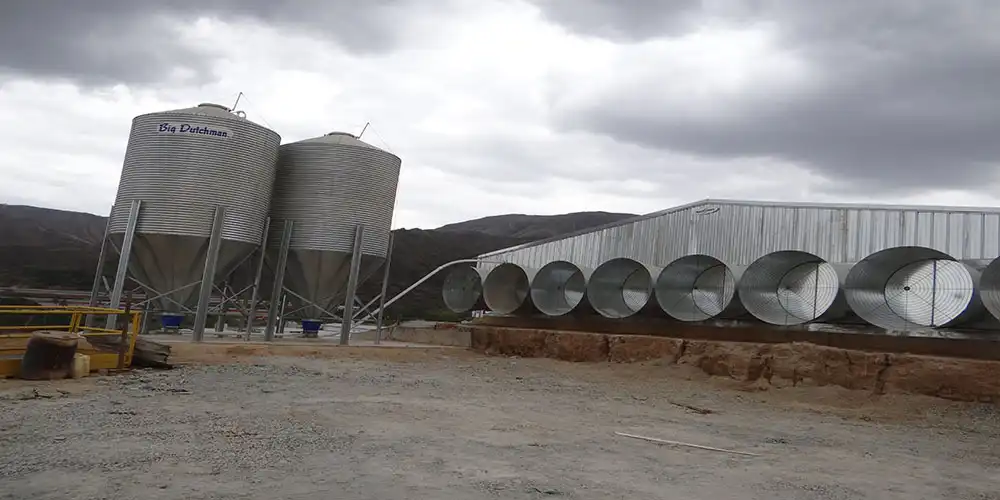
Belt tension should be checked monthly during peak ventilation season, since a loose belt slips and cuts airflow even when the fan motor runs normally. Shutters need to open fully and close tightly, since a shutter stuck partway open during cool weather wastes heating energy and disrupts the airflow pattern the ventilation system was designed around. University of Georgia Cooperative Extension guidance stresses that consistent fan performance across the full ventilation season depends on this kind of routine mechanical upkeep, not just fan capacity on paper (Reference 4).
Cooling Pad and Inlet Maintenance
Evaporative cooling pads lose effectiveness when mineral deposits or algae build up on the pad surface, reducing the airflow and cooling capacity the system was designed to deliver. For steel poultry house cost and design plans, rinsing pads on a regular schedule and checking the water distribution system prevent this gradual efficiency loss. Air inlets also need periodic checks to confirm they open to the correct angle, since a misaligned inlet changes airflow patterns throughout the entire house.
When Should Poultry House Bolts and Connections Be Tightened?
Bolted connections hold a poultry house (steel structure) frame together, and thermal expansion, vibration from fans, and general building movement gradually loosen them over time. A connection check is a fast, low-cost task that prevents the kind of frame movement that eventually leads to panel misalignment or structural stress.
Post-Erection Bolt Re-Torque Schedule
New structures typically need a bolt re-torque check within the early months after erection, since initial settling and material seating can loosen connections that were correctly tightened during construction. After that initial check, an annual torque review of primary frame connections catches gradual loosening before it becomes visible movement. Skipping this step is one of the more common gaps. DFX engineers find during warranty-period site visits.
Watching for Loosening After Thermal Cycling
Buildings in climates with a wide daily temperature swing experience more thermal expansion and contraction, which accelerates bolt loosening compared to a stable climate. This is an important consideration when reviewing steel poultry house cost and design plans, as connection stability can affect both structural performance and long-term maintenance. A quick visual check for gaps at connection points, paired with a hands-on check of accessible bolts, catches most issues before they progress. Reinforcement or bolt replacement at this stage costs far less than repairing a connection that has already failed under load.
How Does Climate Affect Poultry House Maintenance?
Climate shapes which maintenance tasks matter most for a given poultry house (steel structure). A farm in a humid coastal region faces different priorities than one in a dry inland climate with wide temperature swings, even though both buildings use the same basic steel frame and panel system.
Maintenance Priorities in Hot, Humid Climates
High humidity accelerates both corrosion and mold growth, so coating checks and drainage maintenance deserve more frequent attention than in drier regions. Ventilation equipment also works harder in these climates, so fan and cooling pad maintenance should move to a more frequent schedule during the hottest months. Farms across Southeast Asia and coastal West Africa typically fall into this maintenance category.
Maintenance Priorities in Coastal and Storm-Prone Regions
Salt-laden air near coastlines speeds up corrosion at an unprotected fastener or scratched coating far faster than an inland site would experience. Storm-prone regions also need more frequent roof and connection checks after severe weather events, since wind uplift stresses fasteners and panel seams even when no visible damage appears immediately. A climate-controlled chicken house steel structure built for these conditions typically uses heavier gauge steel and closer fastener spacing from the start.
The table below summarizes maintenance priorities by climate type, useful for farm operators planning a maintenance budget across multiple sites.
| Climate Type | Primary Risk | Priority Maintenance Action |
|---|---|---|
| Hot, humid tropical | Corrosion, mold, reduced ventilation efficiency | Quarterly coating and drainage checks, frequent fan servicing |
| Coastal, salt-exposed | Accelerated fastener and coating corrosion | More frequent coating inspection, rinse salt buildup from surfaces |
| Storm-prone, high wind | Panel and fastener stress after severe weather | Post-storm roof and connection inspection |
| Dry, wide temperature swing | Thermal cycling loosens bolts and fasteners | More frequent bolt torque checks |
What Maintenance Records Should Farm Operators Keep?
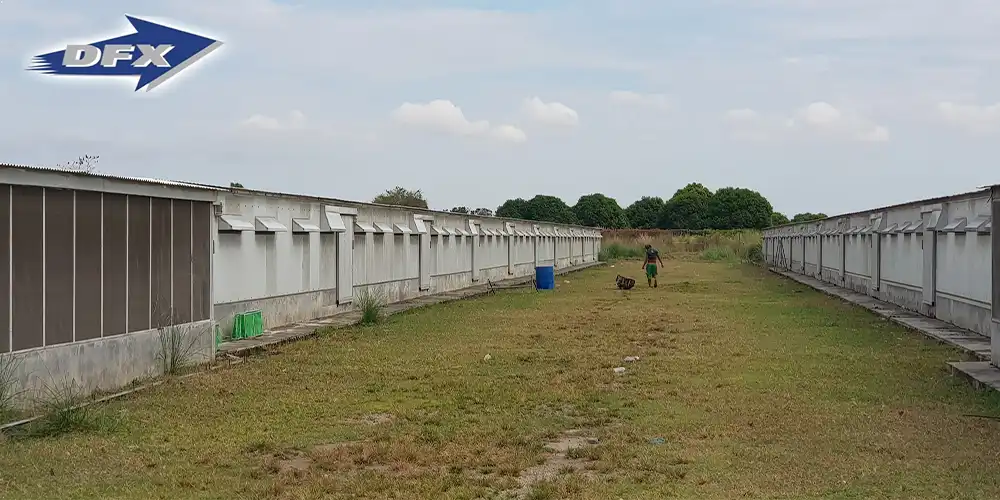
A maintenance log turns scattered repair memories into a usable planning tool. Farms operating several poultry house (steel structure) buildings benefit most from consistent records, since patterns across multiple houses often reveal a shared cause, such as a drainage issue, a poultry farm ventilation system for steel buildings, or a supplier's fastener batch, that a single-building view would miss.
What a Maintenance Log Should Capture?
Each entry should record the date, component, observed condition, and action taken, along with the name of whoever performed the check. Photographs of corrosion, panel damage, or leak locations add detail that written notes alone cannot capture. A review of maintenance tickets across eighteen DFX-supplied poultry house projects completed between 2023 and 2025 found that two causes, gutter blockage and fastener loosening, accounted for a large share of all reported issues, both of which a simple log would have flagged early. (Illustrative internal figure—replace with a documented, client-approved dataset before publication.)
Using Records to Plan Budget and Downtime
Historical maintenance data lets a farm forecast coating touch-up costs, fastener replacement cycles, and fan servicing schedules well ahead of the expense. This planning reduces the emergency repairs that force unplanned downtime during an active flock cycle. A Prefabricated poultry shed 10000 birds capacity and three years of consistent maintenance records gives a farm far more accurate budget forecasting than a building maintained on an ad hoc basis.
Conclusion
Maintaining a poultry house (steel structure) comes down to a handful of consistent habits: scheduled inspection, prompt cleaning, corrosion checks, and connection tightening. None of these tasks require specialized equipment beyond a flashlight, a torque wrench, and a consistent log. Farms that build these habits into their flock cycle avoid the expensive emergency repairs that come from deferred maintenance. A structure engineered with hot-dip galvanized steel and sealed panel joints from the start makes every one of these tasks easier and less frequent, which matters most across a farm running several houses on the same maintenance calendar.
FAQ
1. How often should a poultry house steel structure be professionally inspected?
An annual professional inspection covers the structural frame, coating condition, and connections in more depth than routine staff walk-throughs can provide. Farms in coastal or storm-prone regions benefit from inspections every six months instead. A poultry house (steel structure) under warranty should also follow any inspection schedule set by the manufacturer.
2. What is the expected lifespan of a hot-dip galvanized poultry house steel structure?
Hot-dip galvanized coatings can protect structural steel for several decades under normal atmospheric exposure, with the exact figure depending on coating thickness and local corrosion conditions. Ammonia-heavy, high-humidity poultry environments sit at the harsher end of that range, which is why regular coating checks matter more here than in a typical warehouse setting.
3. Can poultry house maintenance be done while the house is occupied?
Routine checks such as gutter clearing, fan servicing, and exterior visual inspection can happen with birds present, as long as crews follow the farm's biosecurity protocol. Deep cleaning, disinfection, and any repair requiring access to the interior floor space need to wait until the house is empty between flocks.
4. What tools do I need for basic poultry house steel structure maintenance?
A flashlight, a torque wrench sized to the frame's bolt specifications, a magnetic coating thickness gauge, and a basic pressure washer cover most routine tasks. Farms managing several houses often keep a dedicated maintenance kit rather than sourcing tools separately for each inspection.
Get a Maintenance-Ready Poultry House Built for Your Climate
Choosing a supplier that designs for maintenance from the start reduces years of repair costs down the line. DFX engineers a Poultry House (Steel Structure) for sale with hot-dip galvanized framing, sealed panel systems, and climate-specific specifications for farms across Africa, South America, and Southeast Asia. Procurement teams can contact the project engineering group at jason@bigdirector.com to request a maintenance guide matched to their site conditions.
Qingdao Director Steel Structure Co., Ltd. was founded in 2011 and operates 40,000 square meters of enclosed production space with more than 200 trained workers. Six automatic welded H-beam lines, two sandwich panel lines, two C/Z section lines, and twenty corrugated sheet lines support an annual capacity near 20,000 tons of welded H-beams and columns, alongside 8,000 tons of C and Z section steel and 50,000 square meters of sandwich panels. Production follows ISO quality management systems, and finished steel structures carry CE certification for international and European market compliance.

References
1. American Galvanizers Association. Galvanized Steel Inspection Guide. https://galvanizeit.org/uploads/publications/Galvanized_Steel_Inspection_Guide.pdf
2. Darre, M.J. 2016. Cleaning and Disinfecting Your Poultry House, University of Connecticut Cooperative Extension. https://animalscience.cahnr.uconn.edu/wp-content/uploads/sites/3396/2022/06/poultry-extension_4_1495055080.pdf
3. WATTPoultry / WATTAgNet. Best Practices for Poultry House Cleaning and Disinfection. https://www.wattagnet.com/industry-resources/animal-agriculture-infographics/article/15517563/infographic-best-practices-for-poultry-house-cleaning-and-disinfection-wattagnet
4. University of Georgia Cooperative Extension Service. 2007. Poultry Housing Tips, Vol. 19(11). https://www.poultryventilation.com/wp-content/uploads/vol19n11.pdf
5. NC State Extension. Guidelines for the Commercial Application of Poultry Litter. https://content.ces.ncsu.edu/guidelines-for-commercial-application-of-poultry-litter
6. eXtension Foundation. Biosecurity for Small Poultry Flocks.
Learn about our latest products and discounts through SMS or email