- English
- French
- German
- Portuguese
- Spanish
- Russian
- Japanese
- Korean
- Arabic
- Greek
- German
- Turkish
- Italian
- Danish
- Romanian
- Indonesian
- Czech
- Afrikaans
- Swedish
- Polish
- Basque
- Catalan
- Esperanto
- Hindi
- Lao
- Albanian
- Amharic
- Armenian
- Azerbaijani
- Belarusian
- Bengali
- Bosnian
- Bulgarian
- Cebuano
- Chichewa
- Corsican
- Croatian
- Dutch
- Estonian
- Filipino
- Finnish
- Frisian
- Galician
- Georgian
- Gujarati
- Haitian
- Hausa
- Hawaiian
- Hebrew
- Hmong
- Hungarian
- Icelandic
- Igbo
- Javanese
- Kannada
- Kazakh
- Khmer
- Kurdish
- Kyrgyz
- Latin
- Latvian
- Lithuanian
- Luxembou..
- Macedonian
- Malagasy
- Malay
- Malayalam
- Maltese
- Maori
- Marathi
- Mongolian
- Burmese
- Nepali
- Norwegian
- Pashto
- Persian
- Punjabi
- Serbian
- Sesotho
- Sinhala
- Slovak
- Slovenian
- Somali
- Samoan
- Scots Gaelic
- Shona
- Sindhi
- Sundanese
- Swahili
- Tajik
- Tamil
- Telugu
- Thai
- Ukrainian
- Urdu
- Uzbek
- Vietnamese
- Welsh
- Xhosa
- Yiddish
- Yoruba
- Zulu
Luxury Equestrian Hangar Design Ideas for Modern Stables
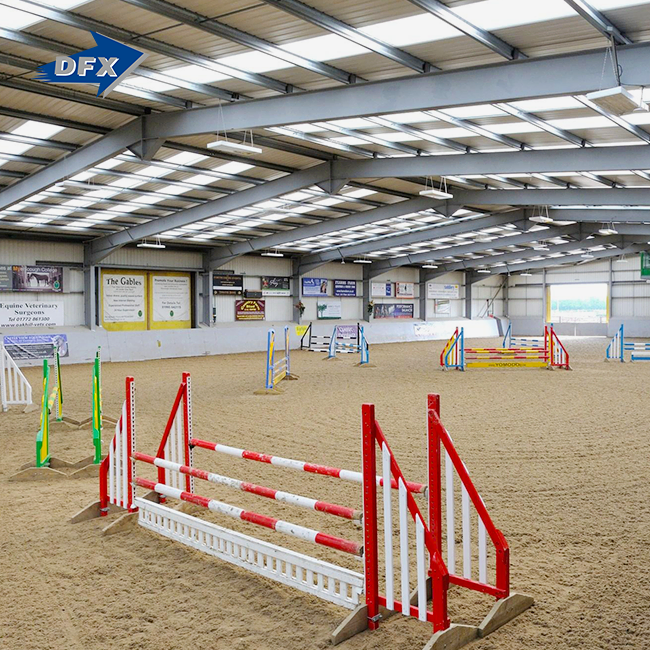
Modern horse facilities need more than just traditional wooden barns. They need engineered buildings with clear internal rooms, temperature control, and long-lasting materials. A luxury equestrian hangar is made of aviation-grade steel and has elegant architectural features to create training and stalling areas for top horses. These long-span steel buildings don't have any internal columns, so they have clear spans of more than 150 feet. This means that they can hold full-size dressage grounds, show jumping courses, and veterinary care zones all inside one safe envelope. This method solves important problems that equine operations have, like how to deal with unpredictable weather, the structural limits of wood buildings, and the need to control the temperature all year to protect both performance horses and expensive equipment.

Understanding Luxury Equestrian Hangars: Features and Benefits
Superior Materials and Construction Methods
When making high-performance horse buildings, precise welding is used to join cold-formed or hot-rolled structural steel with yield strengths between 50 and 55 ksi. Our buildings use welded H-section steel mainframes and strengthened bracing systems, which give them great load-bearing ability without the need for centre posts. The steel parts are hot-dip galvanized in a way that meets international standards for rust protection. This creates a zinc shield that protects against the ammonia-rich environment that horse waste and wash rack moisture create. This galvanized layer protects for decades without any upkeep and lasts a lot longer than paint methods.
Adding insulated metal plates to roof sections and wall systems makes them more energy efficient than R-30 and R-25, respectively. This amount of insulation stops any condensation (also known as "sweating") from forming inside, which can damage expensive arena flooring materials and make the humidity levels dangerous. The interlocking lines on these panels stop thermal bridging, so the inside temperatures stay the same even when bad weather happens.
Enhanced Protection and Operational Efficiency
Long-span steel buildings with high ceilings are better for business than standard barns because they can be used in more situations. Tractors, ring grooming equipment, and horse trailers can move freely through the inner space thanks to the clear-span design. Installing overhead crane systems doesn't require any changes to the structure, which makes it easier to maintain equipment and move big loads. The building envelope keeps valuable things like custom horses, training gear, and cars safe from theft and bad weather.
By placing wash stalls, tack rooms, and feed storage in a climate-controlled area in a smart way, operations run more smoothly. Staff can do their daily tasks even if it's raining, snowing, or very hot outside. This cuts down on delays caused by bad weather and improves the stability of horse care. The high clearance makes room for proper ventilation systems that move fresh air around without making drafts at horse level. This keeps the air quality healthy for the lungs.
Long-Term Cost Savings and Property Value
Investing in engineered steel buildings pays off in the long run because they require less upkeep and use less energy. Steel doesn't rot, termites don't eat it, and it doesn't bend like wood does, which means it doesn't need expensive fixes. Steel buildings usually have lower insurance rates because they are better at resisting fire and wind lifting. This is especially important when protecting expensive racing horses and equipment.
Insulation systems that use less energy keep the inside of a building at a stable temperature with little help from the HVAC system. Facilities in the north save a lot of money on propane or natural gas in the winter, while facilities in the south save money on air conditioning costs in the summer. These practical savings add up every year, which increases the return on investment and makes the workplace more pleasant, which helps keep staff.
The high value of properties reflects the high standard of designed luxury equestrian hangars. Appraisers know that properly built steel buildings that last 50 years or more are permanent improvements that are worth more than regular barns on the market. People who want to buy equestrian properties look for buildings that have temperature control, modern features, and low upkeep needs. Steel construction regularly meets these needs.
Designing Your Luxury Equestrian Hangar: Key Ideas and Considerations
Precise Space Planning and Multifunctional Use
To make a good luxury equestrian hangar design, you need to do a thorough capacity study of the current horse population and the number of horses that are expected to grow. We suggest giving each stall at least 144 square feet and making the aisles 14 to 16 feet wide so that horses and tools can move around safely. The clear-span benefit lets you change the layout of the inside without having to build load-bearing walls. This means that you can change the layout in the future as your business needs change.
Allocating space to multiple uses makes the building more useful all year. Setting up riding arenas, stall rows, wash bays, tack rooms, and storage for tools all in the same building saves money on construction costs compared to building several different buildings. Some clients add watching lounges, office space, or warm bathrooms, which turns the building into a place for training and events all year long, such as a luxury equestrian hangar. Planning where to put the overhead doors makes it easier to load and unload horses from trailers, and putting people doors in the right places helps with daily operations.
Optimal Ventilation and Insulation Solutions
To keep horses healthy, the air quality needs to be managed using ventilating devices that change the air four to eight times an hour. Ridge vents and gable openings work together to make natural airflow that gets rid of ammonia and moisture without the need for mechanical systems. Facilities that keep horses all year can benefit from extra airflow with high-volume, low-speed fans that move the air around slowly and avoid areas where dangerous gases build up.
Insulation plans need to take both temperature efficiency and moisture control into account. Vapour shields put on the warm side of insulation assemblies stop condensation from forming on steel surfaces inside the assemblies. This part of the design keeps the arena floor from getting damaged by water and stops the dripping that bothers horses while they're training. In places where temperatures can change quickly, double-layer insulation systems with air holes work better than single-layer systems because they keep rooms warm while using less energy.
Innovative Design Elements and Sustainable Construction
Adding natural light makes the work setting better and cuts down on power costs. Along the sides and rooflines, translucent screens that block UV rays let in constant light without adding heat. Studies show that exposing horses to natural light improves their mood and ability to respond to training. This lighting plan also makes the workplace more pleasant for staff doing daily tasks.
Acoustic management deals with the problem of metal buildings amplifying noise. Open-cell insulation on the back of perforated steel lining plates soaks up sound waves, lowering the "slap echo" effect that can scare horses. This treatment blocks out the sound of rain during storms and the noise made by machines, making the space calm enough for training and healing.
As part of sustainable building practices, stormwater management systems collect roof runoff and use it to water plants or keep the arena from getting dusty. Installing solar panel arrays on south-facing roof sections generates energy to balance out the facility's power use. This is especially helpful for businesses that use hot waterers and climate control systems. These green features appeal to clients who care about the environment and actually lower running costs.
Comparing Luxury Equestrian Hangars to Traditional Barns for Business Decisions
Structural Integrity and Material Advantages
Steel structures have clear benefits in terms of load strength and durability. Engineered beams that were made using computer analysis can handle loads like snow, wind uplift, and earthquakes with safety factors that have been recorded and confirmed by structural studies. In traditional wood framing, measurements are based on experience, which means that members are often either too big or too small, which wastes materials or makes the structure weak.
Galvanized steel is much better at standing up to the acidic effects of horse surroundings than treated wood. When wood structures are exposed to ammonia vapours and wetness, the column bases and wall frames rot faster, and the luxury equestrian hangars need to be fixed or replaced much less frequently than structures that require replacement every 15 to 20 years. If you properly coat steel, it will keep its shape for 50 to 75 years with only minor upkeep, mostly checking the bolts and sealants every so often. This gives you the best lifecycle value.
Different building ways offer very different levels of customization. Precision control over measurements and building details is made possible by steel manufacturing in a way that traditional woodworking is not cost-effective to do. Complex roof shapes, built-in mezzanines, and custom door openings are all efficiently made, and the buildings are ready to be put together quickly when they get to the site. This prefabrication cuts down on the amount of work needed on-site and the time it takes to build, which keeps the project running smoothly.
Cost Comparison and ROI Analysis
Because they use better materials and have better planning services, steel structures usually cost 10 to 20 percent more to build at first than simple pole barns. This one-time fee is more than made up for by lower insurance rates, lower maintenance costs, and energy savings that show up in the first few years of operation. Over the course of 20 years, facility managers say that the upkeep costs for steel buildings are 40 to 60 percent less than those for similar wood buildings.
In addition to comparing building costs, operational efficiency improvements must also be taken into account when figuring out the return on investment. Climate-controlled spaces allow for training plans that last all year, which means that housing and lesson programmes can make more money. Fewer weather-related delays make customers happier and more likely to stay with the business, which has a direct effect on its profits. The designed buildings also look more professional and have more modern features that allow for higher prices that regular barns can't support.
In places with high temperatures, saving energy can save a lot of money, for example, in a luxury equestrian hangar. When compared to wood buildings that aren't insulated or aren't insulated well, insulated metal panel systems cut heating costs by 30 to 50 percent. In hot climates, the loads on air conditioners drop proportionately, and some businesses report that their summer energy bills drop by more than 40%. These recorded savings show that designing insulation and ventilation correctly pays off financially and makes a project's economics much better.
Purchase and Procurement Guide for B2B Clients
Evaluating Manufacturers and Fabrication Capabilities
To find a trustworthy steel structure partner, you need to look at their production capabilities, quality qualifications, and project experience. Fabricators that have been around for a while have factories that are bigger than 40,000 square metres and have separate lines for making welded H-beams, C and Z purlins, and insulation panels. This combined ability ensures uniform quality control and delivery plans, getting rid of the problems that come with managing multiple subcontractors.
For European markets, certifications like ISO 9001 quality control systems and CE compliance are needed. For foreign shipments, project-specific certifications like COC and PVOC are also needed. These certificates show that the ways the products are made are up to the standards expected for making structural steel. By asking for proof of past Luxury Equestrian Hangar projects, you can find out how well a maker understands specific needs like ventilation design, footing retention systems, and moisture management.
Custom fabrication services should include structural calculations, help with building design, getting materials, and advice on how to put them. Manufacturers that offer "turnkey" options make it easier to complete projects by coordinating planning, production, and transportation through a single point of contact. This method makes the buying process easier for people who are working on multiple projects at once or in places they aren't familiar with.
Procurement Process and Financing Options
The first step in the buying process is to evaluate the site and plan for its capacity, which includes figuring out the building's measurements, door configurations, and utility needs. Manufacturers give clients basic designs that include their unique requests, and then they send approved detailed engineering plans. Getting materials and making things usually takes 6 to 10 weeks, but this depends on the size of the job and how complicated the customizations are.
For foreign projects, shipping logistics include coordinating the movement of freight in containers or on bulk vessels and having skilled manufacturers handle customs paperwork and port handling. There are foundation drawings, erection steps, and expert help during assembly in the installation guide. Some providers offer on-site guidance or full installation services. Buyers should decide which to choose based on the availability of local workers and their knowledge of building.
A lot of the time, business equestrian facilities like the Luxury Equestrian Hangar are financed through commercial real estate loans, farm lending programmes, or financing for tools. If a manufacturer is familiar with doing business internationally, they can set up payment terms that are in line with building milestones. This helps buyers better handle their cash flow. Cost breakdowns that separate supplies, manufacturing, shipping, and installation make it possible to accurately predict budgets and plan finances.
Conclusion
For modern equine operations, buildings need to be built in a way that goes beyond traditional barn construction to improve performance, longevity, and operating efficiency. Clear-span steel structures with advanced insulation and built-in climate control systems improve horse health, staff efficiency, and long-term financial returns in measured ways. When looking at building expenses, procurement workers should give more weight to makers that can show they can fabricate, have quality certifications, and offer turnkey services. With the right design that includes ventilation engineering, natural light, and sound control, horses and workers can work at their best all year long. Luxury equestrian hangars built with galvanized steel are known to last a long time and need little upkeep, which makes the extra cost worth it. It also supports long-term facility operations that raise property values and make a business more competitive.
FAQ
1. What timeline should I expect for a luxury equestrian hangar project?
From the first plan to the final installation, the whole project takes about 4 to 6 months, which includes getting approval from engineers, making the parts, sending them, and putting them together on-site. Manufacturing a luxury equestrian hangar takes between 6 and 10 weeks, depending on how complicated the customization is. Preparing the ground and putting together the structure usually takes between 3 and 6 weeks, depending on the size of the building and the weather in the area.
2. How much customization is available for specific operational needs?
A lot of customization options are available for building sizes, door placements, internal plans, insulation requirements, and ventilation setups. Manufacturers work with customers to add unique features like warm water in the wash bays, climate control in the tack room, viewing platforms, and overhead crane systems. Design freedom lets buildings adapt to different site situations and work processes.
3. What energy-efficient innovations reduce operating costs?
Energy use is cut down a lot with high-performance insulated metal walls, reflective roof coats, LED lighting systems, and designs that let air flow naturally. Facilities that use these technologies say that their heating and cooling costs are 30 to 50 percent lower than in traditional buildings. They also save money by using daylighting techniques to reduce the need for artificial lighting during business hours.
Partner with DFX for Your Elite Equestrian Facility
Luxury Equestrian Hangar Director Steel Structure Co., Ltd. has been providing designed steel solutions for tough uses around the world for more than 12 years. Our factory covers 40,000 square meters and makes precision-welded H-beams, custom panels, and structural parts that are approved by CE and ISO 9001. From structural estimates to installation advice, we take care of the whole project, making sure that your relationship with the luxury horse hangar maker produces great results. Our technical team knows the unique problems that come up in horse settings and can come up with design solutions that balance keeping the temperature stable, endurance, and good looks. Get in touch with jason@bigdirector.com to talk about your project needs and get a thorough plan that shows how our integrated skills can streamline procurement while improving building performance.
References
1. American Institute of Steel Construction. (2022). Steel Construction Manual, 15th Edition. Chicago: AISC Publications.
2. Gibbs, P. and Cohen, N. (2019). "Principles of Equine Housing and Environmental Control." Journal of Equine Veterinary Science, 78: 45-53.
3. National Frame Builders Association. (2021). Post-Frame Building Design Manual. Lawrence, KS: NFBA Technical Publications.
4. Roberts, M. (2020). Modern Equestrian Facility Design: Engineering and Management. Lexington: University Press of Kentucky.
5. Steel Building Alliance. (2023). Low-Rise Steel Building Systems: Design and Construction Guide. Reston, VA: SBA Technical Resources.
6. Williams, J. and Patterson, H. (2021). "Lifecycle Cost Analysis of Agricultural Steel Structures." Agricultural Engineering International, 23(2): 112-127.
Learn about our latest products and discounts through SMS or email