- English
- French
- German
- Portuguese
- Spanish
- Russian
- Japanese
- Korean
- Arabic
- Greek
- German
- Turkish
- Italian
- Danish
- Romanian
- Indonesian
- Czech
- Afrikaans
- Swedish
- Polish
- Basque
- Catalan
- Esperanto
- Hindi
- Lao
- Albanian
- Amharic
- Armenian
- Azerbaijani
- Belarusian
- Bengali
- Bosnian
- Bulgarian
- Cebuano
- Chichewa
- Corsican
- Croatian
- Dutch
- Estonian
- Filipino
- Finnish
- Frisian
- Galician
- Georgian
- Gujarati
- Haitian
- Hausa
- Hawaiian
- Hebrew
- Hmong
- Hungarian
- Icelandic
- Igbo
- Javanese
- Kannada
- Kazakh
- Khmer
- Kurdish
- Kyrgyz
- Latin
- Latvian
- Lithuanian
- Luxembou..
- Macedonian
- Malagasy
- Malay
- Malayalam
- Maltese
- Maori
- Marathi
- Mongolian
- Burmese
- Nepali
- Norwegian
- Pashto
- Persian
- Punjabi
- Serbian
- Sesotho
- Sinhala
- Slovak
- Slovenian
- Somali
- Samoan
- Scots Gaelic
- Shona
- Sindhi
- Sundanese
- Swahili
- Tajik
- Tamil
- Telugu
- Thai
- Ukrainian
- Urdu
- Uzbek
- Vietnamese
- Welsh
- Xhosa
- Yiddish
- Yoruba
- Zulu
Custom Cold Storage Steel Warehouse for Your Business Needs
A Cold Storage Steel Warehouse becomes more than just a piece of equipment when your business counts on keeping temperature-sensitive goods safe. The heavy-duty steel structure and advanced thermal insulation systems in these specialized facilities keep the quality of frozen foods, medicines, and perishables while they are being stored and shipped. These stores are different from regular buildings because they are energy efficient, can withstand extreme temperatures, and can be set up quickly to meet the needs of modern cold chain operations.

Understanding Cold Storage Steel Warehouses: Key Concepts and Benefits
To use Cold Storage Steel Warehouse solutions effectively, you need to know how these buildings are fundamentally different from regular stores. A well-designed facility has a strong H-beam main steel frame and high-performance insulation coverings. This makes areas that stay at steady temperatures, from +2°C for chilled storage to -40°C for deep freeze conditions.
What Makes Steel the Preferred Choice
When it comes to cold storage, steel has unique benefits. The tensile strength of the material makes it possible for large clear-span designs—often more than 30 meters without inner columns—which make the most room for automated equipment and high-density shelving systems. This is especially helpful for EPC workers who are in charge of logistics centers and distribution hubs, where every square meter affects how well the business runs. Companies that make things and are expanding their cold chain skills, like the speed edge. Compared to standard concrete buildings, our modular prefabricated steel storage buildings take 30 to 50 percent less time to build. When opening new factories or growing current ones, speeding up is very important for project managers who are working under tight deadlines.
Core Structural Advantages
The tech behind these buildings, an insulated metal building, solves problems that happen in the real world. Galvanized C/Z purlins and complete bracing systems make buildings resistant to wind and stable during earthquakes, passing strict building rules in many places around the world. When applied at a minimum of 275g/m², the hot-dip galvanization method guards against condensation-induced corrosion, which is a constant danger in places where the temperature changes. Energy economy is a gain that can be measured. High-density polyurethane sandwich panels with thermal conductivity values of κ ≤ 0.024 W/(m·k) keep heat from moving around, which lowers the cost of cooling. When procurement managers look at the total cost of ownership, these energy savings make a lot of sense, especially since electricity costs are going up and rules about sustainability are getting stricter.
Designing Your Custom Cold Storage Steel Warehouse: Principles and Best Practices
Understanding your operating needs is the first step to good planning. Before we start a job, we look at the types of products, the throughput rates, and the temperature zones that are needed. This research affects every choice, from figuring out how much weight something can hold to choosing the right padding.
Load-Bearing Capacity and Structural Integrity
The steel frame needs to be able to handle more than just wind and roof loads. Refrigeration equipment on the roof, such as evaporators, condensers, and the pipes that connect them, adds a lot of weight. When we do the engineering estimates for the design, we take these hanging loads into account and strengthen the rafters and purlins as needed. Agricultural project managers who are putting in Cold Storage Steel Warehouse environments for animal goods require this level of attention to detail because the quality of the products is directly affected by how well the equipment works. High-strength steel types like Q355B are used in portal rigid frame designs to get the tensile performance needed. When temperatures drop below zero, normal building materials might break, but these frames can handle the thermal shrinkage that happens there. We use expansion joints and link plates with slots that let the temperature move safely without causing stress cracks.
Optimizing Operational Flow
Layout productivity has a big effect on daily activities. We plan traffic flows so that arriving and leaving product flows are kept separate, and door openings that let warm air in are kept to a minimum. Even more heat is kept in by high-speed sealed doors that can be opened and closed quickly. These things are especially helpful for building companies that run high-throughput distribution centers that need to keep the temperature stable, even though they are always busy.
Comparing Cold Storage Steel Warehouses with Alternative Solutions
People who make decisions often Insulated metal building compare Cold Storage Steel Warehouse structures to concrete ones. Each method has its own unique qualities that should be looked at critically.
Construction Timeline and Flexibility
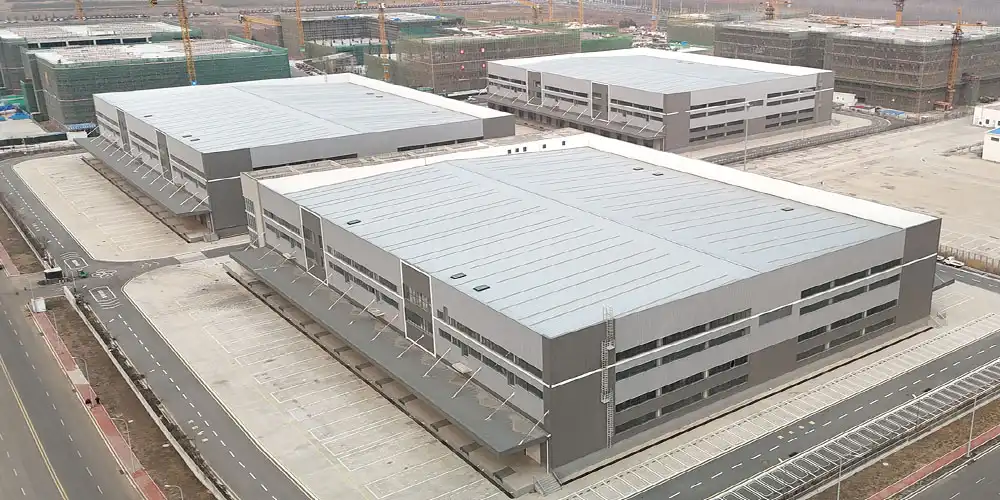
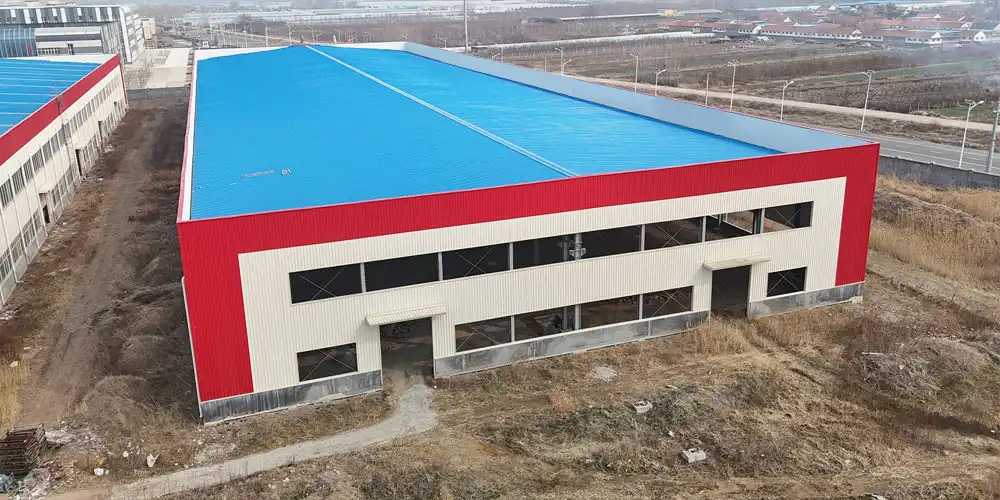
Because steel is prepared, it saves time in a clear way. When parts made in a controlled factory setting, like our 40,000-square-meter production center, get to the site, they are ready to be put together quickly. EPC workers like this level of reliability because it helps them coordinate the different stages of a project. Even though concrete buildings have been used for a long time, it takes longer to cure, and the schedule depends on the weather, which can make the job take longer to finish. Another thing that sets us apart is our design freedom. Steel buildings are better at adapting to future growth. To make a building longer or wider, you connect new structure bays together instead of tearing down and rebuilding parts. This flexibility is useful for manufacturing owners who plan to grow their facilities in stages.
Energy Efficiency Comparisons
How much energy is used is eventually determined by how well the insulation works. These days, polyurethane walls have R-values that are higher than most concrete insulation methods. The constant insulation layer that steel panel systems can provide gets rid of the thermal bridging that happens at the joints of concrete structures. This means that cooling costs go down by a meaningful amount—often by 15 to 20 percent compared to options that aren't well insulated.
Procuring and Building Your Custom Cold Storage Steel Warehouse
Choosing the right partner is crucial to the success of a Cold Storage Steel Warehouse project. Our approach to project completion is based on our work with building companies, manufacturing businesses, and farming businesses in a wide range of markets.
Evaluating Manufacturing Capabilities
Suppliers you can trust show that they have the output capacity and quality processes you need. Our six automatically welded H-beam production lines make about 20,000 tons of steel every year, so we can deliver on time even for big projects. We can make it easier to coordinate and check the quality of our work because our building has both sandwich panel lines and C/Z section steel production. Certifications are important. Products that are marked with the CE mark and the ISO9001 quality management system are guaranteed to meet international standards. When purchasing supplies for building projects, procurement managers need this paperwork to make sure they are following the rules. We keep these certifications in cold chain logistics by doing regular internal checks and making sure our processes are always better.
Budgeting and Financial Planning
Cost arrangements that are clear help businesses make good plans. Material costs usually make up 60–65% of the total cost of a job. The rest of the costs come from fabrication, shipping, and installation. The end price is affected by things that are unique to the site, like the state of the base, the cost of labor, and the need for permits. We give procurement managers thorough quotes that break down each cost factor. This lets them find chances for value engineering. Being able to choose from different panel thicknesses or finishes gives you more choices for your specifications, so you can save money without losing performance.
Maintaining and Ensuring Safety in Your Cold Storage Steel Warehouse
Reliability in operations relies on safety rules and preventative repair programs for your Cold Storage Steel Warehouse.
Routine Maintenance Requirements
Insulation system quality needs to be checked on a regular basis. We suggest checking the panel joints and seals every three months to find any holes or spaces where heat efficiency could be lost. Our panel systems' smooth, non-porous surfaces make it easier to follow the cleaning procedures needed for HACCP compliance in food storage settings. Maintenance plans for refrigeration equipment are followed, but the places where the structure meets the equipment should also be looked at. Mounting brackets and support frames go through temperature cycles, which can cause links to become loose over time. These problems are found by yearly checks, before they make the equipment less reliable.
Addressing Condensation Risks
Most condensation problems can be avoided by installing air barriers correctly during building, but you should still be careful. We use ventilation techniques in our plans to control humidity levels, especially in parts of the loading dock where Cold chain logistics temperature differences are the biggest. Operations managers who use these methods say that repair calls are much less frequent.
Safety Compliance and Training
According to OSHA rules, certain safety steps must be taken in cold storage areas. There must be enough lighting, escape routes in case of an emergency, and the right guidelines for personal safety equipment. These needs are built into our designs from the start, with safety features like emergency warming places and contact systems. Incident risks are lower when staff are trained on the dangers of working in cold environments, such as how to spot the signs of hypothermia and use heated personal protective equipment correctly. As part of our project handover papers, we include paperwork with advice on these subjects.
Conclusion
For companies that need dependable temperature-controlled settings, Custom Cold Storage Steel Warehouses offer quantifiable benefits. When it comes to distribution centers, manufacturing facilities, and farms, steel is the best material because it is strong, keeps heat in, and can be built quickly. Our production skills, backed by ISO9001 and CE certifications, guarantee that you will get well-designed solutions that meet your needs. When you combine design services, manufacturing skills, and installation support, it makes it easier to get projects done while still meeting the performance standards your business needs. When controlling temperature, saving energy, and building structures that will last are important to the success of your business, these specialized facilities are the basis for operating excellence.
FAQ
1. How long does it take to construct a cold storage steel warehouse?
Project timelines depend on the size and complexity of the building. It takes about three to five months for a standard 5,000-square-meter Cold Storage Steel Warehouse to go from engineering approval to site finish. This includes the time it takes to make, move, and set up on-site. For bigger sites or ones with special needs, the time may be extended to 6 to 8 months. Once the specs are set, our project-based method of fabrication lets us make exact schedules.
2. What factors most significantly impact construction costs?
Costs are mostly affected by the width of the insulation and the specifications of the panels. This is because performance requirements raise the cost of materials. The size and complexity of the refrigeration system also have a big effect on costs. Geographical differences in costs are caused by things like the need for a base, how easy it is to get to, and the cost of work in the area. The height of a building affects its structural needs; bigger buildings need heavier steel parts. Customization options like unique doors, loading systems, or built-in office areas raise the price.
3. Can existing warehouses be upgraded with improved insulation?
Retrofitting jobs are possible, and the money saved on energy costs often makes them worth it. We look at current buildings to figure out how much weight they can hold for new panel systems. Using panels inside keeps the outside looking good while improving heat performance. Most of the time, these changes happen during planned shutdowns so that they don't affect operations too much.
Partner with DFX for Your Cold Storage Steel Warehouse Project
Director Steel Structure Co., Ltd. has been making precision-engineered steel buildings for use in tough situations for more than 12 years. Our 200-person team runs high-tech production lines that make 20,000 tons of welded H-beams every year. These lines also make sandwich panels and steel sections. We are a Cold Storage Steel Warehouse company that is dedicated to quality and dependability. We work with building companies, factories, and farms all over North America.
Our all-around method covers every part of a project, from the first technical estimates to fabrication, logistics planning, and help with setting up the structure on-site. Get in touch with Jason at jason@bigdirector.com to talk about your unique needs. We'll give you competitive quotes and thorough technical proposals that are based on your business needs and time limits.
References
1. American Society of Heating, Refrigerating and Air-Conditioning Engineers (ASHRAE). Refrigerated Warehouse Design Guide. ASHRAE Technical Publications, 2021.
2. Steel Construction Institute. Design of Steel-Framed Buildings for Cold Storage Applications. Publication P416, 2020.
3. International Association of Cold Storage Construction (IACSC). Best Practices for Insulated Metal Panel Installation in Freezer Facilities. Technical Bulletin Series, 2022.
4. National Institute of Building Sciences. Whole Building Design Guide: Cold Storage Warehouse Design. WBDG Sustainable Committee, 2021.
5. Metal Building Manufacturers Association. Energy Performance of Metal Building Systems in Refrigerated Warehouse Applications. MBMA Technical Report, 2020.
6. United States Cold Storage Association. Standards for the Design and Construction of Refrigerated Warehouses. Industry Standards Manual, 2022.
Learn about our latest products and discounts through SMS or email