- English
- French
- German
- Portuguese
- Spanish
- Russian
- Japanese
- Korean
- Arabic
- Greek
- German
- Turkish
- Italian
- Danish
- Romanian
- Indonesian
- Czech
- Afrikaans
- Swedish
- Polish
- Basque
- Catalan
- Esperanto
- Hindi
- Lao
- Albanian
- Amharic
- Armenian
- Azerbaijani
- Belarusian
- Bengali
- Bosnian
- Bulgarian
- Cebuano
- Chichewa
- Corsican
- Croatian
- Dutch
- Estonian
- Filipino
- Finnish
- Frisian
- Galician
- Georgian
- Gujarati
- Haitian
- Hausa
- Hawaiian
- Hebrew
- Hmong
- Hungarian
- Icelandic
- Igbo
- Javanese
- Kannada
- Kazakh
- Khmer
- Kurdish
- Kyrgyz
- Latin
- Latvian
- Lithuanian
- Luxembou..
- Macedonian
- Malagasy
- Malay
- Malayalam
- Maltese
- Maori
- Marathi
- Mongolian
- Burmese
- Nepali
- Norwegian
- Pashto
- Persian
- Punjabi
- Serbian
- Sesotho
- Sinhala
- Slovak
- Slovenian
- Somali
- Samoan
- Scots Gaelic
- Shona
- Sindhi
- Sundanese
- Swahili
- Tajik
- Tamil
- Telugu
- Thai
- Ukrainian
- Urdu
- Uzbek
- Vietnamese
- Welsh
- Xhosa
- Yiddish
- Yoruba
- Zulu
What Makes a Reliable Raw Material Steel Warehouse?
A reliable Raw Material Steel Warehouse is defined by its engineered structural integrity, environmental control systems, and operational efficiency designed specifically for heavy-duty industrial storage. Unlike conventional warehouses, these facilities feature reinforced H-beam steel frames capable of supporting overhead cranes up to 100 tons, ground-bearing loads exceeding 50kN/m², and advanced dehumidification systems that maintain humidity below 60% to prevent corrosion of raw steel coils, plates, and billets. Reliability stems from the integration of modular prefabricated steel construction, precise inventory management, and compliance with international safety standards that ensure consistent protection of valuable steel inventory throughout the supply chain.

Understanding the Fundamentals of a Raw Material Steel Warehouse
When procurement managers and project engineers look at storage options for steel inputs, it's important for them to know the main differences between warehouses for raw materials and warehouses for finished goods.
Purpose and Function in the Supply Chain
Storage sites for raw steel materials are very important links between steel mills and manufacturing activities. Before they go into production lines, these buildings keep coils, plates, beams, and billets safe. When compared to traditional storage methods, we've seen that properly built facilities cut the time it takes to move materials by 30 to 40 percent. This has a direct effect on project timelines and cost-effectiveness. The unique layout makes room for heavy-duty forklifts, overhead bridge cranes, and wide paths for moving things around that regular buildings can't handle.
Types of Storage Configurations
Depending on the size of the operation and the budget, industrial steel storage can be set up in two main ways. Standard systems use storage on the ground level that can be reached by crane and are good for operations that move 500 to 2000 tons per month. Automated facilities have robotic retrieval systems and digital inventory tracking, which makes them perfect for businesses that handle more than 2,000 tons of goods every month. Whether to store steel in a climate-controlled room inside or outside under a cover depends on the grade of steel. High-carbon and pre-treated steels need to be kept inside, while structural-grade materials can handle being partially exposed with the right covers.
Role in Production Continuity
Manufacturing plans are directly affected by the supply of materials. From working with car pressing plants and heavy machinery makers, we know that putting warehouses close to production floors cuts the time it takes to get materials from hours to minutes. Just-in-time (JIT) facilities have designated staging areas where materials go through quality checks and preparations before going into production. This keeps output rates steady and minimizes interruptions to workflow.
Core Elements That Define a Reliable Raw Material Steel Warehouse
Industrial steel storage is reliable when it has strong structural planning, accurate inventory control, and preventative maintenance plans that keep the building and its contents safe.
Structural Design and Load-Bearing Capacity
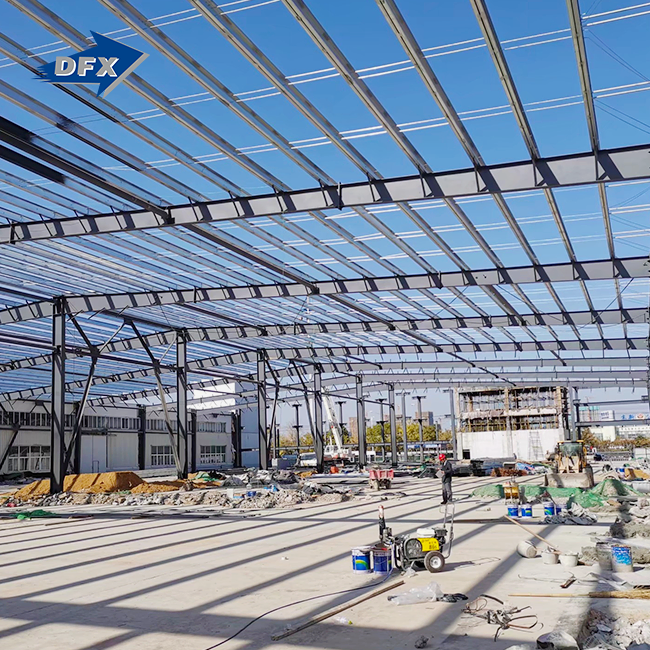
Reliability in a building starts with structural engineering that is designed to handle heavy loads. Buildings made from Q345B or ASTM A572 Gr. 50 structural steel has the right strength-to-weight ratio for clear spans of 20 to 60 meters. This clear space lets the crane work and the forklift move around without getting in the way of the columns. Modular prefabricated steel components are used to build buildings. These buildings have H-beam main frames, galvanized C/Z purlins, and X-bracing systems that are designed to handle wind speeds of more than 120 km/h and earthquake forces up to Grade 8. The structural calculations take into account both static loads from the materials being stored and dynamic loads from the crane moving. This makes sure that there are enough safety margins to meet the requirements for ISO9001 and CE certification.
Deep anchorage bolts in reinforced concrete foundations spread heavy column loads across stable soil layers. Geotechnical analysis tells us whether independent footings or pile foundations are best for the site, especially near the coast where the soil's ability to support weight can change. Specialized engineering is used to make sure that the runway beams that support overhead cranes don't bend more than L/400 or L/600 when they're fully loaded. This keeps the structure from wearing out and keeps the cranes in the right place for decades of use.
Environmental Control Systems
Corrosion in the atmosphere is the main threat to the value of raw steel stockpiles. Reliable storage facilities use both passive and active weather controls to keep the conditions in the storage area at their best. Insulated sandwich panels, which have steel skins and polyurethane or rockwool cores, keep condensation from forming on the inside, which speeds up the oxidation process. Industrial dehumidifiers actively lower the relative humidity below the important 60% level, which is where rust starts to form very quickly.
Ventilation design strikes a balance between moving air and keeping the temperature stable. By strategically placing ridge vents, sidewall louvers, and driven exhaust fans, air is moved around, keeping it from building up in low-lying spots and other places where cold-rolled and galvanized steel coils are most likely to get wet. Buildings made for coastal shipbuilding have C5-M grade anti-corrosive coats on the structural parts. These coatings protect against salt-spray corrosion better than regular paint systems can.
Inventory Management and Tracking Protocols
Accurate inventory control is what separates businesses that run smoothly from ones that are a mess. Smaller businesses that only deal with a few SKUs can use manual systems that use eye identification and paper records. However, automatic systems are very helpful for facilities that deal with different types, thicknesses, and alloy ratios of steel. Barcode reading and RFID technology make it possible to keep track of things in real time as they move between zones for accepting, storing, and distributing them. Enterprise resource planning (ERP) software can talk to Raw Material Steel Warehouse management systems (WMS), which lets buying teams see how much stock they have, how quickly it's being used up, and how often they need to reorder.
Organizing things physically makes sense; things are grouped by size, grade, and project task. Numbered rack positions and color-coded storage zones cut down on search time and handling mistakes. Using First-In-First-Out (FIFO) movement keeps older goods from being stored for too long, which raises the risk of corrosion. We suggest physical audits every three months to check that system records match up with real stock and find any problems before they affect production plans.
Maintenance and Safety Protocols
Preventive maintenance saves stored goods and makes buildings last longer. Ultrasonic Testing (UT) and Magnetic Particle Testing (MT) are used on structural welds every three months to find flaws inside the welds before they spread. Digital Dry Film Thickness (DFT) gages make sure that protective coatings stay at the right depth, which, for heavy industrial uses, is usually 125 microns or more. Any damage needs to be fixed right away to stop corrosion from speeding up.
Wire ropes, hooks, brakes, and electrical systems in cranes need to be checked every month. Torque tests are done on high-strength connection nuts to make sure they stay properly tightened even when they are vibrating from normal use. Safety rules require clear traffic patterns, enough lighting (300 to 500 lux), escape routes in case of an emergency, and fire suppression systems that are suitable for steel storage areas. When teaching employees, it's important to stress the importance of wearing the right safety gear, lifting safely, and following emergency steps that keep accidents at work to a minimum.
Comparing Steel Warehouse Solutions and Their Suitability for Your Business
To choose the right warehouse layout, you need to carefully look at your operational needs, your budget, and your long-term scalability needs, which are very different depending on the industry.
Raw Material versus Finished Goods Storage Needs
When storing raw materials, longevity and protecting the environment are more important than looks. Facilities put a high priority on structural strength so they can handle heavy unit loads like steel coils that weigh 10 to 25 tons each and crane infrastructure to make the most of vertical storage. In comparison, finished goods warehouses focus on speedy order completion and have many loading docks, sorting areas, and packaging zones. The ways they are built are very different. Buildings for raw materials spend 70% of their budget on structure and environmental controls, while buildings for finished goods spend more on automation for material handling and finishes that people see.
Automation versus Manual Systems Analysis
Whether a process is automated or done by hand depends on how much work needs to be done and how many people are available to do it. The starting cost of a manual system is lower; basic crane and forklift equipment ranges from $50,000 to $150,000, based on its capacity. When operations handle less than 1000 tons per month, they can usually be as efficient as they need to be with trained workers and well-organized storage areas. Automated systems cost between $500,000 and $2,000,000 to buy, but they offer better accuracy and throughput for high-volume tasks. For facilities that process more than 2,000 tons per month, the break-even study usually happens between 18 and 36 months, given that the benefits of lower labor costs and fewer mistakes outweigh the costs.
Cost Considerations and Location Strategy
The total cost of owning a building includes the costs of building it, buying tools, running it, and fixing it up over its expected 30 to 50-year life. Modular prefabricated steel buildings are 20–30% cheaper than traditional construction because they are made more efficiently in the factory and need less work done on-site. When the right inspection procedures and standards are followed, project-based fabrication from manufacturers in areas with well-established steel industries can offer reasonable prices without lowering quality.
Picking a location means weighing how close it is to suppliers and customers against the cost of land and the availability of logistics infrastructure. Sites close to deep-water ports may have higher land prices and stricter environmental rules, but they also save money on shipping costs for imported steel. Land prices are lower in inland areas, but goods need to be able to move quickly and easily by rail or car. The best site keeps production plans flexible while lowering the total cost of delivery.
Procurement and Vendor Selection: Ensuring Quality and Reliability
To buy a Raw Material Steel Warehouse successfully, you need to find suppliers who can show they have the engineering skills, manufacturing quality, and all-around project support throughout the lifecycle of the building.
Evaluating Supplier Credentials and Experience
Verifying the vendor's credentials is the first step in evaluating them. The ISO9001 quality management certification shows that process controls have been set up, and the CE label shows that the product meets European safety standards. The EN1090 approval is very specific about the quality of structural steel production. It makes sure that the welding, handling of materials, and finishing all meet very strict standards. In addition to certifications, you should look at the supplier's list of completed projects. Buildings made for automotive, aerospace, or heavy machinery use show that the engineers know how to work in tough industrial settings.
Manufacturing capacity and infrastructure for quality control are very important. Quality and delivery dependability are maintained by suppliers who run specialized production sites with automatic welded H-beam lines, sandwich panel production, and C/Z section steel forming equipment. Our company, DFX, has a protected production room of 40,000 square meters with six automatic H-beam lines. We have more than 200 trained workers, which lets us make 20,000 tons of structural components every year. Putting together systems for shot blasting and applying coatings makes sure that the surface is prepared to meet Sa 2.5 standards and that protective coatings reach the right thickness all over.
Customization Capabilities and Design Support
Standard building kits don't usually meet the needs of industrial steel storage. Reliable providers offer technical calculations that take into account the site's features, the load conditions, and the local environment. This includes figuring out wind loads based on regional codes, snow loads for places in the north, and seismic design for places that are likely to have earthquakes. The facility can match operational workflows instead of forcing workflows to adapt to building limitations because bay spacing, eave height, crane capacity, and door configurations can all be changed.
Having building planning and detailing services in-house makes it easier to carry out projects. When planning, manufacturing, and erection direction are all done by the same source, it's easy to see who is responsible for what, and there are fewer coordination problems. We've seen that combined design-build methods shorten project timelines by 15–25% compared to disjointed procurement methods, in which design, manufacturing, and building are all done by different companies.
Logistics and After-Sales Support
For project-based fabrication to work, complex logistics planning is needed. Parts that are made abroad need to be properly packed, put in containers, and shipped with the right paperwork to meet customs requirements. When suppliers offer transportation planning as a service, buyers don't have to deal with the problems they would normally have to solve on their own. After delivery, experienced technical teams provide construction advice to make sure the right way to put the system together, tighten the bolts, and the assembly is completed.
As important as the original delivery is the long-term assistance. Suppliers who care about their relationships with customers offer technical support for future growth, modification engineering, and maintenance advice. Having access to replacement parts that are exactly the same as the originals makes repairs easier and extends the life of the building. The most reliable sign of a supplier's success and customer happiness is a growing customer base that comes back for more work.
Best Practices and Tips for Optimizing Raw Material Steel Warehouse Operations
To get the most out of a warehouse, it's important to keep adopting new technologies, managing safety, and implementing environmentally friendly methods that cut down on costs while raising service levels.
Implementing Technology Solutions
Today's warehouses use technology to get rid of mistakes made by hand and speed up the decision-making process. When RFID tags are put on steel packages, they can automatically be identified as they move through different areas of the building. This means that inventory systems don't have to be updated by hand. When barcodes are scanned during shipping and receiving, audit trails are made that show how materials moved and where the bottlenecks are. Integration with Warehouse Management Systems lets you see stock levels, location assignments, and turnover rates in real time, which helps you make decisions about what to buy.
Sensor networks constantly check on the state of the environment. Temperature and humidity sensors send out alerts when conditions move outside of acceptable ranges. This lets problems be fixed right away, before they damage inventory. Predictive maintenance systems look at data about how well a crane is working to plan maintenance before a part breaks and stops operations. A small investment in tracking technology usually pays for itself in 12 to 18 months by cutting down on lost materials and downtime for equipment.
Safety Standards and Employee Training
Working with steel comes with some risks that can be reduced by using thorough safety plans. For overhead cranes to work, they need certified operators who know how to calculate loads, set up the crane, and safely move it from one place to another. Forklift operators need to be properly certified and aware of how people walk when they are moving things around on the ground. Hard hats, steel-toed boots, high-visibility vests, and cut-resistant gloves are some examples of personal protective equipment that can help keep you safe.
Regular safety training helps people remember how to do things right and teaches them new ways to do things. Every month, the "toolbox talks" talk about seasonal dangers like ice in the winter and heat stress in the summer. Refresher classes should be taken once a year to keep skills up to date and certifications current. Protocols for investigating incidents look at both near-misses and real incidents to find ways to make the whole system better. This creates a culture where safety is part of everyday life instead of something that is thought about only occasionally.
Sustainability and Energy Efficiency Measures
Green warehouse practices combine caring for the earth with saving money on running costs. LED lighting systems provide better lighting while using 60–70% less energy than standard lights. Using translucent roof panels to collect daylight lowers the need for lighting during the day, which greatly lowers the cost of electricity. Better insulation and HVAC systems that use less energy lower the amount of heating and cooling that needs to be done. This is especially important in harsh areas where controlling the temperature affects both energy costs and the safety of materials.
Water management systems collect rainwater from large roofs so that it can be used for things other than drinking, like washing tools and watering plants. Installing solar panels on parts of a roof that face south generates clean electricity that balances out the electricity used by the grid. These sustainable measures usually pay for themselves in five to eight years, and they show that a company cares about the environment, which is something that buyers and other stakeholders care about more and more.
Conclusion
Strong structural engineering, environmental protection systems, and excellent operational excellence all work together to make the storage of raw materials for steel in a Raw Material Steel Warehouse reliable. Modular prefabricated steel components are used to build buildings that are durable and flexible enough for commercial use. To do effective buying, you need to look at more than just the price of a provider. You should also look at their engineering skills, the quality of their products, and their full range of support services. Adopting new technologies, following strict safety rules, and being environmentally friendly all improve performance while lowering long-term costs. When planned and run correctly, these specialized warehouses keep valuable inventory safe, speed up production, and lay the groundwork for manufacturing businesses that can compete.
FAQ
1. What structural features prevent corrosion in stored steel materials?
In addition to weathertight building envelopes, good facilities use insulated sandwich panels that keep walls from condensation. Industrial dehumidifiers keep the relative humidity below 60%, which is the level at which rusting starts to speed up. Ventilation through roof vents and corner louvers keeps air moving, which keeps storage zones from getting too wet. Anticorrosive coatings of the C5-M grade are used on structural members of buildings near water to make them more resistant to salt spray.
2. How do crane capacity requirements affect building design?
Overhead cranes that weigh between 10 and 100 tons put a lot of stress on structures. It's necessary for the building frame to have strengthened H-section poles and runway beams that can handle dynamic loads while the crane moves and lifts things. Focused point loads at column bases and possible lifting forces during crane operations must be taken into account in the design of the foundation. Structural calculations make sure that displacement stays within the L/400 or L/600 limits. This keeps the crane in line and stops it from wearing out too quickly.
3. What certifications should buyers verify when selecting suppliers?
ISO9001 certification proves that quality control methods are working as they should. The CE mark shows that a product meets European safety standards, which is important for businesses that are supervised by people from other countries. The EN1090 certification is very detailed about the quality of structural steel construction. It covers things like welding techniques, the ability to track down materials, and surface treatment methods. These certifications give third parties proof that the ways things are made are up to international standards.
4. Can existing warehouses be retrofitted for steel storage?
Existing buildings may be able to hold steel stores if they are strong enough. A professional engineering review checks the load-bearing ability of the building by looking at its current foundations, column strength, and roof framing. When retrofitting, the base usually needs to be strengthened, crane beams need to be installed, and environmental control needs to be improved. The economic study should look at the differences between the costs of retrofitting and building something new, since purpose-built facilities usually have better long-term value even though they cost more to build at first.
Partner with DFX for Your Steel Warehouse Solutions
Looking for a dependable Raw Material Steel Warehouse source that knows how to meet the strict needs of industrial storage? DFX has more than 12 years of experience designing and building pre-engineered steel structures that keep your valuable inventory safe. Custom solutions with H-beam structural frames, advanced environmental controls, and infrastructure that is ready for a crane are made in our factory, which has ISO9001 and CE certifications. We provide full technical support, from the first estimates to fabrication, logistics planning, and erection help, to make sure your project stays on schedule and stays within budget. Get in touch with our team at jason@bigdirector.com to talk about your unique needs and find out how our unified method builds warehouses that work well for decades.
References
1. American Institute of Steel Construction. (2022). Steel Construction Manual, 15th Edition. Chicago: AISC Publications.
2. Tompkins, J.A., White, Y.A., Bozer, Y.A., & Tanchoco, J.M.A. (2021). Facilities Planning, 5th Edition. New York: John Wiley & Sons.
3. Bartholomew, D. (2019). Warehouse Management: A Complete Guide to Improving Efficiency and Minimizing Costs in the Modern Warehouse, 3rd Edition. London: Kogan Page Publishers.
4. European Committee for Standardization. (2018). Eurocode 3: Design of Steel Structures - Part 1-1: General Rules and Rules for Buildings. Brussels: CEN Publications.
5. Richards, G. (2021). Warehouse Management: Automation and Organisation of Warehouse and Order Picking Systems, 3rd Edition. London: Kogan Page Publishers.
6. Rushton, A., Croucher, P., & Baker, P. (2022). The Handbook of Logistics and Distribution Management: Understanding the Supply Chain, 7th Edition. London: Kogan Page Publishers.
Learn about our latest products and discounts through SMS or email