- English
- French
- German
- Portuguese
- Spanish
- Russian
- Japanese
- Korean
- Arabic
- Greek
- German
- Turkish
- Italian
- Danish
- Romanian
- Indonesian
- Czech
- Afrikaans
- Swedish
- Polish
- Basque
- Catalan
- Esperanto
- Hindi
- Lao
- Albanian
- Amharic
- Armenian
- Azerbaijani
- Belarusian
- Bengali
- Bosnian
- Bulgarian
- Cebuano
- Chichewa
- Corsican
- Croatian
- Dutch
- Estonian
- Filipino
- Finnish
- Frisian
- Galician
- Georgian
- Gujarati
- Haitian
- Hausa
- Hawaiian
- Hebrew
- Hmong
- Hungarian
- Icelandic
- Igbo
- Javanese
- Kannada
- Kazakh
- Khmer
- Kurdish
- Kyrgyz
- Latin
- Latvian
- Lithuanian
- Luxembou..
- Macedonian
- Malagasy
- Malay
- Malayalam
- Maltese
- Maori
- Marathi
- Mongolian
- Burmese
- Nepali
- Norwegian
- Pashto
- Persian
- Punjabi
- Serbian
- Sesotho
- Sinhala
- Slovak
- Slovenian
- Somali
- Samoan
- Scots Gaelic
- Shona
- Sindhi
- Sundanese
- Swahili
- Tajik
- Tamil
- Telugu
- Thai
- Ukrainian
- Urdu
- Uzbek
- Vietnamese
- Welsh
- Xhosa
- Yiddish
- Yoruba
- Zulu
Steel Rabbit Hutch House for Scalable Rabbit Farming Systems
The global rabbit farming industry has changed a lot as businesses try to find infrastructure that protects animals and makes their operations run more smoothly. Steel rabbit hutch houses are a big change from the old wooden cages because they are made of industrial-grade steel and are designed to last and keep animals safe. These structures are made from galvanised steel frames with coatings that prevent corrosion. Steel rabbit hutch houses solve some of the biggest problems in industrial rabbit production, like keeping rabbits safe from predators, keeping the rabbits clean, and making sure the structures last. Wooden options soak up ammonia and break down in two to three years. Steel-based housing systems, on the other hand, last 10 to 15 years and can be expanded in modules for larger production. This infrastructure investment has a direct effect on the farm's ability to make money by lowering the cost of replacements and improving the health of the animals.

Understanding Steel Rabbit Hutch Houses: Features and Benefits
Structural Composition and Engineering Standards
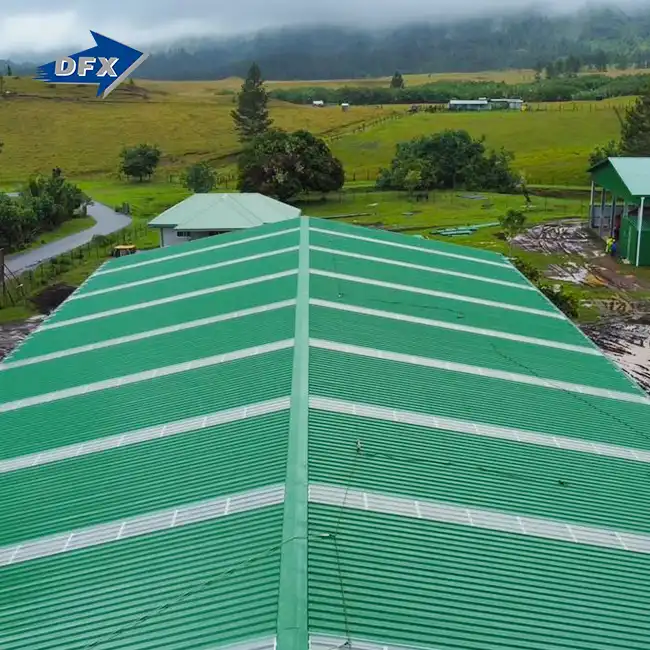
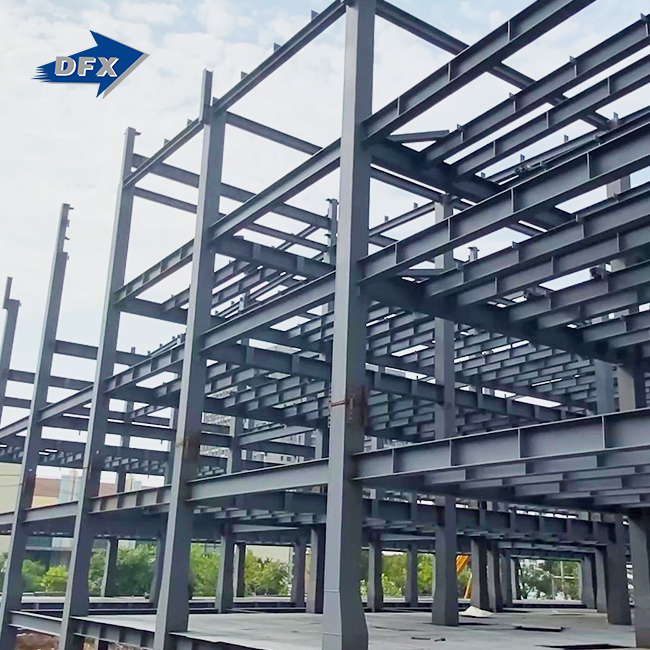
Modern steel rabbit hutch houses use heavy-gauge wire mesh floors (12–14 gauge) and square pipes made of Q235 carbon steel to make load-bearing frames that can be set up in multiple levels. During the galvanisation process, all metal surfaces are coated with zinc at a thickness greater than 275 g/m². This makes a chemical shield against rabbit pee, which is very acidic and can damage metal. Insulated roof and wall panels keep the temperature stable, which lowers heat stress in the summer and stops wetness buildup that can cause lung diseases.
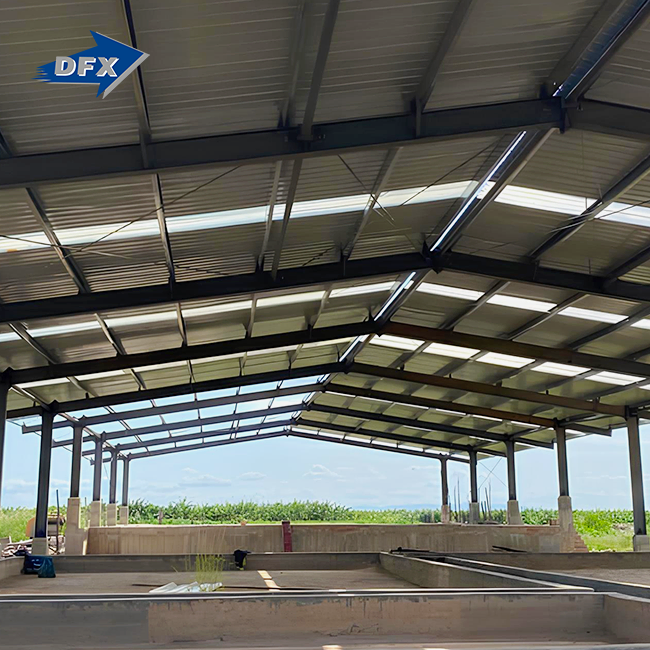
These farm structures are made at Director Steel using the same high standards of accuracy used for industrial buildings. Each unit is hot-dip galvanised and then coated with powder, which provides two layers of protection against damage from the climate. The enclosed livestock building design has horizontal ventilation systems that keep airflow rates at 0.3 to 0.5 cubic feet per minute per pound of rabbit body weight, which is what the American Rabbit Breeders Association recommends.
Disease Prevention Through Non-Porous Surfaces
Coccidiosis and Rabbit Haemorrhagic Disease Virus Type 2 (RHDV2) are constant problems for businesses that keep rabbits because they are spread through dirty surfaces. Because steel isn't porous, it doesn't hold on to pathogens. This means that industrial-strength treatments like Virkon S or sodium hypochlorite can be used to clean it thoroughly without breaking down the material. When it comes to breeding centres, where strict hygiene rules demand doe separation during kindling, this trait is especially useful.
In 2021, the University of California Agricultural Extension did research that showed that farms that switched from wooden to steel housing systems saw a 34% drop in coccidiosis cases in the first production cycle. Getting rid of things that soak up moisture led straight to lower levels of ammonia, which was good for people of all ages' respiratory health.
Predator Protection and Security Features
Foxes, rats, wolves, and wild dogs are some of the animals that can hurt farmers in rural areas. Welded steel frames with heavy-duty wire mesh make walls that are almost impossible to get through, which is something that wooden walls can't do. The 1" x 0.5" floor grid spacing keeps predators' paws from getting through while still letting waste pass. This keeps the living space clean without putting security at risk.
Steel vs Wooden Rabbit Hutch Houses: Making the Right Choice
Comparative Durability Analysis
There are many ways that wooden hutches can break down, such as absorbing water, getting fungus on them, being damaged by rodents, and rabbits chewing on them. Even though cedar and wood have natural preservatives, they still rot when they are left in urine-soaked bedding for a long time. Outdoor wooden units usually need to be replaced every 18 to 36 months, which means that you have to keep spending money on them.
These weaknesses are completely eliminated by the Steel Rabbit Hutch House. When properly kept, galvanised steel frames can be used for decades without any damage to the structure. The starting cost of capital is about 2.3 times higher than for wooden alternatives, but after 28 months of use, the total cost of ownership estimates show that the business breaks even. After this point, steel housing saves money over time because it doesn't need to be replaced as often and lowers medical costs because it's cleaner.
Scalability and Modular Expansion
For commercial rabbit farming to work, the infrastructure needs to be able to adapt to changes in market demand and the growth of the breeding programme. Steel rabbit hutch house systems allow for vertical stacking in battery designs, which makes the best use of room in barns with doors. Standardised bolt-together designs make it easy to quickly add more units without needing special building skills. This lets you increase capacity in small steps that match your cash flow.
A Texas meat rabbit farm wrote about their experience growing it in a case study released by the American Rabbit Council in 2022. They started out with 50 breeding does living in wooden hutches. They had to deal with constant upkeep needs and disease outbreaks. By switching to steel infrastructure, the business was able to grow to 200 does in just 18 months, and the number of hours spent fixing hutches dropped by 87%. The number of kits weaned per doe per year went up from 32 to 41, which is directly related to better living conditions.
How to Build and Maintain a Steel Rabbit Hutch House for Farming Efficiency?
Essential Components and Material Selection
To make a steel rabbit hutch house that lasts, you need to pay close attention to the materials you use and how you put it together. Corrosion-resistant steel tube, usually 20mm x 20mm square for single-tier units and 25mm x 25mm for stacked arrangements, is used to make the foundation's main frame. Roofing materials should have insulated walls with a minimum R-value of 10 to keep the inside of the building at a comfortable temperature. This is especially important in places where the temperature changes a lot.
The choice of wire mesh has a direct effect on how well animals are cared for. Floor mesh needs to provide both structural support and good health for the paws. 14-gauge welded wire with 1/2" x 1" spacing evenly spreads weight and stops pododermatitis (sore hocks). The side and top walls are made of 16-gauge mesh with smaller holes every 1" x 2" to keep out smaller animals. To keep rabbit skin from getting hurt, all cloth edges need to be deburred and finished smoothly.
Maintenance Protocols for Longevity
Even though steel is naturally strong, regular care makes it last longer and saves your infrastructure investment. Cleaning once a week gets rid of organic matter buildup before it damages protection layers. High-pressure washing at 1500 to 2000 PSI gets rid of waste buildup on wire mesh floors. Agricultural disinfectants approved for cattle buildings should then be applied.
Coating quality should be checked every three months, especially at weld points and high-wear areas like door hinges and latch mechanisms. Zinc-rich patch primers work well on minor layer damage and stop rust from spreading. Every year, full inspections check the stability of the structure, the stiffness of the mesh, and the tightness of the fasteners. This way, problems can be fixed before they become safety risks or animal escapes.
Customisation Options for Operational Needs
For each production method, unique housing requirements must be met. Individual doe units that are 30" x 36" and come with nest boxes are good for breeding, while bigger communal pens that are sized to meet stocking density rules of 0.75 square feet per pound of rabbit at market weight are better for grow-out systems. With pre-drilled mounting holes, automated watering systems fit right into steel frames, and waste collection trays slide under wire floors to make managing manure easier.
Climate-specific changes help solve environmental problems in certain areas. Better air holes and marine-grade powder finishing formulas help operations in humid coastal areas. Places in the desert need shade cloths that work with spray systems. Our engineering team helps with structural design, making sure that local building rules are followed by taking into account things like snow loads in northern climates and wind protection in hurricane-prone areas.
Procurement and Buying Guide for Steel Rabbit Hutch Houses
Supplier Evaluation Criteria
When choosing manufacturing partners for farming infrastructure, it's important to do a lot of research on their production skills and quality control systems for the Steel Rabbit Hutch House. Give priority to providers who are certified to ISO 9003 and can show that they handle quality throughout the whole manufacturing process. If something has a CE mark, it means it meets European safety standards. Other approvals, like COC and PVOC, make it easier to make sure it meets the rules for foreign trade.
Manufacturing capacity has a direct effect on how long projects take and how much they can grow. Facilities with specialised production lines for cattle buildings make sure that quality is always the same and wait times are acceptable. Director Steel's 40,000-square-metre production plant has six automatic welded H-beam lines and specialised metal-forming tools that are used by more than 200 trained workers to support the yearly output of large-scale farming projects without delaying delivery dates.
Quality Verification and Testing Standards
Professional buying includes certain quality control steps that must be taken before a shipment is accepted. Weld integrity checks use visual observation and dye penetrant testing to make sure that all joints are fully penetrated. Magnetic induction gauges should be used to measure the thickness of the coating to make sure that it has a minimum 80-micron powder coat layer or a similar galvanisation depth. Tensile strength tests are done on wire mesh to make sure it can handle 200 pounds per square foot of load without permanently changing shape.
Ask for salt spray testing results (ASTM B117 standard) that show corrosion protection after 500 hours of contact. This information is especially useful for activities that take place near the coast or in places with a lot of moisture in the air. Assembly tolerance verification makes sure that the bolt holes are lined up and that the door latch works. This stops installation delays and structural gaps that make the security less secure.
Pricing Structures and Value Considerations
The price of commercial rabbit housing depends a lot on how complicated the design is, what materials are used, and how many units are ordered. Individual breeding units usually cost between $180 and $350 per hutch, based on their size and the features it comes with. Economies of scale allow multi-tier battery systems with built-in trash management to cut costs per unit by 25–40% for orders over 100 units.
The basic product price should not be part of a full cost study. It should also include the scope of the service. Help with structural design, quality of fabrication, transport logistics, and installation instructions are all big value adds that lower project risk and speed up operational readiness. Our made-to-order production plan gets rid of the costs of keeping inventory on hand while making sure that each unit meets the unique needs of each farm, from the way ventilation is set up to the exact dimensions needed.
Optimising Your Rabbit Farming System with Steel Hutch Houses
Integration with Automated Farm Management
More and more, automated systems are being used in modern rabbit farming to cut down on work and improve accuracy. Steel rabbit hutch house infrastructure makes perfect mounting bases for automatic nipple watering lines. This means that water buckets don't need to be emptied every day, and plants can always get water. Using U-bolt clamps, PVC supply lines are attached directly to steel frames. This makes distribution networks that don't leak and can handle being cleaned.
Feeding automation also offers chances to make things run more smoothly. Gravity-feed hoppers are mounted on top of hutch units and send pelleted feed through mechanisms that work on a plan. When compared to feeding by hand twice a day, this method cuts down on labour costs by about 60% while still allowing for precise ration control. Steel's structural strength means that these extra systems don't sag or bend, which would cause automatic parts to become out of alignment.
Financial Performance Metrics
Calculations of the return on investment for steel building facilities show that it is a good investment for businesses. Assuming that the market price for a processed rabbit is $45 and that each doe gives birth to 40 kits a year, a business with 100 does makes about $180,000 a year in gross income. The steel building improved performance by lowering death rates by 3–5%, lowering medical costs by an estimated $2.50 per animal per year, and increasing the average lifespan of a productive doe from 2.5 to 3.5 years.
Over time, these benefits are made stronger by differences in maintenance costs. Wooden hutch businesses set aside about $12 a year per unit for fixes and $85 a year for replacements. Steel systems cut the costs of repairs and replacements by about $8 per unit per year, which saves $89 per hutch per year. For a 100-hutch business, this means saving $8,900 a year on costs, which has a big effect on net income.
Conclusion
For industrial rabbit farms, switching from traditional wooden enclosures to engineered steel rabbit hutch houses is an important infrastructure choice. A steel building is the best choice for flexible production systems because it lasts longer, is safer for biosecurity, and saves money in the long run. Concerns about rust have been put to rest by improvements in galvanisation and powder-coating technologies in material science. Modular designs also make it easy to add on in stages that match the growth of a business. Agricultural businesses that want to gain a competitive edge by improving animal care, lowering the amount of work that needs to be done, and making operations more reliable should look at steel houses as a basic building material that can help them make money in a market that is becoming more demanding.
FAQ
1. Why is steel a better choice for rabbit housing than standard wooden housing?
A steel rabbit hutch house building lasts longer (10–15 years vs. 2–3 years for wood), is completely resistant to predators, has non-porous surfaces that don't let pathogens stick around, and is compatible with industrial disinfection routines. The material doesn't break down when chewed on or exposed to the elements, so wooden hutch businesses don't have to pay for replacements all the time.
2. Will the steel floor hurt the rabbits' feet and hocks?
When used correctly, wire mesh made of 14-gauge material with a 1/2" x 1" space evenly spreads weight across the paw pads, lowering the risk of pododermatitis. Professional designs have parts of pens with solid floors or sleeping mats so rabbits can move between surfaces. According to research, paw health is the same or better in wire-lined hutches compared to wooden hutches, as long as the right mesh specs are followed.
3. How does steel work when temperatures are very high or very low?
While raw steel quickly transfers heat, full housing systems have insulated wall and roof pieces that keep the inside of the building at a comfortable temperature. The white powder layer reflects the sun's rays, which keeps the surface cooler in the summer. As extra climate control tools, operations in places with high temperatures should use shade structures, air fans, or misting systems to keep rabbits as comfortable as possible as the seasons change.
4. What kind of upkeep do steel rabbit cages need?
Once a week, pressure washing gets rid of the organic buildup, and then cleaning products approved for animals are used. Inspections every three months make sure the layer is still in good shape and find any small damage that needs to be fixed with zinc-rich paint. Every year, full inspections check the structural parts, the tightness of the mesh, and the safety of the fasteners. When compared to regular wooden hutch repairs, this care plan takes a lot less time and costs a lot less money.
Partner with DFX for Your Steel Rabbit Hutch House Needs
Over 12 years of specialised experience, Director Steel has been making cattle buildings that meet the strict needs of industrial agriculture. Our Steel Rabbit Hutch House provider can do more than just make the hutch. They can also provide full turnkey solutions that include structural design, sourcing materials, production, global delivery, and fitting help. We serve farming operations in six countries with precision that is made to order and is in line with ISO 9003 and CE, COC, and PVOC standards.
Our engineering team works directly with farm owners and project managers to create unique housing solutions that meet the needs of each site, including climate concerns and desires for the production system. Email jason@bigdirector.com to talk about the equipment you need for rabbit farming and get specifics that are made to fit your needs.
References
1. McNitt, J.I., Patton, N.M., Lukefahr, S.D., & Cheeke, P.R. (2013). Rabbit Production (9th ed.). CABI Publishing.
2. American Rabbit Breeders Association. (2020). Commercial Rabbit Housing Guidelines and Best Management Practices. ARBA Technical Standards Committee.
3. Lebas, F., Coudert, P., Rochambeau, H., & Thébault, R.G. (2019). The Rabbit: Husbandry, Health and Production. Food and Agriculture Organization Animal Production Series.
4. University of California Cooperative Extension. (2021). Comparative Analysis of Housing Systems in Commercial Rabbit Operations. Agricultural Research Publication Series, 47(3), 112-128.
5. Morisse, J.P., & Maurice, R. (2018). Influence of Housing Systems on Rabbit Health and Productivity: A Longitudinal Study. Journal of Applied Rabbit Research, 15(2), 203-217.
6. National Agricultural Statistics Service. (2022). Specialty Livestock Production Infrastructure Investment Trends. United States Department of Agriculture Economic Research Report.
Learn about our latest products and discounts through SMS or email