- English
- French
- German
- Portuguese
- Spanish
- Russian
- Japanese
- Korean
- Arabic
- Greek
- German
- Turkish
- Italian
- Danish
- Romanian
- Indonesian
- Czech
- Afrikaans
- Swedish
- Polish
- Basque
- Catalan
- Esperanto
- Hindi
- Lao
- Albanian
- Amharic
- Armenian
- Azerbaijani
- Belarusian
- Bengali
- Bosnian
- Bulgarian
- Cebuano
- Chichewa
- Corsican
- Croatian
- Dutch
- Estonian
- Filipino
- Finnish
- Frisian
- Galician
- Georgian
- Gujarati
- Haitian
- Hausa
- Hawaiian
- Hebrew
- Hmong
- Hungarian
- Icelandic
- Igbo
- Javanese
- Kannada
- Kazakh
- Khmer
- Kurdish
- Kyrgyz
- Latin
- Latvian
- Lithuanian
- Luxembou..
- Macedonian
- Malagasy
- Malay
- Malayalam
- Maltese
- Maori
- Marathi
- Mongolian
- Burmese
- Nepali
- Norwegian
- Pashto
- Persian
- Punjabi
- Serbian
- Sesotho
- Sinhala
- Slovak
- Slovenian
- Somali
- Samoan
- Scots Gaelic
- Shona
- Sindhi
- Sundanese
- Swahili
- Tajik
- Tamil
- Telugu
- Thai
- Ukrainian
- Urdu
- Uzbek
- Vietnamese
- Welsh
- Xhosa
- Yiddish
- Yoruba
- Zulu
Is Bonded Zone Storage Structural Steel Right for Your Project?
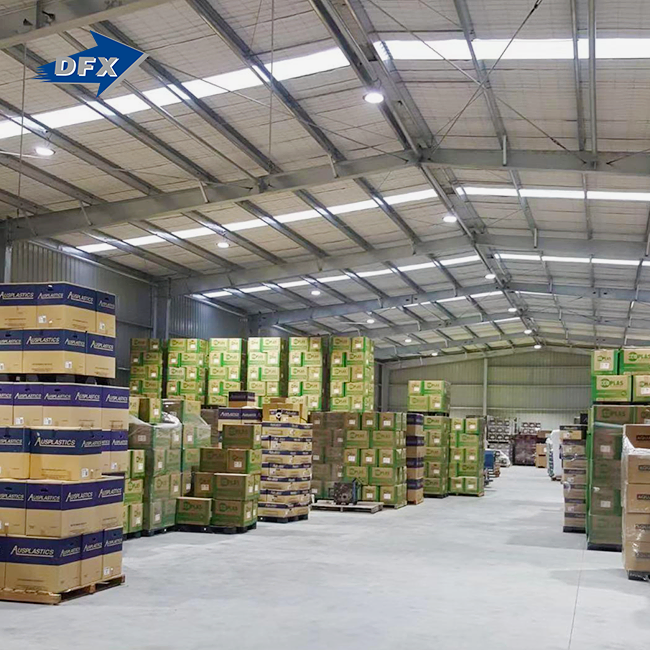
Bonded zone storage structural steel is often a strong fit when your project needs wide clear spans, fast construction, and flexible layouts inside a customs-controlled facility. Bonded status governs how goods are tracked and handled. It does not change how the frame is engineered, so the building must still meet local structural, fire, and environmental rules. Steel works well when you need high storage capacity, future expansion, and a predictable schedule. It needs extra review when you face heavy cranes, multi-story storage, severe fire exposure, or aggressive corrosion. Here is how I would judge the decision step by step.

Why Structural Steel Fits Bonded Zone Storage
What Bonded Status Changes, and What It Does Not
U.S. Customs and Border Protection decides how a customs bonded warehouse should work in the United States. Until they are taken out, goods that were brought in don't have to pay duty. For Foreign-Trade Zones, the plan is the same. These rules say how to keep records, keep them safe, and let people in. They are not the same as the building code. Your steel frame still needs to meet the building codes in your area, the International Building Code, and ASCE 7. I picture the safe place as an extra layer of work on top of a normal warehouse plan. In real life, this leads to planning room. There may be times when you need safe areas, places to check on things, and clear records of where things are. The steel layout should make these possible.
Core Components of the Steel Frame
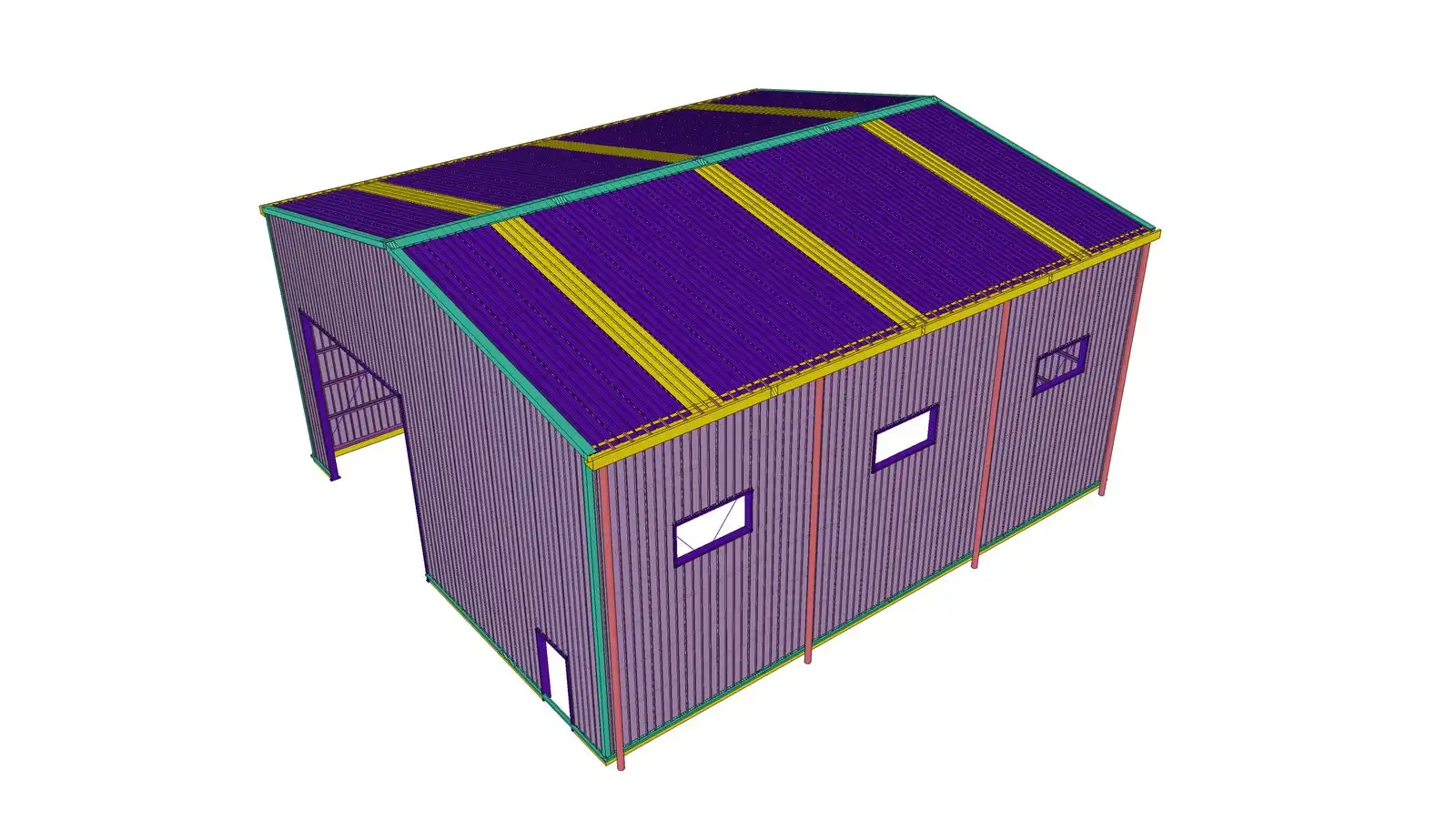
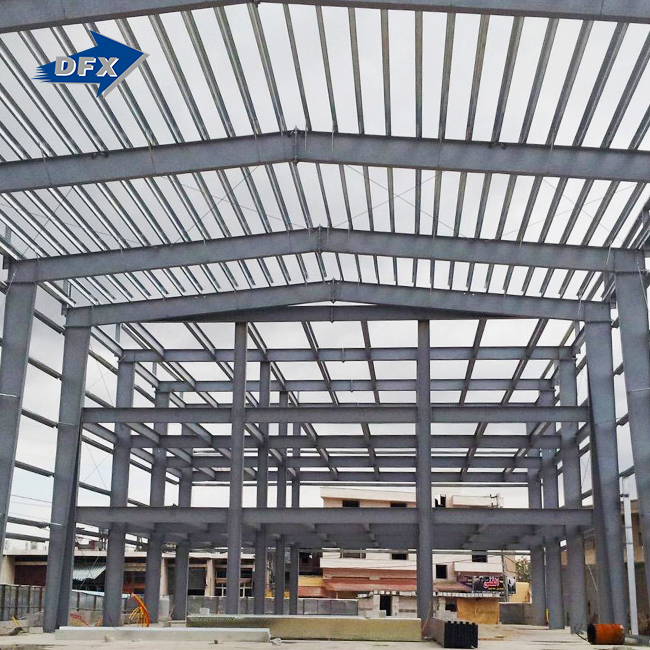
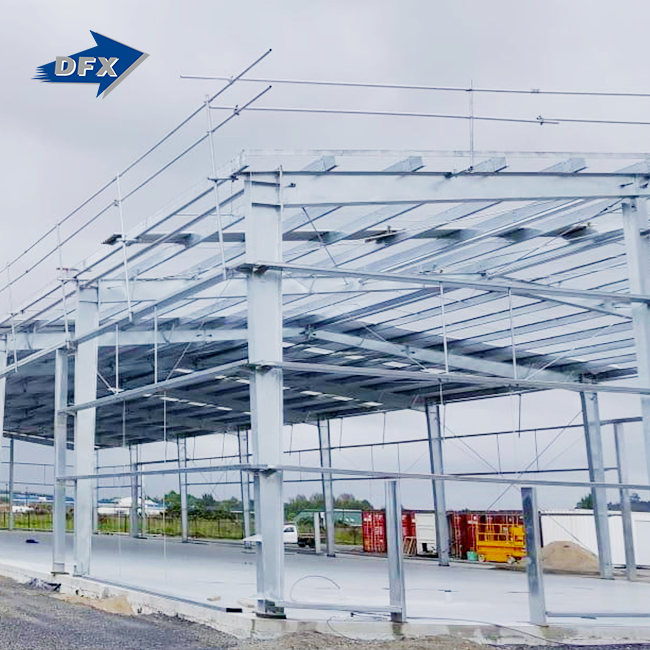
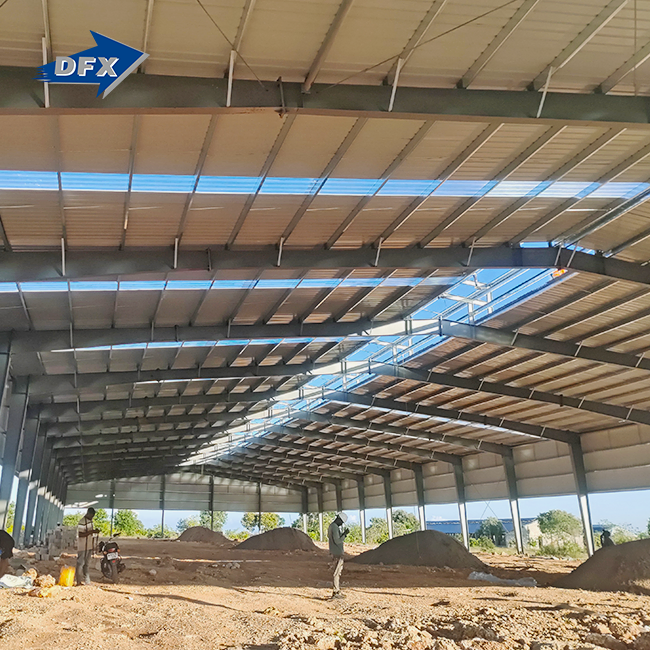
There is an H-beam as the main frame of our modular prefabricated steel storage building. Columns and rafters carry the main loads. On the sides, a bracing system and galvanized C/Z purlins give it extra support and rigidity. Around that frame are built base plates, anchor bolts, a cover, and, if needed, ventilation and dock covers. Right away, pay close attention to how the base moves. Anchor points, base plate heights, and grout must all be the same on both the steel drawings and the civil works. Teams will waste time on the job site if they don't. Fire-rated sections, expansion joints, wall systems, and roof systems should all be included in the scope so that no one thinks they are not.
Define Your Project Requirements First
When you have a clear plan, you can avoid under-designing and quote breaks. What kind of building it is, how big it is, how high the clear height is, what the dock plan looks like, and how people move around inside. Then the loads show up: racks, mezzanines, cranes, conveyor belts, boxes, and things that hang from the sky. Also, you should know about wind, snow, earthquakes, the strength of the soil, humidity, being close to the coast, and changes in temperature. Guessing these environmental loads is against ASCE 7 because it can lead to frames that aren't safe or bonded zone storage structural steel that is wasted. Customs areas, such as inspection bays or caged storage, can also change how far apart the columns are. An engineer can give a correct price after only doing the math once if they have a full outline.
Compare Framing, Compliance, and Protection Choices
Pre-Engineered vs. Conventional Steel, and Steel vs. Concrete
The pre-engineered buildings are easy to put together quickly because they are all the same. They work well for rectangular warehouses with clear lengths and light crane loads. Heavy machinery or layouts that aren't straight can be made of standard steel. It is possible for engineers to taper parts of welded built-up H-beams so that they can bend. This can save weight compared to hot-rolled forms that stay the same. If you have a single-span plan, you can store things on the floors. When you use a multi-span layout, the rafter sizes get smaller, and columns are added inside. Concrete is heavy, easy to grow, and not as strong as iron. It's also easier to build and takes less time. Concrete doesn't catch fire easily and has a lot of mass. The lightest frame isn't always the one that costs the least. The better option works with your rack grid, forklifts, and future growth.
Design Codes and Documentation to Confirm
Before you start designing, make sure you know the rules. This usually refers to the International Building Code, ASCE 7 for loads, AISC 360 for steel design, and NFPA 13 for fires in the US. Load checks check how well racks, cranes, collisions, wind, snow, and shocks work. They also look at things like deflection, shaking, and clear height as a whole. If you need to, you can ask for certificates of materials, qualifications for welding, coating reports, as-built drawings, and results of nondestructive testing. DFX follows ISO9001 and CE rules. If the project needs it, an EN certificate can also be added. You can ask any supplier to name the version of code that was used to do the math. A vague answer comes with a risk.
Corrosion Protection and Fire Resistance
For safety, choose the one that works best for you, not the one that costs the least at first. Our C/Z purlins are galvanized, which means they don't get wet easily. The hot-dip galvanizing process is in line with ASTM A123. Paint systems can work in dry, safe buildings as long as the surface is prepared and there is a dry-film layer. ISO 12944 sorts places into groups based on how harmful they are. This helps match coatings to areas that are wet or near the ocean. Things often fail because they weren't planned well, the edges and weld zones weren't secured, and the coatings got damaged during shipping. Find out how to fix something. When steel is on fire, it loses strength at high temperatures. Check with your local government to see if you need sprinklers, intumescent coatings, or fire-rated systems.
Weigh Cost, Schedule, and Supplier Capability
Cost, Schedule, and Lifecycle Value
When you get a quote, don't just look at how much steel costs per ton or per square foot. Engineering, building, finishing, fireproofing, foundations, freight, setup, inspection, and getting permits are some of the main cost lines. Ask for different prices for main steel, secondary steel, cladding, things that aren't needed, and secondary steel. Get a written list of the things that aren't included as well. Maintenance, energy efficiency, growth, and downtime are all parts of a product's life that add to its cost. Because the steel is already made, the parts are made in a workshop while the supports are being prepared. It takes less time to build now. If the handover happens earlier, you can get the goods faster. That's important when the month it's not used costs money in rent or lost work.
When Steel Is Right, and When to Review Further
Steel is often the best material when you need to build quickly and have clear heights, wide open floors, plans that can be changed, automation built in, or room for future growth. You should wait for an extra engineering review if there is a high chance of fire, if there is storage on more than one floor, if there is heavy equipment, if there are unusual dynamic loads, if the soil is weak, or if there are strict vibration limits. A simple choice matrix seems like it would work. You can rate things like capacity, fire performance, longevity, schedule, code compliance, original price, lifecycle cost, supplier capability, and help for upkeep. After that, you can choose how much weight to give each factor based on what's most important to you. Fair performance is more important than the lowest bid with this method, and your team will have a written reason for the choice they make.
Choosing a Qualified Supplier
The supplier's skills affect safety, time, and acceptance. You should hire people who have worked in a warehouse or logistics center before, who know your design code, and who are clearly responsible for engineering. Our products are made by Qingdao Director Steel Structure Co., Ltd., which has been around since 2011. Over 200 people work in a 40,000-square-meter mill that it runs. It has six automatic welded H-beam lines and two C/Z section lines. We can make about 20,000 tons of welded H-beams and columns and 8,000 tons of bonded zone storage structural steel in C and Z shapes every year. Before they bid, ask each one to show you their calculations, shop drawings, quality plans, coating records, and warranties. Quotes that are only based on area or quantity, or material grades that aren't clear, are red flags.
Plan Construction and Prepare Your RFQ
Construction Process From Briefing to Handover
A predetermined sequence will reduce delays. First, you have to understand the site and how it operates. Then select a frame concept and finalize the technical details. Then they produced the steel and tested it. Then it was packed for shipping, the frame was erected, and the final inspections were completed. Verify that the foundations, racks, elevators, sprinklers, utilities, customs areas, and building services all play well together before you start producing anything. It’s more expensive to make modifications post-facto. Packing lists, part marking, interim bracing, anchor-bolt inspections, and sealing repairs are used to avoid parts becoming lost and rework. We conduct the technical calculations, we build things, we arrange transportation, and aid with the setup, as part of our service. Fabrication is dependent on the projects you offer. So the plan will match the projects.
What to Include in an RFQ Package
If there is a comprehensive RFQ, all suppliers may quote the same scope. Project location, design standards, sizes, spans, clear height, store plan, equipment load capacity, wind and seismic data, fire rating, corrosion category, soil, shipping terms, and installation requirements for the project. You should get formulas, general plans, production drawings, bills of material, inspection plans, packing lists, records of the coating process, coating records, etc. Ask each bidder to state the assumptions that are not included, the work that is not covered, the lead times, and the Incoterms. Bids that arrive in the same manner may be compared in hours, not weeks. The gaps also become narrower with time.
How DFX Supports Bonded Warehouse Projects
China: Our modular steel storage building construction. It may be useful in shipping facilities, warehouses, and transport hubs. The system is comprised of a primary frame of H-beams, galvanized C/Z purlins, and a bracing system. You may receive certifications such as ISO9001 and CE. You can even get an EN license if you choose. We also manufacture sandwich panels and corrugated steel sheets. Our design and finishing team is with us from the start to the conclusion of a project. We manufacture each piece by hand; therefore, the size of the member will depend on how much you want to carry and how much you load. It is simple to deal with everyone since one organization handles the design, steel, roofing, and siding.
Conclusion
The ideal approach to employ bonded zone storage structural steel is to keep the steel connected at all times and design the structure using the same standards as any warehouse. The brief was clear, the load and site facts were accurate, and the choice of framing was excellent. It worked. Steel is strong, fast, and durable. There should be a fire strategy and a galvanized or adequately painted protection that is acceptable for the location and government regulations. The expenses must be compared on the basis of value throughout the full life, not merely the price per ton. Bids are more likely to be comparable, and there’s less work to perform when you’ve had vetted suppliers and a fully completed RFQ. Bonded zone storage structural steel is ideal for the majority of logistics storage jobs, but larger cranes, multi-floor storage, severe corrosion, or a high fire risk need a closer study.
FAQ
1. What is bonded zone storage structural steel?
The goods that are being checked by customs are kept in a warehouse's steel frame. When you join, only actions and records change. The structure code stays the same.
2. Is a pre-engineered steel building suitable for a bonded warehouse?
Yes, most of the time. It works well for plans that are square or rectangular and have clear spans. If there are big cranes or strange layouts, you might need a standard plan. To be sure, talk to an engineer.
3. Should I choose galvanized or painted steel?
It is easy to galvanize things that are wet or near the ocean. Paint on steel can be used in dry, protected buildings as long as the surface is prepared and the film thickness is known.
4. What information do you need for a quotation?
Send the address, the size, the clear height, the loads, the design code, the wind and earthquake data, the fire standards, and the arrival date.
Request a Bonded Zone Storage Structural Steel Quote
Are you going to build something in a customs-controlled area? The company DFX sells bonded zone storage structural steel. They help with engineering calculations, making things, planning shipping, and giving instructions on how to build things. Send me the address of your site, its size, how much it loads, and when it's due to be delivered to jason@bigdirector.com, and I'll send you a preliminary framing suggestion.
References
1. American Institute of Steel Construction, Specification for Structural Steel Buildings (ANSI/AISC 360-22), 2022
2. American Society of Civil Engineers, Minimum Design Loads and Associated Criteria for Buildings and Other Structures (ASCE/SEI 7-22), 2022
3. International Code Council, International Building Code, 2021
4. ASTM International, ASTM A123/A123M Standard Specification for Zinc (Hot-Dip Galvanized) Coatings on Iron and Steel Products, 2017
5. International Organization for Standardization, ISO 12944-2 Paints and Varnishes: Corrosion Protection of Steel Structures by Protective Paint Systems, Classification of Environments, 2017
6. National Fire Protection Association, NFPA 13: Standard for the Installation of Sprinkler Systems, 2022
Learn about our latest products and discounts through SMS or email