- English
- French
- German
- Portuguese
- Spanish
- Russian
- Japanese
- Korean
- Arabic
- Greek
- German
- Turkish
- Italian
- Danish
- Romanian
- Indonesian
- Czech
- Afrikaans
- Swedish
- Polish
- Basque
- Catalan
- Esperanto
- Hindi
- Lao
- Albanian
- Amharic
- Armenian
- Azerbaijani
- Belarusian
- Bengali
- Bosnian
- Bulgarian
- Cebuano
- Chichewa
- Corsican
- Croatian
- Dutch
- Estonian
- Filipino
- Finnish
- Frisian
- Galician
- Georgian
- Gujarati
- Haitian
- Hausa
- Hawaiian
- Hebrew
- Hmong
- Hungarian
- Icelandic
- Igbo
- Javanese
- Kannada
- Kazakh
- Khmer
- Kurdish
- Kyrgyz
- Latin
- Latvian
- Lithuanian
- Luxembou..
- Macedonian
- Malagasy
- Malay
- Malayalam
- Maltese
- Maori
- Marathi
- Mongolian
- Burmese
- Nepali
- Norwegian
- Pashto
- Persian
- Punjabi
- Serbian
- Sesotho
- Sinhala
- Slovak
- Slovenian
- Somali
- Samoan
- Scots Gaelic
- Shona
- Sindhi
- Sundanese
- Swahili
- Tajik
- Tamil
- Telugu
- Thai
- Ukrainian
- Urdu
- Uzbek
- Vietnamese
- Welsh
- Xhosa
- Yiddish
- Yoruba
- Zulu
Commercial Steel Design for Efficient, Durable Buildings
Commercial steel design is the engineering discipline that translates structural requirements into precise, code-compliant frameworks built to last. Whether you're developing a product showroom, an industrial warehouse, or an exhibition hall, getting the design right from the start determines your building's safety, longevity, and total cost of ownership. With global demand for prefabricated steel buildings rising sharply, understanding how thoughtful structural planning shapes every phase—from concept to erection—gives procurement teams a measurable competitive edge.

Understanding Commercial Steel Design Principles
Every high-performance steel building starts with strict technical basics. The main parts of any sound design process are making sure that materials are optimized, that loads are carried efficiently, and that the design meets international standards like AISC 360 in North America and Eurocode 3 in Europe.
The Step-by-Step Design Process
Load estimates, which include dead loads, live loads, wind forces, and earthquake forces, are usually the first thing that structural engineers do. These models can be used right away in 3D modeling programs like Tekla Structures or STAAD.Pro, where the code requirements are checked against the virtual frame before a single beam is made. Then, verification reviews make sure that the dimensions are correct and that the connections are solid. This finds mistakes early on, which saves the client's money.
Why Design Principles Translate to Long-Term Savings
Steel frames that are built to AISC or Eurocode standards come with structural warranties that last for decades. The American Institute of Steel Construction says that steel buildings that are well designed and well taken care of usually last longer than 50 years. Because they last a long time and don't need much upkeep, they have much lower lifecycle costs than similar concrete buildings. This is important to procurement managers who have to balance capital spending with long-term operational spend.
Comparing Commercial Steel with Other Building Materials
Picking the right material isn't just a technical choice; it also affects how long it takes to build and how much it costs. Steel always does better than concrete, wood, and metal in a number of important ways.
Here are the performance areas where structural steel holds a clear advantage:
- Strength-to-weight ratio: commercial steel design can hold a lot of weight while being only about a third as heavy as similar concrete. This means that foundations aren't needed and excavation costs are lower.
- Construction speed: Steel parts that have already been made come to the site ready to be put together. The Steel Construction Institute says that off-site manufacturing can cut the time it takes to put together on-site by up to 50% compared to cast-in-place concrete.
- Labor efficiency: Bolted and welded joints require fewer people on-site, which saves money on labor costs that often make up 30–40% of the total project cost.
- Sustainability: Steel can be recovered over and over again, and structural parts usually have an average recycled content of 93%. This supports LEED certification paths that eco-friendly builders value.
Because of these benefits, steel is the best building material for industrial plants, logistics stores, and big production facilities that need to be fast and cheap.
So, buying teams should compare steel to factors that are unique to each job. While aluminum is better for lightweight cladding than for main framing, concrete may still be good for some high-thermal-mass uses. Choosing the right materials for the job helps keep budgets and schedules in check.
How to Procure Commercial Steel Design Services Effectively
Choosing the right commercial steel design -to-fabrication partner for a steel building project could be the most important purchase choice you make. Whether your building is finished on time and on budget depends on the supplier's engineering depth, track record of code compliance, and ability to integrate systems.
Evaluating a Qualified Design Partner
Look for wholesalers that have an in-house architectural and detailing team that can help with design ideas, structural calculations, shop drawings, and instructions on how to put the structure together. Integrated services get rid of the coordination problems that happen when design and fabrication are done by different companies. These problems often lead to delays and disagreements over change orders.
Understanding Cost Drivers and Procurement Documents
Steel building prices depend on the length and width of the structure, the wind and earthquake risks in the area, the surface treatment requirements, and any extras like heated sandwich panels or custom façade systems that are needed. Comparing bidders is easy when you ask for detailed bids that include steel tonnage, coating system, shipping and handling, and installation support. Before you place an order, you should always make sure that the seller has quality certifications that are known around the world, like ISO 9001 and CE marking.
Advanced Topics in Commercial Steel Design for Durability and Efficiency
Earthquake Resistance and Fireproofing
Because commercial steel design is naturally flexible, structural frames can absorb seismic energy without breaking easily. This is a very important benefit in areas where ASCE 7 seismic rules apply. Intumescent coatings or vermiculite sprays are used for fireproofing, and they can achieve one- to four-hour fire ratings that meet UL standards and local building codes.
BIM, Modular Construction, and Sustainable Design
Integrating structural, mechanical, and architectural data into a single unified model is what Building Information Modeling does. This cuts down on the need for extra work to be done during manufacturing. When building parts are pre-assembled off-site, using modular construction speeds up the building process and improves quality control. In terms of sustainability, steel buildings are good candidates for LEED Silver or Gold certification because they reduce thermal bridges with thermally broken cladding systems and add photovoltaic supports to the roof.
Trusted Commercial Steel Design Partners and Solutions Global Leaders and What They Offer
The combined supply lines and large section catalogs of ArcelorMittal, Nucor, and Tata Steel are known all over the world. Through regional service centers that sell standard sections and offer expert advice, these companies help with complicated international projects. Long-term partnerships with these kinds of suppliers keep material prices stable and ensure consistent mill certification traceability, which are both things that EPC contractors that are in charge of multi-phase infrastructure programs value.
Why Qingdao Director Steel Structure Stands Out
Since 2011, Qingdao Director Steel Structure Co., Ltd., which does business under the DFX name, has been making and putting up steel structures. The company has more than 200 trained workers and more than 40,000 square meters of enclosed production space. It has six automatic welded H-beam lines as well as sandwich panel, C/Z section, and corrugated sheet lines. About 20,000 tons of welded H-beams and piers can be made each year. Quality management system ISO 9001 is used for all production, and goods have CE, COC, and PVOC certifications that show they meet European and foreign standards.
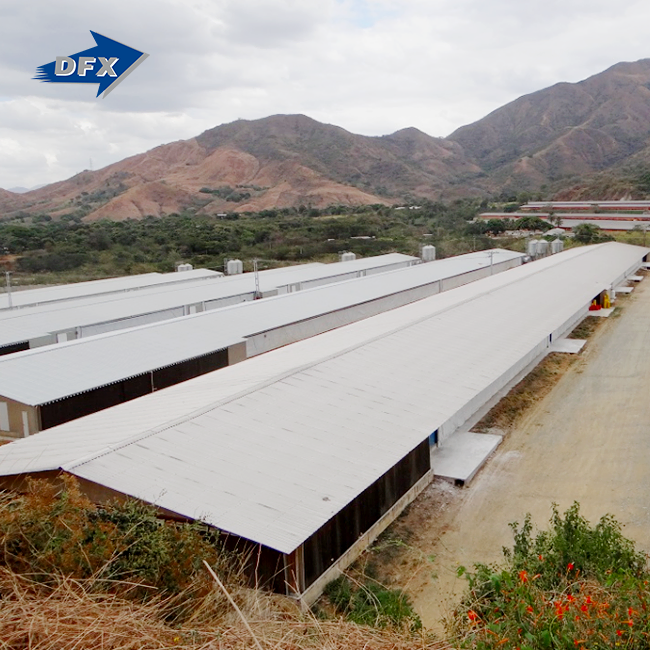
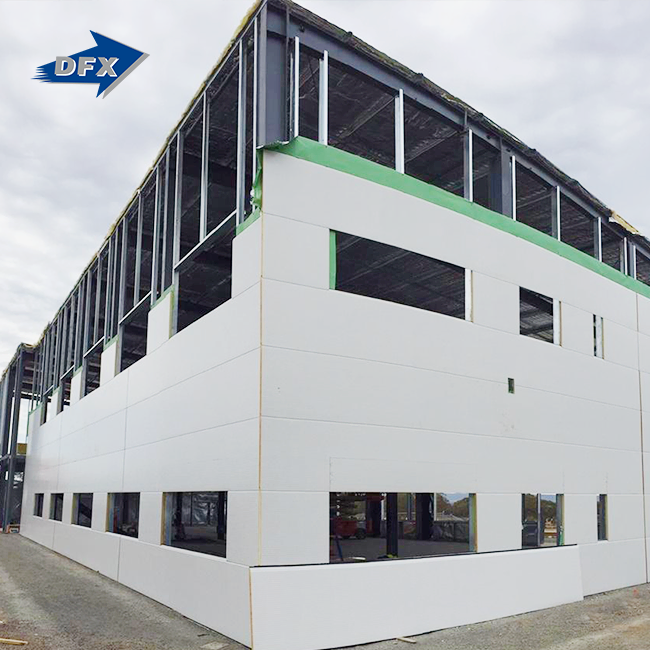
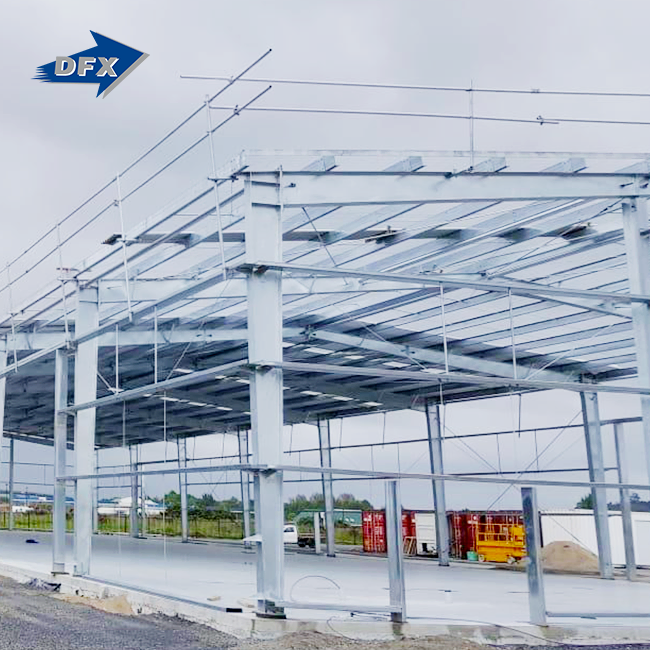
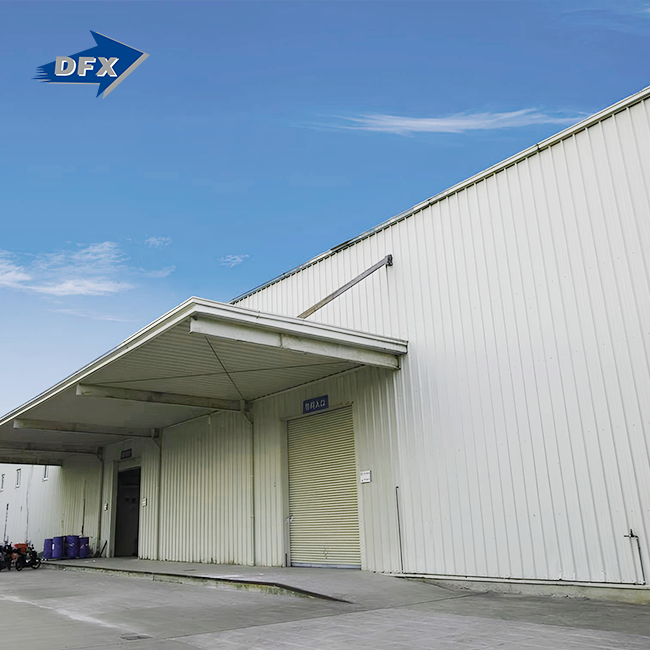
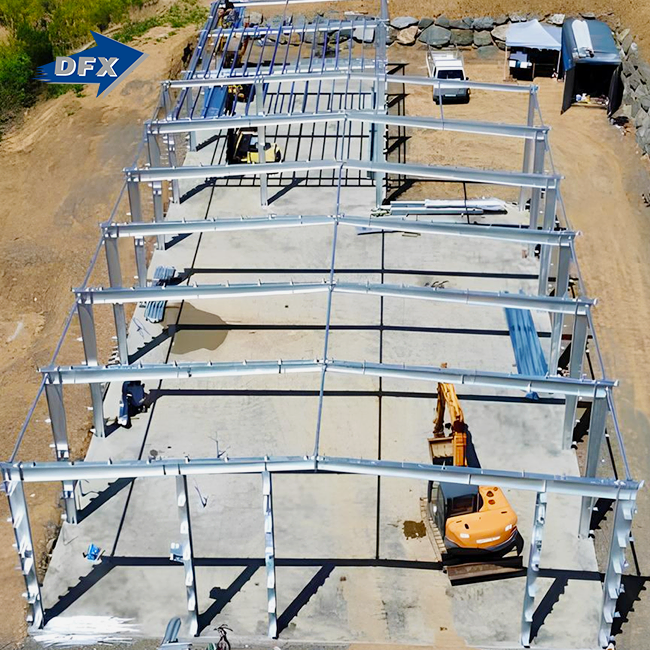
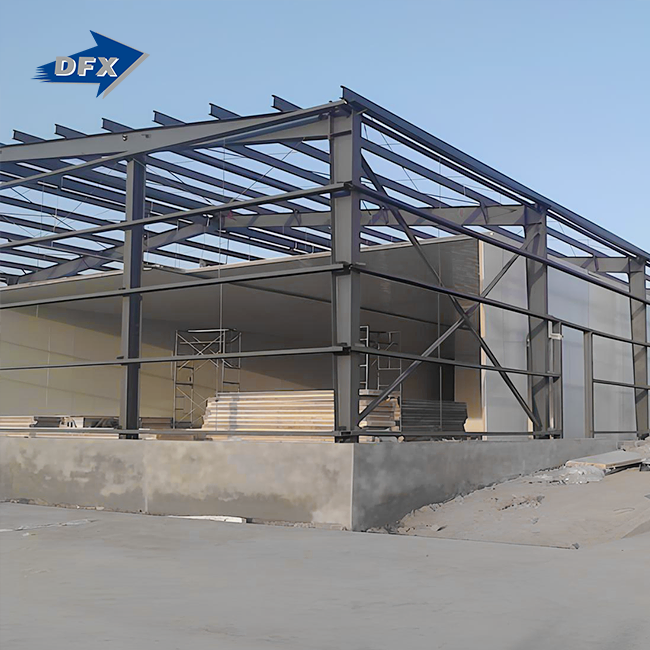
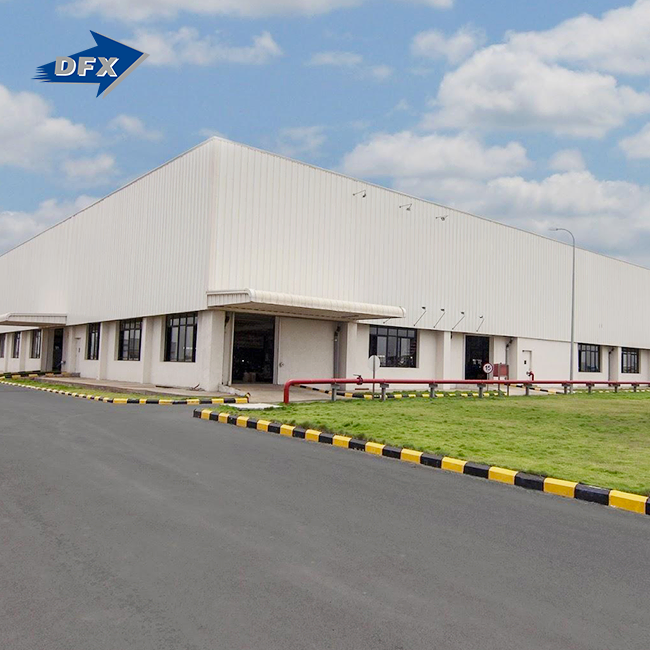
Director Steel's open-space commercial steel buildings have reinforced roof systems, large openings on the sides, and portal frames or beam-column structures. This type of structure works well in places like sales centers, exhibition halls, and showrooms where having column-free spaces and lots of natural light are important. A single, well-coordinated team works on design, manufacturing, surface treatment, and erection support for each project that is made to order.
Conclusion
A business steel building's ability to live up to its claims depends on careful structural planning, material selection, and supplier screening. Steel is still the most popular choice for business, industrial, and farming uses because it is strong, quick, and easy to recycle. This means that it has lower lifecycle costs and can be used more quickly. Choosing a certified, experienced fabricator with commercial steel design capabilities built in takes the guesswork out of buying things and keeps complicated projects on track from the start of construction to commissioning.
FAQ
1. What design standards govern commercial steel buildings in the United States?
In the U.S., structural steel design is based on the AISC 360 standard, and load requirements for wind, earthquake, and snow are set by ASCE 7. When they come into European markets, CE-certified goods from outside of Europe must also show that they follow Eurocode 3.
2. How does steel compare to concrete for large-span industrial facilities?
Steel can have clear spans over 60 meters without having to use interior columns, which is hard for concrete to do on a budget. Steel usually has a lower total project cost for warehouses, factories, and hangars because it is easier to install and takes less time.
3. What certifications should a steel structure supplier hold?
ISO 9001 makes sure that quality control rules are followed. The CE mark proves that the building meets European standards. Imports into some African and developing countries need to have COC and PVOC certifications. By checking these credentials before sending out a buy order, you can keep your project from having materials turned down at customs or during inspection.
4. Can a steel building be modified after construction?
Yes. Because steel members can be strengthened, stretched, or rearranged with little trouble, steel buildings are naturally flexible enough to adapt to future changes in operations. This is a benefit that concrete structures rarely offer at a similar cost.
5. What is the typical delivery timeline for a made-to-order steel building package?
Lead times depend on the details of the project, but prefabricated steel packages from skilled fabricators usually ship eight to twelve weeks after the drawings are approved, depending on the number of tons and how complicated the package is.
Ready to Build Smarter? Connect with DFX Today
DFX, which is run by Qingdao Director Steel Structure Co., Ltd., is a reliable commercial steel design manufacturer with over a decade of verified production experience and internationally certified quality systems. Whether your project involves a showroom, an industrial facility, or a large-span exhibition hall, our integrated team handles everything from concept drawings through on-site erection support. Reach out today and let's discuss your exact requirements. Contact us at jason@bigdirector.com.
References
1. American Institute of Steel Construction (AISC). Steel Construction Manual, 16th Edition. AISC, 2023.
2. Steel Construction Institute (SCI). Design of Steel Structures: Eurocode 3. SCI Publication P385, 2021.
3. American Society of Civil Engineers (ASCE). Minimum Design Loads and Associated Criteria for Buildings and Other Structures (ASCE/SEI 7-22). ASCE, 2022.
4. U.S. Green Building Council (USGBC). LEED Reference Guide for Building Design and Construction, v4.1. USGBC, 2022.
5. World Steel Association. Steel's Contribution to a Low Carbon Future and Climate Resilient Societies. World Steel Association, 2023.
6. National Fire Protection Association (NFPA). NFPA 13: Standard for the Installation of Sprinkler Systems. NFPA, 2022.
Learn about our latest products and discounts through SMS or email