- English
- French
- German
- Portuguese
- Spanish
- Russian
- Japanese
- Korean
- Arabic
- Greek
- German
- Turkish
- Italian
- Danish
- Romanian
- Indonesian
- Czech
- Afrikaans
- Swedish
- Polish
- Basque
- Catalan
- Esperanto
- Hindi
- Lao
- Albanian
- Amharic
- Armenian
- Azerbaijani
- Belarusian
- Bengali
- Bosnian
- Bulgarian
- Cebuano
- Chichewa
- Corsican
- Croatian
- Dutch
- Estonian
- Filipino
- Finnish
- Frisian
- Galician
- Georgian
- Gujarati
- Haitian
- Hausa
- Hawaiian
- Hebrew
- Hmong
- Hungarian
- Icelandic
- Igbo
- Javanese
- Kannada
- Kazakh
- Khmer
- Kurdish
- Kyrgyz
- Latin
- Latvian
- Lithuanian
- Luxembou..
- Macedonian
- Malagasy
- Malay
- Malayalam
- Maltese
- Maori
- Marathi
- Mongolian
- Burmese
- Nepali
- Norwegian
- Pashto
- Persian
- Punjabi
- Serbian
- Sesotho
- Sinhala
- Slovak
- Slovenian
- Somali
- Samoan
- Scots Gaelic
- Shona
- Sindhi
- Sundanese
- Swahili
- Tajik
- Tamil
- Telugu
- Thai
- Ukrainian
- Urdu
- Uzbek
- Vietnamese
- Welsh
- Xhosa
- Yiddish
- Yoruba
- Zulu
Why Invest in a Waste Recycling Steel Workshop?
Investing in a waste-recycling steel workshop represents a strategic move toward profitability and environmental responsibility. As global industries face mounting pressure to minimize landfill contributions and optimize operational costs, a dedicated recycling facility built with robust steel structures offers measurable advantages. A properly engineered Waste Recycling Steel Workshop enables businesses to transform scrap metal into revenue streams while maintaining compliance with increasingly stringent environmental regulations. This specialized industrial building provides the clear-span space, dynamic load capacity, and corrosion resistance necessary to house heavy processing equipment like shredders, balers, and magnetic separators—all while supporting your long-term sustainability goals and enhancing your competitive position in the marketplace.

Understanding the Financial and Environmental Returns
Reducing Waste Management Costs
The costs of using traditional methods of disposal are going up. Tipping fees at landfills keep going up across the US. In many places, the average rate is now more than $55 per ton. You can keep trash out of expensive landfills and turn it into things that can be sold when you run a recycling center. Steel is still one of the most recycled products in the world. The price of scrap steel varies from $200 to $400 per ton, based on the grade and the state of the market. This change from a cost center to a source of income immediately helps the budget.
When you run your own plant, you decide when to gather, how to process, and when to go to market. You can store material when prices are low and sell it when prices are high, making the most of returns that would have gone to third-party processors.
Achieving Regulatory Compliance with Confidence
Every year, the Environmental Protection Agency's rules on how to handle commercial trash get more complicated. Places that deal with steel scrap must show that they have the right storage, pollution control, and paperwork in order to do their job. A recycling workshop that was built with EPA standards in mind makes it easier to follow the rules. Particulate matter is controlled by integrated air systems, possible fluid leaks are contained by reinforced floors, and contaminated materials are kept separate from clean working areas by zoned plans.
Building owners who put money into infrastructure that meets standards from the start can escape expensive repairs and possible fines. Documenting the amount of recycling properly also improves sustainability reporting, which is becoming more and more important for B2B contracts and communications with stakeholders.
Supporting Corporate Sustainability Initiatives
Investors, customers, and regulatory bodies are putting more and more pressure on manufacturers, construction companies, and farms to be more sustainable. A workshop just for recycling is a real sign of caring for the earth. When you handle steel scrap on-site, you cut down on the pollution that comes from transporting trash to faraway sites. You also help the circular economy by reusing things instead of taking them out of circulation to make new ones.
These measurable sustainability results improve the image of your business and can help your company stand out in competitive bidding situations where environmental credentials are important.
Engineering Requirements for High-Performance Recycling Facilities
Structural Design for Heavy Equipment and Dynamic Loads
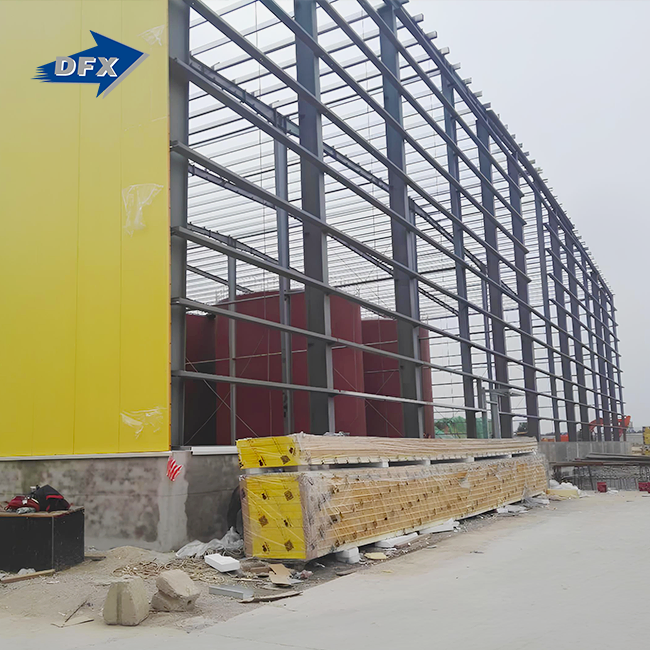
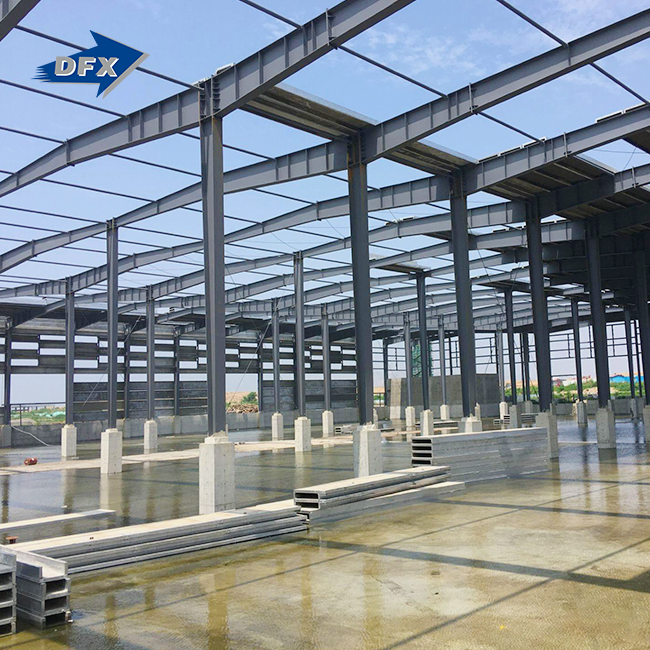
Recycling operations need buildings that can handle harsh conditions. Standard building structures can't safely handle the constant vibration and contact forces that shredders, hammer mills, and conveyor systems produce. A properly set up steel workshop uses main frames made of welded H-section Waste Recycling Steel Workshop that are made from Q235 or Q345 grade steel. These frames are strong enough to support long spans without the need for intermediate columns.
Excavators and wheel loaders can move easily across the work floor, which has clear-span lengths between 24 and 60 meters. Between 10 and 15 meters of eave height can fit vertical baling presses and dust collection systems that hang from the ceiling. Modern pre-engineered buildings use bolted steel links that spread stress well and allow for changes in the future as your working capacity grows.
Crane Systems and Material Handling Infrastructure
Material flow economy has a direct effect on how much money recycling businesses make. To move large amounts of scrap metal, feed processing equipment, and load finished bales onto trucks, most facilities need bridge cranes that can lift between 5 and 50 tons. To keep the crane wheels and rails from wearing out too quickly, the steel frame must have reinforced crane runway beams that are engineered to very tight tolerances, usually within 2 mm of each other.
When you build crane support into the building from the start, you don't have to pay for expensive extra work later on. The building's column spacing and beam sizes should allow for the crane's capacity with the right impact factors. This is especially important when working with scrap metal using grab buckets or electromagnets that change loads quickly.
Corrosion Protection and Environmental Durability
Buildings are exposed to corrosive air when scrap metal is being processed. When batteries are recycled, cars are shredded, and trash is sorted by the city, chemicals are released that break down steel faster. Using high-performance coatings like PVDF or Super Durable Polyester on hot-dip galvanized structure parts protects them against environments that are classified as ISO 12944 C4 or C5.
Heavy-gauge corrugated steel panels with coatings made for industrial settings should be used for wall and roof cladding systems. For decades of dependable service with little upkeep, the surface should be properly prepared by shot blasting to Sa 2.5 standards and then using multi-layer coating methods to reach a minimum dry film thickness of 120 microns.
Operational Efficiency Through Smart Facility Design
Zoning for Contamination Control
Recycling centers that work well split "dirty" areas for accepting items from "clean" areas for processing and storing them. On the tipping floor, where trucks dump mixed trash, containment features like sealed concrete with built-in drains are needed. Processing areas with balers and shredders need soundproofing. Using perforated metal lining sheets with rockwool filling can cut noise by 20 to 30 decibels, keeping workers safe and maintaining good relationships with neighbors.
Access should be limited to clean areas where finished bales are stored so that they don't get contaminated, which lowers the value of the materials. Planning a layout carefully during the planning phase can help prevent operational inefficiencies that cost a lot from happening in retrofitted buildings.
Fire Safety in High-Risk Environments
Recycling operations for paper, plastic, and textiles pose a big risk of fire. Steel-framed buildings have some benefits on their own, but they still need extra safety steps. When applied to structural parts, intumescent fireproof coatings keep fires out for two to four hours, which is what insurance companies require and protects your investment.
The open-web form of steel construction makes it easier to place sprinkler systems all over the building. It is better to plan for enough space between smoke vents and emergency exit doors from the start, rather than adding them later, which would cost more.
Scalability and Future Expansion
Conditions in the market and processing technology change very quickly. Your building should be able to grow with you without having to be completely rebuilt. Adding more rooms or lean-to additions is a simple way to make modular steel building systems bigger. As your business grows, the original frame can be made stronger to hold heavy machines like optical sorters or bigger shredders.
This ability to change saves your investment by making the facility last longer and putting off big capital purchases until the market calls for them.
Maximizing Return on Investment
Understanding Initial Capital Requirements
A turnkey recycling facility is a big investment, but breaking down the costs makes the value proposition clearer. The steel structure, which includes the main frames, purlins, wall and roof panels, usually makes up 30 to 40 percent of the total cost of the project. The rest includes foundation work, installing equipment, preparing the spot, and running utilities.
Working with an expert steel structure manufacturer that offers a full range of services, including designing the structure, fabricating it, treating the surface, and providing installation help, makes the buying process easier and lessens the stress of coordinating everything. With normal lead times of 25 to 52 days, made-to-order production lets you plan your cash flow and make sure that building schedules work with your practical ones.
Revenue Streams and Payback Scenarios
Recycling centers make money in a number of different ways. The main source of income comes from selling scrap directly to Waste Recycling Steel Workshop mills and brokers. Secondary materials, such as non-ferrous metals that are removed during processing, are sold for more than their worth. Some companies turn waste into fuels that can be sold or charge other businesses to dump their trash at their site.
Depending on the mix of materials and market prices, a medium-sized facility that processes 15,000 tons per year can make between $3 million and $6 million in gross revenue. 60 to 75 percent of revenue is usually spent on things like transportation, utilities, labor, and keeping equipment in good shape. Payback periods of 3 to 7 years are typical, and if they are properly maintained, facilities can last more than 30 years.
Risk Mitigation Through Diversification
The market for steel scrap goes through cycles that are linked to construction activity and demand from manufacturers. Businesses that do well spread out their material lines to protect themselves from price changes. Processing scrap metal from cars, factories, demolition sites, and home appliances spreads risk across different market segments with different demand drivers.
Contracting with multiple companies and traders instead of just one buyer in different parts of the world can help you get better prices and keep your supply chain running smoothly. These operational tactics will help your building investment be worth more.
Why Partner with Experienced Steel Structure Manufacturers
Certification and Quality Assurance
Material recovery centers have to follow strict building rules and standards set by the industry. Manufacturers who have ISO9001 approval have shown that they are committed to quality control systems that keep mistakes to a minimum and make sure that everything is the same. The CE mark shows that the product meets European standards, which are being used more and more in foreign purchases. ASTM material compliance checks that structural steel meets important safety and durability standards for its mechanical properties.
Ask potential suppliers for proof of qualifications for welding procedures, non-destructive testing protocols, and coating system specifications when you are evaluating them. Reputable manufacturers offer full quality control, which includes ultrasonic testing of important welds, magnetic particle inspection, and measuring the thickness of protective coatings on a dry film basis.
Comprehensive Service Offerings
The success of a project depends on people from different fields working together without any problems. Steel structure experts who offer full services, from architectural design and engineering formulas to manufacturing, logistics, and on-site erection advice, make sure that projects with multiple workers don't have any problems with coordination.
Look for companies that have their own design teams that can make thorough structural drawings, connection details, and installation processes. This merging speeds up project timelines and lowers the chance of having to make expensive changes in the field when parts don't work right.
When it comes to making steel structures for industrial uses around the world, DFX has more than 12 years of experience. Our production facilities cover 40,000 square meters and have six automatic welded H-beam lines, dedicated C/Z purlin equipment, and the ability to make sandwich panels that support delivering full building systems. More than 200 trained workers follow strict quality rules to make sure that every part meets world standards.
Technical Support Throughout the Project Lifecycle
It's not easy to decide where to put equipment, how to route utilities, what kind of crane to use, and how to plan for future growth when building a recycling center. Manufacturers with a lot of technical knowledge add value beyond just making things. During the design phase, skilled technical teams find potential problems like inadequate crane clearances, inadequate electrical service capacity, and problematic drainage before they become costly problems in the field.
Having access to engineering help for connection details, erection sequences, and field modifications keeps the project moving forward during construction. Once the building is up and running, quick service for planning expansions, structural evaluations, and coating care keeps the building in good shape and protects your investment.
Conclusion
Creating a Waste Recycling Steel Workshop will help your business make money, follow the rules, and grow in a way that lasts. The initial capital investment pays off through lower dumping costs, more money from selling scrap, and a better place in markets that care more about being environmentally friendly. Steel structures that are properly designed and built give recycling operations the strength, durability, and flexibility they need to handle corrosive environments, support heavy equipment, and allow for future growth. When you work with qualified makers who offer full design-to-installation services, you lower the risk of the project and get it up and running faster. Businesses that are resilient and can thrive through market changes and contribute to the circular economy are those that have good building design and smart operational planning.
FAQ
1. What types of steel scrap generate the highest returns?
Clean industrial scrap, like auto bodies, structural steel from demolition projects, and scrap metal from manufacturing operations, fetches high prices. Materials that are contaminated with non-metallic coatings or attachments or that are mixed with other waste streams are worth less. Facilities that can separate and process mixed loads into clean grades make the most money per ton that is processed.
2. How do environmental regulations affect facility design?
EPA rules for managing stormwater require containment systems that stop polluted runoff from leaving your site. Air quality rules control the dust and fumes that come from handling equipment. Usually, these rules require enclosed operations with baghouse filters. Noise laws might limit business hours or require sound barriers. Adding these compliance features after the fact costs more than building them in from the start.
3. Can smaller operations justify dedicated facilities?
Processing amounts above 5,000 tons per year usually need their own equipment. Below this level, it may be cheaper to use mobile tools or form relationships with well-known recyclers. The choice you make will rely on how consistent your materials are, how much money you have, and how important it is for your business to control your waste stream compared to your core goals.
Start Your Recycling Facility Project with Confidence
Are you ready to turn trash into money and reach your green goals at the same time? DFX is an expert at designing and building industrial steel structures that are specifically made for tough recycling jobs. We are a well-known Waste Recycling Steel Workshop supplier with ISO9001 and CE certifications. We offer full solutions, from the initial design to help with installation. Our expert team works with you to find the best plan, choose the right structural systems, and make sure that your building meets all operational and legal standards. Get in touch with our project specialists at jason@bigdirector.com to talk about your unique needs, get full engineering proposals, and find out how our proven manufacturing skills can help your investment in a recycling center. Let us help you build infrastructure that will serve your business reliably for decades and also help you be good to the environment and make money.
References
1. American Institute of Steel Construction. (2020). "Design Guide for Industrial Steel Buildings with Heavy Dynamic Loads." AISC Publications, Chicago, Illinois.
2. Environmental Protection Agency. (2019). "Best Management Practices for Scrap Metal Recycling Facilities." EPA Office of Resource Conservation and Recovery, Washington, D.C.
3. Steel Recycling Institute. (2021). "Economic Analysis of Steel Scrap Processing Operations in North America." SRI Industry Report Series, Pittsburgh, Pennsylvania.
4. International Organization for Standardization. (2018). "ISO 12944: Paints and Varnishes – Corrosion Protection of Steel Structures by Protective Paint Systems." ISO Standards Catalogue, Geneva, Switzerland.
5. Bertram, M., Ramkumar, S., and Rechberger, H. (2017). "The Contemporary European Copper Cycle: Waste Management Subsystem." Ecological Economics Journal, Volume 42, Issue 1.
6. National Fire Protection Association. (2022). "NFPA 654: Standard for the Prevention of Fire and Dust Explosions from the Manufacturing, Processing, and Handling of Combustible Particulate Solids." NFPA Publications, Quincy, Massachusetts.
Learn about our latest products and discounts through SMS or email