- English
- French
- German
- Portuguese
- Spanish
- Russian
- Japanese
- Korean
- Arabic
- Greek
- German
- Turkish
- Italian
- Danish
- Romanian
- Indonesian
- Czech
- Afrikaans
- Swedish
- Polish
- Basque
- Catalan
- Esperanto
- Hindi
- Lao
- Albanian
- Amharic
- Armenian
- Azerbaijani
- Belarusian
- Bengali
- Bosnian
- Bulgarian
- Cebuano
- Chichewa
- Corsican
- Croatian
- Dutch
- Estonian
- Filipino
- Finnish
- Frisian
- Galician
- Georgian
- Gujarati
- Haitian
- Hausa
- Hawaiian
- Hebrew
- Hmong
- Hungarian
- Icelandic
- Igbo
- Javanese
- Kannada
- Kazakh
- Khmer
- Kurdish
- Kyrgyz
- Latin
- Latvian
- Lithuanian
- Luxembou..
- Macedonian
- Malagasy
- Malay
- Malayalam
- Maltese
- Maori
- Marathi
- Mongolian
- Burmese
- Nepali
- Norwegian
- Pashto
- Persian
- Punjabi
- Serbian
- Sesotho
- Sinhala
- Slovak
- Slovenian
- Somali
- Samoan
- Scots Gaelic
- Shona
- Sindhi
- Sundanese
- Swahili
- Tajik
- Tamil
- Telugu
- Thai
- Ukrainian
- Urdu
- Uzbek
- Vietnamese
- Welsh
- Xhosa
- Yiddish
- Yoruba
- Zulu
How to Choose a Cold Storage Steel Building for Your Business
Choosing the right cold storage steel building starts with understanding your operational requirements, structural options, and supplier capabilities. A well-designed refrigerated steel warehouse combines a rigid steel frame with high-performance insulation panels to maintain precise temperature zones—from chilled (+2°C to +10°C) to deep freeze (-25°C to -40°C). Compared to masonry or container-based alternatives, prefabricated steel cold storage facilities deliver faster construction timelines, lower lifecycle costs, and superior thermal efficiency. This guide walks you through every critical decision point, from material selection to procurement strategy, so you can invest with confidence.

Understanding Cold Storage Steel Buildings and Their Benefits
A cold storage steel building is more than just a box with insulation. The structural frame, thermal envelope, floor heating, and mechanical systems all work together to protect material that needs to be kept at a certain temperature. Industries that depend on cold chain logistics, like pharmaceuticals, agriculture, distribution, and food processing, are choosing steel-framed cold storage over traditional concrete builds more and more.
Why Steel Outperforms Concrete for Cold Storage
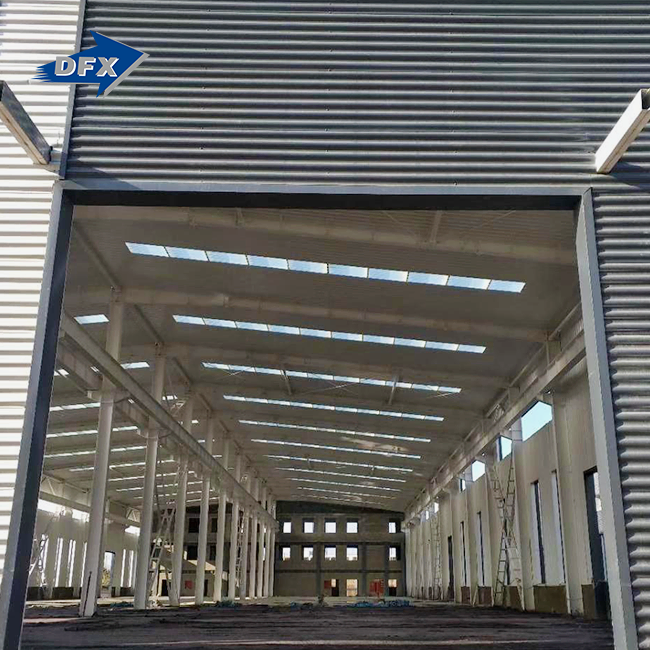
Because steel is strong for its weight, it can have long clear spans without any internal columns. This makes the most of the floor space and can accommodate high-density shelving systems or automated retrieval equipment. The Steel Construction Institute says that pre-engineered steel buildings can cut the time it takes to build by 30 to 50 percent compared to masonry buildings of the same size. Businesses that are expanding their cold chain facilities can start making money earlier because of this speed benefit.
Steel also doesn't crack like concrete does when temperatures change quickly. When temperatures change from room temperature to below zero, concrete stretches and shrinks, which over time causes tiny cracks to form. A well-made steel frame has slotted connection plates and expansion joints that allow for safe thermal movement. This keeps the structure's integrity for many years of use.
Thermal Performance and Energy Savings
The insulation layer is the most important part of any cold storage space. The best in the business are polyisocyanurate (PIR) sandwich panels that have a core density of 40–42 kg/m³ and a thermal conductivity of º ≤ 0.024 W/(m·K). These panels keep the inside of a building at a comfortable temperature with very little refrigeration load. This makes energy bills much lower. The U.S. Department of Energy says that one of the most cost-effective ways to cut down on commercial refrigeration energy use is to make the building envelope perform better.
Key Criteria for Choosing the Right Cold Storage Steel Building
Before calling any cold storage steel building suppliers, you should be clear on how you plan to use the building. The answers decide the building's dimensions, the amount of insulation, the weight on the floor, and the way the doors are set up.
Here are the main factors that every buying manager should look at when making a decision:
- Temperature Zone Requirements: For deep-freeze uses (-18°C to -40°C), you need thicker PIR panels (usually 150–200mm) and under-floor heating systems to stop frost heave, which is when freezing dirt grows and cracks the foundation slab. When it comes to cold storage (+0°C to +10°C), thinner panels and simpler floor construction are fine.
- Clear Span and Height: Cold chain logistics centers that use automatic systems for storage and recovery often need clear heights above 12 meters. At these heights, an H-beam primary steel frame with galvanized C/Z purlins and a lateral bracing system gives the structure the rigidity it needs without reducing the amount of space that can be used.
- Hygienic and Regulatory Standards: Facilities that work with drugs or food must meet HACCP or GMP standards. It is imperative that the panel surfaces are smooth, non-porous, and that the details are free of dust. Make sure that the panels your seller sells have the right fire and hygiene standards.
- Scalability: Future rooms can be added with little trouble thanks to modular prefabricated steel frames. If you think your storage needs will grow, it is much cheaper to put modularity into the plan from the start than to add it on later.
These criteria shape every specification you'll negotiate with a supplier. Locking them down early prevents costly design revisions during fabrication.
Comparing Cold Storage Steel Buildings with Alternative Solutions
A lot of the time, procurement teams compare modular container units or poured-concrete cold rooms to a cold storage steel building. The pros and cons of each choice are important when looking at the big picture.
For short-term or low-volume needs, modular refrigerated containers are quick and easy to move. The downsides are that they are expensive per square meter, have low ceilings, and make it hard to add technology. When you connect several units together, thermal bridging happens at the connecting places. This makes the system use more energy and causes compliance issues.
Poured-concrete cold rooms have a lot of thermal mass, but they take a lot longer to build and are hard to change once they're up. When compared to a steel frame, the extra weight of the concrete frame makes the base more expensive.
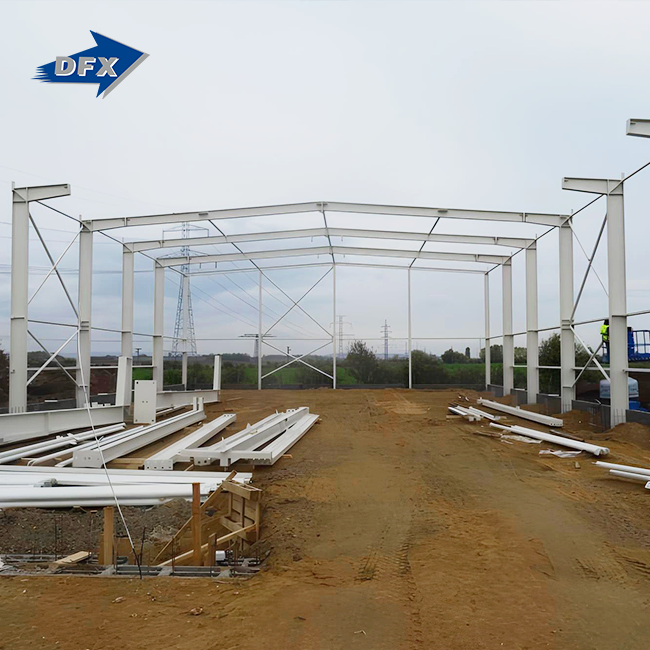
The best middle ground is a prefabricated cold storage steel building. It has a flexible design, can be put together quickly, and the main steel frame will last for more than 50 years. PIR/PUR cladding panels are made to be flexible, which means that after 25–30 years, individual parts can be switched out without affecting the main structure.
Procurement Considerations: How to Buy Your Cold Storage Steel Building
If you want to buy a temperature-controlled cold storage steel building, you need to look at the total cost of ownership, not just the unit price. Logistics planning, on-site erection support, commissioning, and guarantee service after installation are some of the hidden costs that can add 15–25% to the main production price if they are not planned for ahead of time.
Verifying Supplier Credentials
A trustworthy company that makes cold storage steel buildings should have ISO 9001 quality management certification and, for exports, CE certification that shows the buildings meet European building standards. Another sign of how well something was made is EN1092 certification for pressure-bearing parts. Ask for mill certificates for the steel grades that are used in the main members, which are usually Q355B or a similar grade 50 of ASTM A572. Also, ask for reports on the major structural welds that use ultrasound to find flaws.
What a Complete Procurement Package Looks Like
Experienced suppliers offer a "turnkey" service that includes engineering calculations, making shop drawings, fabrication, logistics coordination, and help with setting up the structure. This unified method gets rid of the communication gaps between the design, manufacturing, and installation teams. These gaps are what usually lead to project delays and cost overruns on cold warehouse projects.
Director Steel, which is made in China by the 2011-founded Qingdao Director Steel Structure Co., Ltd., makes modular built steel storage buildings that meet ISO 9001 and CE standards. With six automatic welded H-beam production lines and two sandwich panel lines, the company can make 20,000 tons of welded H-beams every year. With project-based fabrication, each cold storage building is custom-built to fit the client's exact load, temperature zone, and site requirements.
Maintaining and Optimizing Your Cold Storage Steel Building
A structured maintenance program will protect your investment and keep refrigeration costs low for as long as the cold storage steel building is in use.
Three things should be the main focus of regular inspections. Check the thermal envelope once a year to make sure the panel joints are solid and the door seals are in good shape. In deep freeze conditions, even small holes can cause a lot of energy loss. The main steel frame needs to have its connection bolts and corrosion-protecting coatings checked on a regular basis. This is especially important in areas with a lot of humidity, where condensation forms on the structural members. Although hot-dip galvanized steel (with a coating weight of at least 275 g/m²) is a strong barrier, damage during the racking process can reveal bare steel.
Energy management is a field that is always growing. Adding real-time temperature tracking, upgrading evaporator and condenser units to variable-speed refrigerant compressors, and putting in LED cold-rated lights are all tried-and-true ways to lower operating costs. Based on their research, the International Institute of Refrigeration says that optimized cold storage facilities use 20–30% less energy than baseline designs.
Regulatory compliance checks should happen at the same time as HACCP review rounds. This is especially true for sites that store food or drugs. Keeping records of retrofits and panel repairs is what officials expect for an audit trail.
Conclusion
Choosing a cold storage steel building is a big infrastructure decision that needs to be carefully thought out ahead of time. Match the insulation needs for your temperature zone to the right specification, check the certifications of the seller, and get an idea of how much the whole project will cost, including shipping and installation. A properly designed cold storage steel building has a structural lifespan of 50 years, scalable capacity, and measurable energy savings that make the investment worth it. Director Steel's integrated design-to-erection capability makes it easy for construction contractors, EPC firms, manufacturers, and agricultural operators around the world to buy what they need.
FAQ
1. How long does a cold storage steel building last?
If you do regular upkeep, the basic H-beam steel frame is made to last more than 50 years. Insulation panels made of PIR or PUR usually work well for 25 to 30 years. After that, individual parts can be changed without affecting the structure's frame. The modular cladding design makes it easy and inexpensive to replace panels.
2. What insulation thickness do I need?
100mm PIR screens are usually used for chilled storage (+0°C to +10°C). For frozen storage (-18°C to -25°C), panels must be at least 150 mm thick. For deep freeze (-25°C to -40°C), panels must be at least 200 mm thick. The right thickness depends on the weather where you live, the temperature goals inside, and the size of your refrigeration system. Your supplier should be able to prove the standard with an engineering estimate.
3. Can I customize the building size and layout?
It's easy to make a modular prefabricated cold storage steel building that fits almost any footprint, clear height, or bay configuration. In later stages, expansion bays can be added. Director Steel does its own architectural design and structural detailing so that it can make solutions that are unique to each project and fit its site constraints and operational needs.
4. How is frost heave prevented?
The ground below the heated floor slab doesn't freeze because of an underfloor heating system, which could be electric trace heating or a glycol fluid circuit. This gets rid of the risk of frost heave and keeps the foundation from cracking in places where it gets very cold.
Ready to Source Your Cold Storage Steel Building? Contact DFX Director Steel Today
DFX Director Steel is a reliable company that has been making cold storage steel buildings for over 12 years. They are certified to ISO 9001 and CE and offer full project support from planning to installation. Our team can help you with competitive pricing and precise engineering, whether you need a logistics distribution hub, a pharmaceutical storage center, or an agricultural cold store. To get a personalized consultation, email Jason at jason@bigdirector.com.
References
1. Steel Construction Institute. Steel-Framed Buildings: Design and Construction Guide. 2019.
2. International Institute of Refrigeration. The Cold Chain and Its Logistics. 2021.
3. U.S. Department of Energy. Commercial Refrigeration Energy Efficiency. 2022.
4. American Institute of Steel Construction. Steel Construction Manual, 16th Edition. 2023.
5. British Standards Institution. BS EN 14509: Self-Supporting Double Skin Metal Faced Insulating Panels. 2013.
6. Food and Agriculture Organization of the United Nations. The State of Food and Agriculture: Cold Chain Investments for Food Loss Reduction. 2022.
Learn about our latest products and discounts through SMS or email