- English
- French
- German
- Portuguese
- Spanish
- Russian
- Japanese
- Korean
- Arabic
- Greek
- German
- Turkish
- Italian
- Danish
- Romanian
- Indonesian
- Czech
- Afrikaans
- Swedish
- Polish
- Basque
- Catalan
- Esperanto
- Hindi
- Lao
- Albanian
- Amharic
- Armenian
- Azerbaijani
- Belarusian
- Bengali
- Bosnian
- Bulgarian
- Cebuano
- Chichewa
- Corsican
- Croatian
- Dutch
- Estonian
- Filipino
- Finnish
- Frisian
- Galician
- Georgian
- Gujarati
- Haitian
- Hausa
- Hawaiian
- Hebrew
- Hmong
- Hungarian
- Icelandic
- Igbo
- Javanese
- Kannada
- Kazakh
- Khmer
- Kurdish
- Kyrgyz
- Latin
- Latvian
- Lithuanian
- Luxembou..
- Macedonian
- Malagasy
- Malay
- Malayalam
- Maltese
- Maori
- Marathi
- Mongolian
- Burmese
- Nepali
- Norwegian
- Pashto
- Persian
- Punjabi
- Serbian
- Sesotho
- Sinhala
- Slovak
- Slovenian
- Somali
- Samoan
- Scots Gaelic
- Shona
- Sindhi
- Sundanese
- Swahili
- Tajik
- Tamil
- Telugu
- Thai
- Ukrainian
- Urdu
- Uzbek
- Vietnamese
- Welsh
- Xhosa
- Yiddish
- Yoruba
- Zulu
Scaling your logistics business with modular steel warehouses
When your shipping business needs more space than it has now, you're under a lot of pressure to grow Logistics Park Steel Warehouse quickly without going over budget. Modular steel warehouses are a sensible way to grow your logistics business because they offer speed, freedom, and cost control. A Logistics Park Steel Warehouse uses pre-engineered building systems with high-strength H-section steel frames, which makes it easy to set up quickly and allows for future growth. This method meets the immediate need for flexible infrastructure that can adapt to changing demand, yearly peaks, and new distribution models in today's competitive supply chain world.

Understanding Modular Steel Warehouses in Logistics Parks
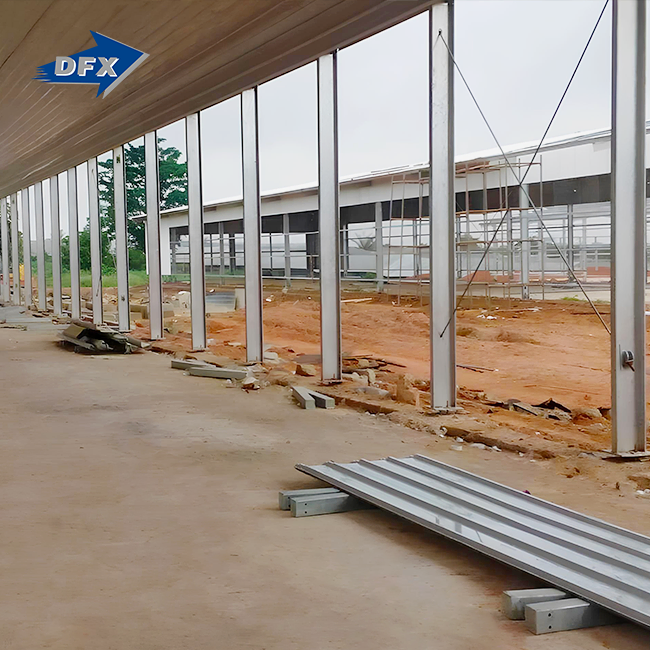
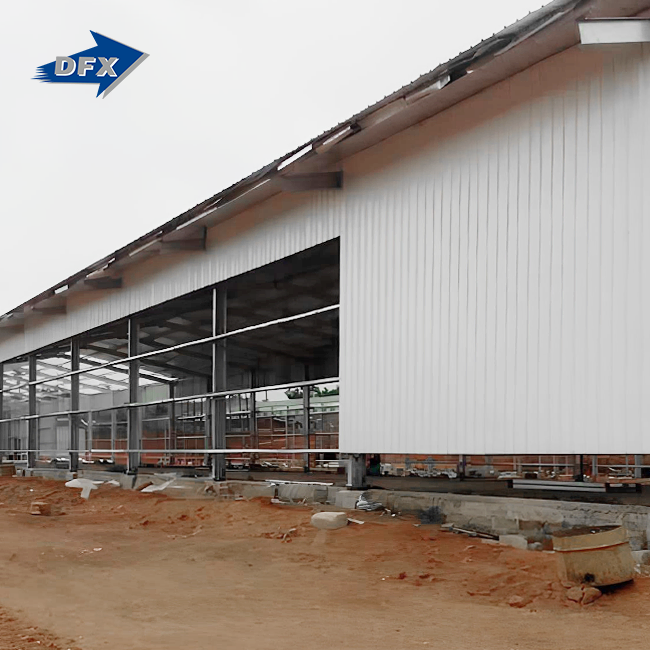
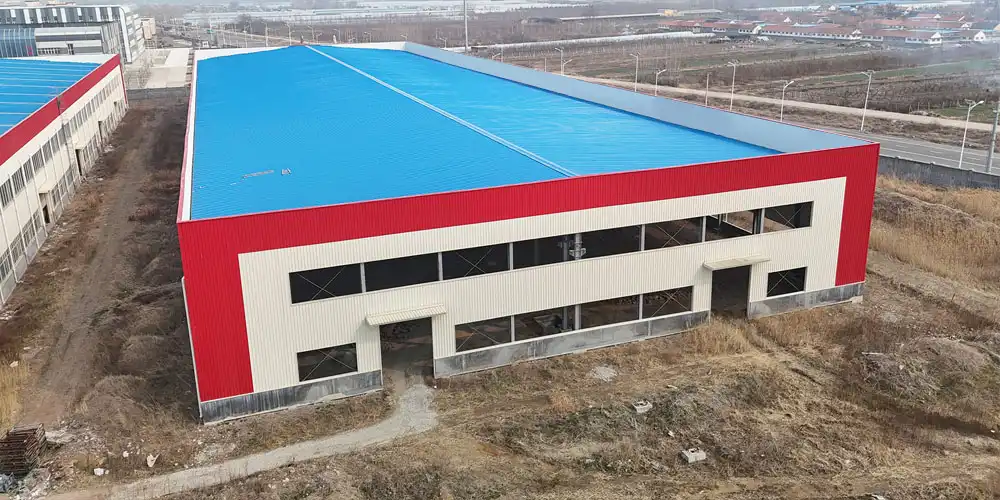
Traditional brick or cast-in-place concrete buildings are very different from modular steel sheds. The modular method uses premade parts, like H-beam main frames, steel C/Z purlins, and bracing systems, that are made off-site in controlled conditions and quickly put together on-site. Compared to traditional methods, this one cuts down on building times by 30 to 50 percent. This means that your business can start making money faster.
What Makes Modular Steel Systems Different
The main difference is in how these buildings are designed and put together. Traditional stores need a lot of on-site workers, plans that change based on the weather, and long periods of downtime. Modular prefabricated steel storage buildings come in carefully cut pieces that are ready to be put together using bolts. Each piece is made to exact specs in climate-controlled workshops. This makes sure that the sizes are correct and the quality is consistent, which can't be done in the field.
Operational Advantages for Loading and Inventory Management
Clear-span architecture gets rid of internal beams on lengths of 30 to 50 meters, making floor space that is free of obstacles and ideal for forklift routes and rack layouts. Compared to grid-based arrangements with regular column breaks, this design increases storage density by 15 to 20 percent. Wider spans also make it easier for goods to move smoothly during busy times, which makes loading docks less crowded and increases output. This freedom of space is especially helpful for distribution centers that do a lot of cross-docking because it allows for a quick switch between arriving distribution centers and outgoing packages.
Key Design and Safety Features of Modular Steel Warehouses
When investing in transportation infrastructure, safety and stability are the most important things to think about. Modular steel warehouses are built using engineering concepts that take into account both short-term operating needs and long-term performance in tough circumstances.
Structural Engineering and Material Specifications
Grades of high-tensile steel like Q355B or ASTM A572 Gr. 50 have a yield strength of more than 345 MPa, which makes the main frames strong enough to hold heavy roof loads. Some examples of these loads are HVAC systems, hanging elevators, and, more and more, solar photovoltaic panels on roofs that help lower energy costs. Cold-formed galvanized steel with a zinc covering layer of at least 275g/m² is used for secondary framing. This gives buildings that are used in humid or seaside areas the corrosion protection they need.
Energy Efficiency and Environmental Sustainability
You can change the thermal insulation values by choosing the panel. Polyurethane or polyisocyanurate sandwich panels have R-values that keep climate-controlled areas comfortable. This feature is very important for businesses that deal with temperature-sensitive goods or e-commerce delivery centers, where worker comfort affects how much work gets done. Energy-efficient design cuts down on running costs and supports business sustainability efforts that have a bigger impact on regulatory compliance and customer partnerships.
Comparing Steel Warehouses with Traditional and Alternative Structures
To pick the best structural system, you need to know how various materials and methods compare to certain operating needs.
Construction Timeline and Cost Analysis
Concrete buildings are strong, but they need a long time to cure and a lot of formwork to be done on-site. Usually, it takes 12 to 18 months from the start of construction to the end of a concrete building. This time frame is cut in half with modular steel buildings, which can be up and running in 6 to 9 months. This saved time directly leads to more money coming in and a faster return on investment. When comparing costs, steel systems come out on top when looking at the total cost of the job. The cost per ton of materials may look about the same for all choices, but steel's lighter weight means that a much smaller base is needed. 20–30% less money is spent on concrete and earthwork when footings are shallower, and pier designs are easier. Installation labor costs go down, too, because the distribution center's simpler building steps need smaller teams and take less time.
Modularity and Scalability Advantages
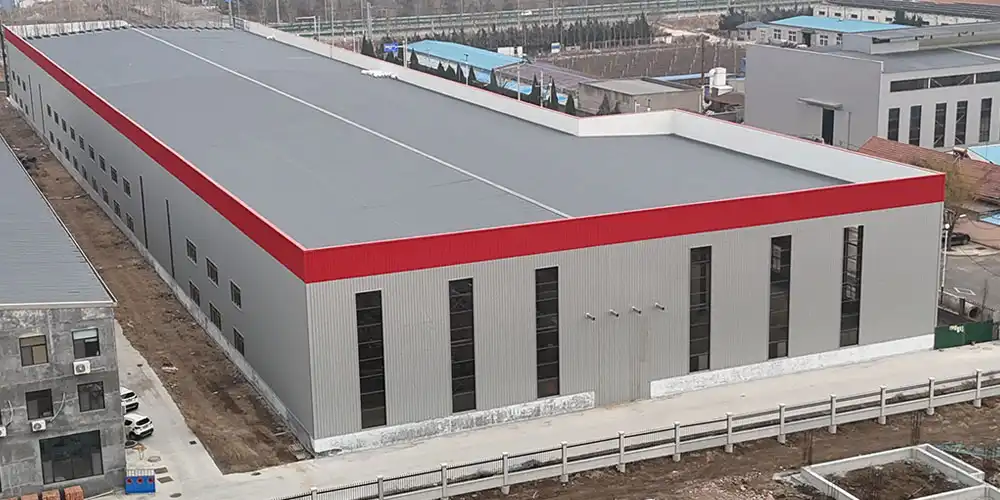
Steel's modular design makes it the best material for transport businesses that need to grow. To increase the capacity of concrete facilities, it is common to have to build completely new buildings with multiple systems. Steel sheds naturally grow by taking down the cladding on the end walls and adding new structural bays that fit in with the rest of the buildings. With this method, you don't have to spend money on things like loading docks, utilities, and site development that aren't needed.
Procurement and Investment Strategies for Modular Steel Warehouses
Strategic decisions about what to buy will determine whether your warehouse investment pays off or turns out to be a costly mistake.
Leasing Versus Purchasing Considerations
Leasing lets you keep your cash for other important business tasks and gives you options if your marketing network changes. Buying increases your wealth and saves you money in the long run, especially when the value of the land goes up. Your choice should be in line with financial estimates, growth plans, and long-term strategy plans that go 5 to 10 years into the future. Companies that are growing quickly tend to buy important infrastructure assets to protect them, while companies that are trying new markets may prefer to lease them.
Turnkey Solutions and Budget Forecasting
Many logistics operators prefer providers who offer full turnkey solutions that include engineering calculations, fabrication, transportation planning, and help with setting up the equipment. By creating a single point of responsibility, this integrated method makes project management easier. When making a budget, you need to include up-front building costs, installation costs, and ongoing upkeep needs. Cost-benefit analyses that are clear help procurement managers correctly predict spending and make sure that purchases are in line with the company's financial goals. Certifications like ISO9001, CE, and EN1091 show that a product is made well and follows the rules, which lowers the chance of buying it. Instead of forcing you into standard configurations that might not make the best use of your space, project-based fabrication plans let you make changes based on the conditions of the site and your working needs.
Case Studies and Future Outlook
Implementations in the real world show how modular E-commerce hub steel buildings change transportation in a wide range of fields and locations.
E-Commerce Fulfillment Center Transformation
An e-commerce distributor that serves the southeast of the United States was having a harder time meeting shipping deadlines and keeping enough product in its old warehouse. The business worked with a steel structure maker to use flexible prefabricated parts to build a 50,000-square-meter distribution center. The clear-span design made room for automatic systems that store and retrieve items, and the top picking levels tripled the amount of space that could be used for storage. The building was finished in seven months, which made it possible to run during the busiest times of the year, which would not have been possible with normal building schedules.
Cold Chain Distribution Hub Efficiency
A cold chain logistics service needed special equipment to handle medicines that need to be kept at a certain temperature and things that go bad quickly. The answer included 150 mm-thick polyurethane screens that kept temperatures between -25°C and +5°C and thermal break technology that stopped corrosion caused by condensation. Because the steel frame was flexible, complicated refrigeration systems and automatic handling equipment could be added. This cut the provider's energy use by 35% compared to their old facilities.
Innovations Shaping Future Warehousing
Digital integration and smart building management technologies are changing how warehouses work. Internet of Things sensors check the health of structures and find problems before they become expensive failures. Building Information Modeling makes it possible to plan and coordinate precisely during the design phase, which cuts down on change orders and delays in installation. New materials, like ultra-high-strength steels and composite panels, offer even longer spans and better insulation. Renewable energy systems and carbon-neutral building techniques are widely used because they are good for the environment. The circular economy is based on the idea that things should be reused and recycled, and modular building produces less trash than traditional ways. These benefits for the environment help shipping companies meet government rules and corporate responsibility promises that have a bigger impact on customer relationships, E-commerce hub, and brand image.
Conclusion
Modular steel buildings are a strategic tool for transportation companies that are trying to grow and stay competitive. Rapid deployment, an expandable design, and low cost all work together to meet basic operating needs while keeping financial freedom. Structural benefits like clear-span design, strong safety features, and flexible setups make environments that make managing inventory and distributing goods more efficient. The best ways to get the most out of your money are to use procurement strategies that focus on quality assurance, turnkey relationships, and clear planning. As environmental standards rise and supply lines become more complicated, modular steel solutions provide the flexible base for your business's infrastructure that it needs to grow.
FAQ
1. Can modular steel warehouses support cold storage applications effectively?
Of course. Temperature control is very accurate from -25°C to +5°C thanks to thermal break technology and high-density polyurethane walls that are 100 mm to 200 mm thick. The steel frame is given a special treatment that stops the corrosion that happens because of condensation, which is common in cold places. This makes sure that the structure lasts for a long time, even in difficult circumstances.
2. What lifespan should we expect from these structures?
The solid steel frame can last more than 50 years with regular upkeep like yearly checks, cleaning of the gutters, and touch-ups to the paint. Cladding systems usually last between 20 and 30 years before they need to be fixed, but this can change depending on the location and the panels that are used.
3. How easily can we expand the warehouse after initial construction?
One big benefit of flexible systems is that they can be expanded. End-wall frames are not just post-and-beam structures; they are load-bearing structures that can be expanded. By taking off the covering and adding new bays, linear growth can be done without affecting current operations or needing extra investments in infrastructure.
Partner with DFX for Your Next Logistics Park Steel Warehouse Project
Infrastructure for your transport business should be able to grow with your goals, not get in the way of them. DFX has been making modular steel storage buildings for distribution centers and storage hubs around the world for more than 12 years. Our 40,000-square-meter factory has more than 200 skilled workers who make precision-engineered H-beam frames, steel C/Z purlins, and full building systems that are certified by ISO9001 and CE. We offer complete turnkey solutions that include engineering calculations, fabrication, transportation planning, and advice on how to set up the structure. Get in touch with our team at jason@bigdirector.com to talk about how DFX, as your trusted Logistics Park Steel Warehouse maker, can help you with your growth goals. Come with me as I lay the groundwork for your logistics success.
References
1. Modern Steel Construction Magazine, "Design Considerations for Pre-Engineered Metal Buildings in Logistics Applications," 2022 Annual Industry Report.
2. Journal of Constructional Steel Research, "Comparative Life Cycle Assessment of Steel versus Concrete Warehouse Structures," Volume 187, 2021.
3. American Institute of Steel Construction, "Steel Design Guide Series: Low-Rise Building Systems," Third Edition, 2020.
4. International Journal of Logistics Management, "Impact of Warehouse Infrastructure on Supply Chain Performance Metrics," Volume 33, Issue 2, 2022.
5. National Fire Protection Association, "Fire Protection Guidelines for Steel-Framed Warehouse Facilities," NFPA Standards Handbook, 2023 Edition.
6. Green Building Council Research, "Sustainability Benefits of Modular Construction in Commercial Logistics Facilities," Environmental Impact Study, 2021.
Learn about our latest products and discounts through SMS or email