- English
- French
- German
- Portuguese
- Spanish
- Russian
- Japanese
- Korean
- Arabic
- Greek
- German
- Turkish
- Italian
- Danish
- Romanian
- Indonesian
- Czech
- Afrikaans
- Swedish
- Polish
- Basque
- Catalan
- Esperanto
- Hindi
- Lao
- Albanian
- Amharic
- Armenian
- Azerbaijani
- Belarusian
- Bengali
- Bosnian
- Bulgarian
- Cebuano
- Chichewa
- Corsican
- Croatian
- Dutch
- Estonian
- Filipino
- Finnish
- Frisian
- Galician
- Georgian
- Gujarati
- Haitian
- Hausa
- Hawaiian
- Hebrew
- Hmong
- Hungarian
- Icelandic
- Igbo
- Javanese
- Kannada
- Kazakh
- Khmer
- Kurdish
- Kyrgyz
- Latin
- Latvian
- Lithuanian
- Luxembou..
- Macedonian
- Malagasy
- Malay
- Malayalam
- Maltese
- Maori
- Marathi
- Mongolian
- Burmese
- Nepali
- Norwegian
- Pashto
- Persian
- Punjabi
- Serbian
- Sesotho
- Sinhala
- Slovak
- Slovenian
- Somali
- Samoan
- Scots Gaelic
- Shona
- Sindhi
- Sundanese
- Swahili
- Tajik
- Tamil
- Telugu
- Thai
- Ukrainian
- Urdu
- Uzbek
- Vietnamese
- Welsh
- Xhosa
- Yiddish
- Yoruba
- Zulu
Steel Poultry Houses: Sustainable Design for Chicken Farming
Today's chicken farming needs infrastructure that blends Steel Chicken Poultry Hangar environmental duty with practical efficiency. Steel Chicken Poultry Hangar buildings have become the best choice for businesses that want to save money, last a long time, and keep birds safe. The frames and roofs of these special farming buildings are made of hot-dip galvanized steel, and they were designed to withstand the harsh conditions found in chicken farms, layer houses, and breeding facilities. Unlike typical wooden or concrete buildings, steel chicken coops are better at resisting ammonia rusting and keeping the right temperature throughout the seasons.

Understanding Steel Poultry Hangars: Features and Advantages
Modern infrastructure for raising chickens has changed a lot in terms of design. Steel-framed buildings now make up most of industrial farming. These buildings are very different from the usual ways of building things, and they have many benefits that have a direct effect on how much money the farm makes.
Superior Durability in Harsh Environments
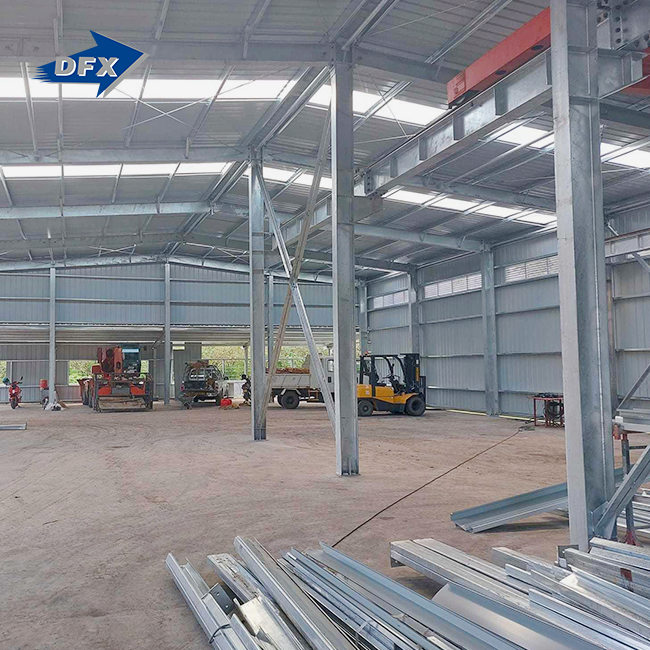
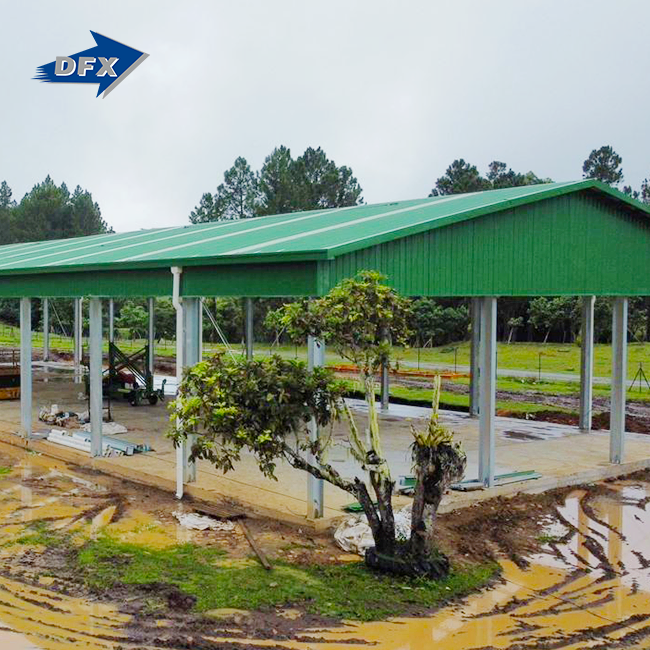
Poultry farms have to work in situations that are very difficult. When evaporative cooling systems raise the humidity and high amounts of ammonia from manure come together, they make a setting where normal building materials break down quickly. Steel buildings made with hot-dip galvanization are very resistant to rust because all of their parts usually have zinc coating masses that are higher than 275g/m². This secure layer makes the building last 30 to 50 years, which is a lot longer than wooden coops, which usually need major repairs every 10 to 15 years. Professional designs use a rigid portal frame system with columns and beams made of Q345B high-tensile steel. This lets the lengths be 12 to 20 meters without the need for internal support posts. This open plan lets automated feeding lines, multi-tier cage systems, and tools for cleaning up manure fit without any structural problems getting in the way of the work being done. We've done projects all over the United States that show how useful this design flexibility is for farms that need to change how they produce food or get better tools without having to rebuild the whole structure.
Sustainable Materials and Energy Performance
Environmental concerns are becoming more and more important in purchasing choices, and steel has strong environmental qualifications. When the material's time is up, it can be recycled completely, unlike composite materials or treated lumber, such as chicken farm buildings, which are hard to get rid of. Facilities like ours follow ISO9001 standards for manufacturing, which makes sure that quality control systems keep trash to a minimum while things are being made. Steel buildings that are properly protected use less energy because they keep heat in or out better. With carefully placed airflow and sandwich panel systems, heating and cooling loads are kept to a minimum all year long. When compared to poorly insulated conventional buildings, farms that use these designs usually have 20–30% lower energy costs. These savings add up over decades of operation to a large amount.
Designing and Building a Sustainable Steel Chicken Poultry Hangar
Building four walls and a roof is not enough to make chicken houses work. During the planning phase, the working factors that will determine how well the farm works for generations to come are set.
Strategic Planning for Scalable Production
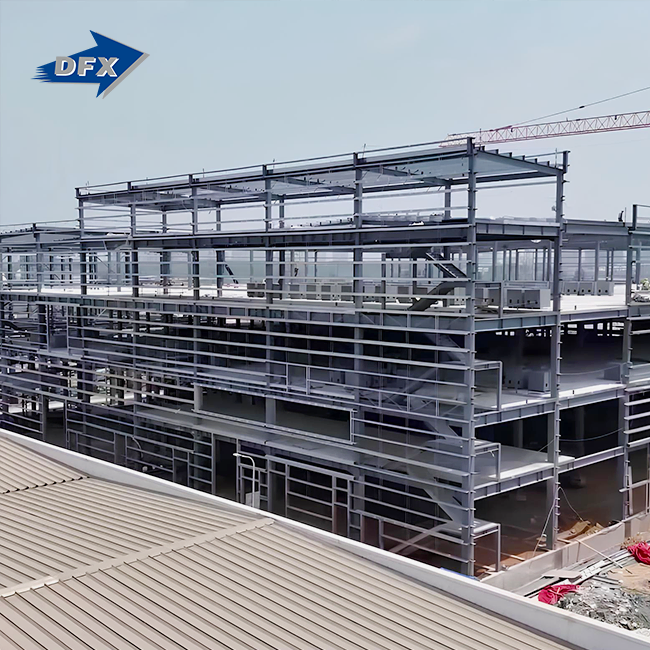
Different chicken businesses have very different production needs. Small broiler farms that process 10,000 birds per cycle need very different infrastructure than large combined operations that manage 500,000 layers of birds in multi-tier cage systems. From our experience planning farm layouts, we know that projects that go well start with a full review of capacity and projections for growth. Modular steel buildings let development happen in stages that match the supply of cash with growth paths. A farm might build homes for 50,000 birds at first while also laying the groundwork for future growth to 150,000. Because the steel frame is light and can be put together with bolts, it is possible to add on without stopping what is already being done. This scalability is especially helpful for farms and companies working on building projects where deploying features in stages lowers the risk of losing money.
Maintenance Protocols for Extended Service Life
Steel poultry structures have a big practical benefit in that they don't need much ongoing upkeep. During routine checks, the main things that are checked are the integrity of the panel seals, any surface rust at the connection points, and making sure that the ventilation equipment stays set. Seasonal checkups before the hottest and coldest times of the year let you find problems before they happen. The galvanized steel frame doesn't need much care other than being washed every so often when the building is cleaned between groups. This is very different from wooden buildings, which need to be painted, strengthened, and have parts replaced on a regular basis to keep them from breaking down too soon.
Making Informed Procurement Decisions for Steel Poultry Hangars
When purchasing managers and project engineers look at investments in chicken infrastructure, they have to think about a lot of things besides just comparing prices at first. Lifecycle cost analysis shows how much different building, Chicken farm building methods for chicken farms are really worth.
Material Performance Comparisons
Different frame materials each have their own pros and cons. Even though aluminum doesn't rust, it's not as strong as steel, so it needs higher-grade materials that are much more expensive. Plastic composite materials don't rust at all, but they can't handle the heavy loads that come from multi-tier cage systems or equipment lines that are hung in the air. Steel is the best material for getting the best mix of power, longevity, and low cost. With high-tensile grades, structural parts can be made lighter, which means that foundations don't have to be as strong. However, safety limits for machine loads and environmental stresses must still be kept. Hot-dip galvanization protects against corrosion for a small extra cost. This eliminates the ongoing upkeep costs that cancel out the original savings of steel or wood framing that hasn't been treated. The comprehensive service scope available from integrated manufacturers adds considerable value. Providers who offer farm layout planning, structure design, fabrication, and installation help make it easier to complete projects and make sure that all building systems work together. This turnkey method works especially well for EPC contractors and building firms that are in charge of poultry projects that are part of bigger farm development plans.
Financial Considerations and Installation Services
Project budgets need to include costs other than the price of steel parts. Foundation work, site preparation, installing equipment, and wiring for electrical systems all add a lot to the total amount of money that needs to be spent. By organizing these parts, suppliers who offer complete solutions help streamline procurement, which often leads to better total value than piecemeal contracting. Installation services are especially helpful for businesses that don't have their own building experts. Agricultural business owners and farm managers who focus on raising animals like instructions that make sure buildings are put together correctly without taking away from their main tasks. Detailed erection plans, on-site expert support, and help with testing equipment all lower the chances of mistakes that will cost a lot of money during building. Project-based production models make sure that manufacturing plans match up with building schedules. This way, costs related to keeping inventory are avoided, and parts come when they're needed. This method works well for the way purchases are usually made in farm building, where things are bought project-by-project instead of in large quantities all the time.
Case Studies: Success Stories with Steel Poultry Hangars
Implementations in the real world show how well-designed steel buildings can solve real-world farming problems. These cases can help procurement workers who are looking at investments in infrastructure.
Climate Control Excellence in Broiler Production
During the summer, a medium-sized chicken farm in the southeastern United States had a lot of problems with heat stress. When temperatures went above 95°F, the death rate went up. The farm got rid of old wooden coops and replaced them with steel-framed buildings that had tunnel ventilation and cooling systems that used evaporation. The sealed design allowed negative pressure airflow, which kept the temperature inside 15 to 20 degrees cooler than the outside air during the hottest parts of the day. The number of birds that died dropped by 40%, and feed conversion ratios went up a lot because the birds had to use less energy to deal with heat stress. Because of lower costs and faster growth, the investment paid for itself in three Climate control production cycles.
Structural Longevity Under Harsh Conditions
A layer business in the upper Midwest had a hard time with building upkeep costs because snow and freeze-thaw cycles quickly broke down wooden structures. These problems went away when the building was changed to steel framing with the right snow load capacity. Heavy snow fell on the rigid portal frames, but they didn't damage the structure. The zinc surfaces also didn't rust from the water that had gotten into the wooden parts and rotted them. The yearly cost of maintenance went down by 70%, and the buildings didn't need any major fixes for the first 10 years. This was in contrast to older wooden buildings that needed to be completely rebuilt every 7–8 years.
Conclusion
Steel chicken coops have real benefits for modern farming operations in terms of efficiency, cost, and environmental friendliness. Biosecurity performance, long-lasting structures, and energy savings all work together to make strong value propositions for farms, contractors, and agriculture businesses looking to invest in infrastructure. The corrosive climate in chicken production can't hurt hot-dip galvanized framing, and it can also hold the heavy loads of tools needed for automated processes. When something is professionally designed and installed, it's set up to last for decades and not need much upkeep. All of these things make steel buildings the best choice for long-lasting chicken farming infrastructure that protects investments and keeps production goals going even when market conditions change.
FAQ
1. What building dimensions work for different flock sizes?
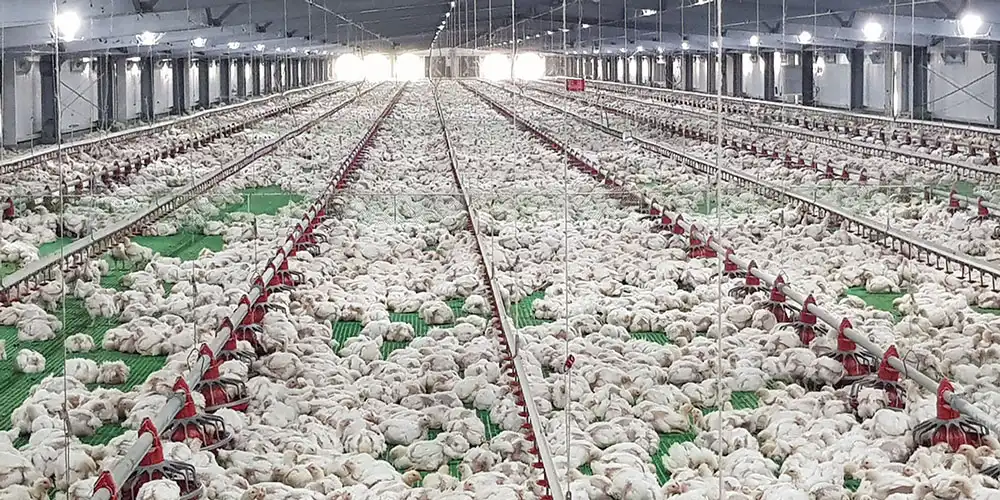
The size of a chicken coop depends on how many birds are to be kept inside and how the chickens are raised. Broiler farms usually give each bird 0.7 to 1 square foot, so a house for 40,000 birds needs about 35,000 to 40,000 square feet of floor space. Layer sites that use cage systems need less floor space but taller buildings so they can fit more equipment on more levels. For smaller businesses, standard plans are 40 feet wide and 400 feet long. For big commercial farms, they are 60 feet wide and 600 feet long. Custom sizing works with the limitations of the spot and the needs of the tools being used. Our design team can help you plan a layout that makes the best use of the space you have and your output goals.
2. How do ventilation systems maintain flock health?
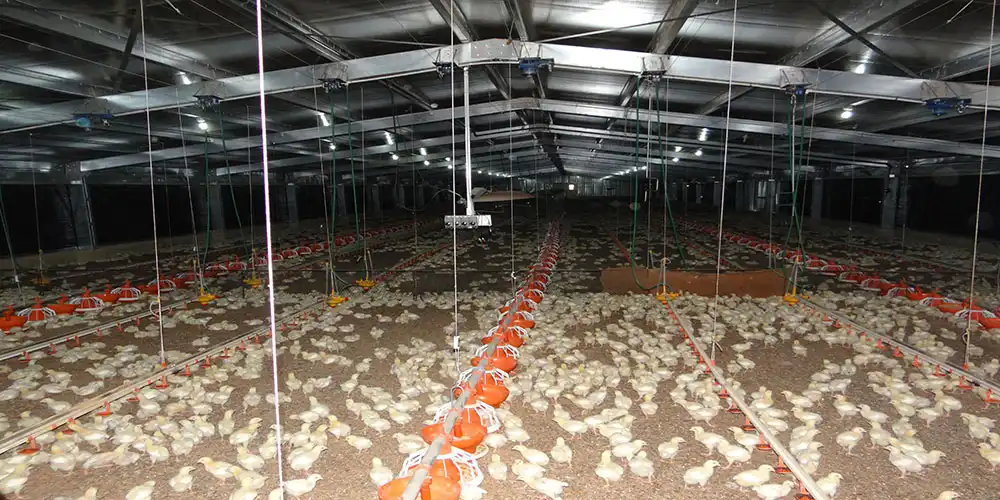
Tunnel ventilation sends controlled air from one end of the building to the other. Large exhaust fans are at one end, and liquid cooling pads are at the other. This system gets rid of heat, wetness, and airborne pollutants while keeping the structure's oxygen levels and temperature stable. When it's cold outside, circulation fans move warm air around without exchanging too much air, which wastes fuel. When systems are set up correctly, temperature changes along the length of the building stay below 3–4 degrees. This keeps the growing conditions stable, which improves feed conversion and lowers the risk of stress-related health problems.
3. What warranty terms should buyers expect?
Manufacturers with a good reputation will cover the galvanized steel frame with a structural warranty for 10 to 15 years against flaws in the manufacturing process and rust failure from normal farming use. Most sandwich panel systems come with guarantees that cover delamination, loss of thermal performance, and the stability of the weather seal for 5 to 10 years. The warranty should make it clear that the performance meets design standards for wind and snow loads. Thoroughly read the guarantee paperwork to fully understand the upkeep needs, as buildings that aren't taken care of may not be covered. When our steel structures are made according to ISO9001 standards, they come with a full guarantee and CE approval that shows they meet international building standards.
Partner with DFX for Your Steel Chicken Poultry Hangar Needs
Agricultural businesses need infrastructure partners who know both what engineers need and how farming really works. With more than 12 years of experience, DFX has been making steel buildings for tough farming uses around the world. Our 40,000-square-meter production center has more than 200 trained workers who use high-tech fabrication tools to make sure that the quality of every part of the project is the same. From planning the initial layout of the farm to designing the structures, making them, and helping you place them, we offer combined solutions that make the process of completing your project easier. Our team has the skills you need for a successful project, whether you're a building contractor in charge of an agricultural development, a farm owner who wants to increase production, or an agricultural project manager who is looking at providers. Contact jason@bigdirector.com to talk to one of our technical experts about your particular needs and find out why more and more poultry farms choose DFX as their chosen Steel Chicken Poultry Hangar supplier.
References
1. Aviagen. Environmental Management in the Broiler House, 2018. Technical publication addressing ventilation design and climate control for commercial broiler production.
2. Donald, J. Comparative Durability of Agricultural Building Materials in Poultry Environments. Journal of Agricultural Engineering Research, 2019, pp. 342-358.
3. Midwest Plan Service. Structures and Environment Handbook, 15th edition. Iowa State University, 2020. Comprehensive reference for agricultural building design including poultry housing specifications.
4. National Chicken Council. Animal Welfare Guidelines and Audit Checklist, 2022. Industry standards addressing housing design, ventilation requirements, and biosecurity protocols.
5. Purswell, J.L., and Dozier, W.A. Broiler House Ventilation Management, Alabama Cooperative Extension System publication ANR-1353, 2017.
6. Reed Construction Data. Life Cycle Cost Analysis of Agricultural Building Systems, 2021. Economic analysis comparing long-term performance and maintenance costs across construction materials and methods.
Learn about our latest products and discounts through SMS or email