- English
- French
- German
- Portuguese
- Spanish
- Russian
- Japanese
- Korean
- Arabic
- Greek
- German
- Turkish
- Italian
- Danish
- Romanian
- Indonesian
- Czech
- Afrikaans
- Swedish
- Polish
- Basque
- Catalan
- Esperanto
- Hindi
- Lao
- Albanian
- Amharic
- Armenian
- Azerbaijani
- Belarusian
- Bengali
- Bosnian
- Bulgarian
- Cebuano
- Chichewa
- Corsican
- Croatian
- Dutch
- Estonian
- Filipino
- Finnish
- Frisian
- Galician
- Georgian
- Gujarati
- Haitian
- Hausa
- Hawaiian
- Hebrew
- Hmong
- Hungarian
- Icelandic
- Igbo
- Javanese
- Kannada
- Kazakh
- Khmer
- Kurdish
- Kyrgyz
- Latin
- Latvian
- Lithuanian
- Luxembou..
- Macedonian
- Malagasy
- Malay
- Malayalam
- Maltese
- Maori
- Marathi
- Mongolian
- Burmese
- Nepali
- Norwegian
- Pashto
- Persian
- Punjabi
- Serbian
- Sesotho
- Sinhala
- Slovak
- Slovenian
- Somali
- Samoan
- Scots Gaelic
- Shona
- Sindhi
- Sundanese
- Swahili
- Tajik
- Tamil
- Telugu
- Thai
- Ukrainian
- Urdu
- Uzbek
- Vietnamese
- Welsh
- Xhosa
- Yiddish
- Yoruba
- Zulu
Steel Building Interior Finishing Guide: Walls, Ceilings, and Floors
Knowing the many interior finishing options for a Steel Structure Office Building will help you maximize its functionality and appearance when designing a business project. Steel industrial buildings must be finished to ensure safety, durability, and cost-effectiveness, unlike concrete structures. This handbook offers proven wall, ceiling, and floor options. These can enable US project managers, procurement experts, and facility engineers to choose wisely for industrial plants, corporate offices, and business centers.

Walls: Design Ideas, Materials, and Installation Best Practices
Steel-framed commercial buildings feature functional wall systems. They block fire, reduce noise, retain heat, and support the building with the steel frame. Project teams must balance these demands with their time and budget.
Popular Wall System Options
Plasterboard is still the cheapest technique to partition workplaces. Standard 5/8-inch Type X gypsum board fulfils most building code requirements for non-load-bearing walls and is fire-resistant for one hour when properly installed. Plasterboard systems reduce steel floor dead load due to their lightness. This maintains real loads like people and equipment.
Metal panel systems endure longer in busy production workshops and logistical warehouses. Over the years, corrugated steel sheets with protective layers have not been harmed by impacts and need little maintenance. Due to secret fastening methods that adjust for temperature, these panels fit steel beams precisely. More colour options enable architects to express themselves without sacrificing industrial utility.
Insulated composite panels feature structural facings and rigid foam bases. Their thermal performance is great in climate-controlled environments. Depending on the core material, these panels have R-values of 20–40 and widths of 50mm–150mm. The tongue-and-groove sides stay together to prevent heat loss. These panels install 300–400% faster than traditional wall-building techniques. This makes them ideal for urgent jobs.
Installation Quality Control Measures
Before joining the finish materials, inspect the steel frame for straightness and levelness. Smooth surfaces will show deviations of more than 10 mm over 3 meters, making them uneven. We verify column line levels with lasers and shimming or modifying connection plates as needed. Preparation prevents costly last inspections.
Fasteners affect long-term wall system performance. Self-drilling screws for steel-to-steel connections must penetrate structural sections at least three thread diameters deep to achieve pull-out strength. The space between wall panels and plasterboard over steel studs should be 200–300 mm and 400 mm, respectively. Overtightening crushes panel cores and reduces binding force. Wind may produce vibrations that loosen links when undertightened.
Fire-rated items must be assembled as tested. Using other materials, modifying fastener designs, or not providing firestopping may invalidate the rating. Building inspections by third parties prove insurance and local government clearance.
Budget Considerations for Wall Finishing
Wall finishing contributes to 12–18% of the Steel Structure Office Building interior fitting costs. Material selection affects cost the most. Basic plasterboard systems cost $8–12 per square foot to install and include framing, board, tape and finish coatings. Premium metal walls cost $18–$28 per square foot, but don't need painting and require less maintenance over time.
Work productivity and cost depend on design complexity. Standard ceiling heights and straight walls improve efficiency. Work hours add up across a broad floor area with every curve, hole, or height change. Standardizing partition designs reduces costs without losing functionality. During planning, procurement teams should engage with finishing contractors to develop features that decrease installation time and fulfil performance criteria.
Ceilings: Optimal Solutions for Functionality and Aesthetics
Commercial multi-story steel frame structures require noise-reducing, attractive ceiling systems that incorporate mechanical, electrical, and water services. The exposed steel framework allows builders to design differently from typical buildings. The structure might be seen or hidden by completed ceilings.
Ceiling System Types for Steel Buildings
Offices that often use services above the ceiling should choose suspended grid ceilings. Within the grid pattern, 600mm x 600mm or 600mm x 1200mm lay-in tiles may house light sources, air diffusers, and sprinkler heads. Acoustic tiles with NRC values between 0.55 and 0.90 reduce echoes in open-plan environments, improving speech comprehension and reducing fatigue. The grid is suspended from the steel frame by adjustable wires. This simplifies levelling large floor plates.
Exposed steel ceilings provide industrial elegance and save money on materials and installation. The skeleton steel and roof deck may be painted to unify the structure and indicate its construction. Due to financial constraints, this approach works effectively in factories and warehouse changes where functionality is more vital than conventional finishes. Spray-on fireproofing matches painted steel pieces in colour and texture. This maintains the fire rating without altering the steel's appearance.
Metal plank ceilings are durable and simple to clean in food processing and medicine companies. The flat metal surface resists water and may be repeatedly cleaned with industrial cleaners. Hidden support systems smooth ceiling planes, eliminating dust-collecting gaps and fractures.
Energy Efficiency and Insulation Integration
Steel Structure Office Building ceiling insulation has two major methods. When the roof deck lacks insulation, batt insulation on suspended ceilings is an inexpensive solution to retain heat. Standard fibreglass batts achieve R-19 to R-30, preventing heat from travelling from heated office spaces to unheated roof cavities, depending on thickness.
Installing reflective insulation below the roof deck reduces solar heat gain in warm climates. Multi-layer assemblies reflect 97% of infrared light. Insulation keeps the roof deck 20–30 degrees cooler than uninsulated structures. This requires less cooling, which reduces HVAC equipment capacity and energy usage.
Modern building management systems use ceiling sensors to control temperature and lighting depending on occupancy. Sun-harvesting LED lights adjust their output depending on natural light. Compared to earlier fluorescent systems, this uses 40–60% less power. HVAC diffusers with adjustable air volume maintain a suitable temperature while conserving fan energy. These technologies are straightforward to implement in ceiling systems with proper plenum capacity and planning.
Floors: Durable and Efficient Flooring Options for Steel Office Buildings
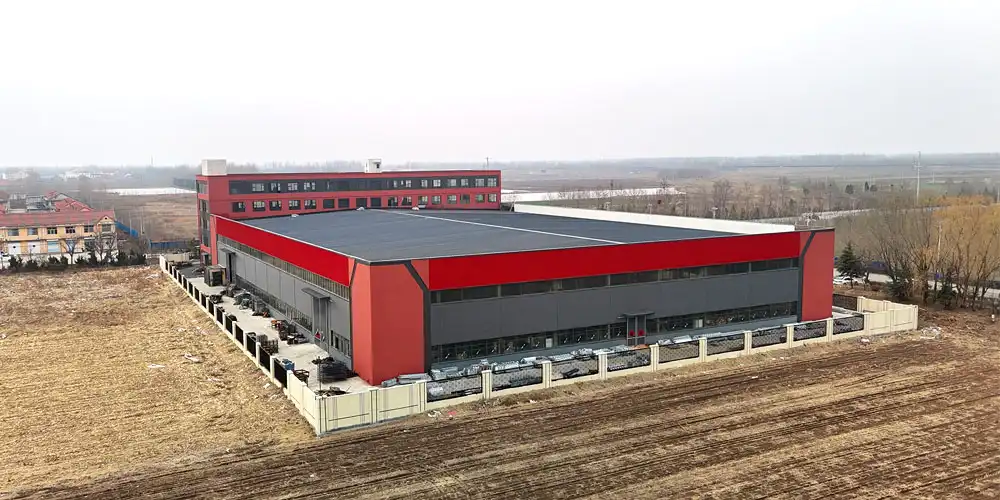
Steel-framed building flooring must be pleasant, durable, and simple to maintain while spreading loads securely. Composite floors, generally metal decks with concrete tops, provide the foundation for finish flooring. Choosing a Steel Structure Office Building material depends on its load-bearing and deflection properties.
Flooring Material Options and Performance
Most contemporary office buildings have high entrance floors, requiring fluid power, data, and HVAC distribution underneath. Adjustable pedestals hold 600 mm × 600 mm modular panels. These separate the structural floor and finish. This configuration simplifies cable routing and office layout changes. Panel load ratings of 1,000 to 2,000 pounds per square foot may hold office furniture and many files.
Epoxy floor coatings provide smooth, chemical-resistant floors for manufacturers and warehouses. Two-component epoxy systems chemically and mechanically bond to the concrete foundation. This creates durable surfaces for chemical spills and trucks. Colour-coding helps drivers notice road lanes, work zones, and storage areas, making them safer. Slip-resistant concrete additives make flooring stable when wet.
Luxury vinyl tile and plank flooring lasts longer and looks better, making it popular in companies. Moving loads don't scratch or damage commercial-grade materials with 20-mil wear layers. Footfall noise is blocked by the sturdy backing's sound-dampening properties. To avoid adhesive failure during installation on concrete, substrates must be adequately prepared and moisture tested.
Installation Coordination with Building Systems
Electrical, plumbing, and industrial professionals must collaborate to complete a floor. In composite floor systems, power and data underfloor pipes must be installed and sealed before pouring concrete. Coordinating photos of all added objects prevents clashes and allows for future adjustments.
Long-term flooring success depends on surface preparation. Concrete surfaces must be clean, dry, and level within the flooring manufacturer's specifications. Grinding or shot blasting removes laitance and opens concrete pores for the adhesive to attach. Tests using calcium chloride or relative humidity sensors reveal slabs that require further drying time or moisture control devices before the flooring is put.
Finish flooring must match the main floor deck expansion joints. Without proper details, tile and other stiff materials may shatter when utilized to bridge structural connections. Transition strips and control joint plates provide mobility without sacrificing style. Planning these items during planning prevents field improvisation, which hinders performance in a Modern steel design office building.
Procuring Interior Finishing Materials and Services: A Buyer's Guide
To obtain items and services for completing the interior of a Steel Structure Office Building, thoroughly examine possible providers and make sure they understand your needs. Its importance for materials, installation, and construction success cannot be overstated.
Selecting Qualified Suppliers and Contractors
Supplier selection begins with certifications and quality control. ISO 9001 certification indicates your commitment to consistent production and continuous development. Product-specific certifications like UL listings for fire-rated assemblies or GREENGUARD accreditation for low-emitting materials verify performance promises. We value suppliers that use third-party validations above our own testing.
Project examples and industry reputation demonstrate a provider's reliability. Past customers' experiences with on-time delivery, technical support, and insurance claims provide information not seen in marketing brochures. The ideal projects to compare are similar in size and complexity. One supplier may be able to provide 50,000-square-foot office buildings, but not 200,000-square-foot industrial facilities.
A "turnkey" service that plans, supplies, and installs speeds up the project and clarifies responsibility. When several firms supply goods and building services, collaboration might be difficult. Single-source suppliers solve this. Unified obligation prevents material and installation manufacturers from blaming each other for faults.
Obtaining and Negotiating Custom Quotes
Complete project paperwork is an important part of effective quote requests. Accurate number takeoffs are made possible by architectural models that show the layout of walls, ceilings, and completion dates. Value engineering surprises that hurt usefulness can be avoided by including performance specs that list fire ratings, sound requirements, and longevity standards. Suppliers can figure out their availability and agree to schedules when project timelines and delivery goals are made clear.
When you get more than one quote, you can really compare prices, but the lowest price isn't always the best deal. To normalize the scope of quotes, you have to check the things that are included, the materials that are mentioned, and who is responsible for installation. A price that seems too high might include engineering services, shop drawings, and insurance coverage that other quotes didn't. True value offers can be found by making comparison matrices that break down unit prices and include services.
Instead of focusing on single price cuts, negotiations should be about the total value of the project. Preferential pricing may be appropriate when there are volume agreements across multiple buildings or stages. Longer payment terms that work with the project's cash flow make it more financially viable without cutting into suppliers' profit margins. Getting involved early on in the planning process allows for value engineering, which lowers costs while keeping performance high, so everyone wins.
Installation Services and After-Sales Support
Good installation services start with skilled workers and experienced supervisors. The qualifications of a contractor should include proof that they have been trained on certain methods and have completed similar tasks successfully in the past. Safety plans that are tailored to each job site and cover things like preventing falls, moving materials safely, and working together with other trades show skill and lower the risk of accidents.
Problems are caught early on before they become widespread by holding regular site meetings and quality checks to track progress. Before the full-scale deployment, mock-up installations of complex assemblies are used to make sure that the design purpose and installation processes are correct. Examples of these include changes from a curtain wall to an internal divider or fire-rated shaft wall construction. Using photographs to document things makes standard records that can be used for warranty claims and future maintenance.

Conclusion
Steel Structure Office Building industrial buildings can be turned into useful, aesthetically pleasing places that can support a wide range of business activities by finishing the inside. Because steel is so flexible, it can be used to finish the inside of buildings in ways that would be hard or impossible to do with standard buildings. Strategically choosing the right materials matches up-front costs with long-term performance, providing value that lasts for decades after the building is first occupied. Coordinated buying that involves qualified suppliers and workers early on in the project creation process cuts down on risk and speeds up schedules. No matter if your project is for a factory, an office building, or a farm building, the finishing principles described here will help you get good results that please everyone involved and the end users.
Frequently Asked Questions
1. How does fire protection work in steel building interiors?
Steel loses its structural strength above 600 degrees Celsius, which is why buildings that are filled need fire protection. When heated, intumescent coatings put on structural members expand, insulating the steel and keeping its load-bearing ability for two to four hours, based on the thickness of the coating. Instead, the minimum fire ratings can be met with gypsum board encasement or spray-applied fireproofing. Type X drywall and other interior finish materials help keep your home safer from fire by stopping the spread of fire from one room to another. Fire-rated assemblies stay together throughout the building as long as they have the right details at penetrations and joins.
2. What acoustic treatments work best in steel-framed offices?
It's important to plan for acoustics when building with steel because it easily transmits sound. High-NRC acoustic tiles suspended from the roof soak up sound energy, shortening the time it takes for sounds to bounce back. Insulation inside wall gaps stops sound from travelling from one room to another. Resilient channel frame systems separate the drywall from the steel walls, which stops the vibration paths. The weight of the concrete slabs on composite floor systems reduces the noise made by people walking on them. Sound filtering systems add background noise that makes it easier to talk privately in open-plan spaces in a Steel Structure Office Building.
3. Can interior layouts be modified after initial construction?
It is easier to make changes to a steel frame than to a load-bearing concrete or masonry building. Non-load-bearing walls can be attached to the floor and roof without weakening the structure. This makes it possible to move and remove the walls as needed. Raised entry floors make it easier to change how power and data are set up without having to drill holes or chase cables. Steel buildings often have column-free spans that are 24 to 40 feet long. This gives the plan more freedom than in buildings with structural supports that are close together. An engineering review makes sure that changes don't put too much stress on current structural parts or put fire-rated systems at risk.
Partner with DFX for Your Steel Building Interior Finishing Needs
The Qingdao Director Steel Structure Co., Ltd. has been making and putting up steel structures for business buildings, airplane hangars, and industrial sites for more than 12 years. Our all-in-one method includes designing the architectural plan, calculating the structure, making the building, and giving installation instructions. This makes sure that the steel framework and internal finishing systems work together perfectly. Our Steel Structure Office Building options meet international standards and local building rules across the United States. They are certified by ISO 9001 and CE. Our 40,000-square-meter production center and more than 200 trained workers can make any project-based fabrication you need, whether it's a multi-story company headquarters or a single-story manufacturing plant. Connect with our team at jason@bigdirector.com to talk about how DFX can help your next project as a reliable supplier that offers full services from planning to installation.
References
1. American Institute of Steel Construction. (2022). Steel Construction Manual, 15th Edition. Chicago: AISC.
2. Lawson, R.M., & Ogden, R.G. (2020). Sustainable Steel Construction: Design and Practice. London: The Steel Construction Institute.
3. Newman, Alexander. (2019). Structural Steel Design and Construction: A Guide for Architects and Engineers. New York: McGraw-Hill Professional.
4. Trebilcock, Paul, & Lawson, Bill. (2021). Fire Safety in Steel-Framed Commercial Buildings: Material Selection and Installation Guidelines. Boston: Architectural Press.
5. Wang, L.M., & Ryherd, E.E. (2018). Acoustic Design Considerations for Steel-Framed Office Buildings. Journal of Building Acoustics, 25(3), 187-204.
6. Yeomans, David. (2020). The Pre-Fabrication of Steel Buildings: History, Technology, and Modern Applications. Cambridge: Cambridge University Press.
Learn about our latest products and discounts through SMS or email