- English
- French
- German
- Portuguese
- Spanish
- Russian
- Japanese
- Korean
- Arabic
- Greek
- German
- Turkish
- Italian
- Danish
- Romanian
- Indonesian
- Czech
- Afrikaans
- Swedish
- Polish
- Basque
- Catalan
- Esperanto
- Hindi
- Lao
- Albanian
- Amharic
- Armenian
- Azerbaijani
- Belarusian
- Bengali
- Bosnian
- Bulgarian
- Cebuano
- Chichewa
- Corsican
- Croatian
- Dutch
- Estonian
- Filipino
- Finnish
- Frisian
- Galician
- Georgian
- Gujarati
- Haitian
- Hausa
- Hawaiian
- Hebrew
- Hmong
- Hungarian
- Icelandic
- Igbo
- Javanese
- Kannada
- Kazakh
- Khmer
- Kurdish
- Kyrgyz
- Latin
- Latvian
- Lithuanian
- Luxembou..
- Macedonian
- Malagasy
- Malay
- Malayalam
- Maltese
- Maori
- Marathi
- Mongolian
- Burmese
- Nepali
- Norwegian
- Pashto
- Persian
- Punjabi
- Serbian
- Sesotho
- Sinhala
- Slovak
- Slovenian
- Somali
- Samoan
- Scots Gaelic
- Shona
- Sindhi
- Sundanese
- Swahili
- Tajik
- Tamil
- Telugu
- Thai
- Ukrainian
- Urdu
- Uzbek
- Vietnamese
- Welsh
- Xhosa
- Yiddish
- Yoruba
- Zulu
Paint Hangar Ventilation: What Standards Should You Follow?
Which standards should you follow for paint hangar ventilation? Start with NFPA 33 for spray application and NFPA 409 for aircraft hangars. Add OSHA rules for worker exposure, EPA rules for emissions, and the National Electrical Code for classified equipment. Then confirm everything with your local Authority Having Jurisdiction (AHJ). No single code covers every project, because aircraft size, coating chemistry, climate, and local law all change the design. In this guide, I explain how each standard fits into a paint hangar project and what buyers should ask before ordering a steel building.

How Aircraft Paint Hangar Ventilation Works
Supply, Exhaust, and Airflow Patterns
A ventilation system brings healthy air into the plane and moves it around the cabin. After going through filters, plenums, pipes, and discharge stacks, the dirty air is pushed out. Designers can choose from cross-flow, side-draft, downdraft, and semi-downdraft plans. It cleans up the job more often, but only on floors with holes or gratings. Downdraft sends more spray toward the floor. If you want to save money, you can use cross-flow on a slab that is already there. But be very careful that the overspray doesn't move along the body. There are no dead zones, turbulence, or uneven coating when the air coming in and going out is equal. Which design is best will depend on how you paint, the size of the plane, and how fast you work.
Protecting Workers From Vapors and Particles
There should be enough airflow around artists so that VOCs, chemical fumes, isocyanates, and dangerous overspray don't build up. Businesses in the United States need to follow the spray finishing rule (29 CFR 1910.107) and the air rule (29 CFR 1910.94). But wind doesn't take the place of safety. Painters still need to get training, respirators, and safety gear through OSHA's programs for telling workers about dangers and keeping their lungs safe. Fans should be thought of as an extra safety measure when buying. There are groups for electrical equipment, emergency stops, and cleanup on the other layers.
Why Airflow Affects Finish Quality
Airflow also shapes the coating. Because steady, even air moves overspray away from the surface, particles don't stick to wet paint. Storms can leave behind orange peel, dust, and extra work. It is also important to know the temperature and humidity. Technical data sheets for coatings list limits set by the companies that make them. To help you set the right temperature for your home, these sheets are more useful than general comfort rules. The cold skin of an airplane can stay dry by keeping an eye on the dew point and the surface temperature. With variable-frequency drives, you can use less energy as long as they don't make it harder to keep the area safe from fire or get rid of contaminants.
Standards That Govern a Paint Hangar Project
NFPA 33 and NFPA 409
This rule (NFPA 33) tells people how to spray things that are flammable or can catch fire. It needs airflow that keeps the vapor level below 25% of the lower flammable limit. The ventilation and spray equipment also need to be able to talk to each other. A guide called NFPA 409 tells people how to keep airplane hangars safe from fire. Most paint hangars use both, so I think the design team should make sure they know which standard to use where. Article 516 of the NFPA 70 National Electrical Code talks about spray areas. It tells us how to wire and set up tools in dangerous places.
OSHA and EPA Requirements
OSHA talks about airflow, telling people about dangers, worker exposure, and protecting your lungs. There are rules about pollution from the EPA. The aerospace NESHAP, 40 CFR Part 63 Subpart GG, makes sure that sites that make or fix aircraft parts don't release harmful air pollutants. This rule might cover painting and fixing up planes. Air agencies in your city or state can add rules to permits about VOC emissions and exhaust stacks. How it is used depends on how much coating is there, what materials are used, and where it is. Before they start planning, I tell owners to get a written report from an environmental expert.
International Codes and the AHJ
Some projects outside of the US might need to follow ATEX, IECEx, EN, or CE rules. The AHJ is in charge everywhere, even in the US. There may be reviewers from the environmental agency, the building department, the fire marshal, and other groups. A lot of the time, insurers add their own rules too. I think there should be a written compliance grid that lists each requirement, who is in charge of it, and proof that it was met. Right away, tell all of your providers about it. If a code review refuses equipment after it's been shipped, a grid will keep you from being caught off guard and having to pay a lot of money.
Core Design Requirements for Ventilation and Safety
Airflow, Make-Up Air, and Pressure Control
Some of the most important things that must be present are a clear direction for airflow, enough supply and exit capacity, even spread, and reliable make-up air. What this means is the shape of the plane, the type of coating, the amount of work that needs to be done, and any lifts or scaffolding that are nearby. There is no single number that describes the flow of air. If you need help with the design, the ACGIH guidebook "Industrial Ventilation" can help. But the numbers you use must be right for your process and the rules in your area. It is also important to keep the pressure in check. As long as the hangar's big doors are open, the vapors shouldn't be able to get into more nearby areas.
Temperature and Humidity Control
Humidity and temperature can change how glossy, flash-off, hard, and thick a coating is. To find out what the range is, look at the coating manufacturer's PDF file. Electric heat, heat pumps, cold water cooling, dehumidification, gas-fired make-up air units, or heat recovery may be used by devices depending on the weather. The building envelope also changes the loads for heating and cooling. It is best to plan the building and the weather at the same time. Machines will have to work less hard if the walls and roof are insulated and the doors are locked tightly.
Fire, Explosion, and Electrical Safety
Paint hangars can contain explosive gas, flammable overspray, static electricity, and sources of fire. It's important that the wires, fans, motors, lights, sensors, and other parts are all safe for the hazardous area. It's better for all of the alarms, emergency stops, paint supply shutoffs, fire suppression, and air interlocks to work together as a single unit. When you do risk assessments, you should look at things like hot surfaces, closed fans, and clogged filters. Checks should also be done on paint equipment, ductwork, fluid lines, and airplanes to make sure they are grounded and bonded. The method is less effective if any of these are missing.
Planning, Specifying, and Building Your Paint Hangar
Paint Booth or Paint Hangar?
Most of the time, an airplane paint room is good for parts, small planes, and controlled finishing. A full paint hangar has enough room for all planes and is easy to get to. While portable and inflatable choices may be easier to set up, they still need to be designed with the right fire, electricity, and airflow in mind. A steel building that stays put can hold a lot of people for a long time, and it can be expanded in sections. Choose based on the plane's size, the flow of work, the budget, the site's conditions, and the growth plans for the company long term. Over time, you may want to make bigger planes. A long-span frame with high space will help you do that.
Specifying the System and Comparing Suppliers
If you give a clear description, you can avoid scope holes. Tell them the length, width, and height of the plane, as well as the covering materials and how they will be applied. They should also say what temperature and humidity they want, when they can work, where the site is, and if there are any services there. Ask for technical drawings, information on how much air will move, electrical papers, fire system interfaces, acceptance test methods, instructions, and the guarantee's terms. Ask how the filters, pipes, fans, and sensors will be set up and how they will be fixed. Shop around and compare more than just price. Check to see if they have experience in aviation, know the rules, and offer lifecycle support. To get the total cost of ownership, you need to add up the costs of installation, energy, filters, and downtime.
What DFX Provides for the Structure
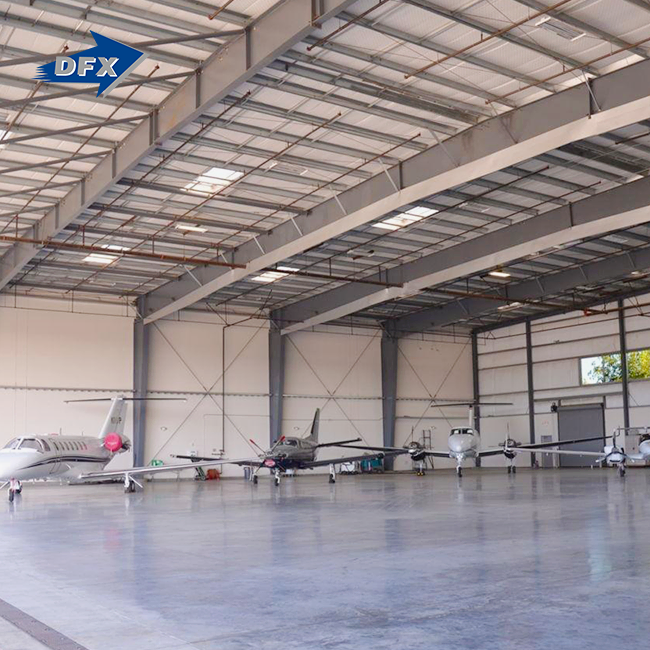
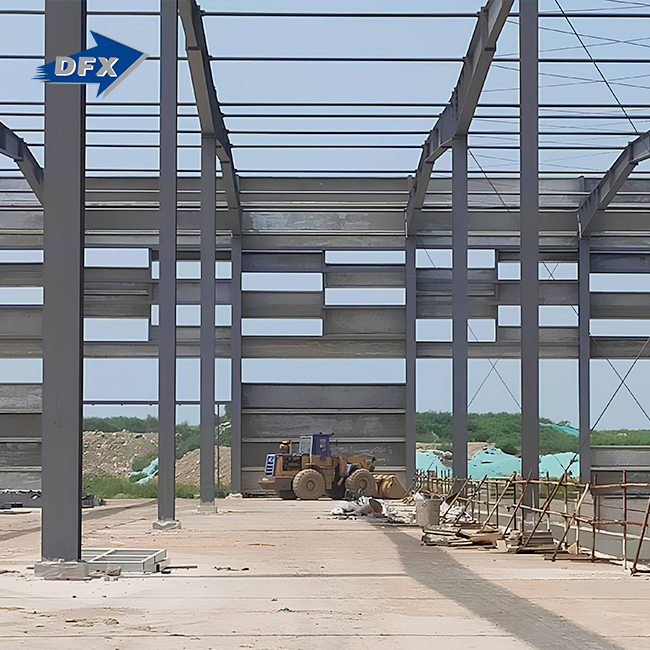
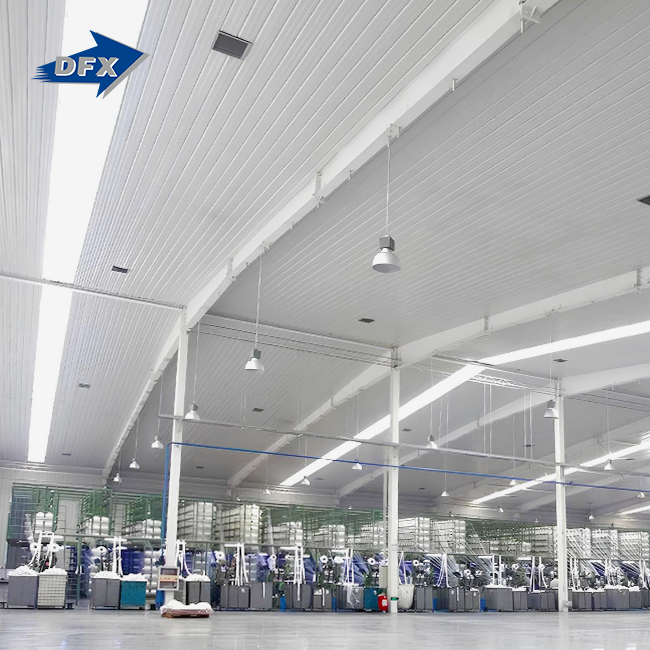
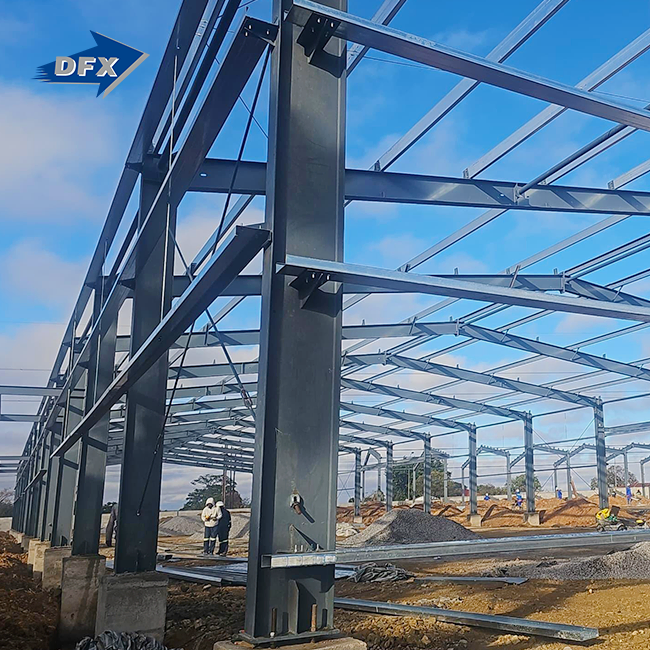
At DFX, we build the steel shell around your fire and airflow systems. That's why our long-span steel building is great for big industrial sheds, storing heavy equipment, and making airplane hangars. China welds together H-section steel to make the main frame, which has a stronger system of braces. We do structural calculations, unique designs, manufacturing, and write up directions for how to put things together. Every order is made to fit the wants of the person who placed it. It's okay with ISO, CE, COC, and PVOC. The Qingdao Director Steel Structure Co., Ltd. has been in business since 2011 and has 40,000 square meters of space where more than 200 people work. Engineers with the right skills plan the fire and airflow systems, and we work with them to make sure that the loads on the building and the openings are coordinated.
Conclusion
There are multiple standards that affect paint hangar airflow. NFPA 33 and NFPA 409 set the rules for fire and spray. AHA rules make sure workers are safe, EPA rules handle pollution, and the AHJ approves the final plan. Supply and exhaust air should be equal, temperature and humidity should be set according to the coating data sheets, and fire, electrical, and ventilation controls should all be linked. There are pros and cons to all three types of booths: fixed buildings, movable buildings, and booths. Being able to compare suppliers based on total cost of ownership, having tests done after the system is finished, and having clear specs all show that it works the way it was meant to. The steel frame needs to fit those systems and have the right span and space for the plane.
FAQ
1. Is there one airflow number for every paint hangar?
Not at all. How the coating is put on, the rules in the area, the size of the hangar, and the shape of the plane all affect the right airflow. As per NFPA 33, the amount of vapor must be less than a certain percentage of the lower flammable limit. Engineers figure out how much airflow is needed for each job.
2. Can portable or inflatable hangars be used for painting?
Sure, as long as it's designed correctly and gets the green light. There are still standards that need to be met for fire safety, climate control, ventilation, and electrical design, so the AHJ has to accept them.
3. What should I send to get an accurate quotation?
Send the plane's length, width, height, position, temperature, goal standards, utilities, and operating schedule, as well as the coating materials, how they will be applied, and the operating schedule.
4. How often should maintenance happen?
To figure out how often to do it, look at the manufacturer's instructions, the rules, and the hours that the business is open. There are different times for fire alarms, filters, fans, and sensors.
Request a Paint Hangar Steel Structure Quote From DFX
Plan to make a paint hangar and want to find a skilled craftsman? You can email DFX at jason@bigdirector.com and tell them about the size of your plane, where the site is, and the standards you want to meet. Our team will look over your project and come up with structural calculations, a unique design, and a plan for making the piece that includes steps on how to put it together.
References
1. National Fire Protection Association, NFPA 33: Standard for Spray Application Using Flammable or Combustible Materials, 2021
2. National Fire Protection Association, NFPA 409: Standard on Aircraft Hangars, 2022
3. Occupational Safety and Health Administration, 29 CFR 1910.107 Spray Finishing Using Flammable and Combustible Materials, 2023
4. U.S. Environmental Protection Agency, National Emission Standards for Hazardous Air Pollutants: Aerospace Manufacturing and Rework Facilities (40 CFR Part 63 Subpart GG), 2023
5. American Conference of Governmental Industrial Hygienists, Industrial Ventilation: A Manual of Recommended Practice for Design, 2019
6. National Fire Protection Association, NFPA 70: National Electrical Code, 2023
Learn about our latest products and discounts through SMS or email