- English
- French
- German
- Portuguese
- Spanish
- Russian
- Japanese
- Korean
- Arabic
- Greek
- German
- Turkish
- Italian
- Danish
- Romanian
- Indonesian
- Czech
- Afrikaans
- Swedish
- Polish
- Basque
- Catalan
- Esperanto
- Hindi
- Lao
- Albanian
- Amharic
- Armenian
- Azerbaijani
- Belarusian
- Bengali
- Bosnian
- Bulgarian
- Cebuano
- Chichewa
- Corsican
- Croatian
- Dutch
- Estonian
- Filipino
- Finnish
- Frisian
- Galician
- Georgian
- Gujarati
- Haitian
- Hausa
- Hawaiian
- Hebrew
- Hmong
- Hungarian
- Icelandic
- Igbo
- Javanese
- Kannada
- Kazakh
- Khmer
- Kurdish
- Kyrgyz
- Latin
- Latvian
- Lithuanian
- Luxembou..
- Macedonian
- Malagasy
- Malay
- Malayalam
- Maltese
- Maori
- Marathi
- Mongolian
- Burmese
- Nepali
- Norwegian
- Pashto
- Persian
- Punjabi
- Serbian
- Sesotho
- Sinhala
- Slovak
- Slovenian
- Somali
- Samoan
- Scots Gaelic
- Shona
- Sindhi
- Sundanese
- Swahili
- Tajik
- Tamil
- Telugu
- Thai
- Ukrainian
- Urdu
- Uzbek
- Vietnamese
- Welsh
- Xhosa
- Yiddish
- Yoruba
- Zulu
What is a Logistics Park Steel Warehouse?
One question keeps coming up when I talk to project managers and procurement heads at Logistics Park Steel Warehouse across the United States: how do we build storage facilities that can keep up with the needs of modern logistics? To find the answer, you need to know what a Logistics Park Steel Warehouse is. This unique building is more than just a place to store things; it's a strategic tool that can make or break the efficiency of your supply chain. This guide will tell you everything you need to know about these amazing buildings, from what they're made of to why they're becoming so important to American business.
What is a Logistics Park Steel Warehouse?
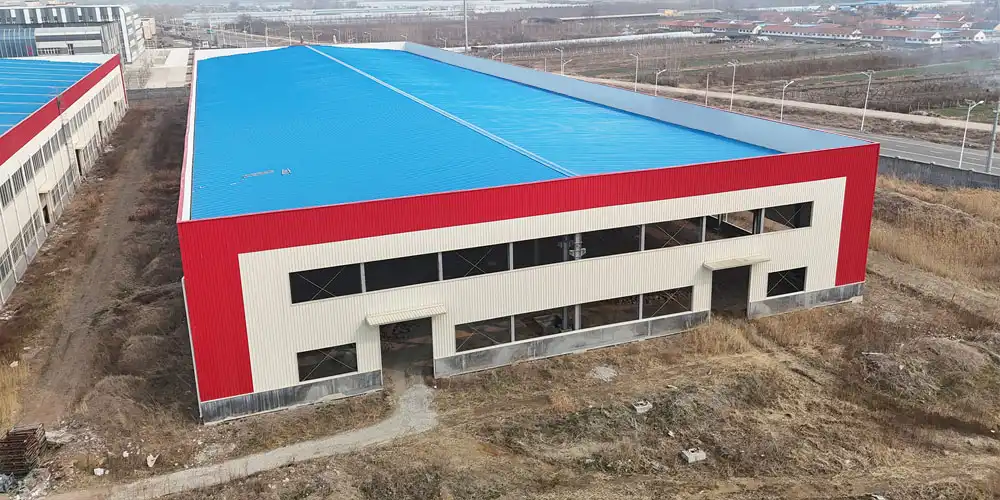
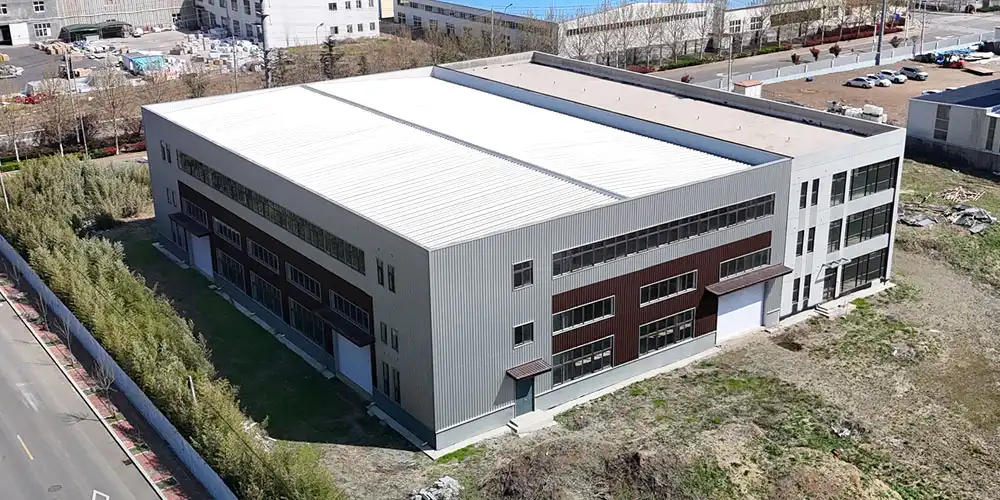
A Logistics Park Steel Warehouse is a big storage area made from pre-engineered steel building systems. You can control the supply chain, distribute cargo, and get value-added logistics services all from this one place. In contrast to typical concrete buildings, these stores use high-strength H-section steel beams and columns along with C/Z-section purlins to make clear-span capabilities that are often more than 30 to 50 meters without internal columns. This plan makes the most of high-bay shelving and automated systems for storage density while cutting down on building times by 30 to 50 percent. In today's fast-paced distribution world, the structure meets important needs for infrastructure that is flexible, long-lasting, and cost-effective.
The Problem It Solves and the Need It Fulfills
There is more and more pressure on modern transportation. As e-commerce grows, orders need to be filled faster. The cost of transport keeps going up. In cities, storage rooms are getting harder to find and more expensive. Traditional storage just can't change fast enough to keep up with these changing times.
These problems are dealt with directly by the Logistics Park Steel Warehouse. Usually, it takes 12 to 18 months to finish a traditional concrete building, which ties up money and delays making money. With steel structures, this time frame is cut down by a huge amount, and companies can start running in as little as 6 to 8 months after the plan is approved.
Another important problem is how to use space. Traditional buildings with many columns waste valuable square feet by having dead zones. The clear-span steel form gets rid of these problems, making the storage space 15 to 20 percent bigger. This is very important when you're paying a lot of money for land near traffic routes.
The most appealing benefit might be the ability to be flexible. Demand from consumers changes quickly. Products change over time. The amount of space needed changes. Because they are modular, steel warehouses can adapt to these changes by expanding or reconfiguring without having to do a lot of big structural work. I've seen clients add whole bays to buildings that were already there in weeks instead of months, a distribution center, while keeping the business running.
Core Features and Functionality Deep Dive
The engineering behind these structures deserves careful examination. Understanding the core features helps you appreciate why they deliver such exceptional performance.
Specifications for the materials are the basis. High-tensile steel with a yield strength of 345 MPa or more is usually used for the primary frame. This steel is rated at Q355B or ASTM A572 Grade 50. This higher ratio of strength to weight means that fewer columns are needed to hold heavier loads. Cold-formed galvanised steel with a zinc coating thickness of 275 grams per square metre is used for secondary framing. This makes sure that the steel will not rust for decades, even in harsh settings.
The goal of structural design is to make the most of the room inside. Clear-span design gets rid of internal obstacles, making forklift routes and rack layouts more efficient. Columns are usually 24 to 36 meters apart, which leaves no empty room for standard warehouse shelving systems. Heavy roof loads of 0.3 to 0.5 kilonewtons per square metre are supported by the structure. It holds up solar panels on the roof, HVAC equipment, and systems for moving things around in the air. There are strict rules for safety
engineering. Structures can handle earthquakes with a magnitude of 8 or higher and winds of up to 120 to 150 kilometres per hour, based on the needs of the area. As required by code, fire protection uses intumescent coats on structural steel and mineral wool sandwich panels that don't catch fire. This gives the building a fire rating of 2 to 4 hours.
Technology Behind the Performance
These buildings work well because they use pre-engineered building technology. Computer-aided design software looks at thousands of different load scenarios and makes sure that each part is as strong as possible while using as little material as possible. When compared to traditional design methods, this precise engineering cuts the amount of steel used by 20 to 30 percent.
Quality is always guaranteed when things are made in a factory. When certified technicians use advanced welding tools, they make connections that are uniform and meet AWS D1.1 standards. Tolerances are kept within 2 millimetres by automated cutting and drilling equipment. This makes sure that bolt holes line up properly during field assembly. This accuracy speeds up site construction by a huge amount.
Building Information Modeling coordinates all trades. MEP systems, racking layouts, and structural elements appear in a single digital model, identifying conflicts before construction begins. This coordination prevents costly field modifications and schedule delays.
The modular construction method sees the building as a collection of standard parts that are put together. When they get to the site, the roof panels, wall pieces, and framing members are all ready to be put together. Small teams with Distribution center basic tools can put up structures quickly and safely, which saves money on labour and time spent outside in bad weather.
Key Advantages for Project Stakeholders
Decision makers evaluating warehouse options consistently identify several compelling benefits. Speed to operation transforms project economics. Shorter construction schedules mean earlier revenue generation and faster return on investment. Projects that traditionally required 18 months are now completed in 8 to 10 months, bringing facilities online while market conditions remain favorable.
Cost efficiency extends beyond initial construction. Steel structures typically cost 20 to 40 percent less per square foot than comparable concrete buildings. Lower foundation requirements, reduced labor hours, and shorter financing periods compound these savings. Operating costs remain lower throughout the building's life due to superior energy efficiency and minimal maintenance needs.
Operational flexibility protects your investment. Markets change. Product mixes evolve. Storage requirements shift. Steel structures adapt through straightforward expansion or reconfiguration. End-wall frames designed as expandable bays allow seamless linear growth by removing cladding and adding new sections.
Sustainability credentials matter increasingly to corporate stakeholders and communities. Steel remains infinitely recyclable without quality loss. End-of-life structures disassemble cleanly, with components entering the recycling stream rather than landfills. Large roof areas accommodate solar arrays, generating renewable energy that offsets operating costs while reducing carbon footprint.
Potential Limitations and Considerations
Honest assessment requires acknowledging certain constraints and planning requirements. Design phase investment demands attention upfront. Steel structures require detailed engineering and fabrication drawings before manufacturing begins. Rushing this phase invites costly errors. Budget adequate time for thorough design development and approval, typically 6 to 8 weeks for standard configurations.
Foundation requirements deserve careful evaluation. While steel structures reduce foundation loads compared to concrete buildings, soil conditions still matter tremendously. Poor soils may require deep piles or ground improvement, adding cost and schedule. Conduct a thorough geotechnical investigation early in project planning.
Climate control considerations affect certain applications. Standard metal building insulation performs excellently for ambient storage but requires thoughtful detailing for temperature-sensitive environments. Vapor barriers, thermal breaks, and properly sealed penetrations become critical for refrigerated or humidity-controlled spaces.
Local building codes vary considerably across jurisdictions. Snow loads in northern states, hurricane provisions along coastlines, an e-commerce hub, and seismic requirements in active zones all influence design. Partner with manufacturers experienced in your specific region to navigate these requirements efficiently.
Steel Warehouses vs Traditional Alternatives
Understanding how steel warehouses compare to other construction methods helps inform your decision. Tilt-up concrete warehouses represent the primary alternative for many projects. These structures use site-cast concrete panels tilted into place as walls. Concrete offers excellent fire resistance and a finished appearance that some clients prefer. However, construction timelines extend 30 to 50 percent longer than steel. Interior columns spaced closer together reduce usable space. Future expansion requires significant structural work. Construction costs typically run 25 to 40 percent higher per square foot.
Hybrid structures combining steel framing with masonry facades suit projects requiring specific aesthetics or enhanced security. The steel frame provides efficient, clear-span interior space while masonry cladding delivers the desired appearance and protection. These buildings cost more than fully steel structures but less than full masonry construction, offering a middle ground for projects with particular architectural requirements.
The steel warehouse excels where speed, flexibility, and cost efficiency drive decisions. Distribution centers serving e-commerce fulfillment prioritize rapid deployment and adaptable layouts. Manufacturing facilities expanding production capacity need structures that won't disrupt existing operations. Third-party logistics providers require buildings that accommodate diverse client needs. These applications align perfectly with steel warehouse capabilities.
Target Audience and Ideal Applications
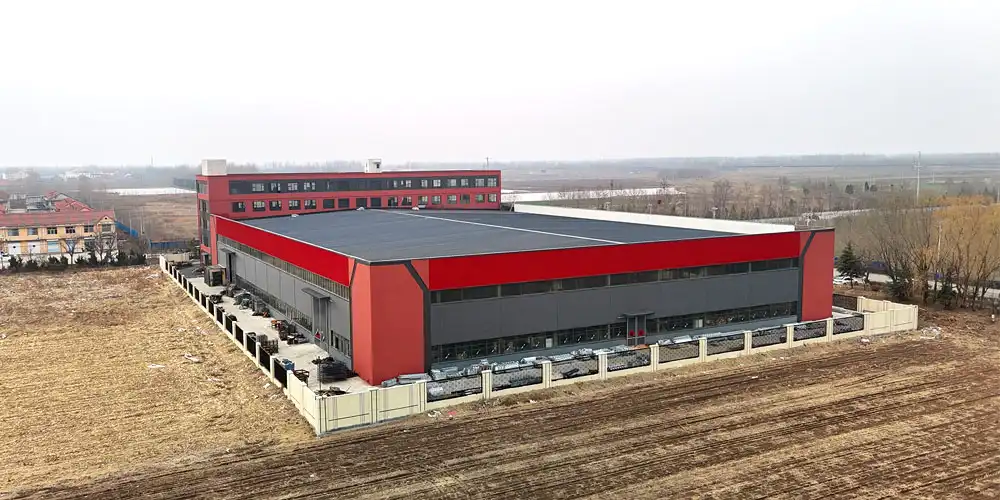
Construction and EPC companies that are in charge of industrial projects need to be able to rely on their structural steel sources. These people are in charge of building infrastructure from start to finish, so they need partners who can meet their deadlines and requirements. They like turnkey options that include design, fabrication, and help with setting up. These contractors usually ask for steel warehouses to be built for industrial plants, business developments, and airport facilities.
When manufacturing companies build new factories or grow existing ones, they need big workshops that can fit a lot of heavy equipment and materials. Short construction timelines keep activities running as smoothly as possible. As makers compete around the world, keeping costs low is still very important. Steel buildings give these businesses the space, speed, and value they need.
Logistics service companies that run distribution centers need as much storage space as possible and as much operational flexibility as possible. Demand for automatic handling systems with clear-span interiors is driven by e-commerce fulfilment. Businesses in the food and drug industries that use cold chains need strong buildings that can handle big loads like insulation and refrigeration. These specific uses show the benefits of steel warehouses.
Agricultural businesses that need to store crops, tools, or animals need E-commerce hub structures that are strong and don't cost a lot of money. Large clear spans make room for modern farming tools and large storage needs. Agricultural businesses in rural areas especially like steel buildings because they shorten the time it takes to build and allow them to finish when the weather is good.
Quality Assurance and Inspection Protocols
Rigorous quality control ensures these structures perform as designed throughout their service life. Buyers should understand key inspection criteria based on international standards.
Verification of the raw materials shows that the steel meets the required grades and qualities. Mill test papers show the chemical make-up and mechanical features. Reputable makers keep track of all the parts from the steel mill to the assembly line to make sure that every part meets the design requirements.
Welding checking is a very important quality control step. Through visual inspection, all welds are checked for flaws like cracks, holes, or partial fusion. Ultrasonic or magnetic particle testing is done on full-penetration butt welds to find problems inside that can't be seen. Certified welder inspectors write down the results and make sure the quality of the work is maintained throughout the whole process.
Accurate measurements make sure that the field assembly goes smoothly. Within 2 millimetres of accuracy, laser measurement checks the straightness, camber, and position of the connection plate holes on an H-beam. Precise fabrication stops problems with field fit-up that slow down assembly and lower the performance of the structure.
Testing for corrosion prevention makes sure that the coating is thick enough and sticks well. Dry film thickness scales check the thickness of paint or galvanisation in several places to make sure it meets the requirements of 80 to 120 microns for epoxy zinc-rich systems. Reports on salt spray tests give more confidence to buildings that are near the coast or in industrial areas with corrosive air.
Your inventory is safe from weather harm with envelope integrity. Water tests are done on new roof and wall panels to make sure they are properly sealed at overlaps, penetrations, and changes. This checking finds mistakes in the installation before the building gets its stock, which prevents expensive damage to the goods from happening.
Conclusion
The infrastructure of steel warehouses is always changing to keep up with changing transportation needs. Structure integration for automated handling systems is getting more complicated. Mandates for sustainability push people to use renewable energy and follow the concepts of the circular economy. As e-commerce grows, so does the need for open fulfilment centers close to cities with lots of people. Because steel construction is fast, flexible, cost-effective, and long-lasting, these buildings are great for the next generation of supply chain infrastructure. If you're an EPC contractor looking for warehouse solutions, a manufacturer wanting to make more products, or a logistics provider building distribution networks, knowing what a steel warehouse can do will help you make smart choices that will help your business succeed in the long run.
FAQ
Q1: Can these warehouses support heavy rooftop solar installations
A: Absolutely. The roof structure can be engineered to carry additional loads from solar arrays, typically adding 15 to 20 kilograms per square meter capacity. This calculation happens during initial design, slightly increasing primary framing to support the extra weight. Many clients integrate solar from the start, generating renewable energy that significantly reduces operating costs while enhancing sustainability credentials.
Q2: How does the structure perform in extreme weather events?
A: Steel warehouses are engineered specifically for regional climate conditions. Buildings in hurricane zones receive enhanced wind bracing and connection detailing. Northern facilities incorporate heavier roof framing for snow accumulation. Seismic areas get special moment-resisting connections and lateral bracing. Properly designed steel structures withstand extreme events as well as or better than traditional construction while maintaining their flexibility advantages.
Q3: What maintenance do these buildings require?
A: Steel warehouses need remarkably little maintenance. Annual inspections checking roof drainage, door operation, and coating condition typically suffice. Gutter cleaning prevents water accumulation. Touch-up painting at doors and high-traffic areas preserves corrosion protection. Compared to concrete structures requiring crack repair and spall patching, steel buildings deliver much lower lifetime maintenance costs. Most operators find maintenance requirements minimal, allowing focus on core business operations rather than building upkeep.
Q4: Can we expand the warehouse after initial construction?
A: Yes, and this represents one of steel construction's greatest advantages. End-wall frames are designed as expandable sections that remain load-bearing when cladding is removed. Adding new bays involves removing the end wall, extending the foundation and framing, and installing new end cladding. This process typically completes in 4 to 6 weeks with minimal disruption to ongoing operations. Many clients build initial phases sized for immediate needs, expanding as business grows without relocating or disrupting established logistics networks.
Partner with DFX for Your Steel Warehouse Project
Selecting the right logistics park steel warehouse supplier Logistics Park Steel Warehousedetermines project success. Director Steel Structure Co., Ltd. brings over 12 years of specialized experience fabricating pre-engineered steel buildings for clients worldwide. Our 40,000-square-meter production facility employs more than 200 skilled workers operating advanced automated equipment, delivering consistent quality certified to ISO9001 and CE standards. We provide complete turnkey solutions from engineering calculations and steel fabrication through logistics coordination and erection guidance. Contact jason@bigdirector.com today to discuss how our modular prefabricated steel storage buildings can meet your specific project requirements.
References
1. American Institute of Steel Construction (2021). Steel Construction Manual, 15th Edition. Chicago: AISC.
2. Metal Building Manufacturers Association (2020). Common Industry Practices for Metal Building Systems. Cleveland: MBMA.
3. Freeman, S. (2019). Modern Warehouse Design: Logistics Solutions for Contemporary Distribution. New York: Industrial Press.
4. Building Design and Construction Magazine (2022). "Comparative Analysis of Warehouse Construction Methods and Life-Cycle Costs." Vol. 63, No. 4, pp. 48-56.
5. Journal of Structural Engineering (2021). "Performance Characteristics of Pre-Engineered Steel Buildings in Seismic and High-Wind Environments." Vol. 147, Issue 8.
6. Logistics Management Quarterly (2023). "Infrastructure Investment Trends in North American Distribution Networks." Spring Edition, pp. 22-31.
Learn about our latest products and discounts through SMS or email