- English
- French
- German
- Portuguese
- Spanish
- Russian
- Japanese
- Korean
- Arabic
- Greek
- German
- Turkish
- Italian
- Danish
- Romanian
- Indonesian
- Czech
- Afrikaans
- Swedish
- Polish
- Basque
- Catalan
- Esperanto
- Hindi
- Lao
- Albanian
- Amharic
- Armenian
- Azerbaijani
- Belarusian
- Bengali
- Bosnian
- Bulgarian
- Cebuano
- Chichewa
- Corsican
- Croatian
- Dutch
- Estonian
- Filipino
- Finnish
- Frisian
- Galician
- Georgian
- Gujarati
- Haitian
- Hausa
- Hawaiian
- Hebrew
- Hmong
- Hungarian
- Icelandic
- Igbo
- Javanese
- Kannada
- Kazakh
- Khmer
- Kurdish
- Kyrgyz
- Latin
- Latvian
- Lithuanian
- Luxembou..
- Macedonian
- Malagasy
- Malay
- Malayalam
- Maltese
- Maori
- Marathi
- Mongolian
- Burmese
- Nepali
- Norwegian
- Pashto
- Persian
- Punjabi
- Serbian
- Sesotho
- Sinhala
- Slovak
- Slovenian
- Somali
- Samoan
- Scots Gaelic
- Shona
- Sindhi
- Sundanese
- Swahili
- Tajik
- Tamil
- Telugu
- Thai
- Ukrainian
- Urdu
- Uzbek
- Vietnamese
- Welsh
- Xhosa
- Yiddish
- Yoruba
- Zulu
How Cold Storage Steel Buildings Protect Products from Heat Damage
A cold storage steel building is one of the most reliable solutions for protecting temperature-sensitive goods from heat damage. Whether you're storing frozen food, pharmaceuticals, or chemical compounds, uncontrolled heat can destroy product integrity within hours. These pre-engineered steel facilities combine high-performance thermal insulation, precision refrigeration systems, and structural durability to maintain stable internal climates — from chilled (+2°C to +10°C) to deep freeze (-25°C to -40°C). For procurement managers and project engineers sourcing robust cold chain infrastructure, understanding how these buildings work is the critical first step toward protecting inventory and reducing operational losses.

Understanding Heat Damage and the Need for Temperature-Controlled Steel Facilities
Damage from heat is not a small problem; it's a risk in the supply chain. The World Health Organization says that about a quarter of vaccines are ruined before they reach patients because of problems with the cold chain. The USDA says that improper temperature storage contributes to over $161 billion in food losses every year in the United States alone.
Construction builders, EPC firms, and factory investors can see how bad storage facilities can hurt their bottom lines. Just 5°C above the goal range can cause food to go bad, shorten its shelf life, or make medicinal batches not meet standards. It's hard for old warehouses made of concrete or brick to keep up with the needs of today's cold chains because they are prone to thermal bridging, moisture intrusion, and poor insulation continuity.
These weaknesses are directly addressed by cold storage steel buildings. Because they are flexible, better at keeping air out, and work with modern insulation envelopes, they are much better at keeping product-safe settings than older building methods.
Key Design Features That Prevent Heat Transfer
A cold storage steel building's thermal performance depends on how well its different engineering layers work together. There is no one part that can protect you on its own; the whole structure is what counts.
When it comes to temperature protection, a well-designed facility has these main features:
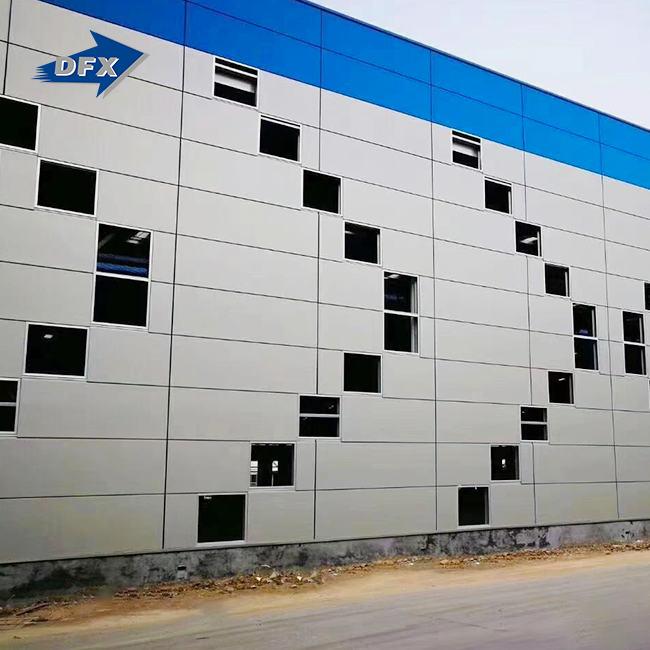
- High-performance insulation panels: Polyurethane (PUR) or Polyisocyanurate (PIR) sandwich panels with core densities of 40–42 kg/m³ and thermal conductivity as low as º 0.024 W/(m·K) are high-performance insulation panels. They make it much harder for heat to move through walls and roofs. In terms of both consistency of R-value and resistance to moisture, these panels are better than traditional fiberglass batting.
- Thermal break technology: At the points where the steel frame and panels are connected, thermal break detailing stops heat from moving through the structural steel members. This is called thermal bridging. Without this feature, cold rooms get frost and condensation that damage both the structure and the cargo.
- Vapor barriers and airtight sealing: At panel joints, door frames, and entry points, high-grade vapor retarders and precision sealants keep warm, muggy air from the outside from getting into the conditioned area. This directly lowers the load on the refrigeration system and keeps the inside from getting damaged by condensation.
- Optimized roof geometry and wall thickness: Low-slope or standing-seam roofing shapes lower solar heat gain, and 150–200 mm thick wall assemblies in freeze applications provide the thermal mass needed to smooth out changes in the outside temperature.
These benefits work together to solve one of the biggest problems in cold chain operations, which is keeping the inside temperature stable without using too much energy. When designed correctly, a facility can use 20–35% less energy for cooling than a masonry option that isn't well insulated.
Construction Process and Materials: Building for Thermal Integrity
The finished building's thermal performance is only as good as the work that went into building it. The choice of materials and their order are very important.
H-Beam Steel Frames and Galvanized Structural Components
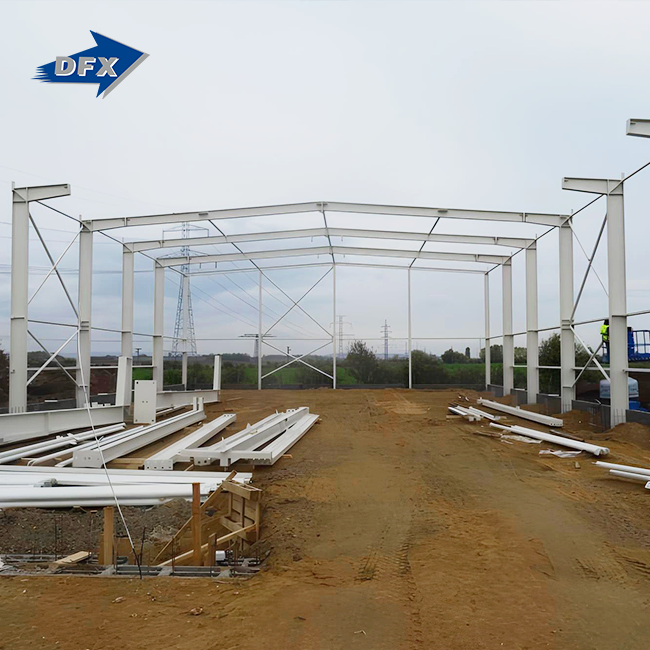
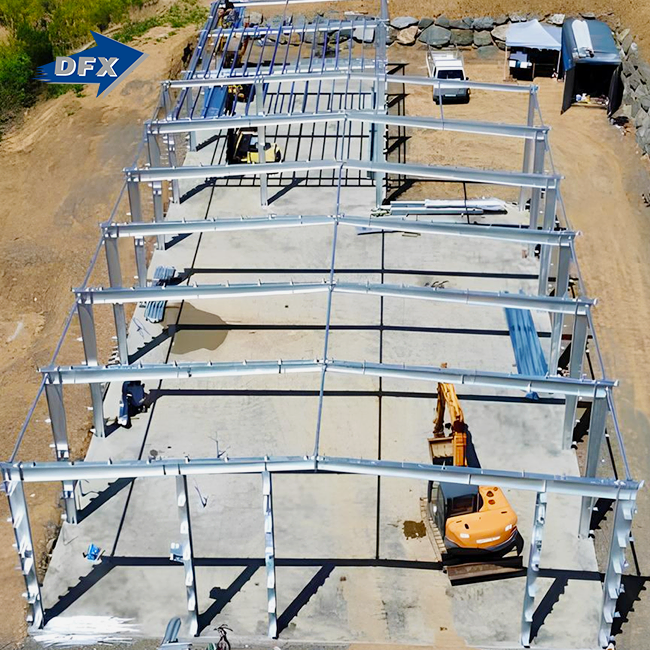
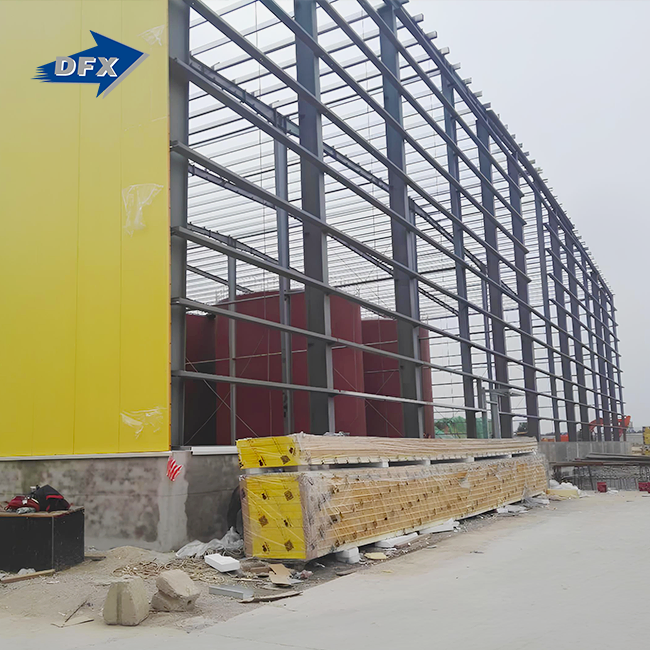
High-strength structural steel (Q355B or an equivalent ASTM A572) is usually used for the main frame's welded H-beam columns and rafters. Hot-dip galvanization with a coating weight of at least 275 g/m² stops the faster rusting that can happen in cold storage steel buildings that tend to get humid. A cross-bracing system and galvanized C/Z purlins finish off the secondary structure, which makes sure it is stable on the sides and evenly distributes the load.
Insulation Installation and Sealing Sequence
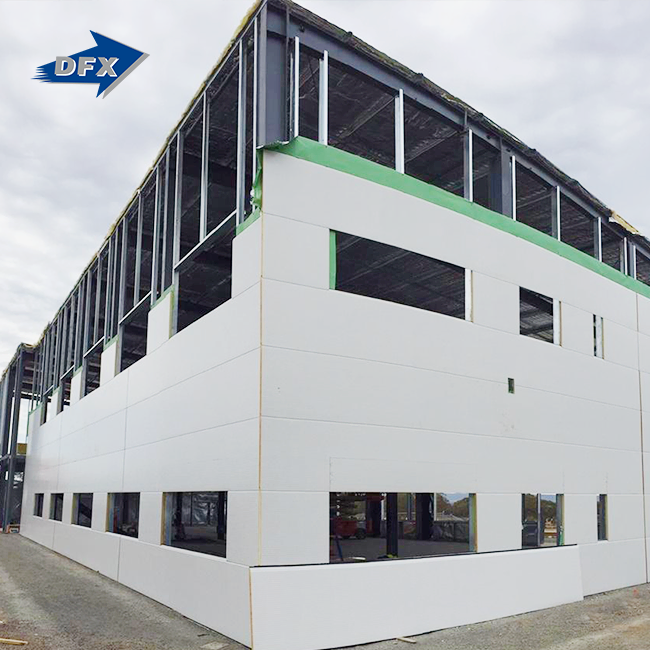
Once the steel frame is set up and secured, PIR or PUR sandwich panels are put on the roof and walls in a specific order to close off any holes in the insulation. Before the concrete is poured, underfloor heating systems, which are usually electric or glycol-fluid circuits, are put into the slab. This is done to stop frost heave, which can damage foundations in cold places. Before the freezer equipment is put into service, advanced sealants are applied to every entry and joint.
Refrigeration System Integration
During the structural engineering process, evaporators, condensers, and pipe networks that are placed on the roof or suspended from the ceiling are taken into account. The steel beams and purlins are strengthened to safely support loads of refrigeration, so they don't bend in the middle, which could damage panel joints over time.
Maintenance and Operational Practices to Sustain Heat Protection
For decades of use, even a cold storage steel building that was built well will need regular maintenance to maintain its thermal performance.
IoT Monitoring and Scheduled Audits
IoT-enabled temperature monitors and automatic warning systems that log real-time data and point out deviations before they cause product losses are useful in modern facilities. It is recommended to check panel joints, door seals, and refrigerator calibration plans every three months. Blower door checks that are done once a year can find joints that are losing their ability to keep air out. This is a typical way that energy is lost without being noticed, which drives up operating costs over time.
Structural Integrity Checks
Checks for structural integrity should look for signs of panel delamination, galvanization condition, and tightness of fasteners. The steel frame is made to last more than 50 years, and the PIR/PUR panels usually work well for 25 to 30 years before they need to be replaced. Director Steel's cladding systems are designed to be modular, so individual panels can be switched out without affecting the main structure. This makes maintenance much easier and faster.
Cost, Procurement, and Supplier Selection
Evaluating Total Cost of Ownership
The cost of buying a prefabricated cold storage steel building is only one part of the expense. Premium standard choices are always a good idea because they save money on energy, keep products from going bad, and require less upkeep over a 20-year period. In most temperature zones in the U.S., a building with properly rated PIR panels and thermal break detailing will save enough on cooling costs to cover the difference in insulation costs within 3 to 5 years.
What to Look for in a Cold Storage Steel Building Manufacturer
When buying, teams look at a supplier source; they should make sure of the following:
- Certifications: ISO 9001 quality management, CE structural compliance, and the extra EN 1092 approval all show that the manufacturing process is followed to the letter.
- Engineering depth: Suppliers who do more than just fabrication can lower project risk and coordination gaps by doing structural calculations, connection design, and load analysis in-house.
- Service scope: Being able to do everything from engineering calculations to fabrication, transportation planning, and erection direction makes buying things and being responsible for them easier.
- Application fit: Make sure the supplier has worked with logistics warehouses, cold chain distribution hubs, and storage centers of a similar size in the past.
When buying from businesses, procurement professionals should ask for full engineering packages instead of just catalog sheets. They should also make sure that the manufacturer's production processes actually meet the standards that were mentioned, not just those that were supposed to meet them.
Conclusion
Keeping the temperature right is essential. Every degree of uncontrolled heat means measured product loss, risk to regulations, and weakness in the supply chain. For current cold chain operations, a purpose-built cold storage steel building with thermal break details, high-performance PIR insulation, galvanized structural steel, and built-in refrigerator support is the only way to go. It is easy to see, measure, and remember why these facilities are a good choice for building companies, owners in manufacturing, and farms planning their next storage project.
FAQ
1. How much faster is steel construction compared to traditional masonry cold storage?
When compared to masonry builds, pre-engineered cold storage steel buildings usually cut down on construction times by 30 to 50 percent. When factory-made parts are brought to the job site already assembled, the frame and cladding stages are sped up by a lot.
2. Can interior temperature zones be customized within a single building?
Yes. Multi-zone refrigerated steel buildings usually have different temperature envelopes and separate refrigeration circuits inside the same structure. This way, cold, frozen, and ambient zones can be set up in bays next to each other.
3. How is frost heave prevented under the floor slab?
Under the insulated slab is an under-floor heating system made up of electric resistance wires or glycol fluid circuits. This keeps the dirt from freezing, which can cause the ground to expand and crack foundations.
4. What certifications should I require from a supplier?
Most of the time, ISO 9001, CE marking, and EN 1092 are used as standards. For B2B buying due diligence, these check the quality of the manufacturing process, the compliance of the structure, and the tracking of the materials.
5. How long do the insulation panels last?
A good PIR/PUR sandwich screen will last for 25 to 30 years of steady use. The modular panel design lets specific panels be replaced without affecting the steel frame.
Partner with DFX for Your Cold Storage Steel Building Project
Since 2011, DFX (Qingdao Director Steel Structure Co., Ltd.) has been shipping designed steel structures all over the world. Our factory space is 40,000 m² and is ISO 9001 and CE-certified. As a reliable cold storage steel building manufacturer, we offer full project support, including structural engineering, fabrication, logistics coordination, and help with setting up the building. To get a free consultation and a thorough price on your project, email jason@bigdirector.com right now with the details. The right structure is the first step in keeping your goods safe.
References
1. World Health Organization. Vaccine Cold Chain: Maintaining the Cold Chain. WHO Press, 2020.
2. United States Department of Agriculture (USDA). The Estimated Amount, Value, and Calories of Postharvest Food Losses. Economic Research Service, 2010.
3. American Institute of Steel Construction (AISC). Steel Construction Manual, 16th Edition. AISC, 2022.
4. International Association of Refrigerated Warehouses (IARW). Global Cold Storage Capacity Report. GCCA, 2023.
5. Oak Ridge National Laboratory. Thermal Performance of Building Envelope Details for Mid- and High-Rise Buildings. U.S. Department of Energy, 2011.
6. European Committee for Standardization. EN 14509: Self-Supporting Double Skin Metal Faced Insulating Panels — Factory Made Products. CEN, 2013.
Learn about our latest products and discounts through SMS or email