- English
- French
- German
- Portuguese
- Spanish
- Russian
- Japanese
- Korean
- Arabic
- Greek
- German
- Turkish
- Italian
- Danish
- Romanian
- Indonesian
- Czech
- Afrikaans
- Swedish
- Polish
- Basque
- Catalan
- Esperanto
- Hindi
- Lao
- Albanian
- Amharic
- Armenian
- Azerbaijani
- Belarusian
- Bengali
- Bosnian
- Bulgarian
- Cebuano
- Chichewa
- Corsican
- Croatian
- Dutch
- Estonian
- Filipino
- Finnish
- Frisian
- Galician
- Georgian
- Gujarati
- Haitian
- Hausa
- Hawaiian
- Hebrew
- Hmong
- Hungarian
- Icelandic
- Igbo
- Javanese
- Kannada
- Kazakh
- Khmer
- Kurdish
- Kyrgyz
- Latin
- Latvian
- Lithuanian
- Luxembou..
- Macedonian
- Malagasy
- Malay
- Malayalam
- Maltese
- Maori
- Marathi
- Mongolian
- Burmese
- Nepali
- Norwegian
- Pashto
- Persian
- Punjabi
- Serbian
- Sesotho
- Sinhala
- Slovak
- Slovenian
- Somali
- Samoan
- Scots Gaelic
- Shona
- Sindhi
- Sundanese
- Swahili
- Tajik
- Tamil
- Telugu
- Thai
- Ukrainian
- Urdu
- Uzbek
- Vietnamese
- Welsh
- Xhosa
- Yiddish
- Yoruba
- Zulu
Grade 12 Windproof Steel Structure Teaching Building: Cost Guide
Planning a school construction project comes with real pressure — tight budgets, safety codes, and the need for a building that lasts. If you're sourcing a grade 12 windproof steel structure teaching building, this guide breaks down everything you need to know: technical standards, cost factors, design principles, and how to choose the right supplier.
Understanding Windproof Steel Structures for Grade 12 Teaching Buildings
What "Grade 12 Wind Resistance" Actually Means
According to the Beaufort Scale, Grade 12 wind resistance means wind speeds of about 32.7 to 36.9 m/s, which are considered hurricane-force conditions. This rating isn't just a guess for educational buildings; it directly affects the size of structural members, the way they are connected, and how the facade is anchored. Standards like China's GB 50009 (Load Code for Building Structures) and ASCE 7-22 (Minimum Design Loads for Buildings) both list specific wind pressure factors that engineers use when planning these buildings.
Benefits of Steel Over Concrete for Wind-Resistant Schools
Because steel is very flexible, it bends before it breaks, which makes it very good at withstanding lateral wind forces. In real life, a steel-framed school building made of Q355 structural steel can handle lateral loads caused by wind without losing any of its structural integrity. A study by the Metal Building Manufacturers Association (MBMA) says that steel construction can cut on-site build time by up to 40% compared to cast-in-place concrete. Steel is also completely recyclable, which makes it a good choice for institutional projects that want to be environmentally friendly.
Steel Grades, Coatings, and Seismic Integration
The most popular steel types for windproof school buildings are Q235B and Q355B, which are the same as ASTM A36 and A572 Gr.50. It is common to use a three-coat epoxy paint method or hot-dip galvanization (minimum 600 g/m²) in seaside or high-humidity areas. In danger areas, wind and earthquake forces often act at the same time, so structural engineers combine cross-bracing, moment-resisting frames, and diaphragm floor systems into a single design that works well together. This dual-resistance method was used on a school project in Shandong Province, China, and it passed tests after building using a Grade 12 wind simulation.
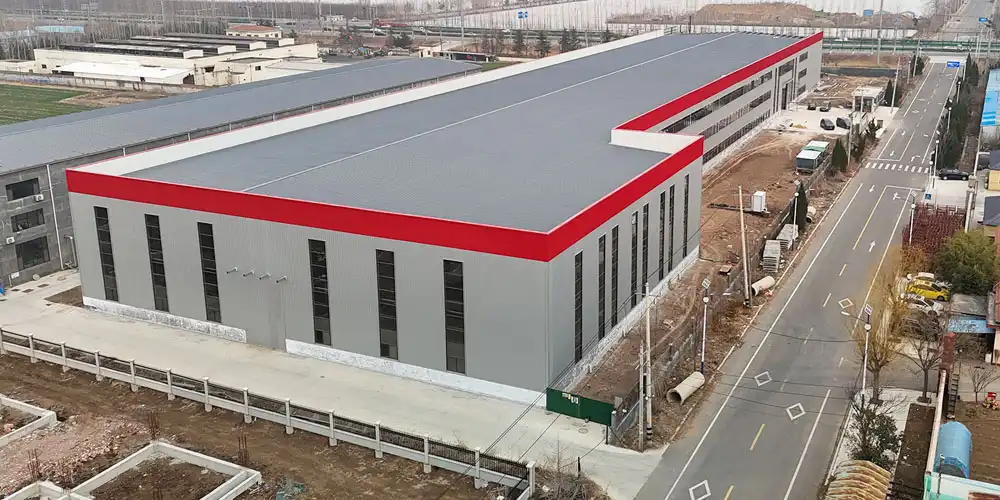
Cost Components and Comparison: Steel Structure vs. Concrete Teaching Buildings
Breaking Down the Total Cost of a Steel Teaching Building
Knowing where your money goes will help you make better decisions about what to buy. For a steel structure teaching building, these are the main cost categories:
- Structural steel materials (columns, beams, purlins): Typically accounts for 35–45% of total project cost, depending on steel market pricing. Q355 steel currently ranges from $750–$950 per metric ton (2024 figures).
- Enclosure and facade systems: Metal panel or curtain wall cladding represents 15–20% of cost. Composite sandwich panels offer better thermal performance at a modest price premium.
- Labor and fabrication: Off-site prefabrication reduces labor costs significantly. On-site installation labor runs 10–15% of total cost, versus 20–30% for equivalent concrete construction.
- Foundation and civil works: Lighter steel structures require shallower foundations, saving 8–12% compared to reinforced concrete buildings of identical floor area.
These cost groups give procurement managers a reasonable place to start when looking at bids and making budgets.
Steel vs. Concrete: A Practical Cost Comparison
Steel buildings for schools usually cost less to run over 30 years than concrete buildings of the same size. Shorter construction schedules mean that grade 12 windproof steel structure teaching building can be used or rented out sooner, needs less long-term maintenance if it is properly coated, and has higher residual value because it is made of recyclable materials. According to a report released in 2023 by the American Institute of Steel Construction (AISC), steel-framed educational buildings saved between 6 and 14% on project costs when compared to concrete alternatives. This was when total lifecycle costs were taken into account. When you're in charge of institutional buying across various sites, that margin counts.
Procurement Strategy Tips for B2B Buyers
It's important to carefully look over bids when looking for a windproof steel structure teaching building from a reputable maker. Ask for mill test certificates (MTCs) for all structural steel, make sure that fabricated parts have ISO 9001 certification and CE marking, and make sure that the supplier's engineering team can make localized structural calculations that meet the building code for your project. When building a school quickly, it's important to check the supplier's annual production capacity as well as their price to avoid shipping delays.
Designing Grade 12 Windproof Steel Structure Teaching Buildings
Core Structural Design Principles
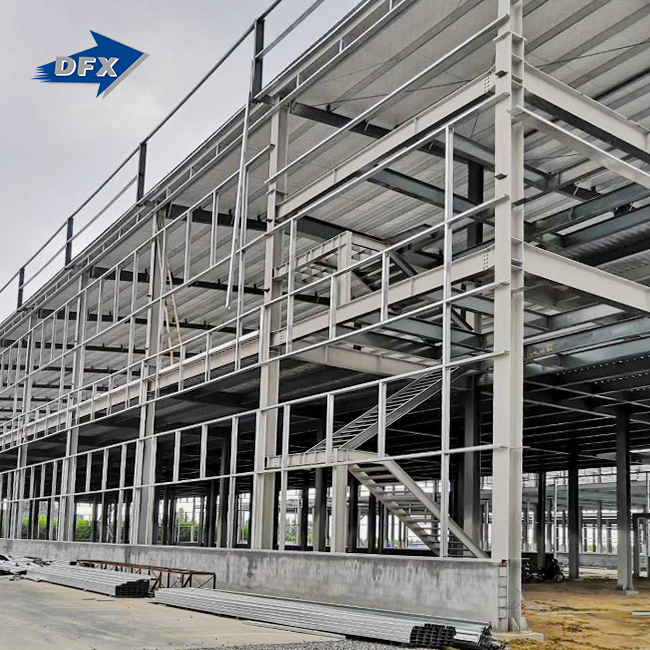
A windproof school building is mostly made up of a column-beam frame made of welded H-sections, with diagonal steel bracing running along both main directions. This stops wind from blowing on both the long and short facades at the same time. For buildings with more than one floor, composite floor decks (a steel deck with a concrete topping) provide in-plane stiffness, which is important for spreading wind loads from the sides to the vertical bracing elements.
Modular vs. Conventional Construction Methods
With modular steel buildings, whole room-sized parts are made off-site and then put together on-site. This method works well on school grounds where crane access is limited. For larger, less regular floor plans, conventional steel framing gives architects more freedom. When properly engineered, both methods can achieve Grade 12 wind resistance, but modular systems usually allow for faster assembly on-site, which is very helpful for school projects that need to be finished by a certain date each school year.
Integrating Building Services and Wind Load Calculations
HVAC ducts, electrical conduit, and fire suppression piping all go through or around structural members, so structural and MEP engineers working together during the design phase save a lot of money on rework that needs to be done. The design wind pressure for each facade panel, roof zone, and structural link is based on wind load estimates that follow ASCE 7 or a similar code. Engineers also look at dynamic effects like vortex shedding on thin or tall buildings to make sure that the building's natural frequency doesn't get stuck when wind blows for a long time.
Maintenance and Lifecycle Management of Steel Structure Teaching Buildings Routine Inspection and Corrosion Prevention
If you properly coat a grade 12 windproof steel structure teaching building with a coating system, all it needs is regular checks, usually every 3–5 years, to see if the paint film is wearing off, fasteners are loosening, and drainage is getting clogged. If small coating damage is found early, it's much cheaper to fix just a few spots with zinc-rich primer than to re-coat the whole thing. NACE International says that an organized corrosion management program can add 30 to 50 percent more service life to coatings than reactive upkeep alone.
Environmental Credentials and Green Certifications
Steel can be recycled more than 90% of the time when a building is no longer needed. This directly helps earn LEED v4 Material and Resources points. Steel construction works well with both the LEED and BREEAM frameworks for school projects that want to get green building approval, which is something that government clients and foreign schools are asking for more and more. When compared to metal covering that isn't insulated, sandwich panel walls and roof systems improve thermal insulation, which cuts annual HVAC energy use by 15–25%.
Warranty Coverage and After-Sales Support
Reliable suppliers of steel structure for teaching buildings usually offer structural warranties on the main frame for 25 to 50 years, and coating warranties for 10 to 15 years, as long as the warranties are followed. Make sure that your supplier includes as-built drawings, connection detail manuals, and a written maintenance schedule in the delivery package. Not only are these papers a good idea, but they are also often needed to get a building permit and for insurance reasons.
Selecting the Right Supplier for Grade 12 Steel Teaching Buildings
Key Supplier Evaluation Criteria
It takes more than just comparing unit prices to find the right Grade 12 windproof steel structure teaching building supplier. Carefully think about these things:
We have ISO 9001 quality management, CE structural marks, and project-specific certificates like COC or PVOC if the target country needs them.
- Certifications: ISO 9001 quality management, CE structural marking, and project-specific certificates such as COC or PVOC where required by the destination country.
- Engineering capability: In-house architectural design, structural calculation, and detailing services reduce coordination risk and speed up the approval process.
- Production capacity: Suppliers with annual output exceeding 20,000 metric tons of welded H-beams carry adequate capacity to meet project deadlines without supply interruptions.
- Track record: Request references for comparable educational or public building projects, including documented wind resistance testing or post-construction performance data.
These factors help project engineers and procurement managers tell the difference between skilled makers and traders who don't have control over the production process.
Why Steel Remains the Right Choice for Modern Academic Buildings
When it comes to speed of construction, flexibility of the structure, and long-term cost management, schools with steel column-beam frames always do better than those with concrete frames. Whether it's a curtain wall or a metal panel, their enclosed facade systems keep out the weather from the start. As investments in school buildings rise in Africa, Southeast Asia, and the Americas, steel structure systems made to international standards become the easiest way to build safe, code-compliant schools at a low cost.
Conclusion
If you get the right materials, follow the right construction rules, and find the right provider, a grade 12 windproof steel structure teaching building is a good buy. Buildings made with Q235/Q355 steel frames, composite floor systems, and properly specified wall coverings can withstand strong winds without breaking the bank. Along with the initial purchase price, you should also pay attention to the lifecycle costs, maintenance schedules, and supplier certifications. Working with a maker that oversees the whole process, from designing the structure to making the building and giving instructions on how to place it, lowers the risk of the project and helps schools open on time.
FAQ
1. What wind speed does Grade 12 correspond to?
Grade 12 on the Beaufort Scale means that the wind will keep blowing at 32.7–36.9 m/s, which is about 73–82 mph and is considered hurricane-force wind. For this grade, the dynamic wind pressure is applied to all exposed surfaces, connections, and foundation anchorages during structural design.
2. What steel grade is typically used for windproof teaching buildings?
Most of the time, Q355B, which is the same as ASTM A572 Grade 50, is chosen for the main structural parts of schools that are exposed to high winds. For secondary parts like purlins and girts, where wind forces are smaller, Q235B is fine.
3. How long does it take to build a steel structure school?
A 1,000–2,000 m² single-story steel frame school is usually finished structurally 8–14 weeks after the steel is brought to the site. Even though they take longer, multi-story buildings still go up much faster than similar concrete buildings.
4. Is a steel teaching building compliant with local building codes?
Yes, as long as the structural engineer follows the right national or regional code, like ASCE 7 in the US, Eurocode in Europe, or GB 50009 in China. Reliable providers provide plan documents that help people apply for local building permits.
Partner with DFX for Your Next Grade 12 Windproof Steel Structure Teaching Building Project
Since 2011, DFX (Qingdao Director Steel Structure Co., Ltd.) has built steel buildings that are ISO 9001 and CE-certified all over the world. We help grade 12 windproof steel structure teaching building suppliers and contractors with every step of a project thanks to our 40,000 m² of production space and in-house engineering team that does everything from structural design to installation guidance. To get a price for your job right away, email our team at jason@bigdirector.com.
References
1. American Institute of Steel Construction (AISC). Steel Construction Manual, 16th Edition. AISC, 2023.
2. American Society of Civil Engineers (ASCE). Minimum Design Loads and Associated Criteria for Buildings and Other Structures (ASCE 7-22). ASCE, 2022.
3. Metal Building Manufacturers Association (MBMA). Metal Building Systems Manual. MBMA, 2022.
4. NACE International. Corrosion Management in Industrial Infrastructure: Best Practices and Lifecycle Cost Analysis. NACE, 2021.
5. Ministry of Housing and Urban-Rural Development of China. GB 50009: Load Code for the Design of Building Structures. China Architecture & Building Press, 2012 (Revised 2019).
6. U.S. Green Building Council (USGBC). LEED v4 Reference Guide for Building Design and Construction. USGBC, 2019.
Learn about our latest products and discounts through SMS or email