- English
- French
- German
- Portuguese
- Spanish
- Russian
- Japanese
- Korean
- Arabic
- Greek
- German
- Turkish
- Italian
- Danish
- Romanian
- Indonesian
- Czech
- Afrikaans
- Swedish
- Polish
- Basque
- Catalan
- Esperanto
- Hindi
- Lao
- Albanian
- Amharic
- Armenian
- Azerbaijani
- Belarusian
- Bengali
- Bosnian
- Bulgarian
- Cebuano
- Chichewa
- Corsican
- Croatian
- Dutch
- Estonian
- Filipino
- Finnish
- Frisian
- Galician
- Georgian
- Gujarati
- Haitian
- Hausa
- Hawaiian
- Hebrew
- Hmong
- Hungarian
- Icelandic
- Igbo
- Javanese
- Kannada
- Kazakh
- Khmer
- Kurdish
- Kyrgyz
- Latin
- Latvian
- Lithuanian
- Luxembou..
- Macedonian
- Malagasy
- Malay
- Malayalam
- Maltese
- Maori
- Marathi
- Mongolian
- Burmese
- Nepali
- Norwegian
- Pashto
- Persian
- Punjabi
- Serbian
- Sesotho
- Sinhala
- Slovak
- Slovenian
- Somali
- Samoan
- Scots Gaelic
- Shona
- Sindhi
- Sundanese
- Swahili
- Tajik
- Tamil
- Telugu
- Thai
- Ukrainian
- Urdu
- Uzbek
- Vietnamese
- Welsh
- Xhosa
- Yiddish
- Yoruba
- Zulu
How to Choose a Steel Structure Exhibition Hall Supplier
Choosing the right steel structure exhibition hall supplier can determine whether your project finishes on time, within budget, and to the structural standards your clients expect. A qualified supplier should offer certified materials (such as Q235/Q355 steel), full design-to-fabrication services, and documented compliance with international codes. Whether you are sourcing for a trade fair center, a corporate showroom, or a public pavilion, this guide walks you through every stage of the selection process—from defining your project scope to signing the contract.

Understanding Your Procurement Needs and Market Landscape
You need to have a good idea of what you need and where the market stands right now before you contact any vendors.
Define Your Project Requirements First
Start by writing down the basic information, such as the total floor area, whether the building will have one or more floors, the necessary clear span (many exhibition halls need spans without columns that are more than 60 meters long), the floor's weight capacity, and the type of face you want (curtain wall, metal panel, or composite cladding). Locking down these numbers early stops steel structure exhibition hall suppliers from having to make expensive changes in the middle of production and gives them enough information to give accurate quotes.
Overview of the Global Supplier Market
China is still the biggest source of pre-engineered steel buildings. It sends a lot of goods around the world, and its manufacturers sell Q235B and Q355B steel frames at very low prices. European suppliers strictly follow Eurocode 3, while North American suppliers follow AISC rules. Lead times, freight prices, and certification requirements are different in each area, so it's important to know from the start where your shortlisted providers are based.
Common Sourcing Challenges to Anticipate
There are four problems that procurement managers often have: weld quality that varies between production batches; delivery schedules that aren't clear and don't track milestones; pricing that doesn't show the cost of hardware for coating or connections; and suppliers who say they have international certifications but don't show proof. If you know about these risks before you send out your RFQ, you can make focused screening questions that quickly weed out sellers who aren't a good fit.
Core Criteria to Evaluate Steel Structure Exhibition Hall Suppliers
Once you know what the project needs, you can use objective criteria to rate each steel structure exhibition hall supplier.
Quality Certifications and Material Standards
Ask for ISO 9001 or ISO 9004 certificates, CE marks, and material mill test certificates (MTCs) that show the chemical make-up and yield strength of each type of steel that is used. If a supplier makes Q355B columns, they should show proof that the steel meets the requirements of GB/T 1591 or an equivalent standard, ASTM A572 Grade 50. Reports from Non-Destructive Testing (NDT), especially Ultrasonic Testing (UT) for welds, give an extra level of confidence that the structure is strong and works the way it was supposed to.
Customization and Design Collaboration
In order to be visually expressive, exhibition rooms often need curved sides, big clerestory glazing bands, or cantilevered canopy structures. A good vendor should be able to do their own architectural layout design, structural calculations, and 3D detailing. Make sure the design team can make drawings that follow your city's building code, not just a Chinese standard. Ask to see shop plans of a finished project that is about the same size as yours.
Delivery Reliability and After-Sales Support
Lead time is just as important as price. Ask the supplier for a list of recent projects that have been confirmed to ship on a certain date, and make sure they use project management software to keep track of fabrication milestones. As part of the after-sales help, there should be clear guarantee policies, installation instructions, and the ability to have someone watch over the job site. Suppliers who offer ongoing repair advice after handover lower your operating risk in the long run.
Comparing Leading Steel Structure Exhibition Hall Suppliers
When you compare the quotes from your chosen steel structure exhibition hall suppliers side by side, you can see differences that a single quote can't.
Verify Reputation Through Case Studies and References
Ask each candidate for at least three finished examples of an exhibition hall or big commercial building. These should ideally include projects in the area you're interested in; a supplier with finished buildings in North America, Africa, or Southeast Asia has already figured out how to get local code approvals, handle port logistics, and coordinate installation. Testimonials from clients that include specifics like delivery times and how well the structure worked are more reliable than general praise.
Compare Certifications and Production Technology
There are different kinds of CE certificates that cover different kinds of work. Check to see which types of manufacturing processes and products each certificate covers. Technology used in production also affects consistency. Suppliers who use automated H-beam welding lines make parts that are more accurate in size than those who only use human assembly. When production is automated, physical deviations that cause problems during on-site fit-up are less likely to happen.
Total Cost of Ownership Analysis
The unit price is only one factor that can change. Think about the type of paint (a C3 epoxy zinc-rich primer system will last 15+ years longer than a basic alkyd paint), the cost of shipping and imports, the complexity of the foundation (lighter steel frames lower footing costs), and how often you plan to maintain the building each year. A seller who charges a little more for hot-dip galvanization or intumescent fire-resistant coatings usually has lower lifetime costs than the best quote given at first.
Step-by-Step Buying Process for Steel Structure Exhibition Halls
You are safe at every step of the way with a structured buying process designed to vet each steel structure exhibition hall supplier.
Identify Suppliers and Prepare Your RFQ
Start with B2B platforms, industry directories, and trade show exhibitor lists that have been vetted. In your RFQ, you should include sized floor plans, the type of facade, any certificates that are needed, the shipping port, and the inspection requirements. The more specific your RFQ, the more similar the quotes will be, which makes it easy to compare. You can get a good idea of prices by sending the same RFQ packages to at least four providers.
Evaluate Quotations and Negotiate Terms
When quotes come in, look at each one carefully and compare things like steel grade, coating system, link hardware specs, paperwork package, and freight terms (FOB vs. CIF). Instead of a single advance payment, talk about payment plans based on milestones that are tied to the progress of the production. For big orders, ask for a factory audit or a third-party inspection during the fabrication stage to make sure the dimensions are correct and the coating is the right thickness before sending it out.
Finalize the Contract and Oversee Installation
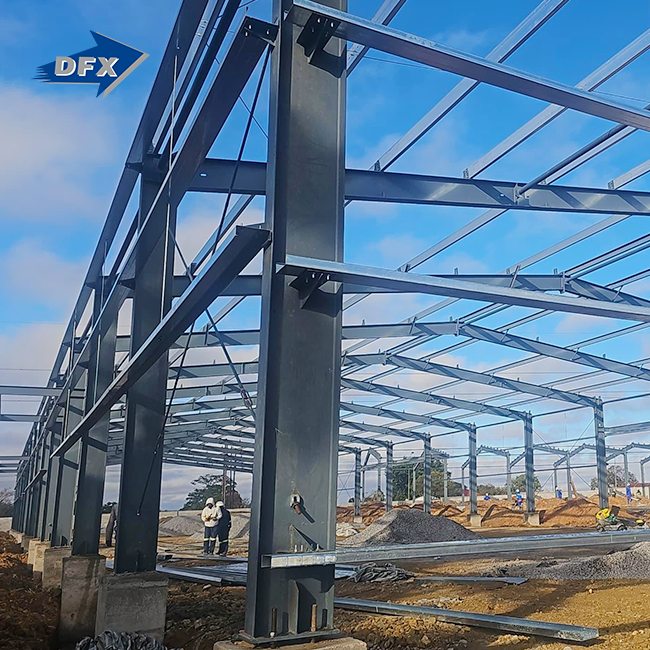
The contract should include delivery goals, acceptance standards based on ISO 13920 dimensional limits, and a fault liability period of at least 12 months after the product has been installed. Assign a site monitor to check the bolt torque values on High-Strength Friction Grip (HSFG) links and the columns' verticality tolerances while the structure is being put together. A structure inspection report after installation gives you a starting point for planning future maintenance.
Maintenance and Sustainability: Maximizing Lifespan of Your Steel Structure Exhibition Hall
A steel building does need some upkeep, but if it's taken care of properly, it lasts a very long time, especially when sourced from a quality steel structure exhibition hall supplier.
Routine Inspection and Preventive Care
Set up visual inspections every six months to check the condition of the coating, the corrosion at the connection points, and the drainage performance of the roof. If the protective coating has been worn away, you should fix it so that the oxidation doesn't spread. With a C3-level anti-corrosion treatment, a steel display hall is meant to last longer than 50 years. However, that number only applies to regular upkeep, not actions that are put off until later.
Environmental and Sustainability Advantages
Steel can be recycled over and over again, and pre-engineered production creates a lot less waste on-site than cast-in-place concrete. If you choose a provider that uses recycled steel and production methods that use less energy, your project will help the company meet its green goals. As of now, some markets need proof of embodied carbon as part of building permit applications. This means that it is standard practice to ask suppliers for Environmental Product Declarations (EPDs).
Long-Term ROI Through Proactive Upkeep
Steel building halls that are well taken care of lose value more slowly than ones that aren't, so the value of the object is protected over time. Faster construction times—usually 30–50% faster than similar concrete structures—allow people to move in sooner and get their money back faster. If you work with a supplier that gives technical help after the project is finished, you will always have access to the original design data in case you need to make changes to the structure.
Conclusion
To find a good steel structure exhibition hall supplier, you need to look at their certifications, see how good they are at design, compare their total ownership costs, and follow a strict procurement process. Steel has been shown to speed up construction, make structures more flexible, and last for a long time—as long as you buy it from a supplier with good quality control and on-time delivery. Follow the steps and guidelines in this guide to make a smart choice about your next job that won't put you at risk.
FAQ
Q1: How long does it take to build a steel structure exhibition hall?
Timelines for different sizes of projects vary, but for a normal 5,000–10,000-square-meter prefabricated steel display hall, it takes about 3–5 months from the time the order is confirmed until the hall is fully installed on-site. This includes building, moving, and putting up. Most of the time, concrete versions need 12 to 18 months.
Q2: Is steel more cost-effective than concrete for exhibition halls?
Yes, most of the time. Steel needs a shallower base, about 40% less work on-site, and the ability to move into the building earlier. Even though the raw materials cost more in some markets, the total cost of the project is often less than that of concrete.
Q3: How do I verify a supplier's certifications?
Ask for the original certificate number and name of the granting body, then check directly on the online register of the certification body. When checking for CE marking, make sure you look at the harmonized standard (like EN 1090) and the Notified Body number that is written on the certificate.
Q4: Can the hall be customised for multi-storey use?
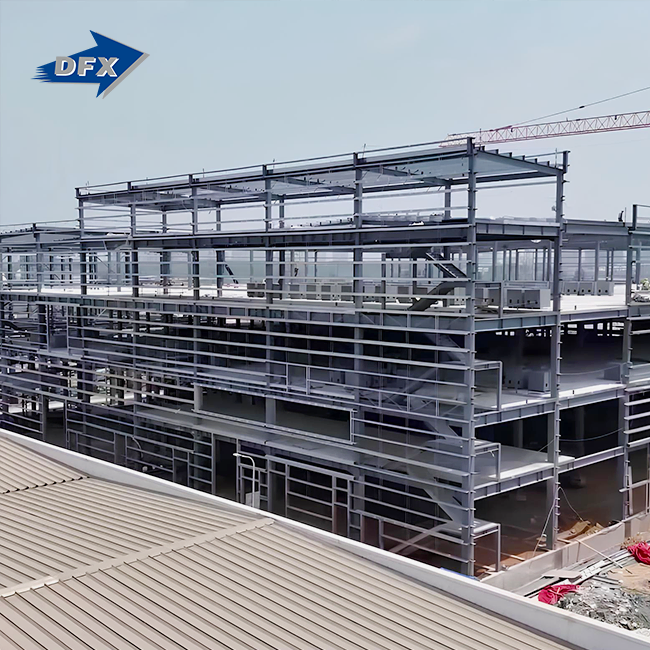
Yes. Multi-storey commercial buildings for company offices, executive centers, or business pavilions can be made with a steel column-beam frame, composite floor systems, and steel bracing. Depending on your tastes and budget, the front can be made of a curtain wall or metal panels.
Partner With DFX for Your Next Exhibition Hall Project
Since 2011, DFX (Qingdao Director Steel Structure Co., Ltd.) has been building certified steel structures. They have over 200 skilled workers, 40,000 m² of production space, and processes that are CE- and ISO-certified. As a direct steel structure exhibition hall supplier and manufacturer, we can help with architectural design, structural calculations, manufacturing, and assembly all from one place. Get a quote for your project right away by emailing jason@bigdirector.com.
References
1. American Institute of Steel Construction (AISC). Steel Construction Manual, 16th Edition. AISC, 2022.
2. British Standards Institution. EN 1090-2: Execution of Steel Structures and Aluminium Structures. BSI, 2018.
3. International Organization for Standardization. ISO 13920: Welding — General Tolerances for Welded Constructions. ISO, 2023.
4. Steel Construction Institute (SCI). Design of Steel Structures for Buildings: A Guide to Eurocode 3. SCI, 2020.
5. World Steel Association. Steel's Contribution to a Low Carbon Future and Climate Resilient Societies. worldsteel, 2023.
6. Metal Building Manufacturers Association (MBMA). Metal Building Systems Manual. MBMA, 2022.
Learn about our latest products and discounts through SMS or email