- English
- French
- German
- Portuguese
- Spanish
- Russian
- Japanese
- Korean
- Arabic
- Greek
- German
- Turkish
- Italian
- Danish
- Romanian
- Indonesian
- Czech
- Afrikaans
- Swedish
- Polish
- Basque
- Catalan
- Esperanto
- Hindi
- Lao
- Albanian
- Amharic
- Armenian
- Azerbaijani
- Belarusian
- Bengali
- Bosnian
- Bulgarian
- Cebuano
- Chichewa
- Corsican
- Croatian
- Dutch
- Estonian
- Filipino
- Finnish
- Frisian
- Galician
- Georgian
- Gujarati
- Haitian
- Hausa
- Hawaiian
- Hebrew
- Hmong
- Hungarian
- Icelandic
- Igbo
- Javanese
- Kannada
- Kazakh
- Khmer
- Kurdish
- Kyrgyz
- Latin
- Latvian
- Lithuanian
- Luxembou..
- Macedonian
- Malagasy
- Malay
- Malayalam
- Maltese
- Maori
- Marathi
- Mongolian
- Burmese
- Nepali
- Norwegian
- Pashto
- Persian
- Punjabi
- Serbian
- Sesotho
- Sinhala
- Slovak
- Slovenian
- Somali
- Samoan
- Scots Gaelic
- Shona
- Sindhi
- Sundanese
- Swahili
- Tajik
- Tamil
- Telugu
- Thai
- Ukrainian
- Urdu
- Uzbek
- Vietnamese
- Welsh
- Xhosa
- Yiddish
- Yoruba
- Zulu
Steel educational buildings: Design, Safety, and Sustainability
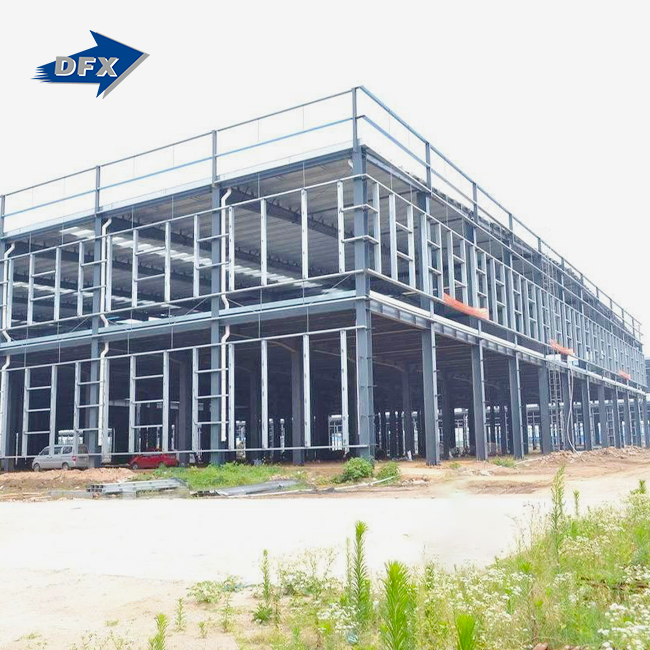
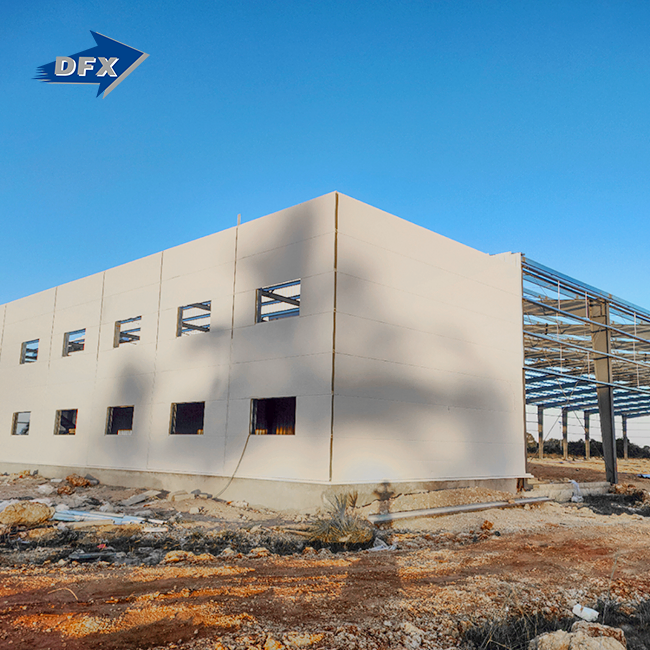
Steel educational buildings are purpose-built structures that use structural steel frames to create safe, durable, and flexible learning environments. As school infrastructure demands grow worldwide, more construction contractors, EPC firms, and institutional developers are turning to prefabricated steel school buildings to reduce costs and speed up delivery. Combining earthquake resistance, fire protection, acoustic performance, and energy efficiency, steel school buildings outperform conventional concrete and timber alternatives across nearly every category. This guide covers design principles, safety standards, sustainability factors, and procurement best practices.

Understanding the Design Principles of Steel Educational Buildings
Design Flexibility and Structural Adaptability
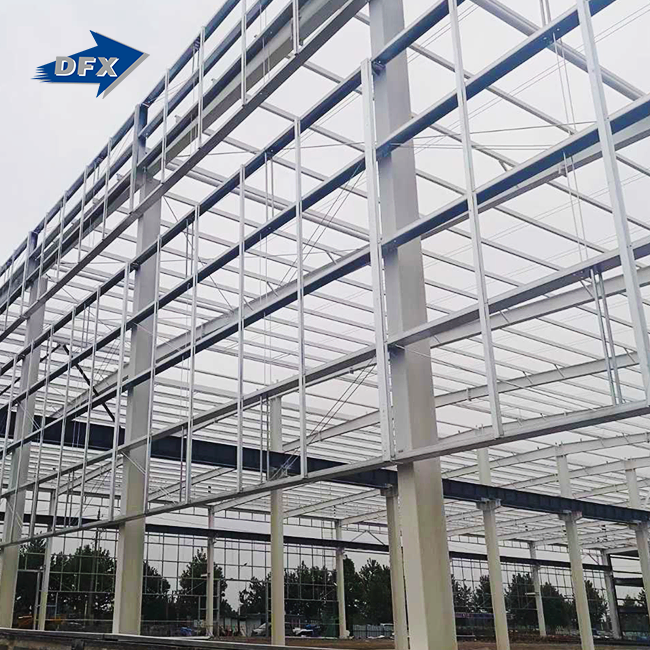
With steel column-beam framing systems, which usually use Q235 or Q355 grade steel, wide clear spans can be supported without the need for internal posts. This lets you build labs, gyms, assembly halls, and classrooms in ways that concrete frames just can't do for the same price. Steel is a good choice for schools that expect to grow or change their curriculum over time because it can be used to reconfigure inner areas later on.
Prefabrication and Faster Project Delivery
One of the main reasons procurement managers choose steel for school construction is that it can be made away from the building site. Steel parts are made in a controlled environment in a plant and then sent to the site to be put together. The American Institute of Steel Buildings (AISC) says that this method cuts down on building times by 30–50% compared to cast-in-place concrete. That extra time saved is very helpful for school areas that have to stick to tight academic schedules.
Acoustic and Thermal Performance in Learning Environments
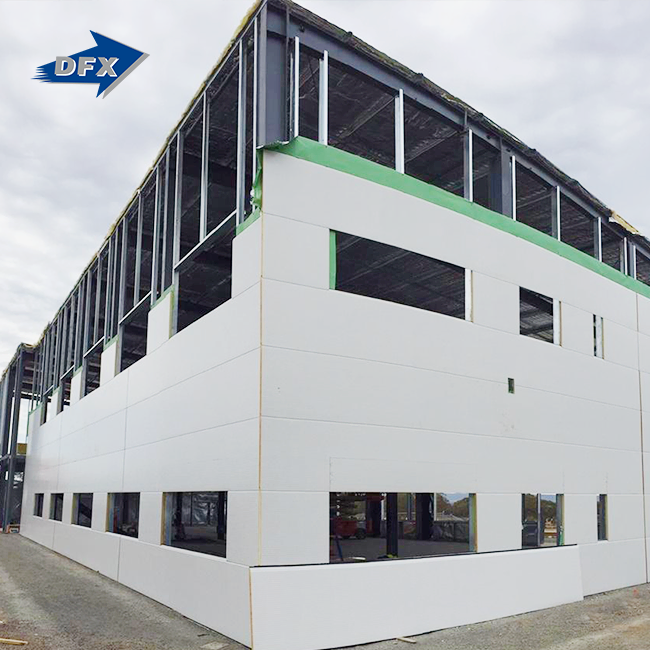
Steel educational buildings combine composite floor systems, insulated metal panels, and acoustic ceiling treatments that work together to keep noise from moving between classrooms. Steel is good at retaining heat because it pairs well with sandwich panel wall systems that have metal faces and mineral wool or polyurethane cores. As a direct result, these panels lower the amount of energy needed for heating and cooling. They also keep noise levels within the ranges suggested by the American National Standards Institute (ANSI S12.60) for classroom acoustics.
Ensuring Safety and Structural Integrity in Steel Educational Buildings
Seismic and Wind Load Resistance
Instead of breaking apart, controlled plastic deformation is how steel frames release seismic energy. In places with a lot of earthquakes, AISC 341 specifies moment-resisting frames and cross-bracing structures. For places that get a lot of wind, steel buildings are designed to meet ASCE 7 load standards, which include estimates for winds that are strong enough to cause hurricanes. When building a school, these standards are especially important because they make sure that people's lives are safe.
Fire Protection Systems and Code Compliance
Above 600°C, steel that isn't covered loses its hardness. Because of this, schools need passive fire protection that is approved and applied to building parts. Most of the time, intumescent coatings are used. These coatings spread when heated, creating an insulating char layer. They can meet ASTM E119 ratings of two to four hours. For steelwork that is going to be seen, cementitious sprays are an option. Third-party fire tests have shown that both methods work, and they can both be used in schools with students.
Indoor Air Quality and Occupant Health
After it is installed, structural steel does not give off volatile organic compounds (VOCs), which is different from some other building materials. When metal panel surfaces are properly sealed and HVAC systems are filtered, steel school buildings meet ASHRAE 62.1 guidelines for indoor air quality. Better student attendance and focus have been linked to healthier indoor settings. This was backed by a study released in the journal Indoor Air (2015).
Advancing Sustainability in School Construction with Steel
Recycled Content and Carbon Reduction
Steel is the most recovered building material in the world. According to the World Steel Association, steel made in an electric arc furnace (EAF) has 60–100% recovered scrap in it. Using repurposed steel in school building projects lowers embodied carbon without affecting the strength of the structure. Material Transparency Reports and Environmental Product Declarations (EPDs) from certified steel makers help procurement teams that want to get LEED or BREEAM approval with the paperwork.
Energy Efficiency Over the Building Lifecycle
In thermal performance modeling, steel educational buildings with insulated metal panels always do better than similar schools made of stone or brick. A 100mm polyurethane sandwich panel used in a composite wall can achieve U-values as low as 0.20 W/m²K, which means it uses a lot less energy for HVAC systems every year. Lower energy bills over the course of a building's 30–50-year life directly translate into lower operating costs for school administrators, which strengthens the business case during the initial procurement.
End-of-Life Recyclability and Circular Economy
When a building's service life is over, structural steel components retain high scrap value and can be fully recovered without breaking down. When concrete is broken down, a lot of trash that can't be recycled is made; steel doesn't make any trash. This advantage over the course of its life supports circular construction principles that are being asked for more and more by US, EU, and Australian public procurement rules. Total cost of ownership models for government-funded school projects should include the ability to be recycled.
Procurement Considerations for Steel Educational Buildings
There's more to picking a steel frame source for a school project than just looking at prices. Here are the main things that buying teams need to look at:
- Certifications and quality standards: Look for ISO 9001 or ISO 9004 certification, CE marking, and compliance with local structural codes such as IBC, Eurocode 3, or GB 50017. These confirm that fabrication processes meet documented quality benchmarks.
- Engineering and design support: A supplier capable of delivering architectural layout design, structural calculations, shop drawings, and installation guidance reduces coordination risk significantly. Turnkey supply models—covering steel frame, roofing, cladding, windows, and doors—compress the supply chain and simplify project management.
- Custom versus prefab trade-offs: Prefabricated modular steel school buildings suit straightforward layouts and tight timelines. Custom-fabricated steel frames are better suited to complex multi-storey or architecturally unique designs. Both approaches should include a full set of stamped engineering drawings before fabrication begins.
For steel educational buildings, these evaluation points are the same for project managers looking for buildings for college sites, government buildings, and industrial parks. Once technical compliance is confirmed, purchasing teams should ask for factory audit records and sample Mill Test Certificates (MTCs) to check the grade of steel and its mechanical properties before making orders.
Why Experienced Suppliers Matter in School Projects?
There are special duties that come with school buildings. Any structural problem or code violation has a direct effect on the kids, the staff, and the organizations. This is why purchasing managers give more weight to suppliers whose production records can be checked, not just those with low prices.
The Director Steel Structure Co., Ltd. (Director Steel) was founded in 2011 and has been making steel structures for commercial buildings, public facilities, office buildings, and large-span industrial structures for more than 12 years. The company has more than 200 trained workers who work in an enclosed area of 40,000 square meters. There are six automatic welded H-beam production lines that make about 20,000 tons of welded H-beams and columns every year. There are also C/Z section steel lines and sandwich panel production lines.
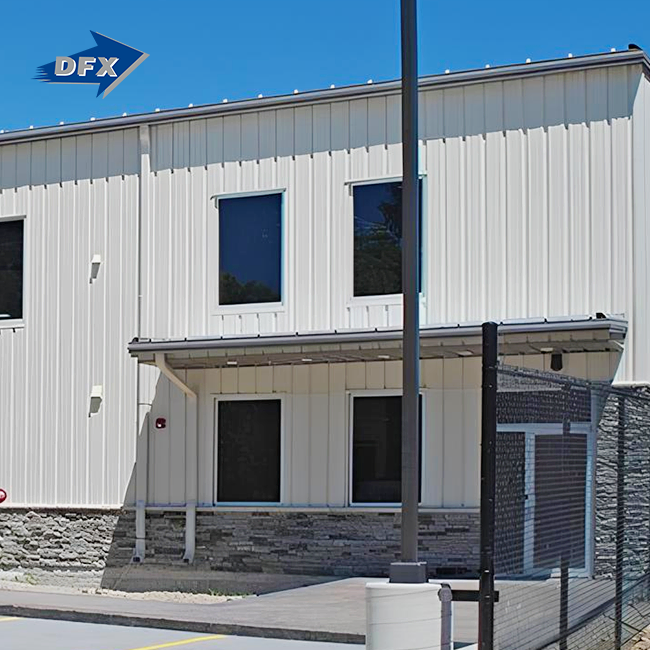
Director Steel is certified by CE and follows the quality management standards set by ISO 9004. An in-house building design and detailing team helps customers with everything from initial plans to fabrication and helps with setting up the structure on-site. Steel column-beam frames (Q235/Q355), composite floor systems, steel bracing, curtain wall or metal panel faces, and full enclosure kits for single- and multi-story buildings are some of the things that are sold. All of the goods are made to meet the building rules in each target market.
Conclusion
Steel educational buildings offer structural performance, safety compliance, and long-term durability that options made of concrete and wood cannot match for the same price. From being resistant to earthquakes to being quiet, and from using recycled materials to finishing projects faster, steel school buildings meet the realistic needs of project managers, purchasing officers, and engineering directors all over the world.
FAQ
Q1: Is steel suitable for multi-storey school buildings?
Yes. Steel column-beam frames with composite floor systems are well-established for multi-storey school construction. The combination of high yield strength (235–355 MPa) and lightweight sections reduces foundation loads while supporting multiple stories efficiently.
Q2: How long does a steel school building last?
With appropriate protective coatings and routine maintenance inspections, steel school buildings are designed for service lives exceeding 50 years. Coating systems should be inspected every 5–10 years depending on local environmental exposure.
Q3: What fire ratings are achievable for steel school buildings?
Intumescent coatings and cementitious sprays applied to structural steel members can achieve 2–4-hour fire ratings when tested to ASTM E119, meeting International Building Code requirements for educational occupancies.
Q4: Can steel school buildings meet green building certification requirements?
Yes. Recycled steel content, EPD documentation, insulated panel systems, and energy-efficient HVAC integration all contribute to LEED, BREEAM, or equivalent green building certification.
Start Your Steel School Building Project with Director Steel
Director Steel's 40,000 m² factory in Qingdao, China, makes steel school buildings that are CE-certified and meet ISO 9004 standards. We are a reliable maker of steel educational buildings with more than 12 years of project experience. We offer full-service support, including structural design, fabrication, roofing, cladding, and fitting advice. Get in touch with our engineering team right away to talk about the details of your project. Jason@bigdirector.com is his email address.
References
1. American Institute of Steel Construction (AISC). Steel Construction Manual, 16th Edition. AISC, 2022.
2. World Steel Association. Steel's Contribution to a Low Carbon Future and Climate Resilient Societies. World Steel Association, 2021.
3. Wargocki, P., & Wyon, D. P. "Providing Better Thermal and Air Quality Conditions in School Classrooms Would Be Cost-Effective." Indoor Air, 2013.
4. American Society of Civil Engineers (ASCE). Minimum Design Loads and Associated Criteria for Buildings and Other Structures (ASCE 7-22). ASCE, 2022.
5. National Institute of Building Sciences (NIBS). Whole Building Design Guide: Educational Facilities. NIBS, 2020.
6. Steel Construction Institute (SCI). Design of Steel Buildings to Eurocode 3 (P362). SCI, 2014.
Learn about our latest products and discounts through SMS or email