- English
- French
- German
- Portuguese
- Spanish
- Russian
- Japanese
- Korean
- Arabic
- Greek
- German
- Turkish
- Italian
- Danish
- Romanian
- Indonesian
- Czech
- Afrikaans
- Swedish
- Polish
- Basque
- Catalan
- Esperanto
- Hindi
- Lao
- Albanian
- Amharic
- Armenian
- Azerbaijani
- Belarusian
- Bengali
- Bosnian
- Bulgarian
- Cebuano
- Chichewa
- Corsican
- Croatian
- Dutch
- Estonian
- Filipino
- Finnish
- Frisian
- Galician
- Georgian
- Gujarati
- Haitian
- Hausa
- Hawaiian
- Hebrew
- Hmong
- Hungarian
- Icelandic
- Igbo
- Javanese
- Kannada
- Kazakh
- Khmer
- Kurdish
- Kyrgyz
- Latin
- Latvian
- Lithuanian
- Luxembou..
- Macedonian
- Malagasy
- Malay
- Malayalam
- Maltese
- Maori
- Marathi
- Mongolian
- Burmese
- Nepali
- Norwegian
- Pashto
- Persian
- Punjabi
- Serbian
- Sesotho
- Sinhala
- Slovak
- Slovenian
- Somali
- Samoan
- Scots Gaelic
- Shona
- Sindhi
- Sundanese
- Swahili
- Tajik
- Tamil
- Telugu
- Thai
- Ukrainian
- Urdu
- Uzbek
- Vietnamese
- Welsh
- Xhosa
- Yiddish
- Yoruba
- Zulu
How to Design an Automotive Assembly Workshop Layout Efficiently
Making a good plan for an Automotive Assembly Workshop layout has a direct effect on how much work gets done, how safe the workers are, and how much it costs to run the business. An Automotive Assembly Workshop has to be able to handle complicated tasks like body-in-white welding and final trim installation. It also has to make sure that materials move smoothly, avoid bottlenecks, and easily incorporate automation. It's important to find a layout that combines how the room is used, ergonomics, and the ability to grow in the future. This guide explains useful tips that procurement managers, project engineers, and building planners can use to create facilities that are more productive and last longer.
Understanding the Challenges in Automotive Assembly Workshop Design
Space Constraints and Workflow Bottlenecks
A lot of automakers have trouble finding land, especially when they want to add on to current sites. Because of limited room, there are limits on where to put tools, how far the crane can reach, and where to store materials. When an Automotive Assembly Workshop site is not set up in the right order, there are problems with workflow because parts are not available at key points, or there are too many people near quality inspection zones. These wasteful practices lead to wasted time at work and slower output processes.
Root Causes: Poor Space Utilization and Suboptimal Sequencing
These problems are caused by common design flaws. Aisles that are too big lose important floor space, and buffer zones that are too small cause delays in handling. Sequencing issues happen when heavy parts like chassis frames come late in the process, making it necessary to go back and do things again. Paying too little attention to load routes, especially when using an overhead crane, can cause structural stress on steel frames and cost a lot to fix. The ideas behind lean production can help. Designers can make small, sensible layouts by mapping value streams and getting rid of moves that don't add value. Modular steel structures make it possible to change the layout of production lines as product mixes change, which protects long-term investments.
Core Steps to Designing an Efficient Automotive Assembly Workshop Layout
Space Planning and Workflow Sequencing
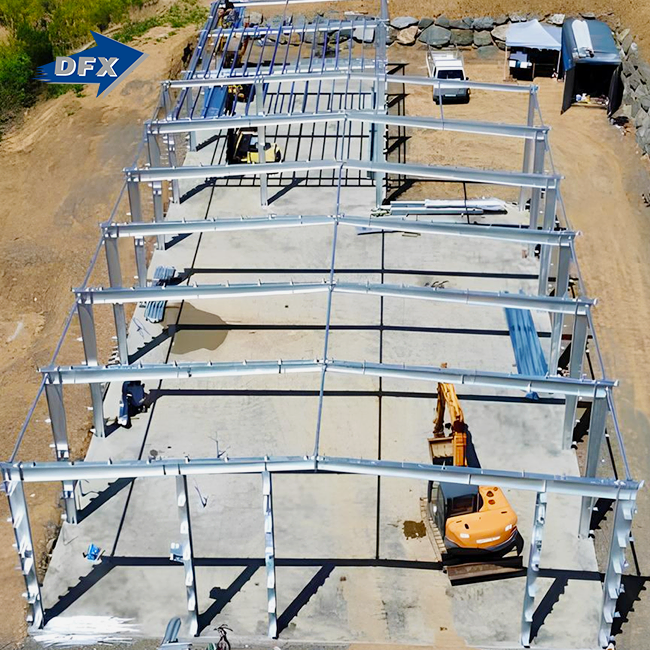
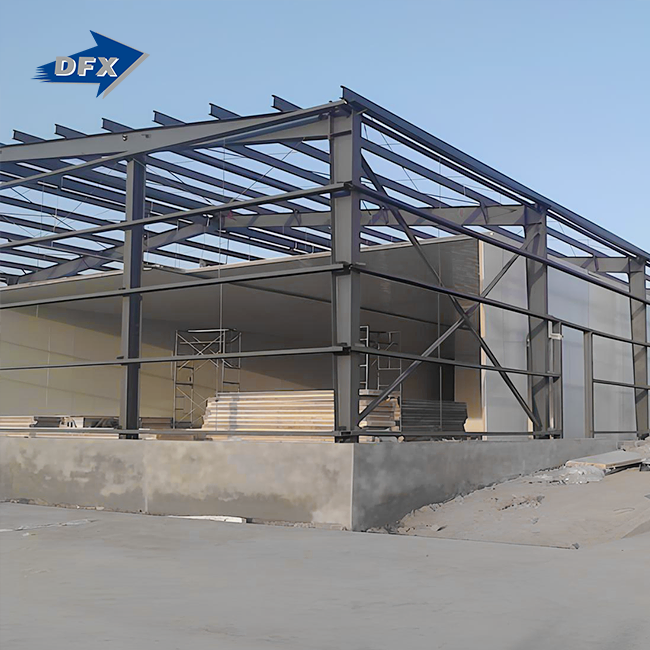
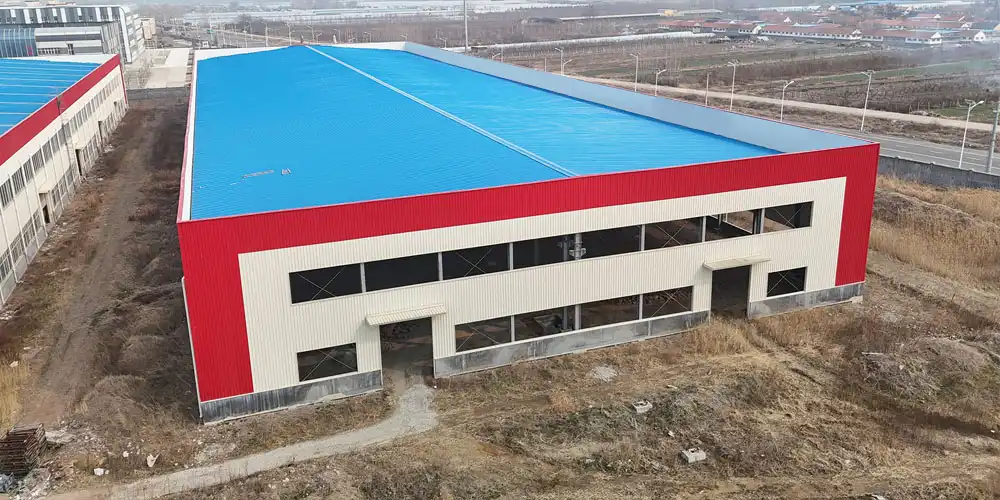
A thorough study of production volume, takt time, and product range is the first step in designing an Automotive Assembly Workshop plan that works well. Make sure there are clear areas for getting raw materials, subassembly stations, major assembly lines, quality control checkpoints, Auto factory design, and storing produced goods. Place these zones so that parts and workers don't have to move too far. A well-organized workplace makes sure that the steps from pressing to welding, painting, and final assembly go smoothly, with no problems with cross-traffic or traffic jams. Flexible zoning is possible with steel buildings that have long lengths without columns, often more than 30 meters. Welded H-section steel main frames (Q235 or Q355 grade) are strong enough to hold high cranes and mezzanine platforms without getting in the way of work on the floor. Bolted links let you put things together quickly and make changes in the future.
Adhering to Safety Standards and Ergonomic Design
Following OSHA and ISO safety rules helps keep workers safe and lowers the risk of being sued. Make sure there are enough emergency doors, lights, and air flow. Ergonomic workstation heights, anti-fatigue floors, and easy-to-reach tool storage all help keep workers from getting hurt and increase production. Keep forklifts away from paths for people to avoid accidents. High-quality surface treatments on steel parts, like epoxy zinc-rich bases and polyurethane topcoats, make them less likely to rust and increase the life of the building, especially in damp painting settings that are damp. Achieve salt spray protection of more than 1000 hours to keep the structure's stability for decades.
Types of Automotive Assembly Workshop Layouts and Their Suitability
Line Flow Layout: High-Volume Production
This plan sets up the desks in a straight line, which is great for doing the same thing over and over or making a lot of things. Vehicles keep moving through the steps of welding, painting, and assembly, which cuts down on travel time and makes organizing easier. Line flow works best for basic forms that can't be changed much in an Automotive Assembly Workshop. As part of the structural standards, the floors must be long and unbroken and be held up by strong steel frames. Overhead crane rails run straight to the line, which makes it easier to place heavy parts. This layout's simplicity makes the original design simpler, but it makes it harder to make changes to the product.
Cellular Layout: Hybrid Efficiency
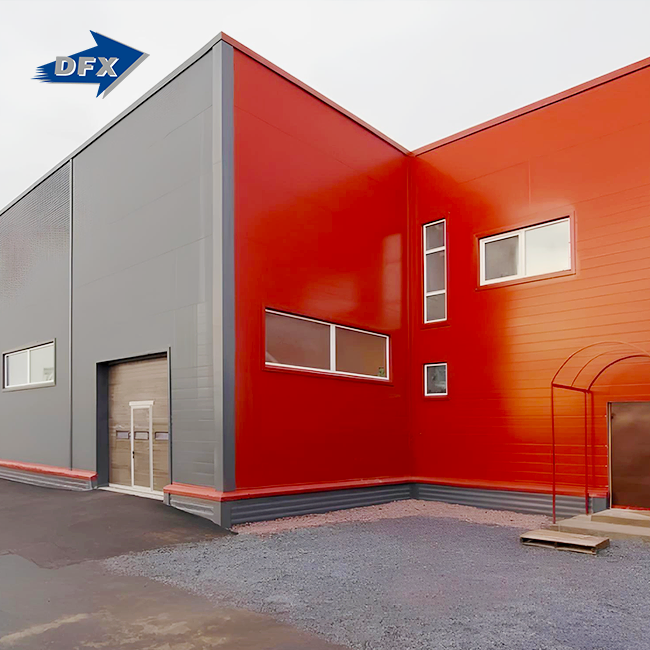
Cellular layouts divide workstations into separate groups, or cells, that are responsible for a full assembly process for a certain type of car or subassembly. This mixed method combines functional flexibility with efficient line flow, allowing mixed-model production without a lot of retooling. For cells to work, steel buildings need to be flexible, with walls that can be moved and electrical hookups that can be changed. Sandwich panels with polyurethane or rockwool cores keep heat in and noise out, making workspaces more comfortable, which helps people focus and do a better job. Selecting the right plan relies on how much is being made, how complicated the product is, and how it can be expanded in the future. Early on, procurement managers should work with the Auto factory design and structural steel suppliers to make sure that the building skin supports the process strategy that was chosen.
Leveraging Advanced Tools and Technologies in Workshop Layout Design
Digital Simulation and Workflow Optimization
Virtual prototypes of Automotive Assembly Workshop layouts can be made with modern design tools before building starts. Engineers can use programs like AutoCAD Plant 3D and Siemens Plant Simulation to simulate how materials move, find problems, and try out different layouts. Insights based on data cut down on expensive redesigns and speed up project timelines. Building Information Modeling (BIM) and simulation tools work together to manage the electrical, mechanical, and structural systems. This all-around method makes sure that the steel framework can fit HVAC ductwork, fire suppression pipes, and electrical lines without any problems.
Future-Proofing Through Modular Design
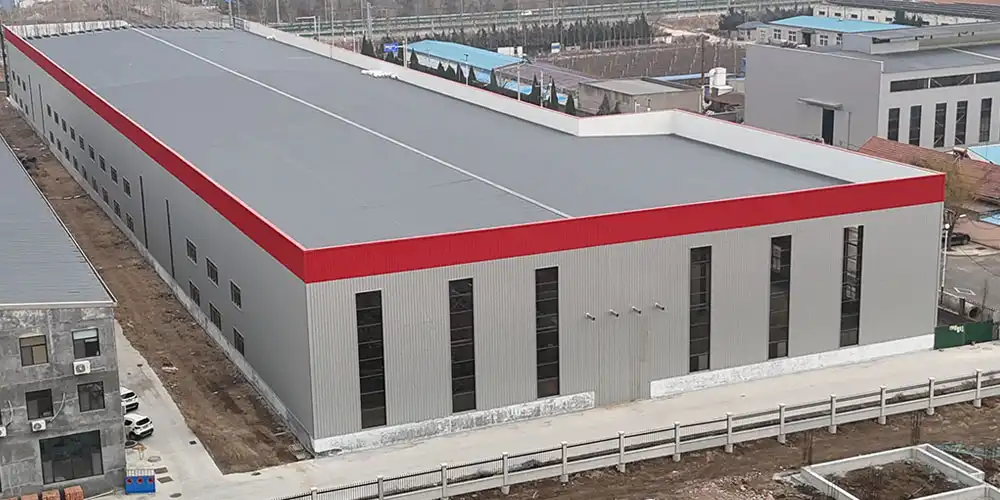
As customer tastes and government rules change, the auto industry changes quickly to keep up. Modular steel construction lets buildings grow in the future without stopping work. New parts can be easily added because the end posts and knock-out wall panels have connection points that have already been drilled. Picking a provider that can do all of the planning, fabrication, and installation makes the job go more smoothly. For example, Qingdao Director Steel Structure Co., Ltd. is certified by both ISO9001 and CE and offers a full range of services, from idea planning to on-site assembly. These suppliers offer complete packages that meet high-quality standards around the world. They have been making welded H-beams, C/Z section steel, and sandwich panels for more than 12 years.
Case Studies: Successful Automotive Assembly Workshop Layouts
High-Efficiency Line Flow Workshop
A mid-sized automotive manufacturer in the United States required a new assembly facility to double production capacity. The project team planned a line flow layout that covered 15,000 square meters and used a welding H-section steel frame with clear widths of 32 meters. Overhead bridge cranes moved things up and down, and floor-mounted elevators moved car bodies from one stop to the production line, the next in this Automotive Assembly Workshop. Advanced modeling tools improved the space between workstations, which cut cycle time by 18%. Robotic welding cells worked well with hand trim stations, combining technology and human knowledge. Within six months, the plant was producing at full capacity, showing how important it is to plan carefully ahead of time and make the structure flexible.
Automated Cellular Workshop for Mixed Models
An EPC contractor working on a job for a European car client set up a cellular layout so that one line could handle three different types of vehicles. Each cell had its own set of tools and robots for making certain subassemblies. This made it possible to switch between them quickly without stopping production. The steel frame had modular wall panels and flexible utility links that let cells be rearranged as product needs changed. Insulated metal walls kept the temperature and humidity stable, which is important for paint quality. This project showed how well-designed steel frames help businesses be flexible and stay competitive over the long term. Both case studies show how important it is to match production methods with structure design. Professionals in charge of buying things should give preference to sellers who know how to put together cars and offer custom tech solutions.
Conclusion
To make an efficient Automotive Assembly Workshop plan, you have to find a balance between limited space, process logic, integrating automation, and following safety rules. Depending on the number of products and types being made, line flow, functional, and cellular layouts all have their own benefits. Using digital modeling tools and advanced robots makes things more accurate and flexible. When practical goals are aligned with structural design, real-world case studies show measurable gains in quality and efficiency. Procurement managers can find workshops that meet current needs and can grow with the company by working with experienced steel structure makers.
FAQ
1. What safety standards are essential for automotive assembly workshops?
According to OSHA rules, there must be enough air flow, emergency doors, and guards on all machines. ISO 45001 is a set of rules for managing health and safety at work. Ergonomic workstations make it less likely that someone will get hurt, and steel buildings with fire-resistant coatings provide indirect fire protection for up to three hours in an Automotive Assembly Workshop.
2. Should I choose automated or manual layouts for my workshop?
The choice will depend on the amount being made, the budget, and the skills of the workers. Automated plans work best for regular, high-volume assembly where demand is known ahead of time. Manual plans give you more options for unique orders and require less money up front. Many facilities use a mix of methods, automating jobs that are done over and over again while still having people oversee more complicated processes.
3. Which software tools help with layout simulation?
Siemens Plant Simulation, AutoCAD Plant 3D, and Dassault Systèmes' DELMIA all help you get the best material flows and equipment placement. These tools work with BIM systems, which let the building, mechanical, and electrical fields work together. Early-stage modeling cuts down on mistakes and speeds up the building process.
4. How long do steel structures last in humid environments?
With the right surface preparation (Sa 2.5 blasting) and marine-grade finishes (epoxy zinc-rich primers and polyurethane topcoats), designs can last longer than 50 years. Regular upkeep and checks make things last longer, which protects long-term investments in infrastructure for putting together cars.
Partner with DFX for Your Automotive Assembly Workshop Needs
It has been over 12 years since Qingdao Director Steel Structure Co., Ltd. (DFX) started making big industrial steel buildings for car assembly plants. Our ISO9001-certified factory has 40,000 square meters of production space, six automatic welded H-beam lines, and the latest technology for making sandwich panels. We offer full package solutions, which include designing and building the structure, finishing the outside, and helping with the placement on-site. This makes sure that your Automotive Assembly Workshop meets international quality standards. We know how hard it is to make cars because we are a trusted source. Our welded H-section steel frames (Q235/Q355 grades) can hold a lot of weight, and the fixed joints make them easy to put together and allow for future growth. DFX makes sure your project stays on track and on budget by offering wait times between 25 and 48 days and using materials that meet ASTM standards. Get in touch with us right away at jason@bigdirector.com to talk about your unique needs. Whether you're building a new assembly plant or growing an old one, our engineering team will come up with custom solutions that improve safety, speed up work, and allow for long-term growth.
References
1. Tompkins, J. A., White, J. A., Bozer, Y. A., & Tanchoco, J. M. A. (2010). Facilities Planning (4th ed.). John Wiley & Sons.
2. Groover, M. P. (2020). Automation, Production Systems, and Computer-Integrated Manufacturing (5th ed.). Pearson Education.
3. Heragu, S. S. (2016). Facilities Design (4th ed.). CRC Press.
4. Mather, H., & Schaffer, G. (2018). "Lean Manufacturing Principles in Automotive Assembly." International Journal of Production Research, 56(8), 2847-2863.
5. Smith, D. R. (2019). Steel Structures: Design and Behavior (6th ed.). Pearson.
6. Occupational Safety and Health Administration (2021). OSHA Technical Manual: Section III, Chapter 5 – Welding, Cutting, and Brazing. U.S. Department of Labor.
Learn about our latest products and discounts through SMS or email