- English
- French
- German
- Portuguese
- Spanish
- Russian
- Japanese
- Korean
- Arabic
- Greek
- German
- Turkish
- Italian
- Danish
- Romanian
- Indonesian
- Czech
- Afrikaans
- Swedish
- Polish
- Basque
- Catalan
- Esperanto
- Hindi
- Lao
- Albanian
- Amharic
- Armenian
- Azerbaijani
- Belarusian
- Bengali
- Bosnian
- Bulgarian
- Cebuano
- Chichewa
- Corsican
- Croatian
- Dutch
- Estonian
- Filipino
- Finnish
- Frisian
- Galician
- Georgian
- Gujarati
- Haitian
- Hausa
- Hawaiian
- Hebrew
- Hmong
- Hungarian
- Icelandic
- Igbo
- Javanese
- Kannada
- Kazakh
- Khmer
- Kurdish
- Kyrgyz
- Latin
- Latvian
- Lithuanian
- Luxembou..
- Macedonian
- Malagasy
- Malay
- Malayalam
- Maltese
- Maori
- Marathi
- Mongolian
- Burmese
- Nepali
- Norwegian
- Pashto
- Persian
- Punjabi
- Serbian
- Sesotho
- Sinhala
- Slovak
- Slovenian
- Somali
- Samoan
- Scots Gaelic
- Shona
- Sindhi
- Sundanese
- Swahili
- Tajik
- Tamil
- Telugu
- Thai
- Ukrainian
- Urdu
- Uzbek
- Vietnamese
- Welsh
- Xhosa
- Yiddish
- Yoruba
- Zulu
Automotive Assembly Workshop: Layout, Process and Key Benefits
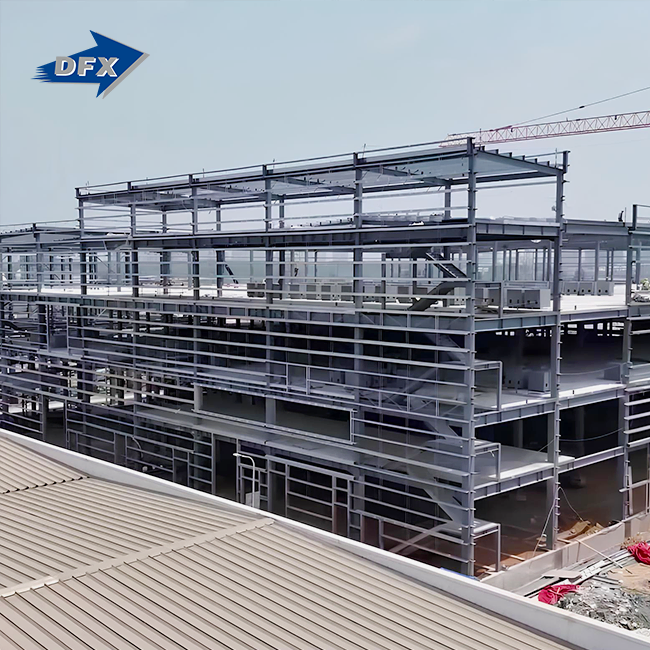
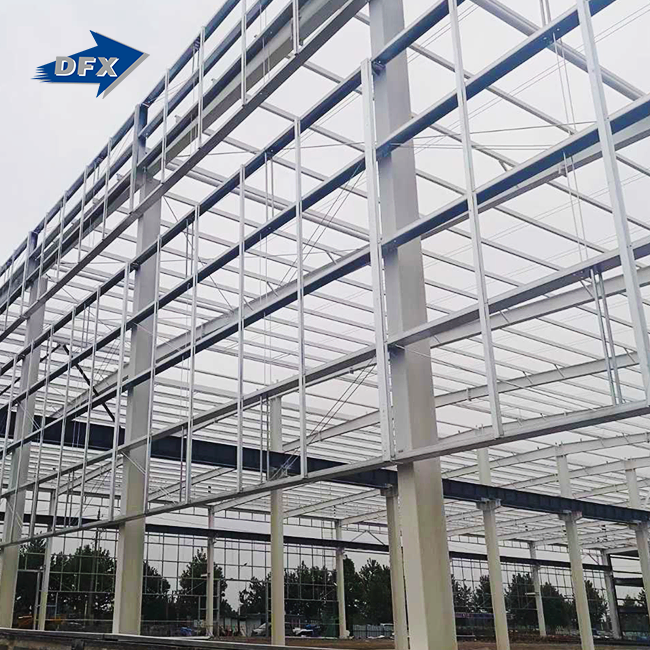
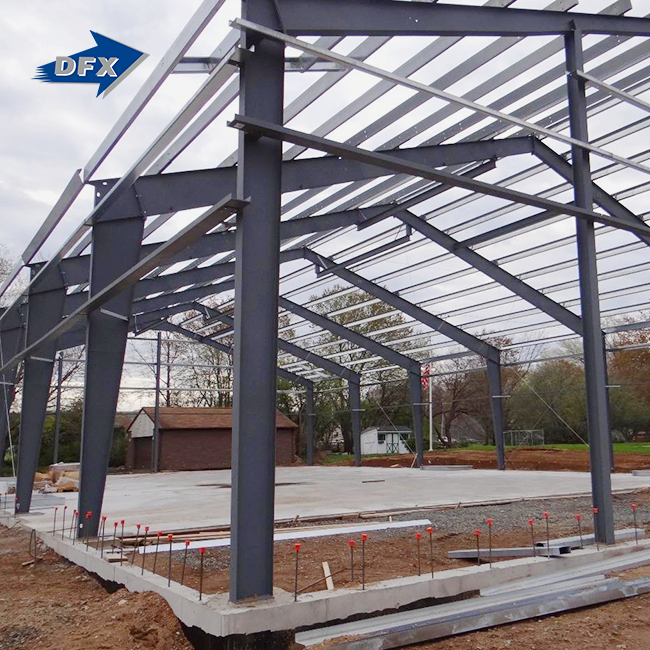
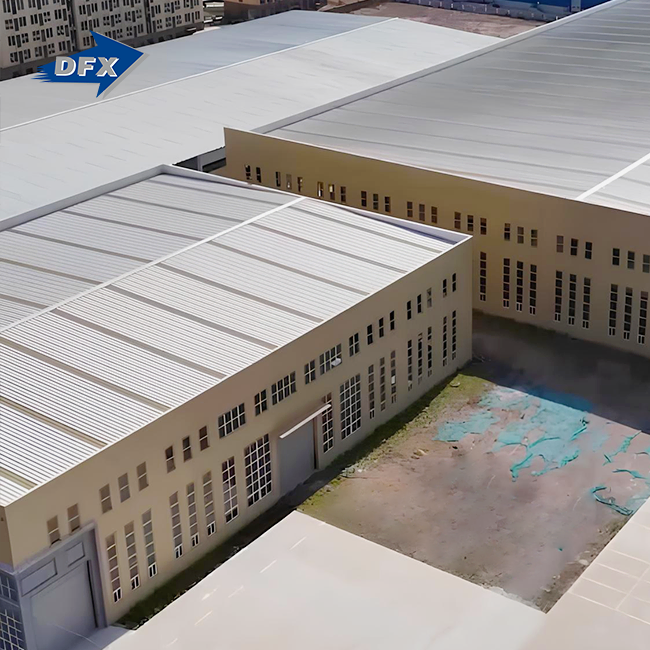
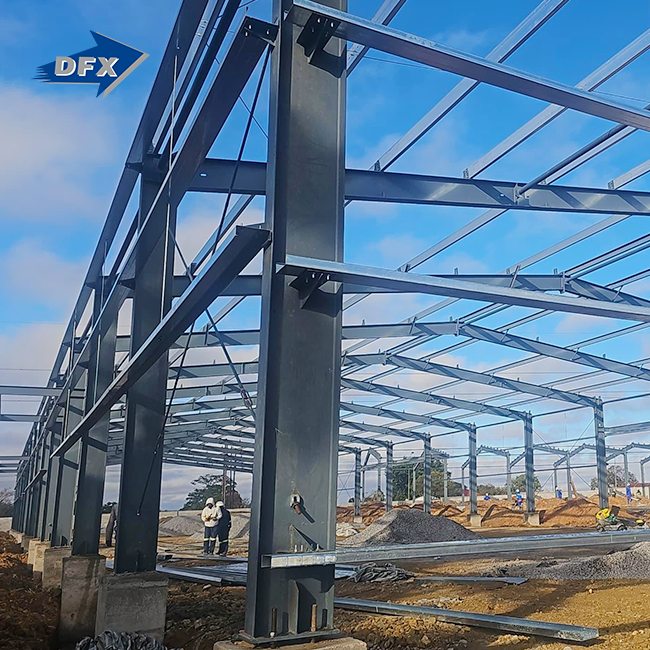
An Automotive Assembly Workshop is a special kind of factory that is designed to handle the complicated needs of making cars. With their steel frames, these buildings provide the necessary infrastructure for carefully putting together car parts, from the chassis and engine to the final trim. The design focuses on big gaps with no columns made of welded H-section steel frames (Q235/Q355 grade). These frames can support heavy overhead cranes, conveyor systems, and flexible production plans that are necessary for modern assembly work.


Understanding Automotive Assembly Workshops: Layout and Equipment
Facilities that are well thought out are essential for making cars that work well. When choosing the structural framework and plan design for assembly operations, project managers and buying teams have to make important choices.
What Makes Assembly Workshop Design Critical
Putting together modern cars takes more than just building a room. The building's structure has to be able to handle moving loads from bridge cranes that often weigh more than 10 tons, systems that move things from above, and robot cells that need to be perfectly lined up. We at Director Steel have been working to understand these problems for more than 12 years. Bolted steel links and C/Z steel purlins make the inside of our large-span industrial steel buildings open so that makers can set them up in any way they need to meet their production needs. Because there are no internal columns, the production lines are very flexible and can change as car models change.
Structural Materials That Support Heavy Equipment
Because of the physical needs of assembly work, strong structural solutions are needed. Our welding H-section steel frames are made from Q235 or Q355 steel, which has yield strengths above 345 MPa. This is important for keeping overhead cranes and hanging conveyors in place without bending too much. The surface is treated by shot blasting to the Sa 2.5 standard and then applying epoxy zinc-rich primers. This makes sure that the corrosion protection lasts for more than 1000 hours in salt spray tests. These requirements aren't made up on the spot; they're based on the expected Car manufacturing plant operating lives of facilities that have to keep precise equipment aligned for decades.
Automotive Assembly Workshop Process: From Start to Finish
Knowing how the assembly process works helps buyers list the right building features and equipment needs. At each stage of production, different structures and space needs arise.
Component Preparation and Staging
Parts come from wholesalers and internal manufacturing areas before the assembly process starts. Forklifts and material carts can move on smooth concrete floors that are big enough for staging areas. Our steel workshop plans include specific areas for receiving goods with ceilings high enough (usually 8 to 10 meters) to allow for stacking pallets and moving things around above them. Studies have shown that searching for things and moving things around can take up to 30% of assembly work hours when things are not organized well.
Subassembly Operations Build Complexity
Before they reach the main production lines, major car systems go through preliminary building. In separate subassembly rooms, the engine is dressed up, the dashboard is installed, and the door panels are put together. Smaller clear spans (15–20 meters) with targeted ventilation and work lighting are good for these places. The steel frame needs to be able to handle the spread of utilities like electrical drops, compressed air lines, and data cables for quality tracking systems. As part of our planning service, we coordinate MEP, which makes sure that structural members don't interfere with important building systems.
Safety and Maintenance Considerations
Moving tools, hanging loads, and material handling vehicles can be dangerous during assembly work. The building's design includes safety features like clearly marked paths for pedestrians, emergency doors that meet NFPA standards, and enough space between workrooms. As part of our combined design services, our steel buildings can fit fire suppression system pipes and sprinkler heads. Maintenance access features, like roof stairs and equipment platforms, make building systems last longer and keep workers safe while they do regular maintenance.
Key Benefits of Automotive Assembly Workshops for B2B Clients
Investment choices are based on practical and financial benefits that a car manufacturing plantcan provide. When assembly plants are properly built, they provide many benefits that make them more competitive.
Accelerated Project Timelines
When compared to standard concrete construction, steel construction cuts building finishing times by 30 to 50 percent. Our made-to-order production method finishes making the structures in 25 to 48 days, and it only takes 4 to 6 weeks to put up a normal assembly building on-site. This shortening of the timeline has a direct effect on the time it takes for new vehicle programs to reach the market, which is a key competitive edge when customer tastes change quickly. This speed is especially important for EPC companies because project delays cost them money and time.
Cost Predictability and Control
Pre-engineered steel buildings have set prices and little chance of change orders. Full structural kits come with design, fabrication, surface treatment, packing, and fitting instructions all in one box. Project managers get full installation drawings and technical help, which cuts down on coordination problems in the field that usually cause building costs to go up by 15 to 20 percent. The bolted link method lets parts be taken apart and moved if production needs change, which isn't possible with permanent concrete structures.
Long-Term Durability and Low Maintenance
When properly covered, structural steel can last for more than 50 years, even in harsh industrial settings. Our coating systems—epoxy zinc base, epoxy micaceous iron oxide intermediate coat, and polyurethane topcoat—are made for corrosivity categories C4 or C5-M. They can handle chemical contact from materials used in the assembly process. Steel buildings don't need much upkeep besides regular checks and touch-up paint in high-wear areas. Concrete buildings, on the other hand, crack and flake.

Comparing Automotive Assembly Workshops With Other Facilities
Being clear about the types of facilities helps people make smart financial choices and choose the right suppliers. Each type of building is used for a different kind of industry.
Assembly Workshops Versus Full Manufacturing Plants
Automotive manufacturing sites that do everything, including painting, pressing, welding, Auto factory design, and putting things together, sometimes all under one roof or in buildings next to each other. In order to keep these complexes clean, the stamping areas need reinforced foundations that keep the presses from shaking too much, the paint shops need airtight construction that keeps the positive pressure, and the welding areas need spark-resistant cladding and strong ventilation. Assembly-only workshops only work on putting together parts, which usually means smaller loads on the structure and easier controls for the environment. This expertise cuts down on the original investment by 40–60%, which makes assembly workshops perfect for companies that outsource upstream production processes or work with contract makers.
Distinguishing Assembly Halls From Body Repair Facilities
Auto body shops focus on fixing paint problems, finishing the outside of cars, and fixing damage from accidents. Usually, these buildings are 1,000 to 3,000 square meters and have ceilings that are 6 to 8 meters high, which is enough space for paint booths and car lifts. Different-sized Automotive Assembly Workshops (20,000 to 50,000 square meters with 10 to 14-meter high heights) make it possible for dozens or hundreds of cars to be made every day. These types of buildings have very different structural engineering, material-moving systems, and utility connections.
New Equipment Versus Refurbished Systems
Purchasing teams often have to decide whether to buy new robotic equipment or used equipment that can save them 40 to 50 percent of the cost. New systems come with warranties, the newest technology, and professional assistance from the seller that is needed to fix problems during startup. Refurbished technology is good for projects that are tight on money, but it comes with integration risks and less help. "Refurbishment" rarely improves the structure of the building itself—the quality of the steel manufacturing directly affects how reliably the building works, so new construction is the best option for buildings that will be used for 20 years or more. Director Steel's 20,000-ton yearly production capacity ensures that materials are always available and that quality is maintained while the job is being carried out.
How to Optimize Your Automotive Assembly Workshop Workflow
Continuous growth methods get the most out of spending on facilities. There are a number of tried-and-true methods that can increase efficiency.
Identifying and Eliminating Bottlenecks
A production flow study shows the limits that stop total throughput. Poorly organized materials that leave lines empty, uneven job cycle times that cause lines to build up, and narrow aisles that make it hard for deliveries to get through are all examples of common bottlenecks. Time-motion studies can measure these errors, which allows changes to be made more precisely. Moving tool boxes closer to areas that get a lot of use or making doors wider for forklifts are two simple changes that can often boost throughput by 10 to 15 percent without buying any new equipment.
Applying Lean Manufacturing Principles
Lean methods cut down on activities that don't add value and raise production costs. Sort, Set in Order, Shine, Standardize, Auto factory design, and Sustain, or 5S, is a method for organizing workspaces that cuts down on the time it takes to find things and the number of mistakes that happen. Value stream planning shows how information and materials move, pointing out places where loss could happen. Just-in-time arrival of materials that is timed with production takt times cuts down on the costs of keeping supplies on hand while keeping the line running. These cultural practices go well with the planning of actual facilities, which makes the most of the money spent on infrastructure.
Workforce Development and Safety Culture
Skilled workers are needed for setup, quality control, and ongoing improvement in even the most highly automated centers. Structured training programs build expert skills, while cross-training makes the workforce more flexible by adjusting for changes in attendance. Safety performance is directly linked to output. Injuries stop work and lead to more attention from regulators and higher insurance costs. Compared to concrete buildings with blind corners and separate work areas, steel-framed workplaces are more open, which makes it easier to see and talk to each other. This helps build a safety culture.
Conclusion
Assembling cars needs special buildings that balance structural performance, operating freedom, and cost-effectiveness. Competitive production operations are built on steel-framed workplaces that are designed with the right clear spans, load capacity, and environmental controls. To complete a project successfully, you need to know about the different plan choices, process routines, and methods for ongoing improvement that get the most out of infrastructure investments. Director Steel has worked with construction builders, manufacturing companies, and EPC firms for more than 12 years, so they know how to handle projects of any size when it comes to building car assembly lines.

FAQ
1. How do steel workshops handle vibration from heavy assembly equipment?
Assembly tasks cause less severe vibrations than pressing or forging, but moving an overhead crane and moving materials create dynamic loads. Our building plans include the right bending limits (usually L/600 for crane beams) to keep things from moving too much, which could mess up robotic measurements. When needed, equipment foundations separate certain machines from the building structure. They do this by connecting reinforced concrete pads to grade beams instead of floor slabs.
2. Can existing assembly workshops expand without production disruption?
Because steel buildings are made of modules, they can be expanded without any problems. Expansion zones that have already been thought out include end wall panels that can be taken off and poles that are made with connection points for future framing. The expansion is built outside the current building envelope, and the final tie-in is done during planned downtimes. Usually, it only takes two to three days to finish the structural link.
3. What determines the appropriate clear span width?
Production layout drives span requirements. For a single-line assembly, the clear width needs to be 18–24 meters, while for parallel lines or U-shaped designs, it needs to be 30–36 meters. Wider gaps raise the cost of the structure, but they make it easier to place equipment and change the layout in the future. Our design team looks at different layout choices while planning a project, balancing the need for operating flexibility with the efficiency of the structure.
Partner With Director Steel for Your Automotive Assembly Workshop Project
Director Steel offers complete steel frame options that are designed to work with assembly lines for cars. Our 40,000 square meter production facility manufactures welded H-beams, C/Z purlins, and complete building systems meeting ISO 9001 and CE certification standards. With six automatic H-beam production lines generating 20,000 tons of annual capacity, we maintain consistent material availability and quality control throughout your project timeline. As a seasoned Automotive Assembly Workshop Supplier, we offer a full range of combined services, including structural design, manufacturing, surface treatment, and installation support—providing single-source accountability from concept through commissioning. Project engineers and procurement managers benefit from our 12-year track record serving construction contractors and manufacturing companies across international markets. Contact jason@bigdirector.com to discuss your assembly facility requirements and receive detailed technical proposals addressing your specific production objectives.
References
1. Mather, D. (2018). Designing the Modern Automotive Assembly Plant: Structural and Operational Considerations. Industrial Engineering Press.
2. Society of Automotive Engineers. (2020). Steel Building Systems for Automotive Manufacturing Facilities. SAE Technical Paper Series J2875.
3. Groover, M.P. (2019). Fundamentals of Modern Manufacturing: Materials, Processes, and Systems (7th ed.). Wiley Publishing.
4. American Institute of Steel Construction. (2017). Design Guide 7: Industrial Buildings—Roofs to Anchor Rods (3rd ed.). AISC Publications.
5. Lean Enterprise Institute. (2021). Facility Design for Lean Manufacturing: Layout Principles and Case Studies. LEI Research Publications.
6. National Association of Manufacturers. (2022). Best Practices in Automotive Assembly Facility Planning and Operations. NAM Industry Reports Series.
Learn about our latest products and discounts through SMS or email