- English
- French
- German
- Portuguese
- Spanish
- Russian
- Japanese
- Korean
- Arabic
- Greek
- German
- Turkish
- Italian
- Danish
- Romanian
- Indonesian
- Czech
- Afrikaans
- Swedish
- Polish
- Basque
- Catalan
- Esperanto
- Hindi
- Lao
- Albanian
- Amharic
- Armenian
- Azerbaijani
- Belarusian
- Bengali
- Bosnian
- Bulgarian
- Cebuano
- Chichewa
- Corsican
- Croatian
- Dutch
- Estonian
- Filipino
- Finnish
- Frisian
- Galician
- Georgian
- Gujarati
- Haitian
- Hausa
- Hawaiian
- Hebrew
- Hmong
- Hungarian
- Icelandic
- Igbo
- Javanese
- Kannada
- Kazakh
- Khmer
- Kurdish
- Kyrgyz
- Latin
- Latvian
- Lithuanian
- Luxembou..
- Macedonian
- Malagasy
- Malay
- Malayalam
- Maltese
- Maori
- Marathi
- Mongolian
- Burmese
- Nepali
- Norwegian
- Pashto
- Persian
- Punjabi
- Serbian
- Sesotho
- Sinhala
- Slovak
- Slovenian
- Somali
- Samoan
- Scots Gaelic
- Shona
- Sindhi
- Sundanese
- Swahili
- Tajik
- Tamil
- Telugu
- Thai
- Ukrainian
- Urdu
- Uzbek
- Vietnamese
- Welsh
- Xhosa
- Yiddish
- Yoruba
- Zulu
Steel Hangar Fire Protection: Key Standards for Jet Facilities
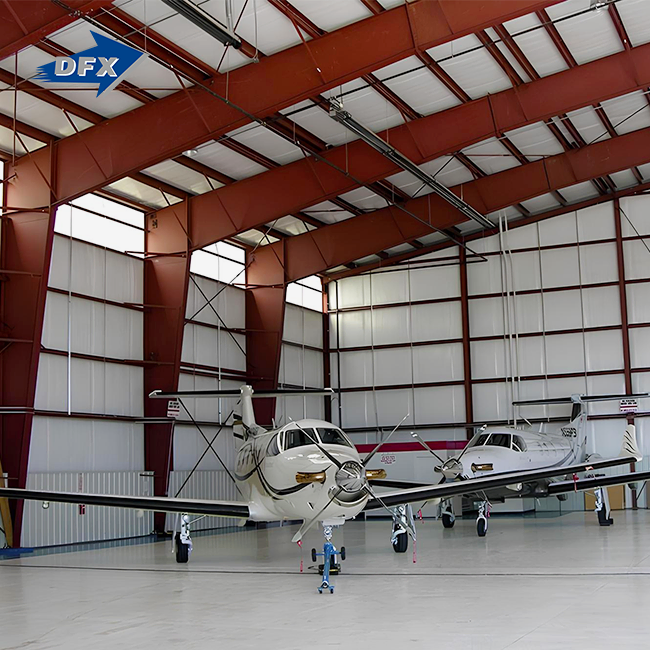
When planning a private jet steel hangar, fire protection is not an afterthought — it is a core engineering requirement. Aviation hangars house high-value aircraft, jet fuel, hydraulic fluids, and electrical systems, all of which create serious fire exposure. Getting the fire protection design right from the start protects assets, ensures regulatory compliance, and keeps operations running without costly interruptions.

Understanding Fire Risks in Private Jet Steel Hangars
What Makes Jet Hangars High-Risk Environments
Jet fuel fumes are heavier than air, so they can build up on the floor and catch fire with just one spark. Hydraulic fluids, lubricants, and cleaning solvents are all flammable and can be kept in a private jet steel hangar. The FAA says that airplane fuel fires can reach temperatures of over 1,800°F in just minutes, which is much higher than the structural tolerance level for steel that isn't protected.
How Steel Behaves Under Fire Conditions
At temperatures around 1,100°F, steel loses about half of its yield strength. If a steel frame in a hangar fire doesn't have intumescent coatings or fire-resistant insulation, it can fall apart before the control systems can do their job. This is the reason why NFPA 409 talks about the fire protection needs for hangar buildings and not just general building rules.
Regulatory Landscape You Must Know
There are three main groups in the US that make rules about fire safety in jet hangars:
- NFPA 409 — A standard for aircraft hangars that covers fire suppression equipment, foam ratios, and building requirements.
- FAA Advisory Circulars — Notably AC 150/5370-10, which sets standards for airport construction, and other FAA advisory circulars.
- Local Authority Having Jurisdiction (AHJ) — Fire marshals in different areas may have rules that go above and beyond what the federal government requires.
If you understand these three layers, you can avoid costly compliance problems during the review or approval of the project's occupancy.
Key Fire Protection Standards for Private Jet Steel Hangars
Fire Resistance Ratings for Steel Frameworks
Hangars are put into Groups I, II, III, and IV by NFPA 409 based on the size of the aircraft and the size of the opening for the hangar door. For Group I hangars, which are usually used to store big cabin jets like a Gulfstream G650, the private jet steel hangar structure must have a fire resistance rating of at least 2 hours for the columns and walls that hold things up. To meet this standard, steel parts used in these situations are usually covered in mineral wool or painted with intumescent paint.
Fire Detection and Suppression Systems
A well-designed fire suppression system for an airplane hangar usually has two levels of defense. The first is an overhead foam-water deluge system that is meant to spread aqueous film-forming foam (AFFF) or fluorine-free foam over the whole floor area at a rate of at least 0.10 gallons per minute per square foot, which is what NFPA 409 says must happen in Group I and II hangars. The second layer is made up of an automatic network that detects heat or flame and shuts down the system without any help from a person. Our steel hangars are built with roof purlins and rafters that are stronger so they can handle the extra weight of deluge pipes and sprinkler heads.
Fire-Resistant Coatings and Insulation
Intumescent coatings are applied directly to steel surfaces. When heated, they spread to form an insulating char layer that slows the steel's temperature rise. To protect against rust and fire for a long time, our welded H-section steel parts are shot-blasted to SA 2.5 grade and then given an epoxy zinc-rich base and topcoat system. The hangar shell is better protected from heat loss and fire with a sandwich panel covering that has a mineral wool core.
Comparative Analysis: Steel Hangars vs. Alternative Hangar Materials for Fire Protection
Why Steel Outperforms Fabric and Wood
Fabric and tensioned membrane hangars are used to store planes temporarily, but they are very likely to catch fire. Fabric membranes don't offer any structural fire resistance and can't be used to meet NFPA 409 standards for permanent private jet steel hangar facilities because they can burn through in minutes. Modern flight fire rules don't allow wood-framed hangars to be used for much more than storing light sport aircraft. This is because wood is easily ignited and quickly breaks down when it's heated.
Steel Compared to Concrete
Without any extra cleaning, concrete is naturally very resistant to fire. However, building a concrete hangar takes longer—usually 40% to 60% longer than building one out of pre-engineered steel—and doesn't allow for as many changes to the layout or spans in the future. Pre-engineered steel hangars with clear spans from 60 to 300 feet can be built and put up in a lot less time. Coatings and insulation make steel's fire resistance almost as good as concrete's, but the overall cost of the project is lower.
Steel vs. Aluminum
When compared to steel, aluminum starts to deform at lower temperatures (around 400°F), while steel starts to deform at higher temperatures. When it comes to a building that is meant to hold a valuable private plane, aluminum framing adds extra structural risk during a fire. Steel, especially high-tensile Q345B or ASTM A572 Grade 50, keeps working better if it is properly protected and makes a stronger base for connecting fire suppression systems.
These studies of materials show that pre-engineered steel is still the best choice for building a permanent jet hangar when fire safety, speed of construction, and long-term sturdiness are all important.
How to Build and Maintain Fire-Safe Private Jet Steel Hangars? Design-Stage Fire Safety Integration
Fire safety experts should be a part of the planning process from the start. Important choices, like beam spacing, roof height, door header framing, and material choices, have a direct effect on the fire resistance scores and the area covered by the suppression system. Before fabrication starts, our in-house engineering team does structural calculations and creates a custom private jet steel hangar design that meets NFPA 409 standards and local AHJ rules.
Construction Quality Control Checkpoints
Failures in fire safety in the field can be avoided by making sure quality is consistent during fabrication. During production, the following quality control steps were taken:
- Mill Test Certificates (MTC): All steel plates and H-section products are checked for their chemical make-up and yield strength before they are used.
- Weld Inspection: To find flaws inside, critical butt welds on main columns and beams are put through Ultrasonic Testing (UT) in line with AWS D1.1 standards.
- Coating Thickness Verification: Dry Film Thickness (DFT) readings show that fire- and corrosion-resistant coatings meet certain micron goals, which are usually 80 to 120 microns.
- Trial Assembly: Before shipping, the primary frames are put together to make sure that the bolt holes are lined up correctly and that the door frame opening is within a 5mm error.
These checks make sure that what is delivered on-site is exactly what was planned, with no changes made to the building's structure or fire safety performance.
Long-Term Fire Safety Maintenance
NFPA 409 says that foam suppression systems, sprinkler heads, and detection sensors must be inspected once a year. Staff training in how to respond to fires and weekly eye checks of the coating integrity on steel parts make the fire protection system last much longer than the time it was first installed.
Selecting Trusted Suppliers for Fire-Protected Steel Jet Hangars
What to Look for in a Steel Hangar Manufacturer
There are three main things that you should look for in a private jet steel hangar supplier: certifications, technical skills, and help after the sale. A good manufacturer should have product certificates from ISO, CE, and a third party that is known to be reliable. They should also show that they can do more than just basic catalog buildings and provide structural estimates and unique fire-safe plans.
Director Steel was established in 2011 and has a 40,000-square-meter factory in Qingdao, China. It has supplied steel structures for aviation and industry in many international markets. Our goods are certified by ISO, CE, COC, and PVOC, and our six automatic welded H-beam production lines can make about 20,000 tons of structural steel every year. We take care of the whole job, from figuring out the structure and making a special design to making the product and helping with the installation.
Procurement Considerations for International Buyers
Lead time and supply planning are real worries for EPC contractors and project managers who buy airplane hangar structures from other countries. Depending on the size and scope of the hangar, custom fabrication takes between 45 and 90 days on average. There are professional assembly instructions and thorough erection drawings included to help local teams on-site. Every package comes with clear paperwork that is needed for customs and legal reasons.
Conclusion
Fire safety in jet hangar buildings is a legal and technical requirement that affects every design choice, from the type of steel used to how the suppression system is set up. When built and treated correctly, pre-engineered private jet steel hangars meet or beat the fire resistance standards set by NFPA 409 and FAA rules. Choosing a qualified manufacturer with a background in engineering, valid licenses, and a history of building flight structures lowers project risk and protects assets for the long run.
FAQ
Q1: What fire safety standard does the US have for private jet hangars?
The main standard is NFPA 409. It sorts hangars into groups and sets baseline standards for fire suppression systems, foam application rates, and the strength of buildings' fire defense.
Q2: Does steel need to be treated with extra fire safety in a hangar?
Yes, steel that isn't protected can lose a lot of its strength at the high temperatures that a jet fuel fire creates. To meet NFPA 409 standards, common treatments include fire-resistant insulation, walls, and coatings that don't catch fire for a private jet steel hangar.
Q3: Can a foam overflow system be used in a steel hangar that was already built?
Yes. In a well-designed steel hangar, the roof purlins and rafters are made strong enough to hold the extra weight of the deluge pipes and sprinkler heads. During the design phase, this needs to be made clear.
Q4: How long does it take to build a unique hangar for a jet?
Depending on the hangar's clear span, height, and door layout, custom construction can take anywhere from 45 to 90 days. Installation instructions are included to help with setup on-site.
Get a Custom Quote for Your Steel Jet Hangar Project
Director Steel offers private jet steel hangar options that are designed to meet the highest fire safety standards around the world. We are a reliable steel hangar maker with ISO and CE certification. From our Qingdao site, we do structural calculations, custom manufacturing, and full installation support. Please email our team at jason@bigdirector.com to talk about the details of your project and get a detailed quote.
References
1. National Fire Protection Association. NFPA 409: Standard on Aircraft Hangars. NFPA, 2022.
2. Federal Aviation Administration. Advisory Circular AC 150/5370-10: Standards for Specifying Construction of Airports. FAA, 2021.
3. American Institute of Steel Construction. Steel Construction Manual, 16th Edition. AISC, 2023.
4. Society of Fire Protection Engineers. SFPE Handbook of Fire Protection Engineering, 5th Edition. Springer, 2016.
5. Metal Building Manufacturers Association. MBMA Metal Building Systems Manual. MBMA, 2021.
6. International Code Council. International Fire Code (IFC). ICC, 2021.
Learn about our latest products and discounts through SMS or email