- English
- French
- German
- Portuguese
- Spanish
- Russian
- Japanese
- Korean
- Arabic
- Greek
- German
- Turkish
- Italian
- Danish
- Romanian
- Indonesian
- Czech
- Afrikaans
- Swedish
- Polish
- Basque
- Catalan
- Esperanto
- Hindi
- Lao
- Albanian
- Amharic
- Armenian
- Azerbaijani
- Belarusian
- Bengali
- Bosnian
- Bulgarian
- Cebuano
- Chichewa
- Corsican
- Croatian
- Dutch
- Estonian
- Filipino
- Finnish
- Frisian
- Galician
- Georgian
- Gujarati
- Haitian
- Hausa
- Hawaiian
- Hebrew
- Hmong
- Hungarian
- Icelandic
- Igbo
- Javanese
- Kannada
- Kazakh
- Khmer
- Kurdish
- Kyrgyz
- Latin
- Latvian
- Lithuanian
- Luxembou..
- Macedonian
- Malagasy
- Malay
- Malayalam
- Maltese
- Maori
- Marathi
- Mongolian
- Burmese
- Nepali
- Norwegian
- Pashto
- Persian
- Punjabi
- Serbian
- Sesotho
- Sinhala
- Slovak
- Slovenian
- Somali
- Samoan
- Scots Gaelic
- Shona
- Sindhi
- Sundanese
- Swahili
- Tajik
- Tamil
- Telugu
- Thai
- Ukrainian
- Urdu
- Uzbek
- Vietnamese
- Welsh
- Xhosa
- Yiddish
- Yoruba
- Zulu
commercial aviation hangar Maintenance: A Practical Guide
Maintaining a commercial aviation hangar represents a critical commitment for contractors, procurement managers, and facility operators responsible for infrastructure housing high-value aircraft assets. A well-executed hangar maintenance program preserves the structural integrity of these long-span steel buildings, safeguards operational continuity, and ensures compliance with rigorous aviation safety codes. This guide explores the practical elements of hangar upkeep—from structural inspections to door systems—helping you make informed decisions when selecting maintenance providers and sourcing quality materials that protect your infrastructure investment.

Understanding Commercial Aviation Hangar Maintenance
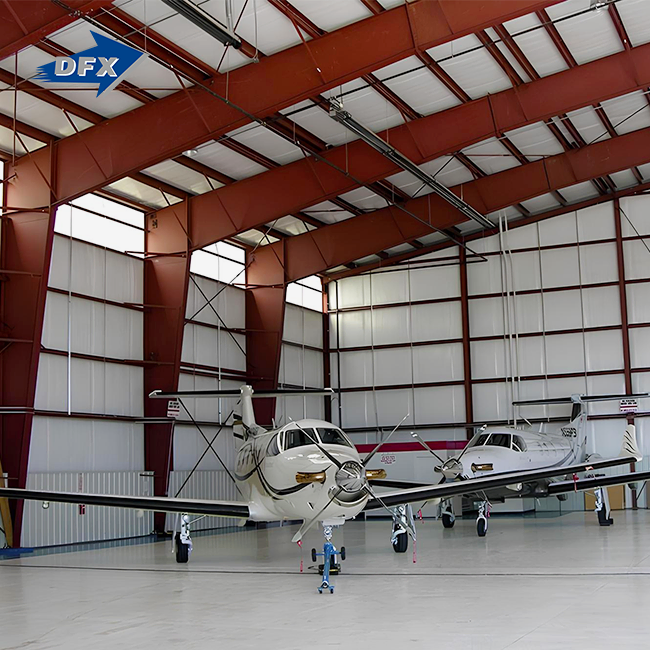
Aviation hangars are special buildings that are made to withstand harsh working conditions and environmental stresses. In contrast to regular stores, these buildings have to be able to handle huge clear spans, heavy loads from airplane landing gear, and exposure to hydraulic fluids, de-icing chemicals, and changes in temperature. Maintenance for commercial aircraft is very different from maintenance for private aircraft because commercial hangars house fleets that are undergoing intensive MRO activities, which require stronger structures and more regulatory oversight.
Scope and Significance of Hangar Upkeep
As part of regular hangar maintenance, the structural integrity of the welded H-section steel frameworks is checked, as well as the protective coatings, floors, and mechanical systems. People who work in procurement need to know that putting off maintenance speeds up corrosion in primary steel members, makes it harder for doors to work, and increases the chance of not meeting FAA and NFPA 409 standards. Preventative maintenance cuts down on unplanned downtime. Closing one hangar can mess up the service schedules of many planes, which costs operators and contractors managing big projects a lot of money.
Key Challenges Facing Hangar Operators
Environment-related issues make upkeep very hard. Facilities near the coast have to deal with faster rusting from the salty air, while in the north, ice builds up on door tracks and roof systems. Also, the sheer size of these buildings—often with clear spans of more than 80 meters and eave heights of up to 20 meters—makes it harder to check and fix them. Another layer of complexity is added by regulatory requirements. For example, aviation authorities require regular structural certifications and fire suppression system testing to keep operational permits.
Key Components of an Effective Hangar Maintenance Program
A full maintenance plan covers three areas that are all connected: safety infrastructure, mechanical systems, and structural elements. To keep performance and meet approval standards, each domain needs its own special care.
Structural Integrity and Framework Preservation
The main steel structure makes the hangar last. Regular inspections should concentrate on truss connection weld integrity. Use magnetic particle examination to find microscopic fractures. In strong winds, diagonal members are pressured by lateral loads; hence, reinforced bracing systems must be monitored for deformation. Concrete foundation examinations detect settlement issues before they lower the floor, which is crucial for aeroplane maintenance placement.
Steel protective coatings should be examined carefully. We recommend dry film gauges to measure coating thickness while adhering to ISO 12944 micron counts. In wet regions, treat column bases with anti-corrosion products because moisture builds up and accelerates oxidation.
Hangar Door System Care
Door systems are the most mechanically complicated parts and need to be maintained in a very specific way. Bottom-rolling doors need to have their track alignment checked, their wheel bearings oiled, and their cable tension adjusted so that they don't work unevenly. Fabric megadoors need to be checked for UV damage and seam integrity, while bi-fold steel doors need to have their hydraulic systems inspected and their counterweight balance tested.
Pay extra attention to safety mechanisms. Every three months, emergency stop systems, wind load sensors, and personnel detection devices need to be tested to make sure they work properly. Inspections with thermal imaging can find overheating in motor drive systems before the bearings fail. Given that door malfunctions account for approximately 40% of commercial aviation hangar operational disruptions, this maintenance area delivers a substantial return on investment.
Critical Safety Systems Maintenance
Fire suppression systems designed to NFPA 409 specifications require annual discharge testing and quarterly valve inspections. High-expansion foam systems demand particular care—foam concentrate shelf-life monitoring and proportioning system calibration ensure readiness during emergencies. Smoke detection networks need sensor cleaning and sensitivity verification to prevent false alarms that interrupt operations.
Ventilation systems controlling VOC levels during painting operations require filter replacement schedules aligned with usage intensity. HVAC units managing temperature and humidity across vast interior volumes benefit from coil cleaning, refrigerant level checks, and airflow balancing to optimize energy efficiency while preventing condensation on aircraft surfaces.
Maintenance Best Practices and Scheduling
Strategic scheduling minimizes operational interference while maximizing asset longevity. Different maintenance types serve distinct purposes within a holistic program.
Routine, Preventive, and Condition-Based Approaches
Routine inspections occur monthly, covering visual assessments of structural elements, door operation cycles, and safety system indicator lights. Preventive maintenance operates on time-based intervals—quarterly lubrication schedules, semi-annual coating touch-ups, and annual comprehensive structural evaluations. Condition-based maintenance leverages real-time monitoring data, triggering interventions when performance metrics deviate from baseline parameters.
Developing maintenance checklists tailored to your hangar configuration proves essential. Facilities housing heavy transport aircraft require more frequent floor load testing compared to those servicing regional jets. Geographic location influences scheduling—hurricane-prone regions benefit from pre-storm structural reinforcement checks, while snow-belt facilities prioritize roof drainage system maintenance before winter months.
Technology Integration for Predictive Maintenance
Modern maintenance programs increasingly incorporate IoT sensor networks tracking structural stress, vibration patterns, and environmental conditions. These systems provide early warning of developing issues—detecting door motor inefficiencies months before catastrophic failure or identifying coating degradation in hidden areas inaccessible during visual inspections.
Computerized Maintenance Management Systems (CMMS) platforms centralize documentation, automate work order generation, and track spare parts inventory. We have observed that facilities implementing CMMS solutions reduce maintenance costs by 15-20% through optimized scheduling and improved technician efficiency. Data analytics capabilities enable trend analysis, helping procurement teams forecast replacement part needs and budget accurately for upcoming fiscal periods.
Environmental Stewardship in Maintenance
Sustainable maintenance practices align with corporate responsibility goals while reducing operational costs. Waste oil from hydraulic systems and door mechanisms requires proper collection and recycling through certified handlers. Energy-efficient LED lighting retrofits cut electricity consumption substantially in high-ceiling environments where traditional fixtures consume excessive power.
Water management systems controlling runoff from commercial aviation hangar floor washing operations prevent environmental contamination. Implementing closed-loop wash systems and sediment traps demonstrates regulatory compliance while minimizing water usage—an increasingly important consideration in drought-affected regions.
Procurement Considerations for Commercial Aviation Hangar Maintenance
Selecting qualified repair companies and getting quality components directly impacts long-term business success. Procurement managers should evaluate potential partners through multiple lenses.
Choosing Dependable Maintenance Providers
Certifications are the first thing that is looked at. Look for workers with appropriate welding certifications, structural steel inspection credentials, and fire suppression system licensing. Experience with aviation-specific structures matters significantly—general building maintenance companies often lack familiarity with clear-span steel engineering nuances and aviation regulatory requirements.
Request case studies demonstrating successful completion of projects matching your hangar scale and configuration. Providers should explain their approach to safety compliance, recording procedures, and emergency response capabilities. Flexible price models allowing both project-based buying and ongoing service contracts offer adaptability as repair needs change.
Budgeting and Cost Management
Typical yearly upkeep costs run from 1.5-3% of hangar replacement value, varying with age, usage intensity, and environmental exposure. Structural inspections generally cost $8,000-$15,000 for comprehensive assessments, while door system overhauls may reach $25,000-$50,000 depending on complexity. Fire suppression system maintenance averages $5,000-$10,000 annually, including testing and minor component replacement.
Strategic borrowing choices help handle cash flow. Some repair providers offer multi-year service plans with set prices, protecting against inflation while ensuring stable service quality. Energy-efficiency upgrades often qualify for utility rebates and tax incentives, offsetting upfront investment through long-term operational savings.
Sourcing Quality Spare Parts
Building relationships with reputable makers guarantees access to parts that meet the original design requirements. When looking for solid parts like connection plates or strengthened bracing members, make sure the materials meet ASTM A572 Grade 50 standards or something similar. OEM specifications should be followed by all door system parts to avoid compatibility problems that could weaken safety mechanisms.
We suggest keeping a smart stock of important wear items like door rollers, hydraulic seals, and fire suppression hoses so that fixes take as little time as possible. Creating relationships between suppliers and makers that offer custom fabrication gives designers of unique hangars that need non-standard parts more options.
Case Studies and Real-World Applications
Targeted maintenance actions can solve common problems and make assets last longer. Here are some real-life examples.
Successful Maintenance Program Implementation
A regional EPC contractor that is in charge of several airport hangars set up a central CMMS platform that connects repair data from five different sites. This method found that frequent breakdowns of door motors could be traced back to not lubricating them often enough. Changing the preventive maintenance schedule cut down on door-related downtime by 60% over two years, and buying parts in bulk through centralized spare parts procurement lowered the cost of each part.
During a routine inspection, the owner of another manufacturing facility with a 100-meter clear-span hangar saw that the coating on the windward columns was wearing off. Quick action, like blast cleaning and re-coating the damaged areas, stopped widespread corrosion that would have needed expensive structural strengthening. The $12,000 spent on care saved the building about $150,000 in fixes that might have been needed.
Resolving Critical Technical Issues
If you don't fix structural decline, it can lead to very bad things. In one case, a hangar's floor started to drop over time near places where planes were parked. Ground-penetrating radar showed that there were holes in the ground below the slab. Stabilizing the foundation with grouting injections made the floor flat again, which is important for using precision maintenance equipment. This fix cost about $45,000, while replacing the whole floor would have cost $300,000 or more.
Failures in machines can happen quickly. A thorough study of a cloth door that kept tearing showed that the wind load sensor wasn't calibrated correctly. Updating the control software and recalibrating the sensors to meet the maker's specs got rid of the false wind warnings that were causing emergency retract cycles. This increased the fabric's service life from three years to seven years.
Conclusion
Maintaining commercial aviation hangars well saves big investments in infrastructure and makes sure they work reliably, which is important for keeping flight services going. Procurement professionals can make smart choices about which maintenance providers to hire and where to find high-quality parts if they know what kind of care is needed for everything from structural inspections to mechanical systems and safety infrastructure. A complete strategy that reduces downtime, keeps costs low, and meets regulatory requirements throughout the lifetime of a building is made up of proactive maintenance plans, using technology to get predictive insights, and working with experienced fabricators.
FAQ
1. How often should structural inspections occur for aircraft hangars?
According to industry norms, buildings should have full structural evaluations once a year and visual checks of important load-bearing members every three months. Frequency is affected by things like the age of the building, how exposed it is to the environment, and the types of airplanes it services. Detailed inspections every six months are helpful for coastal hangars or those that have been in use for more than 15 years to find early signs of rust or stress.
2. What are the most common maintenance issues in hangar facilities?
About 40% of maintenance calls are for problems with the door system. These problems can be anything from misaligned tracks to broken motors. Concerns about the structure include coating wear that leads to corrosion, floor settlement that makes it less level, and connection bolts coming loose in places with a lot of shaking. Expiration of fire control system parts and clogged air filters are two other common problems that need regular attention.
3. Can maintenance be performed without shutting down hangar operations completely?
Strategic scheduling lets most maintenance work be done during the time when an airplane is not in use, between service cycles. For repair purposes, doors usually need to be closed temporarily, but this can usually be done overnight or during planned building downtime. Aerial lifts and non-destructive testing tools are used for structural checks that don't get in the way of work at ground level. Working together with facility managers makes sure that maintenance work fits in with the normal flow of business.
Partner With DFX for Comprehensive Hangar Solutions
DFX has been specializing in building and maintaining airplane hangars for more than 12 years, working with construction companies, engineering and procurement firms, and flight facility owners all over the United States. Our factory is ISO9003 and CE-certified, and we can make custom long-span steel buildings with welded H-section frames that are made to last in harsh aircraft settings. Our full-service solutions cover everything, from structural calculations and custom design to fabrication and installation instructions. This makes sure that all of your commercial aviation hangar repair needs are met accurately and reliably.
Our engineering team can help you with solutions that are both cost-effective and reliable, whether you need structural strengthening parts, changes to your door system, or advice on a full maintenance program. Contact our sourcing experts at jason@bigdirector.com to talk about your project needs and find out why top builders choose DFX as their go-to provider for commercial aviation hangars for both new builds and ongoing upkeep.
References
1. Federal Aviation Administration. (2019). Advisory Circular 150/5370-10H: Standards for Specifying Construction of Airports. Washington, D.C.: U.S. Department of Transportation.
2. National Fire Protection Association. (2021). NFPA 409: Standard on Aircraft Hangars. Quincy, Massachusetts: NFPA Publications.
3. American Institute of Steel Construction. (2020). Steel Construction Manual, 15th Edition. Chicago, Illinois: AISC.
4. Airport Cooperative Research Program. (2018). ACRP Report 192: Maintenance Practices for Aircraft Hangars and Shade Structures at Airports. Washington, D.C.: Transportation Research Board.
5. International Organization for Standardization. (2017). ISO 12944: Paints and Varnishes – Corrosion Protection of Steel Structures by Protective Paint Systems. Geneva, Switzerland: ISO Publications.
6. Society for Protective Coatings. (2020). Protective Coatings for Steel Structures in Harsh Environments: Best Practices Manual. Pittsburgh, Pennsylvania: SSPC Technical Publications.
Learn about our latest products and discounts through SMS or email