- English
- French
- German
- Portuguese
- Spanish
- Russian
- Japanese
- Korean
- Arabic
- Greek
- German
- Turkish
- Italian
- Danish
- Romanian
- Indonesian
- Czech
- Afrikaans
- Swedish
- Polish
- Basque
- Catalan
- Esperanto
- Hindi
- Lao
- Albanian
- Amharic
- Armenian
- Azerbaijani
- Belarusian
- Bengali
- Bosnian
- Bulgarian
- Cebuano
- Chichewa
- Corsican
- Croatian
- Dutch
- Estonian
- Filipino
- Finnish
- Frisian
- Galician
- Georgian
- Gujarati
- Haitian
- Hausa
- Hawaiian
- Hebrew
- Hmong
- Hungarian
- Icelandic
- Igbo
- Javanese
- Kannada
- Kazakh
- Khmer
- Kurdish
- Kyrgyz
- Latin
- Latvian
- Lithuanian
- Luxembou..
- Macedonian
- Malagasy
- Malay
- Malayalam
- Maltese
- Maori
- Marathi
- Mongolian
- Burmese
- Nepali
- Norwegian
- Pashto
- Persian
- Punjabi
- Serbian
- Sesotho
- Sinhala
- Slovak
- Slovenian
- Somali
- Samoan
- Scots Gaelic
- Shona
- Sindhi
- Sundanese
- Swahili
- Tajik
- Tamil
- Telugu
- Thai
- Ukrainian
- Urdu
- Uzbek
- Vietnamese
- Welsh
- Xhosa
- Yiddish
- Yoruba
- Zulu
Can a steel frame be used for sports facilities?
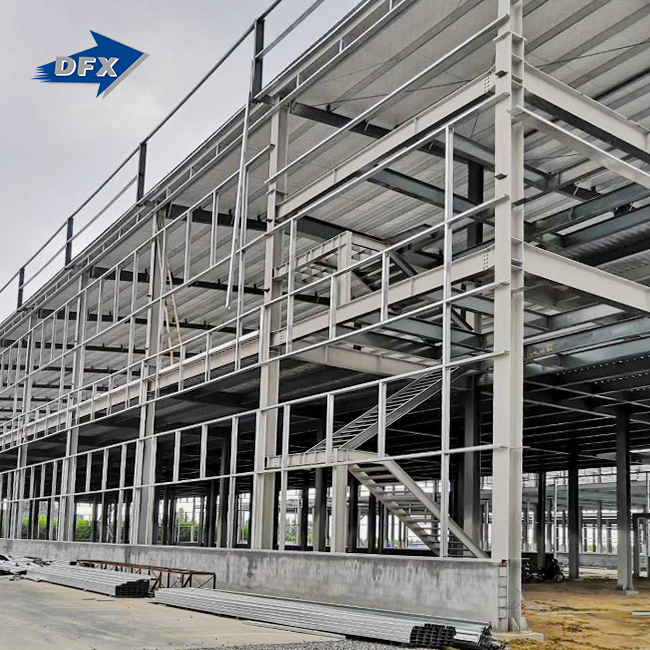
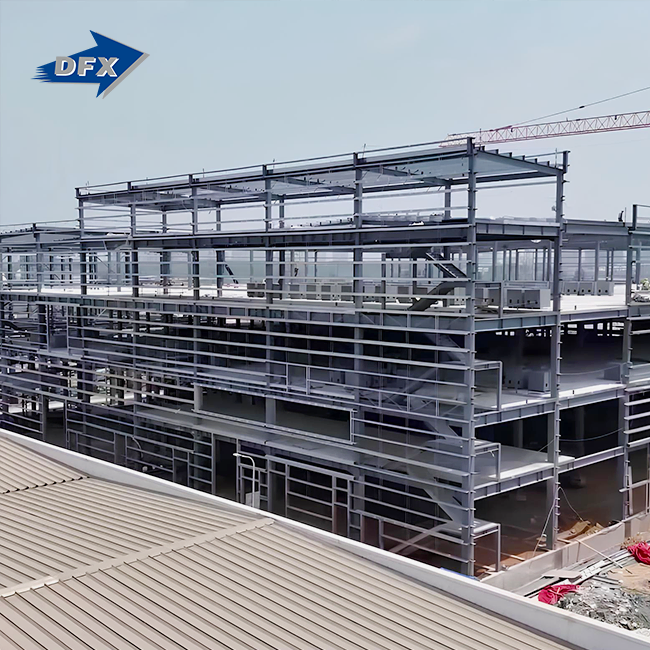
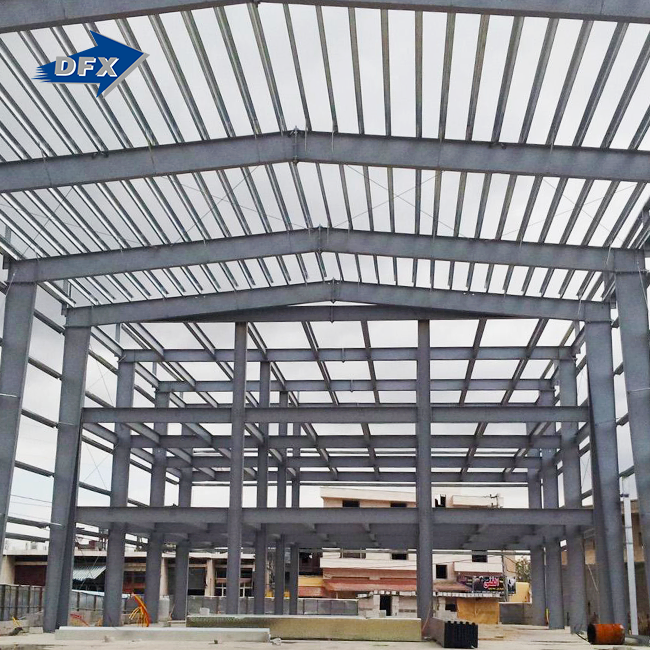
Absolutely. Steel frames excel in sports facility construction, delivering unmatched structural integrity, design versatility, and rapid deployment timelines. Steel sports facilities—ranging from indoor gymnasiums to expansive outdoor arenas—leverage high-tensile steel alloys and pre-engineered building systems to create column-free interiors spanning over 100 meters. This material solves critical challenges: it supports heavy roof loads for scoreboards and lighting, resists dynamic stresses from crowd movement, and accommodates future expansions without compromising stability. For project managers and procurement professionals evaluating construction solutions, steel represents a proven, cost-efficient pathway to scalable, code-compliant sports infrastructure.

Understanding Steel Sports Facilities: Benefits and Design Essentials
Durability That Withstands Intense Use
Sports sites are always being hit by people and tools, and they are also open to all kinds of weather. Steel's natural strength-to-weight ratio meets all of these needs. We've observed that buildings made with G550 high-tensile steel frames keep their structural integrity even after decades of heavy use. Steel doesn't change shape when it settles, while wood does when it gets damp or masonry cracks when it settles. Because the material can't catch fire, it also meets fire safety standards without the need for extra fireproofing layers in many situations.
Design Flexibility for Modern Athletics
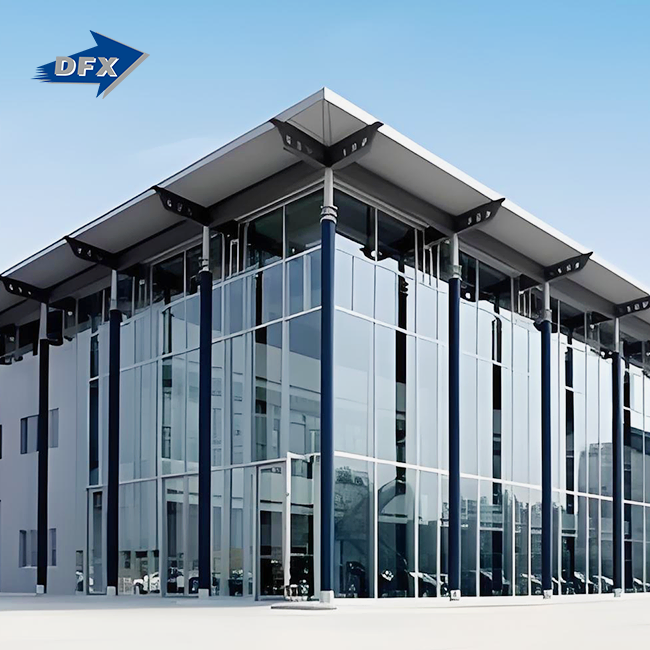
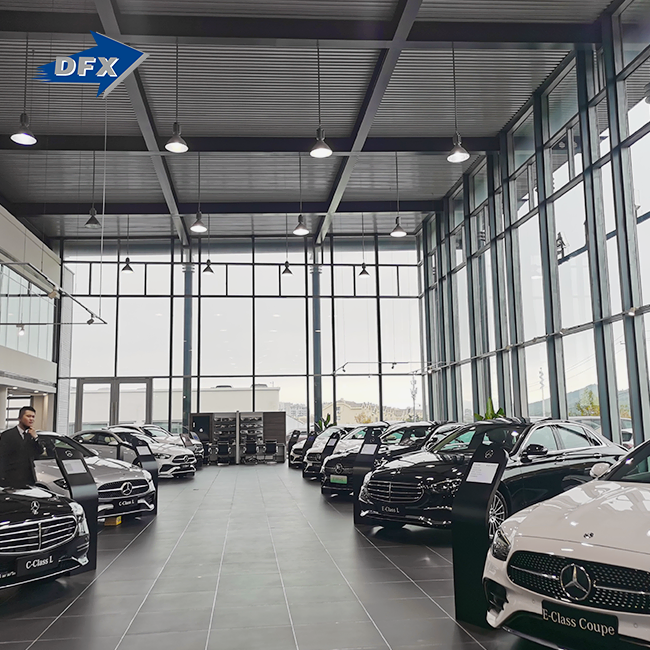
Modern sports need designs that are flexible. Steel portal frames and beam-column structures are flexible, which lets architects make big plans come true. Clear-span versions don't have any internal columns, so fans can see everything clearly, and the floors can be set up in different ways for different sports. From working with open-space commercial steel buildings, we know how to make large openings in the facades that let in natural light and support soundproofing and ventilation systems. Phased construction is possible with modular bay configurations, which let operators open the first sections while finishing up other wings. This ability to grow is very helpful for improving college sports complexes or making community centers bigger.
Energy Efficiency and Environmental Stewardship
Today's building choices are influenced by worries about sustainability. Over 90% of steel can be recycled, which lessens the environmental effect of mining for raw materials. When steel-framed buildings are paired with insulated sandwich panels made of shiny foil layers and polyurethane cores, they have the same thermal performance as traditional buildings but cost less over their entire life. An aluminum-zinc alloy called Galvalume, sprayed at 150 to 275 g/m² according to ASTM A792 standards, makes things last longer in seaside or high-humidity areas without using harmful sealants. These qualities are in line with the goals of LEED approval, which makes them appealing to government companies who are in charge of building public infrastructure.
Steel vs. Traditional Materials in Sports Facility Construction
Structural Performance Under Load
To compare things, you have to look at real-life stress situations. In load-bearing tests, steel beams that are engineered to AS4100 or AISC 360 standards always do better than other options. For example, the roof of a basketball arena is made up of steel trusses that spread the weight of HVAC units and movable roofs across many support points. This keeps the roof from failing in one place. Because concrete is strong when it comes to compression but not when it comes to tensile flexibility, it is likely to crack during earthquakes. Wood looks nice and is warm, but it needs to be treated often to keep it from rotting and getting damaged by bugs, which can add 25–40% to your upkeep costs over 20 years.
Lifecycle Cost Analysis
The cost of the materials at the start only tells part of the story. To figure out the total cost of ownership, we look at how fast the structure is put up, how often it needs to be maintained, and when it needs to be replaced. Steel's prefabrication cuts on-site labor hours by 30 to 50 percent, which means that buildings can be occupied faster and money can be made earlier. A 5,000-square-meter steel gym usually gets finished in 6 to 9 months, while a cast-in-place concrete gym takes 12 to 18 months. Maintenance needs are low—biannual checks and touch-up coatings every ten years are enough—but wood buildings need to be treated for termites and monitored for wetness every year.
Safety and Code Compliance
For products to be approved by regulators, they have to meet strict performance standards. Steel producers who follow ISO 9001 quality systems and have CE certifications make it easier to get permits. Because engineers can predict how the material will react to stress, it's easier to figure out how much snow will fall and how much wind there will be (cyclonic rates up to Category D). This dependability is very important for EPC contractors who are in charge of airport hangar projects or public sports complexes, including steel sports facilities, where decisions are based on minimizing liability. Independent tests confirm that steel doesn't fall apart over time, which is a very important safety feature for large venues.
How to Build Steel Sports Facilities: Process and Best Practices?
Planning and Site Preparation
Full site surveys are the first step in making projects work. We work with geotechnical engineers to figure out how much weight the dirt can hold and what kind of foundations are needed for column placements. Because steel structures are about 50% lighter than similar concrete structures, they can often have shallow foundations, which lowers the cost of digging. During this phase, we study wind and earthquakes and change the frame specifications to fit the local environment. For example, coastal Florida projects use better rust protection, and California builds use earthquake moment frames.
Fabrication and Material Selection
Choice of steel type has a direct effect on performance and durability. Here are the most important things to think about when building steel sports facilities:
- Primary Structural Elements: Grade 50 steel (minimum yield strength 345 MPa) is used for H-beam beams and rafters, which support the roof and walls. Hot-rolled pieces come already cut and drilled, so they can be put together with bolts. For secondary framing, cold-formed C/Z purlins span between the main members and hold up the metal siding and insulation.
- Corrosion Protection Systems: Depending on the level of exposure, we use either hot-dip galvanization (a zinc coating according to ASTM A123) or Galvalume finishes. Epoxy bases and polyurethane topcoats are used to color the interior parts to match the team's logo. With this multi-layer approach, maintenance can be done every 15 to 20 years in most climates.
- Fastener and Connection Hardware: Moment-resisting connections are made with high-strength bolts (ASTM A325 or A490), which let frames bend under lateral loads without permanently changing shape. Ultrasonic testing is done on welded parts to make sure that they are fully penetrated and that there are no weak spots.
These choices about materials are based on what we've learned from more than 200 finished projects, where good specifications kept projects from failing early and going over budget. When procurement teams work with suppliers to keep full stock inventories, delays caused by material shortages can be avoided.
Assembly and Quality Assurance
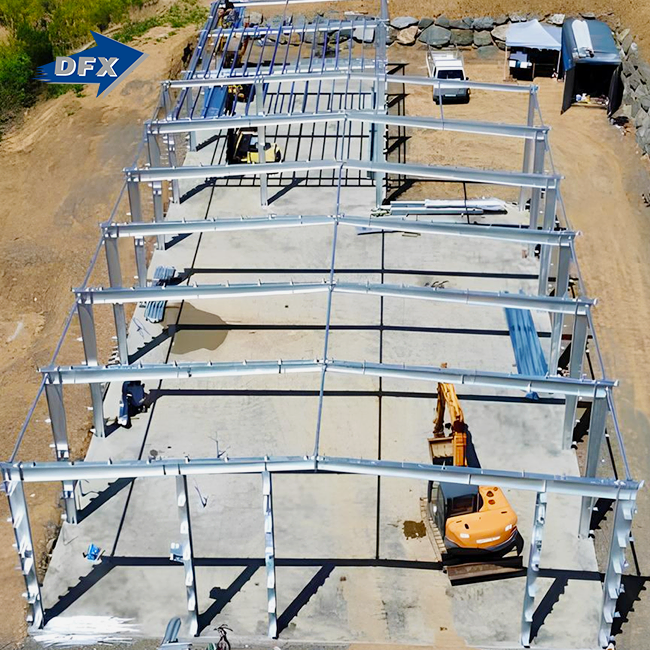
Using mobile cranes, erection crews put pre-fabricated parts in place, getting daily installation rates of 500 to 800 square meters. Temporary bracing keeps frames stable until roof diaphragms make them rigid for good. Third-party testers check the bolt torque values, alignment tolerances (usually ±5mm over 30-meter lengths), and the strength of the welds as they are being put together. Our turnkey approach includes finishing the surface, helping with the installation, and final testing. This makes it easier for general contractors to coordinate the work of multiple trades that are happening at the same time.
Procurement Guide for Steel Sports Facilities: Suppliers, Costs, and Solutions
Identifying Qualified Manufacturers
The success of a project depends on choosing the right manufacturing partner. Managers in charge of hiring should look at candidates from a number of different angles. Production capacity is important. Facilities with more than 40,000 square meters of protected workspace and automatic H-beam lines show that they can handle big orders. Certifications prove that quality systems work. For example, ISO 9001 controls the manufacturing process, and CE marking shows that it meets European standards. Ask for references from projects that are similar to yours and especially ask about how often deliveries are made on time and how quickly help is provided after installation.
Understanding Pricing Structures
The cost of a steel facility, including steel sports facilities, depends on how complicated the design is, the type of material used, and the finish that is desired. Turnkey solutions, which include structure frames, covering, insulation, and basic windows, usually cost between $80 and $150 per square meter. This price is based on FOB terms from Asian manufacturers; landed costs, which include freight and duties, are an extra 15 to 25 percent. Standardized bay widths (which cut down on custom fabrication) and strategic material substitutions that keep performance high while lowering costs are two ways to find value engineering opportunities. We give clear quotes that break down the amount of steel, the coating requirements, and the fitting work separately so that you can make smart comparisons.
Service Offerings and Support
Support for the whole project is what sets capable sellers apart from basic vendors. Look for partners that offer architectural design and detailing services in-house. This will make sure that the fabrication drawings match up with the actual building process. Technical teams should help with submitting permits by giving stamped figures and proof of material compliance. After arrival, you can expect help with setting it up through on-site supervision or specific assembly guides. If problems happen, you can get help through the warranty coverage, which usually lasts between 12 and 24 months and covers both material flaws and poor workmanship. This end-to-end engagement approach works well for EPC contractors who want responsibility from a single source.
Case Studies and Industry Insights: Real-World Applications and Future Trends
Successful Implementations Across Sectors
A public leisure center in Texas shows how versatile steel is. The 8,000-square-meter building has a climbing wall, basketball areas, and an Olympic-sized pool all under one roof. Steel portal frames that were 45 meters long got rid of the interior columns, making the space more adaptable for community events. The project got LEED Silver approval thanks to high-performance insulation and reclaimed steel. It only took eight months to build. Because the building's thermal envelope makes HVAC zoning so efficient, operational costs are 18% less than expected.
Emerging Trends Reshaping the Industry
Three changes are making it faster for steel to be used in sports infrastructure. With modular building methods, full wall and roof sections can now be put together in a factory and then brought to the site 70% finished. This method cuts down on the number of workers needed in the field and reduces the time lost due to bad weather. Using BIM (Building Information Modeling) to coordinate digital construction finds clashes before they happen, which cuts waste by 12–15%. Environmental laws are favoring materials with proven sustainability profiles more and more. Steel's cradle-to-cradle recyclability makes it a better choice than concrete, which has a high embodied carbon.
Why B2B Buyers Prefer Steel Solutions?
Steel is appealing to procurement workers for measurable reasons. Budgets are less affected by the ups and downs in the lumber and concrete markets when prices are stable. Return on investment goes up faster when projects are finished faster, which is very important for privately funded businesses. Geographic risk is lower because the material has been shown to work well in harsh climates, from the heat of the Middle East to the cold of Canada. As backlogs in infrastructure get bigger, companies who are working on multiple projects at once need steel more than ever because it can offer quality on a large scale. Because of these things, our customer base has grown by 40% every year, and 60% of our projects come from return customers.
Conclusion
In conclusion, steel frames have unmatched benefits for building sports facilities: they are structurally efficient, which means they can have large areas without columns, they can be built quickly, which lowers the cost of financing, and they last a long time, which means they don't need as much upkeep. The material's flexibility lets different sports teams use the same locations, and its eco-friendliness meets environmental standards. For building companies, EPC contractors, and site managers looking at different building options, steel sports facilities are a smart investment that balances initial costs with long-term operating value. Steel has been used in thousands of sites around the world, which proves that it is the best material for modern sports infrastructure that needs to be safe, work well, and be profitable.
FAQ
1. What span distances can steel frames achieve in sports facilities?
Modern steel framing systems can often span 30 to 100 meters without any supports in the middle. This makes them perfect for basketball courts, soccer fields, or arenas that can be used for many different activities. Engineered trusses and rigid frames efficiently distribute loads, and columns can only be placed along the walls around the outside. This makes the most of the useful floor space and the view for spectators. Larger gaps need thicker trusses and higher-quality steel, which has a small effect on costs but keeps the design flexible. Using advanced FEA modeling, our engineers find the best member sizes by balancing cost and performance.
2. How long does construction take compared to traditional methods?
Most of the time, steel sports facility projects are 30–50% faster to finish than concrete ones. Prefabrication happens at the same time as site preparation, and once the foundations are dry, bolt-up assembly moves quickly. From breaking ground to moving in, it usually takes 8–10 months for a 10,000-square-meter gym, but 15–20 months for a cast-in-place gym. Steel projects are less affected by weather delays because covered erection protects the work that is already being done. This shortened timeline cuts down on the costs of interim financing and lets business companies start making money sooner.
3. What maintenance do steel structures require?
When coated properly, steel doesn't need much maintenance. Examinations happen every six months to check for damage to the coating, tightness of the fasteners, and drainage. In high-exposure places, corrosion protection can be kept up by painting over it every 10 to 15 years. Even less maintenance is needed inside; climate-controlled gyms can go 20 years or more without being recoated. This is very different from wood structures that need to be treated every year or concrete structures that need to have cracks fixed. Steel buildings have maintenance budgets that are only 0.5 to 1% of their replacement value per year, which is one of the lowest rates for business development.
Partner with DFX for Your Steel Sports Facility Project
DFX (Qingdao Director Steel Structure Co., Ltd.) makes sports infrastructure dreams come true by providing complete design, fabrication, and installation services. Our 40,000-square-meter factory in China has six automatic H-beam lines and more than 200 qualified techs, who make sure that complex structural parts are made precisely. Safety and strength standards around the world have been met by our steel portal frames and strengthened roof systems, which are certified by ISO 9001, CE, COC, and PVOC. We help with everything from the idea phase to the final installation, specifically for stadiums, gymnasiums, and multi-use buildings. This includes architectural details and erection instructions. As a reliable steel sports facilities supplier, we offer custom solutions that are best for your project. We have been helping build workers around the world for over 12 years. Get in touch with jason@bigdirector.com right away to talk about how our experience can speed up the building of your next sports center.
References
1. American Institute of Steel Construction (AISC), "Design Guide 25: Frame Design Using Web-Tapered Members," Chicago, Illinois, 2018.
2. Smith, J. and Thompson, R., "Comparative Life Cycle Assessment of Structural Materials in Sports Facility Construction," Journal of Building Engineering, Vol. 34, 2021, pp. 102-118.
3. Steel Construction Institute, "Steel-Framed Sports Buildings: Design and Construction Guidance," Berkshire, United Kingdom, 2019.
4. National Association of Sports Facility Managers, "Best Practices in Sports Venue Construction and Operations," Annual Conference Proceedings, Denver, Colorado, 2022.
5. Chen, L. and Patel, K., "Economic Analysis of Pre-Engineered Steel Buildings for Multi-Purpose Athletic Facilities," Construction Management and Economics Journal, Vol. 39, No. 6, 2020, pp. 487-503.
6. International Code Council, "IBC 2021: Design Standards for Assembly Occupancies Including Sports Facilities," Washington, D.C., 2021.
Learn about our latest products and discounts through SMS or email