- English
- French
- German
- Portuguese
- Spanish
- Russian
- Japanese
- Korean
- Arabic
- Greek
- German
- Turkish
- Italian
- Danish
- Romanian
- Indonesian
- Czech
- Afrikaans
- Swedish
- Polish
- Basque
- Catalan
- Esperanto
- Hindi
- Lao
- Albanian
- Amharic
- Armenian
- Azerbaijani
- Belarusian
- Bengali
- Bosnian
- Bulgarian
- Cebuano
- Chichewa
- Corsican
- Croatian
- Dutch
- Estonian
- Filipino
- Finnish
- Frisian
- Galician
- Georgian
- Gujarati
- Haitian
- Hausa
- Hawaiian
- Hebrew
- Hmong
- Hungarian
- Icelandic
- Igbo
- Javanese
- Kannada
- Kazakh
- Khmer
- Kurdish
- Kyrgyz
- Latin
- Latvian
- Lithuanian
- Luxembou..
- Macedonian
- Malagasy
- Malay
- Malayalam
- Maltese
- Maori
- Marathi
- Mongolian
- Burmese
- Nepali
- Norwegian
- Pashto
- Persian
- Punjabi
- Serbian
- Sesotho
- Sinhala
- Slovak
- Slovenian
- Somali
- Samoan
- Scots Gaelic
- Shona
- Sindhi
- Sundanese
- Swahili
- Tajik
- Tamil
- Telugu
- Thai
- Ukrainian
- Urdu
- Uzbek
- Vietnamese
- Welsh
- Xhosa
- Yiddish
- Yoruba
- Zulu
Multi-story steel hotel: The Modern Solution for Fast
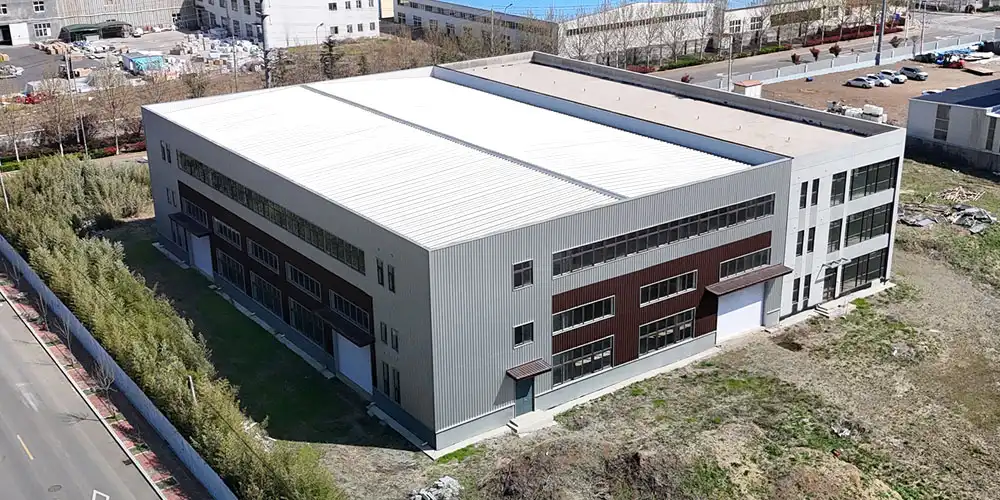
The hotel business is going through a change. A Multi-story Steel Hotel is a type of business lodging building that uses structural steel (columns, beams, and diagonal bracing) as its main load-bearing framework rather than the more common reinforced concrete. For floors, this method uses composite metal decking with concrete toppings, and for the outside, it uses light-gauge steel. The method solves important problems in building, like shortening project timelines by 30 to 50 percent, keeping base costs low through lightweight design, and making the best use of space by using longer spans and smaller column footprints. This leads to a faster return on investment and more architectural freedom for developers.
Introduction
There is more and more pressure on us to finish hotel projects faster without lowering the quality or harming the environment. Multi-story Steel Hotels represent a cutting-edge approach to hospitality construction, combining quick build times with long-term environmental responsibility. In a field where speed of operation and care for the environment are important, steel is a sturdy and flexible choice over other materials. This content is designed for purchasing managers, engineers, distributors, and EPC contractors who work with businesses to find streamlined construction solutions that meet today's safety, cost-effectiveness, and environmental standards. At Qingdao Director Steel Structure Co., Ltd., we've been making steel structures for big commercial buildings and process plants in tough global markets for more than 12 years.
Understanding Multi-story Steel Hotels: Concepts and Core Advantages
What Makes Steel Frameworks Superior
Multi-story Steel Hotels use pre-made steel frames to make buildings that are flexible and physically sound so that they can grow vertically. Due to high pre-fabrication rates, steel hotels can be put together faster and with less on-site labour than standard buildings. The speed of construction is amazing—site preparation and off-site steel fabrication are happening at the same time, which cuts project schedules by a lot.
Material Properties That Matter
High-performance metallurgy comes up with the technical properties. We usually use high-strength low-alloy structural steel like ASTM A572 Gr 50 or EN 10025 S355, which has a better yield strength (≥345 MPa) and is flexible, which is important for releasing earthquake energy. Hot-dip galvanisation or high-performance coating systems with epoxy zinc-rich starters that meet ISO 12944 standards for C3–C5 conditions are used to treat the steel chemically. Some of the main benefits are consistent material quality with isotropic properties, the ability to disassemble for future changes to the geometry, and better tolerance control that allows for millimeter-level accuracy.
Economic and Operational Benefits
Key benefits go beyond how fast construction can be done. Less maintenance is needed over the life of a building because it is more resistant to environmental factors. Better safety features, like natural fire resistance (when properly protected) and seismic resilience, keep people and property safe. The foundation economy is big. Because steel is so light (about 30–60% lighter than concrete equivalents), dead loads are cut down a lot. This means that foundations can be smaller and they can be used on soils with lower bearing capacities. Steel is naturally recyclable, which fits with rising sustainability goals and makes it a good choice for hotel developers who want to get green building certifications like LEED and improve operational efficiency.
Comparing Multi-story Steel Hotels with Traditional Construction Methods
Steel versus Concrete Structures
When Multi-story Steel Hotels are compared to hotels made of concrete, steel hotels are stronger and cost less over their entire life. Steel frames are more resistant to damage and last longer than concrete ones. This means they require less upkeep, which is helpful since concrete can crack, carbonate, and rebar corrode, especially in coastal areas. Even though the cost of raw steel materials can be higher than that for concrete, the 30–50% shorter building time cuts down on general conditions costs and labour hours by a large amount. This lets the hotel open earlier and start making money sooner, which helps to cover the higher cost of materials.
Environmental Impact Analysis
When it comes to the environment, steel's ability to be recycled makes it much less harmful than concrete's high CO2 emissions during production or wood harvesting. Steel buildings can be taken apart and used for other things, which is in line with the ideas of the circular economy. Compared to modular hotels, multi-story steel constructions combine quick prefabrication with design flexibility, allowing architects to make custom requests without affecting the time or cost of construction. With transfer trusses or plate girders, you can make large spans without columns for ballrooms and lobbies. This adds functionality that can't be achieved with load-bearing masonry or traditional framing.
Design and Construction Process of Multi-story Steel Hotels
Architectural Flexibility and Innovation
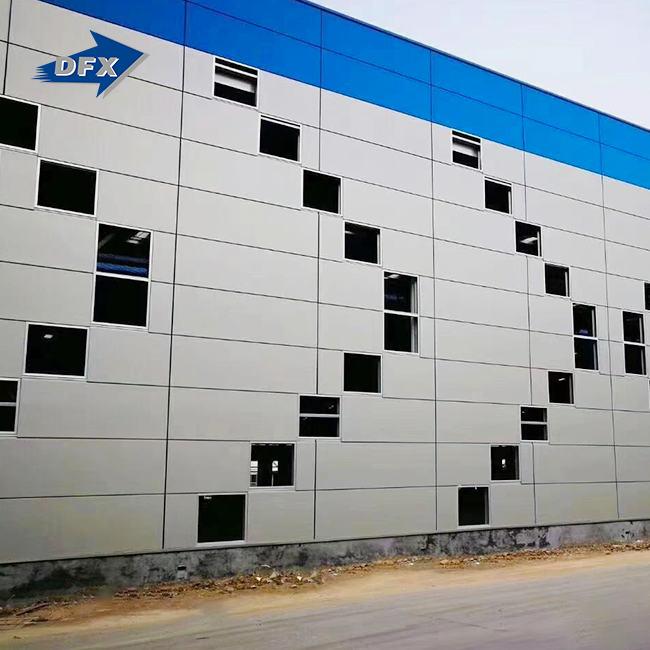
Modern steel frames can support a wide range of building styles, making it possible to create both iconic and custom designs. The design looks like an open-plan industrial steel building, with big openings on the front that let in a lot of natural light and make the building stand out. Our steel portal frame or beam-column building with a reinforced roof system can hold product showrooms, display halls, and sales centers inside the hotel complex. This means that the Multi-story Steel Hotel can make more money from things other than guest rooms.
Construction Workflow and Timeline Management
The steps for building something are very clear. Getting good steel from certified mills is the first step in getting materials. Six automatic welded H-beam production lines, two sandwich panel lines, two C/Z section steel lines, and twenty corrugated steel sheet lines are some of the things we can make. About 20,000 tonnes of welding H beams and columns can be made every year, which makes sure that big projects always have what they need. In our 40,000-square-meter enclosed production space, parts are prefabricated under strict ISO quality management systems. All of our products are CE-certified. Streamlined on-site assembly cuts the total project time by a huge amount, and just-in-time delivery of prefabricated parts cuts down on the need for laydown space, which is especially important for high-density urban infill projects.
Cost Structure Transparency
Figuring out how costs work helps stakeholders give accurate estimates of ROI. Costs of getting materials, labour, and prefabrication must be weighed against the need to make more money faster. Our services include idea design, manufacturing, surface treatment, and help during erection. We offer integrated solutions that get rid of the need for multiple companies to work together. This all-in-one method makes sure that the investment fits with the operational goals and delivery dates, and it also keeps the budget predictable.
Procurement and Partnering for Multi-story Steel Hotel Projects
Quality Standards and Certification Requirements
Strategic buying and choosing reliable partners are key to building a successful Multi-story Steel Hotel. International standards must be followed when getting quality steel. Quality control checks ensure that links are solid and materials meet standards. We focus on non-destructive testing of welds using ultrasonic testing and magnetic particle inspection to find flaws or holes below the surface in critical moment connections. This makes sure that we follow the AWS D1.1 structural welding codes. For high-strength friction grip bolts that don't slip under dynamic loads, strict turn-of-nut methods are used for bolt torque verification. Our certificates, such as ISO9002, CE, COC, and PVOC, show that we meet foreign and European standards.
Selecting Experienced Contractors
Working with skilled contractors and turnkey service providers who focus on building multi-story steel structures will make sure that the project goes smoothly. We can help customers with all stages of a project, from coming up with ideas and engineering them to making the building and putting it together on-site, because we do architectural design and detailing in-house. Clients can get the most out of their budgets by managing competitive bidding processes and accurate cost assessments. Setting clear criteria for choosing contractors, such as those with a history of success in hospitality projects, technical knowledge for fire protection systems, and open communication channels, helps build strong relationships that are essential for big steel hotel projects.
Application Scenarios That Benefit Most
In some business-to-business situations, steel hotel buildings work really well. High-density urban infill projects gain from having less noise pollution and less wet work on-site. Coastal and island resorts need steel frames that are made with moment-resisting connections that can withstand higher wind loads. Advanced galvanisation also protects against corrosion from salt spray. Seismic zone developments use the ductility of steel to make structures that can bend without falling down. They do this by using eccentric braced frames or buckling-restrained braces to absorb seismic energy and keep the business running.
Future Trends and Sustainable Practices in Multi-story Steel Hotels
Environmental Responsibility and Green Building
Sustainability and new ideas will shape the future of multi-story steel hotel buildings. Steel has a much smaller effect on the environment than other materials because it can be recycled. Adding energy-saving technologies like smart building management systems, high-performance insulation, and solar panels to strengthened roof systems makes hotel operations better while lowering their carbon footprints. Green building principles help business-to-business clients meet changing government rules in the competitive hotel industry.
Seismic and Safety Advancements
New developments in seismic design make steel hotels ideal for places that are prone to earthquakes, and proven structural improvements raise safety standards. Market trends show that there is a growing need for quick, long-lasting construction of hotels and resorts around the world. Using new technologies like Building Information Modelling to find clashes and advanced coating systems to make things last longer sets projects up for long-term success.
Conclusion
For procurement managers, project engineers, and EPC companies looking for ways to stay ahead of the competition, the Multi-story Steel Hotel building is a big change. When you put together building speed, base economy, space efficiency, and environmental responsibility, you get strong business reasons. Our 12 years of experience delivering CE-certified steel structures that are CE-certified shows that this method works and can be trusted. Customers are very happy with the quality, dependability, and international certification of the products, as shown by the steadily growing number of customers. When you choose steel, you choose flexibility, safety, and long-term growth in a service industry that is always changing.
FAQ
Q1: How does steel handle fire safety compared to concrete?
Since steel weakens at high temperatures, we use passive fire protection systems like intumescent paints that swell to surround steel and keep it warm, or gypsum board to meet strict fire resistance ratings of two to three hours. To make sure you get the right fire ratings according to ASTM E119 standards, you need to measure the dry film thickness of intumescent coatings or the density of spray-applied fire-resistant materials.
Q2: What about acoustic transmission between floors?
To meet the high acoustic standards of a luxury hotel (STC 55+), we use composite floor decks with a concrete topping, build resilient channels, and use high-STC rated insulation batts in wall spaces. This keeps guests comfortable and protects their privacy.
Q3: Is corrosion a risk in humid climates?
Factory-controlled anticorrosive systems can stop corrosion before it happens. We use shot blasting on Sa 2.5, then inorganic zinc-rich primers, epoxy intermediates, or hot-dip galvanisation for uncovered elements to protect the structure for its whole service life, even in harsh coastal settings.
Partner with DFX for Your Multi-story Steel Hotel Project
Qingdao Director Steel Structure Co., Ltd. is ready to make your dream of building a hotel come true. We provide complete solutions, from idea design to erection support, as an experienced Multi-story Steel Hotel maker with over 200 skilled workers and cutting-edge automatic production lines. Our ISO9002 and CE certifications make sure that our products meet international quality standards, and our made-to-order delivery model makes sure that all of your project's needs are met exactly. Talk to Jason at jason@bigdirector.com about how our steel portal frame systems, reinforced roof structures, and turnkey fabrication services can help you get your project done faster and for less money.
References
1. American Institute of Steel Construction. (2016). Specification for Structural Steel Buildings (ANSC/AISC 360-16). Chicago: AISC.
2. Chen, W.F., & Lui, E.M. (2018). Handbook of Structural Engineering (2nd ed.). Boca Raton: CRC Press.
3. Lawson, R.M., & Richards, J. (2010). Modular Design for High-Rise Buildings. Proceedings of the Institution of Civil Engineers - Structures and Buildings, 163(3), 151-164.
4. Smith, B.S., & Coull, A. (2017). Tall Building Structures: Analysis and Design. New York: John Wiley & Sons.
5. Taggart, M. (2014). The Green Building Materials Guide: Sustainable Options in Steel, Concrete, and Timber. London: RIBA Publishing.
6. United States Green Building Council. (2019). LEED v4 for Building Design and Construction. Washington, DC: USGBC.
Learn about our latest products and discounts through SMS or email