- English
- French
- German
- Portuguese
- Spanish
- Russian
- Japanese
- Korean
- Arabic
- Greek
- German
- Turkish
- Italian
- Danish
- Romanian
- Indonesian
- Czech
- Afrikaans
- Swedish
- Polish
- Basque
- Catalan
- Esperanto
- Hindi
- Lao
- Albanian
- Amharic
- Armenian
- Azerbaijani
- Belarusian
- Bengali
- Bosnian
- Bulgarian
- Cebuano
- Chichewa
- Corsican
- Croatian
- Dutch
- Estonian
- Filipino
- Finnish
- Frisian
- Galician
- Georgian
- Gujarati
- Haitian
- Hausa
- Hawaiian
- Hebrew
- Hmong
- Hungarian
- Icelandic
- Igbo
- Javanese
- Kannada
- Kazakh
- Khmer
- Kurdish
- Kyrgyz
- Latin
- Latvian
- Lithuanian
- Luxembou..
- Macedonian
- Malagasy
- Malay
- Malayalam
- Maltese
- Maori
- Marathi
- Mongolian
- Burmese
- Nepali
- Norwegian
- Pashto
- Persian
- Punjabi
- Serbian
- Sesotho
- Sinhala
- Slovak
- Slovenian
- Somali
- Samoan
- Scots Gaelic
- Shona
- Sindhi
- Sundanese
- Swahili
- Tajik
- Tamil
- Telugu
- Thai
- Ukrainian
- Urdu
- Uzbek
- Vietnamese
- Welsh
- Xhosa
- Yiddish
- Yoruba
- Zulu
Power Plant Steel Structure Ensures Stable Support for Heavy Industrial Equipment
When engineers and procurement managers evaluate infrastructure for power generation facilities, one question keeps coming up: what kind of structural system can reliably carry turbines, generators, and boiler assemblies without compromising safety or timeline? The answer, time and again, points to steel. A steel structure building for power plant applications provides the load-bearing capacity, span flexibility, and long-term durability that heavy industrial equipment demands. At Director Steel, we have supported energy and industrial projects across multiple continents, and this article shares what we have learned about making these structures work.

Understanding Steel Structures in Power Plants: Design and Standards
What These Structures Actually Do
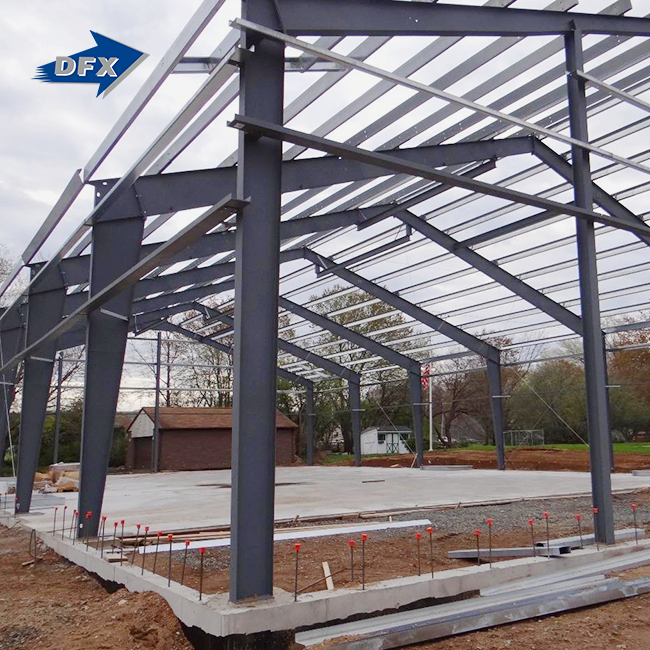
Steel frames for power plants are not like other industrial buildings. They hold huge standing loads from the turbine halls and moving loads from engines that are running. For maintenance work, they also have to support overhead bridge cranes that can lift more than 100 tons. The frame system usually has heavy truss systems, welded H-section columns, and box columns that are made to fit the weight and vibration patterns of each machine.
Steel Grades and Selection
A572 Grade 50 and Q355B/C/D are the most common types. HSLA stands for "High-Strength Low-Alloy." At least 355 MPa of yield strength is present in these grades, and 470 to 630 MPa of tensile strength is present. Carbon Equivalent Value (CEV) levels below 0.45% allow steel to be welded on-site without breaking. The 50-year design life goal is directly affected by picking the right grade for the working setting, like in areas with hot boilers or on outdoor condenser platforms.
Design Standards That Apply
Engineers who work on steel structure building for power plant use AISC 360 for structural design, AWS D1.1 for welding requirements, and EN 1090 for putting steel structures together in European markets that are regulated. For seismic design, ASCE 7 or similar regional codes are used. For fire resistance ratings of F120 to F180 (two to four hours), intumescent coatings or cementitious sprays are used according to local fire codes.
Advantages of Steel Structures Over Traditional Concrete Buildings
When building a power plant, steel is clearly better than reinforced concrete, and the data backs this up. A study in the Journal of Constructional Steel Research says that using prefabricated steel frame projects in industrial settings can cut construction time by 20 to 30 percent compared to using cast-in-place concrete methods.
As a general rule, steel is better for power plant projects because:
- Fast assembly: Components are pre-fabricated and delivered with exact dimensions and bolt-ready connectors. Field assembly is far faster than shaping, pouring, and curing concrete, which helps keep EPC project deadlines on track.
- Higher strength-to-weight ratio: Steel decreases the dead load on the foundations. That translates directly to decreased foundation engineering costs – a significant saving when applied to the large-scale power plant sites where foundation work can represent 15 to 25 percent of overall project cost.
- Flexibility of access to equipment: Large-span open interior spaces enable crane runways and maintenance corridors without intermediary columns, which concrete framing seldom offers at the same cost.
Easier to put together: Prefabricated parts come with exact measurements and joints that are ready to bolt together. Putting things together in the field is a lot faster than shaping, pouring, and curing concrete, which helps keep EPC project schedules on track.
Procurement and Supplier Selection for Power Plant Steel Structures
What Certifications Should You Require
Managers in charge of buying things for power plants should make sure that the steel structure building they want has ISO 9001 quality management certification, CE marking for structural parts, and ASTM material compliance for steel grades. These certifications show that the provider has written quality processes and third-party verification, which lowers the risk of the project.
Procurement Workflow: From Inquiry to Delivery
A normal process for getting a custom steel structure for a power plant includes asking technical questions and sending in load specifications, getting an engineering proposal and getting approval for a drawing, making the structure, treating the surface, packing it up, and shipping it. Made-to-order production at Director Steel usually takes 25 to 55 days, but this can vary based on the amount of work and how complicated it is. There should be checkpoints in contracts at the approval of the drawings, the mid-fabrication inspection, and the pre-shipment stages.
Evaluating Cost Against Long-Term Value
For a steel structure building for power plant, the price per ton is just the beginning, not the end. It will cost more over the life of the facility to work with a provider that has lower unit rates but no Non-Destructive Testing (NDT) or proper anti-corrosion systems. The total cost of ownership should include the building of the structure, the surface treatment system (DFT 250–320 microns for marine/industrial settings), help with fitting, and an estimate of how often it will need to be serviced.
Installation, Maintenance, and Longevity of Steel Structures in Power Plants Foundation and Installation Requirements
It is necessary to have accurate foundation work. Anchor bolt placement tolerances of ±2mm have a direct effect on whether premade frame pieces line up correctly when they are put together. Director Steel helps erection teams by giving them full installation plans and on-site advice. This cuts down on mistakes during installation that would otherwise cause delays in completion.
Maintenance Protocols That Extend Service Life
A power plant's steel frame is meant to last between 50 and 70 years if it is well taken care of. Maintenance plans should always focus on these three areas:
- Corrosion inspection: Annual visual checks and five-year coating thickness measurements using dry film thickness (DFT) gauges. Coastal or high-humidity installations require C4 or C5-M grade anti-corrosion systems per ISO 12944.
- Weld and connection integrity: Periodic magnetic particle testing (MT) or dye penetrant testing (PT) on high-stress joints, particularly crane runway beams and column bases exposed to vibration.
- Fire protection condition: Intumescent coatings degrade over time and require reapplication in zones exposed to moisture or mechanical abrasion.
Preventive maintenance on these three fronts cuts down on unplanned downtime and increases the time between big structure repairs.
Quality Control During Fabrication
A full Inspection and Test Plan (ITP) is used by Director Steel during production. Through Mill Test Certificates (MTC), the material for every structure part can be tracked back to its source. Ultrasonic (UT) and radiographic (RT) tests are done on all critical butt welds on main supports. Before being sent out to the field, complex connection nodes are put together for the first time in the factory so that there are no surprises.
Environmental and Safety Considerations in Power Plant Steel Structures
Sustainability of Steel as a Construction Material
When it comes to steel structure building for power plant, one of the most recycled building materials in the world is steel. The World Steel Association says that more than 85% of steel in the world is recycled. When recovered material and end-of-life recovery are taken into account, choosing steel buildings lowers embodied carbon compared to similar concrete amounts. This is important for project owners who are looking at sustainability measures or corporate environmental reports.
Fire Resistance and Seismic Design
Steel loses its strength above 400°C, so fire safety engineering has to be a part of the design of any steel frame power plant. When heated, intumescent coatings expand to insulate the steel, keeping it strong enough to hold weight during an emergency evacuation window. When designing for seismic activity, flexibility is taken into account so that the frame can absorb energy without breaking suddenly. This is something that concrete frames of the same cost can't do.
Regulatory Compliance
Power plant structures in the US must comply with OSHA 1910.119 (Process Safety Management), NFPA 850 (Recommended Practice for Fire Protection for Electric Generating Plants), and local seismic codes. Suppliers holding CE certification and ISO 9001 accreditation demonstrate alignment with international safety standards, which supports the permit application process and third-party audits.
Conclusion
Since 2011, Director Steel has been building and delivering industrial steel structures. That's more than 12 years of busy project experience. Our 40,000 m² factory has six automatic H-beam welding lines and methods that are ISO 9001 and CE certified. This makes us a reliable steel structure building for power plant manufacturers, EPC contractors, infrastructure developers, and industry operators.
FAQ
Q1: What steel grades are used in power plant steel structures?
Q355B/C/D and ASTM A572 Grade 50 are standard choices. Both offer a yield strength of at least 355 MPa and controlled weldability. Grade selection depends on operating temperature, seismic zone, and exposure conditions.
Q2: How is corrosion protection applied for coastal power plants?
A C5-M marine-grade system is standard: sandblasting to Sa 2.5 cleanliness, followed by an inorganic zinc-rich primer, epoxy MIO intermediate coat, and polyurethane topcoat. Total dry film thickness typically reaches 250 to 320 microns.
Q3: What is the typical lead time for a power plant steel structure order?
Director Steel operates on a made-to-order basis with a standard lead time of 25 to 55 days, depending on project scope and tonnage.
Q4: Can steel structures support the dynamic loads of operating turbines?
Yes. The design incorporates bracing systems, heavy H-beam columns, and high-strength friction grip (HSFG) bolts calculated to handle continuous dynamic vibration without loosening or fatigue cracking.
Get a Custom Quote from Director Steel — Your Trusted Steel Structure Building for Power Plant Supplier
For a steel structure building for power plant, most people choose ASTM A572 Grade 50 or Q355B/C/D. They can both be managed to weld and have a yield strength of at least 355 MPa. The working temperature, seismic zone, and exposure factors all play a role in choosing the right grade. Get in touch with us right away, and our tech team will look over your load requirements and site conditions. Send us a message at jason@bigdirector.com.
References
1. Gorenc, B., Tinyou, R., & Syam, A. Steel Designer's Handbook. UNSW Press, 2005.
2. American Institute of Steel Construction. AISC 360-22: Specification for Structural Steel Buildings. AISC, 2022.
3. World Steel Association. Steel's Contribution to a Low Carbon Future. World Steel Association, 2021.
4. National Fire Protection Association. NFPA 850: Recommended Practice for Fire Protection for Electric Generating Plants. NFPA, 2020.
5. Bjorhovde, R. "Development and Use of High-Performance Steel." Journal of Constructional Steel Research, Elsevier, 2004.
6. Baddoo, N. R. "Stainless Steel in Construction: A Review of Research, Applications, Challenges and Opportunities." Journal of Constructional Steel Research, Elsevier, 2008.
Learn about our latest products and discounts through SMS or email