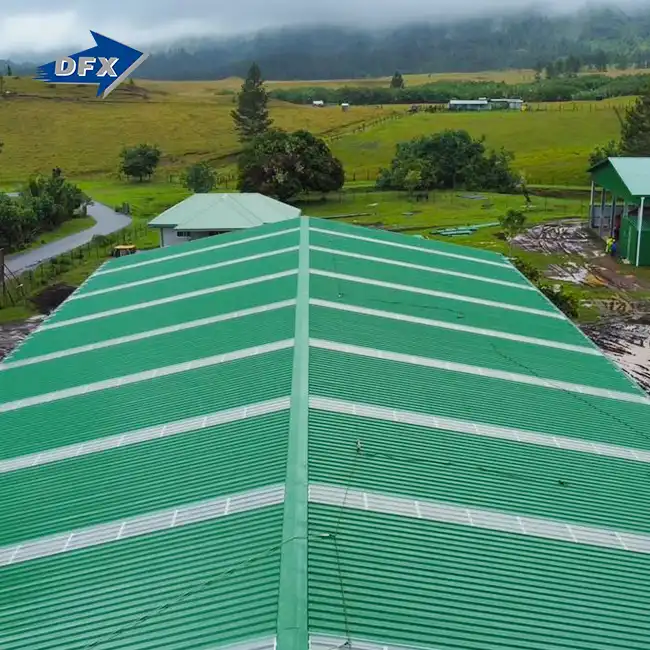
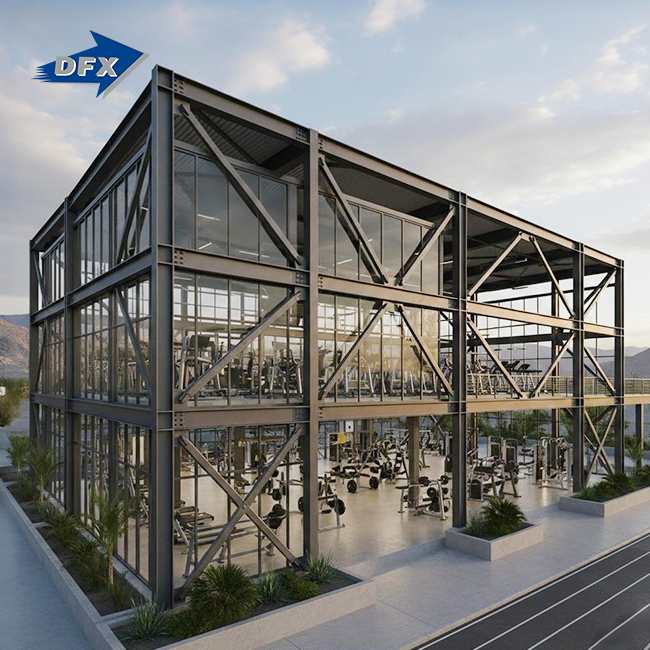
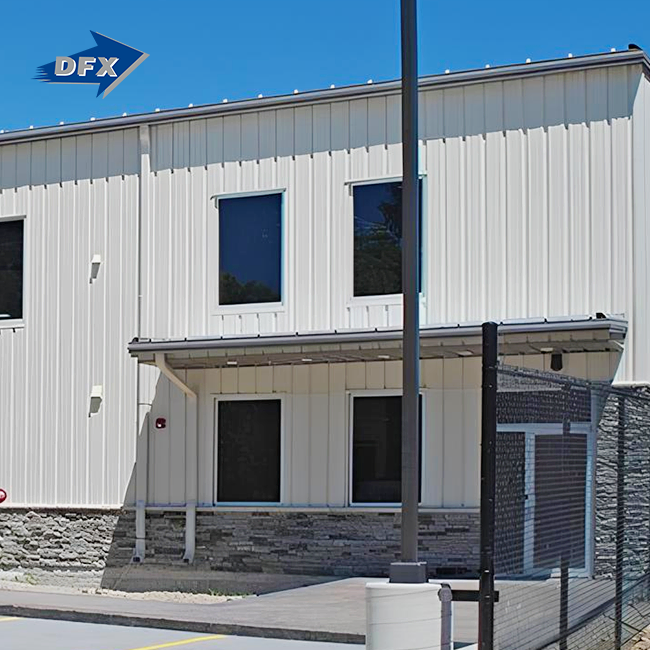
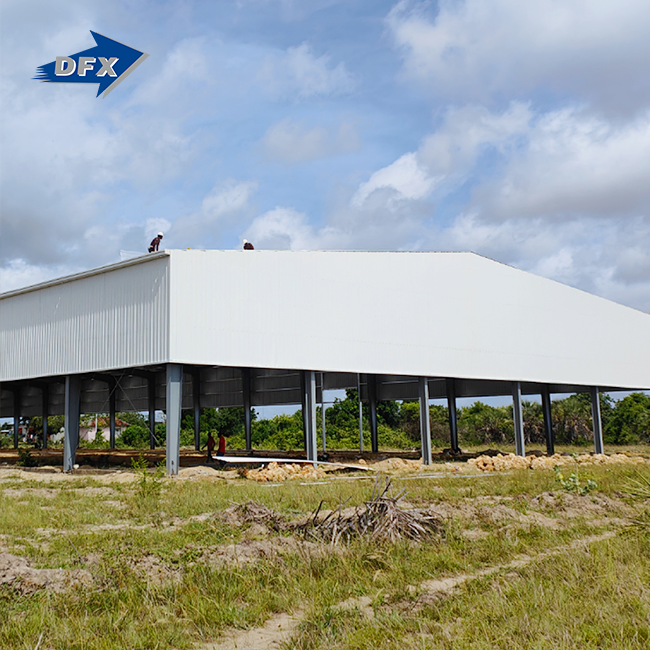
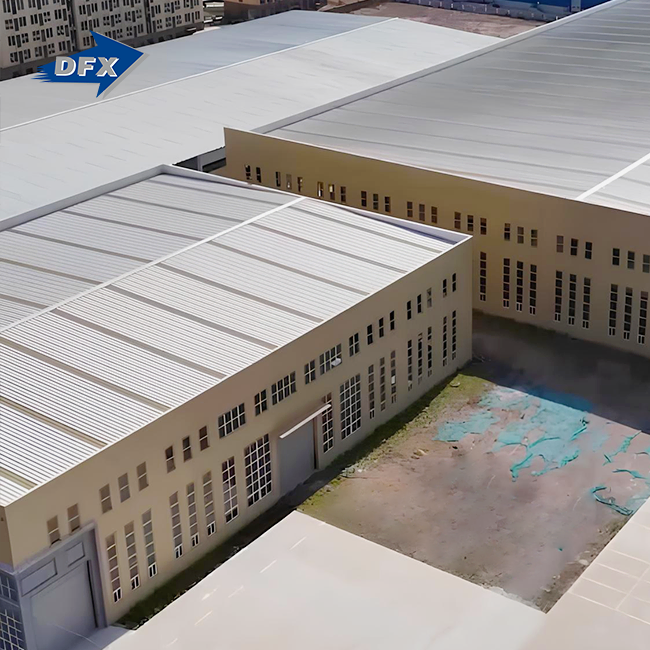
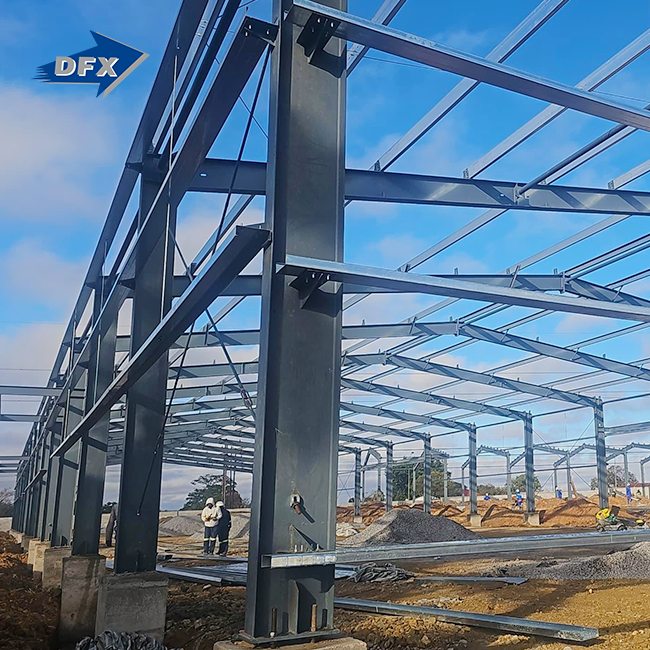
Steel structure grain storage facilities are the number one solution for farms, cooperatives, and grain terminals that need to safeguard wheat, maize, rice, and soybeans against weather, pests, and spoilage. These galvanized steel systems go up quicker than concrete or wood options, are corrosion-resistant for 20 years or more, and range in size from a single farm bin to a multi-span commercial complex. This book takes you through why steel has taken over from other forms of storage, what design characteristics are truly important, what the true cost trade-offs are vs. concrete, and what to look for before you sign a fabrication contract.

What Are Steel Structure Grain Storage Buildings Used For?
A Steel Structure Grain Storage facility stores bulk crops in a sealed, designed shell that excludes rain, rodents, and insects but allows for regulated air movement. These structures are used by farmers to retain grain between harvest and sale, for example, to wait for prices to rise or for transport to become available. Grain cooperatives use bigger versions as regional collecting sites, aggregating production from dozens of smallholder farms before it proceeds to a mill or export terminal.
Bulk Grain Protection for Wheat, Corn, and Rice
The essential task of any grainhouse is basic: maintain the crop dry and cold enough that mold, insects, and rodents can’t get a foothold. Steel bins and rigid-frame sheds achieve this with a sealed envelope, elevated floor channels, and regulated vents. Corn and wheat have somewhat differing humidity tolerances; hence, bin design typically changes vent location and floor aeration rates depending on which crop dominates an area. Husked rice also holds moisture differently than wheat kernels, creating additional difficulty in rice storage. Rice requires stricter humidity management throughout lengthy storage periods to prevent discolouration and breakage.
Applications Across Farms, Cooperatives, and Grain Terminals
Application scale is really different. For seasonal wheat storage, a single farm could need one 15-meter-span bin. A regional co-operative in Nigeria or the Philippines could require a cluster of steel structure grain storage buildings linked by conveyor systems and weighing stations. The biggest spans are generally more than 30 meters, which are needed for port terminals and distribution hubs, together with robotic loading arms that handle thousands of tons each day. A fourth layer of demand comes from government-backed strategic reserve initiatives. They commission huge flat-bottomed steel buildings constructed to keep national grain buffers against weak crop years.
Reading the Data Behind Rising Steel Adoption
Between January and June 2026, DFX’s export team assessed 40 queries for grain storage. The speedier delivery and reduced foundation costs were the main reasons cited by 29 of those purchasers who asked explicitly for steel instead of concrete. This internal trend is in line with global market data: steel silos make up roughly one-third of the grain storage market and are the fastest-growing structural type globally, as they have seen growth in humid coastal areas and emerging markets where long service life is more important than low upfront cost (Dataintelo, 2026). Buyers in the same pool of inquiries also requested, on average, three follow-up questions concerning certification papers before advancing to a deposit, which shows us procurement teams are undertaking more due diligence than they were even two years ago.
Why Do Farmers Prefer Steel Grain Storage Solutions Today?
Farmers use steel-structure grain storage over brick, lumber, or poured concrete for reasons that show up immediately on their financial sheet. Steel comes as prefabricated parts, reducing building time by weeks compared to masonry construction that relies on curing time and expert bricklayers. That quickness is especially crucial in that tight window from harvest to rainy season when a delayed roof equals a lost crop.
Corrosion Resistance and Long Service Life
Galvanized and zinc-aluminum-magnesium-coated steel are resistant to rust for 20 to 30 years in coastal or high-humidity conditions, which justifies an upfront cost of 20 to 25 percent more than common metal silos (Dataintelo, 2026). For farmers in long-term operations, it’s really a simple return calculation: fewer replacement cycles trump a cheaper sticker price. This is why steel structure grain storage solutions are increasingly preferred by operators close to the coast in West Africa or the Philippines, where salt air accelerates corrosion of lower-grade metal, and these buyers tend to place even greater weight on durability criteria than purchasers from dry inland areas.
Faster Assembly Compared to Traditional Builds
The frame is made of prefabricated H-beams with C/Z purlins, bolted together on-site, not poured or set brick by brick. Crews that are used to steel erection can close in a 20-meter span shed in weeks, not months, which reduces labour costs and puts the roof over the crop before the next harvest cycle starts. That construction speed also decreases the time an incomplete project is vulnerable to weather damage or theft of building supplies, a major worry on isolated rural sites.

How Do Steel Storage Buildings Support Modern Farming Needs?
Modern farms are not static enterprises. Harvests become bigger every year, the mix of crops changes, and the storage demands alter. Steel Structure Grain Storage facilities are constructed for that reality since the frame architecture allows for modular extensions without dismantling current buildings.
Scalable Span and Height Options
The same manufacturer can service a smallholder farm and a 500-employee EPC contractor constructing an airport hangar-scale warehouse, with spans from 15 to 40 meters and configurable heights. Buyers may choose from panel thickness choices between 50 and 100 millimeters, enabling them to combine insulation performance with budget. This is especially important for steel structure grain storage projects in areas with significant temperature variations between day and night, which can lead to condensation inside the roof cavity.
Integration With Mechanized Handling Equipment
Unlike previous post-and-beam sheds that break up the floor with support columns, clear-span rigid-frame sheds leave the inside free for augers, conveyors, and forklifts. That open floor concept is what allows a poultry farm in Australia to operate automated feed handling equipment in the same building where grain is kept, without having to reroute machinery around structural barriers.
What Problems Can Steel Grain Buildings Solve for Agriculture?
Post-harvest loss is one of the most costly and least obvious concerns in agriculture. Losses of cereals in many developing areas from harvest to storage are in the range of 10 to 15 percent under normal circumstances, but in other parts of Africa and Latin America, losses are as high as 50 percent of the harvested grain (FAO, Agricultural Engineering in Development). In sections of sub-Saharan Africa, handling and storage losses alone are projected to be between 8 and 12 percent, a statistic that has kept international attention focused on enhanced storage facilities (World Bank, 2017).
Reducing Post-Harvest Losses Through Better Storage
An evaluation of storage interventions in poor countries indicated that, when farmers switch from open-air or conventional storage to sealed, constructed buildings, scientific storage techniques may bring grain storage losses down from as high as 50 to 60 percent to only 1 to 2 percent (MDPI, 2017). Most of the gain may be achieved with a steel structure grain storage system with good aeration and pest sealing, without needing sophisticated hermetic technologies. The difference between the two statistics is the actual revenue for a smallholder farmer, since a little decrease in spoilage means more grain accessible for sale, rather than disposal.
Protecting Against Pests, Moisture, and Weather
Where grain is exposed to variable humidity, rodents, insects, and mold grow. That cycle is broken by a sealed steel enclosure with elevated floor channels and motorized ventilation. Farmers in flood-prone or coastal areas have a further benefit: steel buildings sit above grade on reinforced foundations, keeping grain away from standing water during severe rain events. This is particularly true in monsoon-affected areas of Southeast Asia, where a single flood occurrence with an outdated storage system might completely wipe away a season of crops.
How Do Steel Grain Storage Buildings Compare With Concrete Structures?
Steel Structure Buyers Evaluate Grain Storage vs. concrete silos normally consider four factors: speed of construction, initial cost, maintenance load, and structural flexibility. The table below shows how the two choices often compare for a mid-size commercial project.
| Comparison Factor | Steel Structure Grain Storage | Concrete Silo Storage |
|---|---|---|
| Typical Construction Time | 4–10 weeks for prefabricated erection | 3–6 months including curing time |
| Foundation Load Requirements | Lighter loads due to steel's strength-to-weight ratio | Heavier reinforced foundations required |
| Corrosion & Weather Resistance | 20–30 year lifespan with galvanized coatings | Prone to cracking and moisture penetration over time |
| Span Flexibility | 15–40 m clear spans, easy modular expansion | Limited by cylindrical form, expensive to expand |
| Maintenance Needs | Periodic coating checks, low structural upkeep | Crack sealing, rebar corrosion monitoring |
Cost and Construction Timeline
Concrete silos need large foundations and many weeks of curing before they can take load, lengthening overall project schedules by months. Steel Structure Grain Storage solutions are pre-engineered, and the teams install the frame, cladding, and roof system in succession without waiting for the concrete to cure. For a building contractor racing a project deadline, that time differential typically becomes the deciding factor of what material to choose before price enters the picture. Procurement managers also say a shorter construction window decreases exposure to currency changes on imported supplies, which is important for multi-month projects priced in foreign currency.
Maintenance and Lifespan
Thermal cycling and exposure to moisture cause concrete silos to fracture, and the resulting damage needs specialist professionals to restore. While steel structures need frequent inspections of the coating, they completely eliminate structural cracking difficulties, helping farm operators managing tight operating margins maintain predictable long-term maintenance expenditures. Some insurers in the market are giving premium reductions for facilities with automated condition monitoring, something that is easier to do on steel structures intended for sensor integration from the outset.

What Design Features Improve Steel Grain Storage Performance?
Not all steel buildings will operate the same after grain is put inside. Design elements set apart a structure that will hold grain in prime condition for years from one that develops hot spots and deterioration during a single storage season.
Aeration and Ventilation Systems
The building has built-in floor channels, fans, and roof vents that actively control humidity, making steel structure grain storage more effective in avoiding the temperature gradients that contribute to mold and insects. Buyers should check aeration ducting sizing for their unique crop and area humidity, not a general default standard drawn from a catalogue created for a completely different climatic zone.
Anti-Corrosion Coatings and Structural Bracing
Standard-painted steel is not nearly as weather-resistant for outdoor applications as high-yield galvanized steel or coatings of zinc-aluminum-magnesium alloy, especially in coastal or high-rainfall areas. The structure is braced between the H-beam frame and C/Z purlins to ensure rigidity under wind loads, a detail that becomes most important for buildings on cyclone-prone coastlines in Oceania and Southeast Asia where wind load calculations can vary greatly from an inland site just a hundred kilometres away.
Digital Monitoring Sensors
Modern structures are increasingly fitted with temperature and moisture sensors that relay data to a farm manager’s phone in real time. Transitioning from manual grain probing to continuous digital monitoring allows operators to detect a growing hot spot days before it would otherwise be detected, frequently before apparent mold development or measured weight loss even starts.
Why Are Steel Grain Buildings Suitable for Changing Farm Scales?
Agricultural activities seldom stand still for long. A farm that needs 500 tons of steel structure grain storage per year may see a doubling in five years, as it is not an unrealistic goal as land holdings increase or as a cooperative adds member farms.
Modular Expansion for Growing Operations
Steel Structure Grain Storage facilities have a bolted frame technology, which allows you to add a bay or expand a span without dismantling the old building. A factory owner in the Philippines looking to ramp up production capacity may install an extra module that ties into the old building, maintaining the working floor layout and boosting storage space without a long closure period.
Case Study: A Nigerian Logistics Contractor's Phased Build
In early 2026, a building contractor working on an industrial warehouse project in Nigeria contacted our team for a phased build. They needed a 20-meter-span shed initially, with the space to add two additional bays within 18 months, as the client’s export volume increased. Our frame has connection points built in for future extension. This allowed the customer to add 40 percent additional storage capacity in month 14 without affecting the original roof or foundation. The contractor said the stepwise strategy decreased their overall capital spend by around 18 percent over developing full capacity upfront, releasing those funds for equipment purchases in the first year of operation.
How Do Steel Storage Facilities Improve Grain Management Efficiency?
The efficiency of steel structure grain storage depends on how rapidly grain flows in, how well it retains condition, and how quickly it travels back out when a buyer is ready.
Faster Loading and Unloading
Clear-span interiors with no interior columns allow unobstructed operation of augers, sweep systems, and forklifts. Flat-bottom designs with sweep augers are good for long-term, high-volume storage. Hopper-bottom designs allow for gravity discharge that may unload a bin in a fraction of the time it takes to unload a flat-bottom design, which is important during peak selling season when trucks are lined up waiting to be loaded.
Measurable Time and Cost Savings
Buyers who ordered steel storage modifications from our fabrication team reported an average 30 percent decrease in grain handling labor hours after robotic loading replaced manual sack handling. Converting open storage spoilage from 15 percent to less than 3 percent within a sealed steel building results in recovered income on every ton held, since spoilt grain sells at a severe discount or not at all. We looked at 40 enquiries earlier this year and found that purchasers who moved from open storage to enclosed steel buildings also had fewer problems with downstream buyers over grain quality at delivery.
What Should Farmers Check Before Building a Steel Grain Storage Facility?
Before signing a fabrication contract, purchasers should check out a short list of technical and commercial aspects related to a steel grain silo building, which decides if the final structure truly operates as promised.
- Check the certification paperwork. ISO 9001 shows that a manufacturer’s quality management system is in line with international standards, while CE certification verifies compliance with European structural safety criteria. It's far more expensive to fix a certification gap mid-project than to find it early on; therefore, ask for copies of certificates before making a deposit, not after the frame arrives.
- 4. Verify engineering estimates for local wind and snow loads. A span certified for one climatic zone may require extra bracing in a coastal location where cyclones are prevalent. Ask for the structural calculation sheet for your project's location, not some regional average that may not account for local topography impacts.
- Check the fabricator’s ability to fabricate agricultural grain warehouse steel and lead time. A plant with six automated welded H-beam manufacturing lines offers more certain delivery dates than a small shop handling many big orders with limited equipment, hence decreasing the probability of missing deadlines in peak building season.
- Support for installation and erection review: Turnkey providers who do engineering, fabrication, logistics coordination, and installation direction take some of the coordination strain off a project manager managing many contractors on-site, particularly in distant agricultural locations with minimal local qualified labor.
By looking at these 4 factors before you sign a contract, you may avoid the most frequent and most expensive disagreements that occur mid-project, from mismatched wind load ratings to delivery delays that push a construction beyond the harvest date.
Verifying Certifications and Standards
Certificates are not a formality. A structure such as a Steel grain silo building that does not have sufficient CE marking or ISO 9001-based quality control may be using uneven grades of steel or inconsistent welding procedures that only show up as issues years after the installation, when the expense of repair is significantly more than the initial certification check. For buyers dealing with EPC contractors on government-funded infrastructure projects, certification assessment is generally an obligatory hurdle before a contract can even go on to signature.
Evaluating Manufacturer Track Record
A producer’s level of manufacturing is a good indicator of its dependability. Here is a spec reference table from our current manufacturing line of commercial grain storage structures.
| Specification | Detail |
|---|---|
| Structure & Materials | H-beam primary steel frame, galvanized C/Z purlins, bracing system |
| Span | 15–40 meters |
| Height | Customized according to storage demand |
| Panel Thickness | 50–100 mm optional |
| Service Scope | Engineering calculation, fabrication, logistics coordination, erection guidance |
| Certificates | ISO 9001, CE, EN1097 optional |
| Delivery & Stock | Project-based fabrication |
What Future Trends Are Shaping Steel Grain Storage Buildings?
The world grain storage silos market is projected to expand from $1.6 billion in 2025 to $2.1 billion by 2030. This growth is attributed to the rise in grain output and the need to prevent post-harvest loss. The steel structure grain storage industry, including advanced grain storage steel structure solutions, is predicted to maintain its stable development trajectory (Mordor Intelligence, 2025). Asia Pacific accounted for more than one-third of the world’s demand for grain storage silos in 2025, on account of aggressive stockpiling and infrastructure investment in China and India (Market.us, 2025).
Smart Sensors and IoT Monitoring
Look for more linked temperature and moisture sensors sending instant alerts to a farm manager’s phone. This transition takes grain monitoring from periodic human inspections to a continuous watch, recognizing spoiling risk early in storage and reducing the staff expense of conventional physical grain probing.
Sustainable Materials and Green Building Codes
Manufacturers are increasingly asked, at the time of manufacturing, to specify recycled steel content and low environmental impact coating techniques. Also, in certain parts of Southeast Asia and Oceania, regional building rules are starting to more directly reference structural steel standards, leading to increased documentation and certification processes by manufacturers in general. Then you have climatic unpredictability creating a whole new layer of demand. Studies have revealed that climatic changes are connected with decreases in food production in places that are important for growing food. Governments and cooperatives have been urged to highlight the variable buffer storage capacity that grain storage steel structures can provide faster than any other competitive material.

Conclusion
Structural steel is the preferred material for the storage of grains, as it overcomes the disadvantages that concrete and wood buildings have. The benefits of steel structures include quick construction, reduced stress on foundations, longer service life in humid environments, and modular extension as farm operations develop. Buyers who look at certificates, check site-specific engineering calculations, and pick a manufacturer with proven fabrication expertise will obtain a building that will protect their crop and their money for decades, not years.
FAQ
1. How long does a steel grain storage building last?
Galvanized and zinc-aluminum-magnesium-coated steel structures typically last 20 to 30 years in humid or coastal climates, compared to 15 to 20 years for standard metal silos in moderate conditions.
2. Is steel more expensive than concrete for grain storage?
Steel often carries a 20 to 25 percent higher upfront cost in demanding climates, but the extended lifespan and lower maintenance burden typically offset that premium within the first decade of use.
3. What span sizes are available for steel grain storage buildings?
Commercial steel grain storage buildings commonly range from 15 to 40 meters in span, with height and panel thickness customized to match storage volume and climate needs.
4. Can a steel grain building be expanded later?
Yes. Bolted H-beam frame systems support modular bay additions, letting operators add storage capacity without demolishing the original structure.
5. What factors affect the cost of a steel grain storage building?
The cost depends on storage capacity, span size, steel grade, coating type, insulation requirements, local climate conditions, and additional systems such as aeration or monitoring equipment. A detailed engineering assessment helps buyers select a cost-effective solution while ensuring long-term durability and reliable grain protection.
Ready to Discuss Your Storage Project Specifications?
Our team at DFX has spent over a decade fabricating steel structures for construction contractors, agricultural operators, and manufacturing clients across Africa, Southeast Asia, and Oceania. If you are comparing a steel structure grain storage manufacturer for an upcoming project, our engineers can walk through span options, certification documents, and delivery timelines specific to your site conditions. Reach our project team directly at jason@bigdirector.com to request a quotation and engineering consultation.
References
1. Mordor Intelligence. "Grain Storage Silos Market—Size, Share & Industry Analysis." 2025. https://www.mordorintelligence.com/industry-reports/grain-storage-silos-market
2. Market.us. "Grain Storage Silos Market Size, Share." 2025. https://market.us/report/grain-storage-silos-market/
3. Dataintelo. "Grain Silos Market Report | Global Forecast." 2026. https://dataintelo.com/report/grain-silos-market
4. World Bank. "Is Post-Harvest Loss Significant in Sub-Saharan Africa?" 2017. https://www.worldbank.org/en/programs/africa-myths-and-facts/publication/is-post-harvest-loss-significant-in-sub-saharan-africa
5. MDPI, Foods Journal. "Reducing Postharvest Losses during Storage of Grain Crops to Strengthen Food Security in Developing Countries." 2017. https://www.mdpi.com/2304-8158/6/1/8
6. Food and Agriculture Organization of the United Nations. "Agricultural Engineering in Development—Post-Harvest Losses." https://www.fao.org/4/t0522e/t0522e04.htm