- English
- French
- German
- Portuguese
- Spanish
- Russian
- Japanese
- Korean
- Arabic
- Greek
- German
- Turkish
- Italian
- Danish
- Romanian
- Indonesian
- Czech
- Afrikaans
- Swedish
- Polish
- Basque
- Catalan
- Esperanto
- Hindi
- Lao
- Albanian
- Amharic
- Armenian
- Azerbaijani
- Belarusian
- Bengali
- Bosnian
- Bulgarian
- Cebuano
- Chichewa
- Corsican
- Croatian
- Dutch
- Estonian
- Filipino
- Finnish
- Frisian
- Galician
- Georgian
- Gujarati
- Haitian
- Hausa
- Hawaiian
- Hebrew
- Hmong
- Hungarian
- Icelandic
- Igbo
- Javanese
- Kannada
- Kazakh
- Khmer
- Kurdish
- Kyrgyz
- Latin
- Latvian
- Lithuanian
- Luxembou..
- Macedonian
- Malagasy
- Malay
- Malayalam
- Maltese
- Maori
- Marathi
- Mongolian
- Burmese
- Nepali
- Norwegian
- Pashto
- Persian
- Punjabi
- Serbian
- Sesotho
- Sinhala
- Slovak
- Slovenian
- Somali
- Samoan
- Scots Gaelic
- Shona
- Sindhi
- Sundanese
- Swahili
- Tajik
- Tamil
- Telugu
- Thai
- Ukrainian
- Urdu
- Uzbek
- Vietnamese
- Welsh
- Xhosa
- Yiddish
- Yoruba
- Zulu
Commercial Office Building Steel Structure Solutions
What's behind modern business skylines' shiny glass and sleek facades? Office building steel structures are new construction methods that use high-strength steel frames and advanced engineering to produce adaptable, durable, and sustainable corporate facilities. For over a decade, DFX has perfected steel structure construction for commercial buildings, administrative centres, and company complexes worldwide. Our solutions solve procurement managers' and construction experts' biggest problems: faster project timeframes, financial optimisation, and international-standard structural reliability.

Understanding Office Building Steel Structures
What Defines a Modern Steel Office Framework?
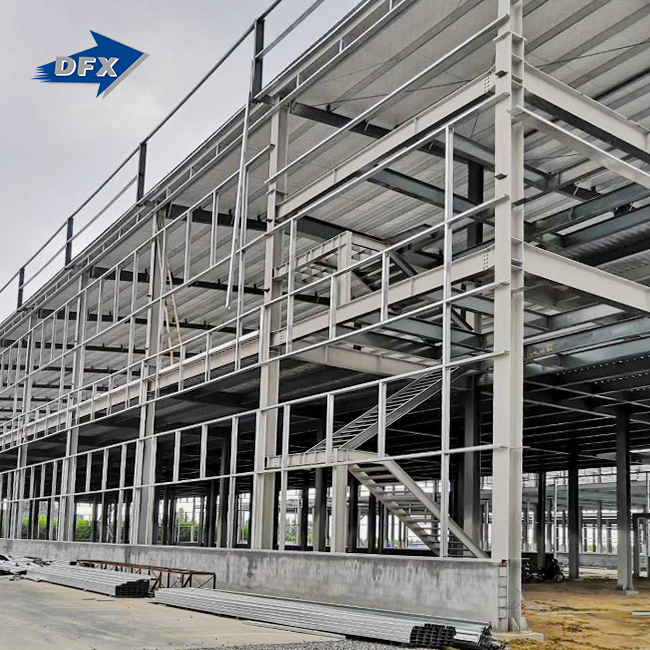
Office building steel structure's load-bearing skeletons are made of prefabricated steel H-beams, box columns, and lattice girders. Unlike standard reinforced concrete, this technology uses high-grade steel (Q235, Q355, or ASTM A572 Grade 50) with high strength-to-weight ratios. Steel column-beam frames, composite floor systems, and curtain wall installations are used to build multi-storey and single-storey layouts with enclosed facades. This technology substitutes months of concrete drying with factory-precision fabrication, reducing construction time by 30-50% while retaining structural integrity under fluctuating loads and climatic conditions.
Core Components and Material Specifications
Multiple systems function together in office building steel structures. Moment-resisting frames and braces manage vertical gravity loads and wind and earthquake lateral stresses in the main structure. Composite floor solutions optimise structural efficiency and reduce dead weight with steel decking and concrete toppings. DFX uses six automated welded H-beam production lines to produce 20,000 tonnes per year with sub-millimetre dimensional precision. The envelope is protected from weather and customisable with metal panel or curtain wall facades.
Advantages Over Traditional Construction Methods
Office building steel structures handle major commercial construction issues. Prefabrication removes weather-dependent curing times, allowing year-round production. The foundation needs to drop by 30% with lighter structural weight, saving excavation and concrete expenses. Design flexibility offers column-free spans from 12 to 24 metres, allowing open-plan workplaces that adapt to workspace trends without structural changes. Government contractors and international renters increasingly need corporate sustainability, and steel's 100% recyclability helps LEED and BREEAM certifications.
Steel Structure Construction Process for Office Buildings
Design and Engineering Phase
Understanding your space, local building rules, and project budget is the first step in architectural layout design. Structural calculations consider installation-specific live loads, wind pressures, and seismic design categories. We design to AISC 360, EN 1090, and regional standards and ensure ISO9001, CE, COC, and PVOC certifications for every project. We optimise material utilisation and connection details to balance structural performance and cost-effectiveness during this 3-6-week phase, which is critical for EPC contractors handling numerous procurement streams.
Fabrication and Quality Control
In our 40,000-square-metre enclosed plant, over 200 skilled staff use ISO quality management procedures to manufacture. Before leaving the plant, ultrasonic and magnetic particle inspections check H-beam welding joints. Pre-assembly testing verifies bolt hole alignment and geometric tolerances, avoiding expensive on-site adjustments. We carefully monitor the dry film thickness of intumescent coatings to ensure fire ratings (2-4 hours) and apply corrosion protection technologies such as epoxy zinc-rich primers and ISO 1461 hot-dip galvanisation.
Site Assembly and Installation Guidance
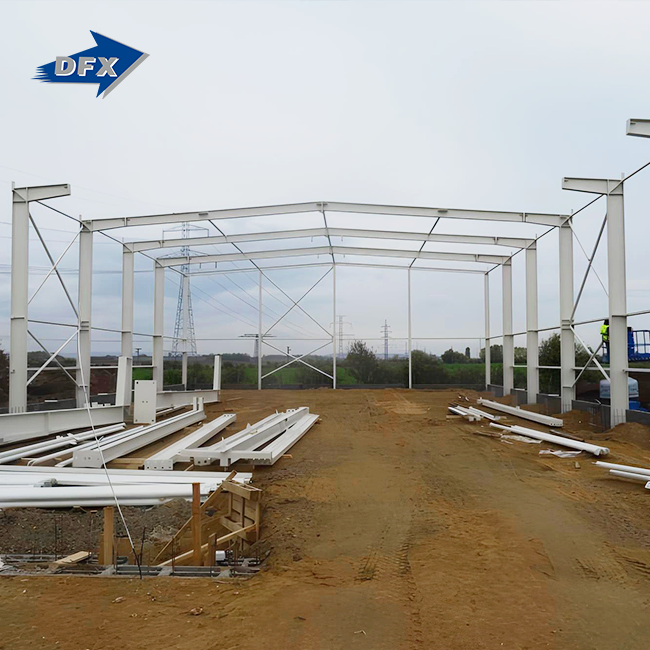
Project locations receive prefabricated components ready for speedy assembly, decreasing on-site labour by 40% over concrete construction. Our installation guide helps your construction teams ensure torque standards and alignment during bolted connection sequences. Multiple building zones can be worked on simultaneously due to modularity, shortening timeframes. A typical 5,000-square-metre office building steel structure may reach a weathertight enclosure within 8-12 weeks after foundation completion, allowing earlier interior fit-outs and tenant occupancy, lowering finance costs and increasing project ROI.
Budget Optimisation and Cost Benchmarks
The rest of the project budget goes to manufacture, transportation, and erection, whereas structural steel costs 35–45%. Although steel material costs may be higher than concrete, shortened schedules, decreased foundation work, and cheaper labour hours favour office building steel structures. Office building steel structures saved 15-20% more than concrete baselines in North America after accounting for the time value of money and site management length. Our project-based fabrication strategy optimises cash flow for phased-payment construction enterprises by procuring materials precisely without unnecessary inventory.
Comparing Steel Structures with Other Office Building Materials
Structural Performance and Durability
In seismically active western US regions, office building steel structures are more ductile than concrete or masonry, permitting plastic deformation without catastrophic destruction. Q355 grades have a tensile strength of 400 MPa, allowing smaller structural elements to optimise floor space and design options. With corrosion protection, service life exceeds 50 years, equal to or exceeding concrete structures and allowing easier structural element examination. The material's consistent load response simplifies engineering calculations and minimises design uncertainty for project engineers comparing building methods.
Fire Resistance and Safety Compliance
Office building steel structures lose strength at 600°C, yet intumescent coatings or concrete encasement expand under heat. These systems have 2-, 3-, or 4-hour fire resistance ratings based on occupancy and local building rules. Our coating application procedures measure protection thickness using DFT to meet ASTM E119 or comparable international standards. Steel construction has weight advantages while satisfying the same life-safety requirements as concrete buildings, reassuring building owners and insurance underwriters of occupant protection during fire crises.
Environmental Impact and Sustainability
Recyclability is a major benefit of office building steel structures in green building. Decommissioned buildings provide high-quality material to steel mills, reducing landfill waste from concrete destruction. Over two decades, electric arc furnace technology has reduced manufacturing energy usage by 35%, lowering new steel production's carbon footprint. Through thermal break design in facade connections and compatibility with sophisticated insulation systems, our steel frames save energy. For net-zero carbon companies, these traits help earn LEED points in Materials & Resources and Energy & Atmosphere.
Integration with Modern Facade Systems
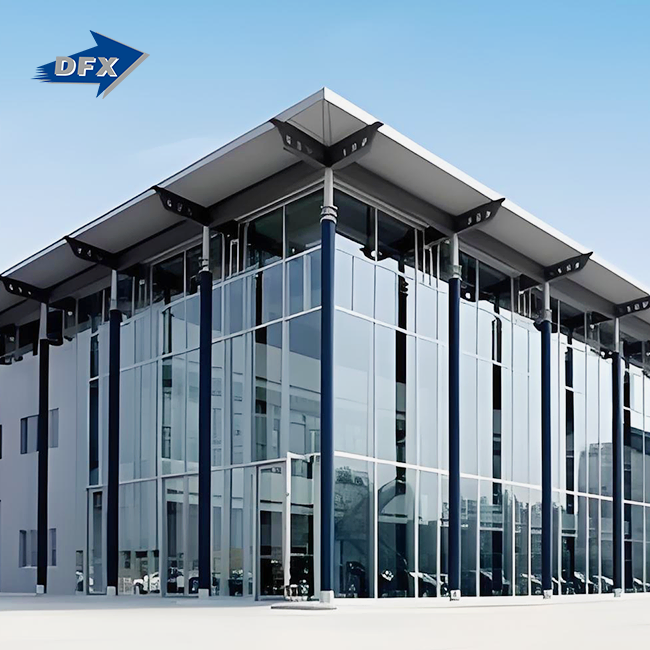
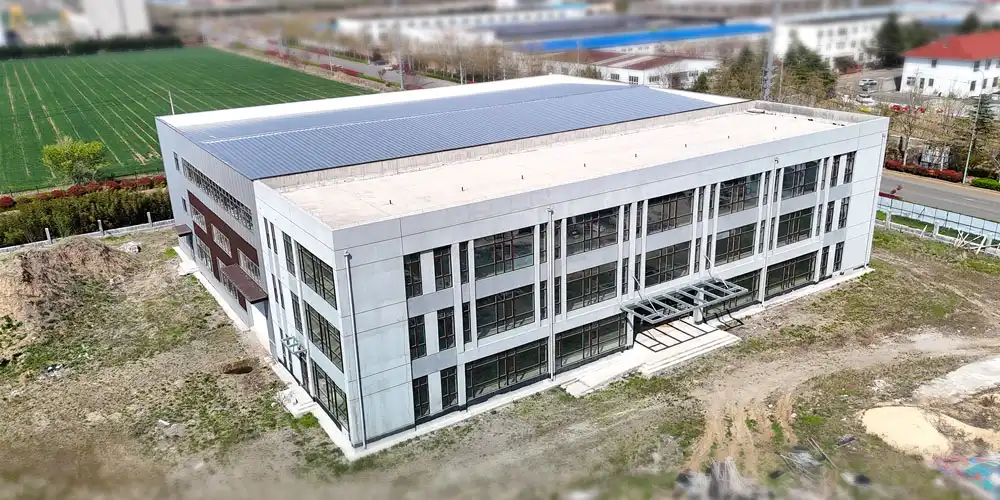
Office building steel structures are perfect for modern curtain wall systems and metal panel cladding. Factory-fabricated steel pieces provide constant facade mullion connection locations, facilitating glass installation and decreasing weather seal failures. Modern corporate design favours transparent styles with column spacing that allows enormous glass spans without intermediate support. We've combined steel structures with double-skin facades and photovoltaic glass systems, showing that steel can adapt to new building technologies that concrete's formwork cannot.
Procurement and Supplier Selection for Steel Structures
Evaluating Manufacturer Credentials
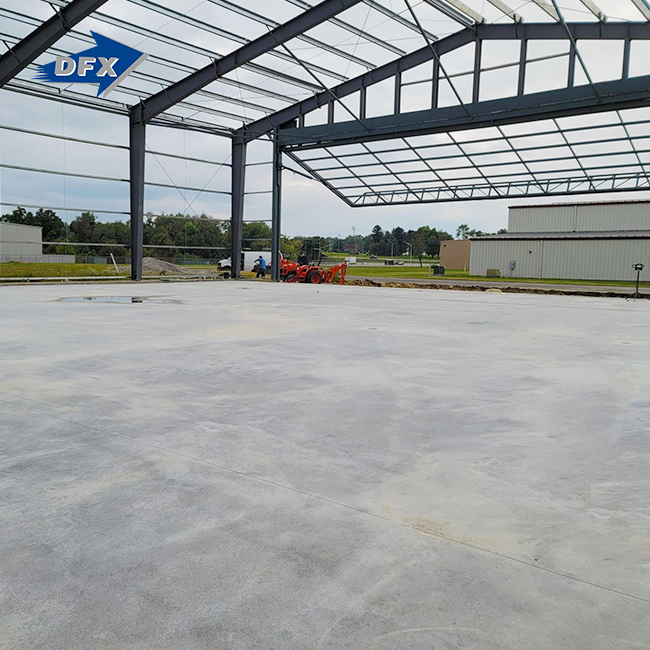
Certification portfolios, manufacturing capability, and project track records are needed to choose an office building steel structure supplier. Check ISO9001 quality management systems, CE labelling for European conformity, and market-specific certifications like PVOC for Africa or COC for the Middle East. Our 12-year track record shows stability and skill in aeroplane hangars with 40-metre clear spans and multi-storey administrative buildings with sophisticated lateral load systems. Factory audits can show welding, material traceability, and quality control techniques that separate expert fabricators from commodity vendors.
Understanding Steel Grades and Material Selection
Commercial office constructions usually use Q235 or Q355 steel (ASTM A36 or A572-50 in North America). Q235 is strong enough for low-rise structures with modest loads, while Q355's yield strength allows longer spans and taller buildings with smaller members. Shipments should include steel mill material certifications stating chemical and mechanical qualities. For projects requiring third-party inspection or government permission, we work with recognised steel suppliers to track material. Understanding these requirements helps procurement managers assess bids and avoid under- or over-specification that threatens structural safety or raises costs.
Customisation and Modular Solutions
Each office building has distinct needs, such as column-free trade floors, rooftop mechanical equipment loads, or vertical extension. Our in-house design team works with architects and engineers to create space-, aesthetic-, and budget-friendly solutions. Modular methods standardise beam connections and floor systems while supporting project-specific characteristics. This balance between customisation and standardisation enhances fabrication productivity, decreasing design approval to shipment time to 8-12 weeks for buildings under 3,000 tonnes. This flexibility allows distributors serving diverse building industries to offer customised solutions without compromising delivery dependability.
Building Long-Term Supplier Relationships
Successful office building steel structure procurement requires strategic collaborations. Reliable vendors offer value engineering throughout design to save costs without compromising performance. We provide installation advice from experienced site supervisors who troubleshoot and instruct local teams. Post-completion help includes maintenance advice and structural inspection for building additions. These relationship features lower total cost of ownership and position procurement managers as strategic contributors rather than transactional purchasers focused on unit pricing.
Maintenance, Safety, and Energy Efficiency of Steel Office Buildings
Proactive Maintenance Strategies
Routine examinations of office building steel structures should focus on corrosion, connection integrity, and coating. Biennial visual assessments of exposed steel pieces should focus on moisture buildup and mechanical deterioration. In high-humidity areas, touch-up painting may be needed every 5-7 years, although hot-dip galvanisation or marine-grade epoxy systems can last 15+ years. Building vibrations and seismic occurrences need torque verification of connection bolts. Less intensive than concrete spalling repairs or masonry repointing, these maintenance techniques ensure structural integrity over the 50-year design life while keeping facility managers' operating budgets predictable.
Compliance with Safety Standards
Fire, seismic, and structural design are governed by international safety rules. AISC 360 for structural steel members, AWS D1.1 for welding, and IBC or Eurocode for load combinations and safety factors are our design standards. Ductile detailing in seismic design ensures office building steel structures disperse earthquake energy through controlled yielding rather than brittle collapse. Fire protection systems are certified by ASTM E119 or BS 476, with test results accompanying coating applications. For government contractors and institutional customers under strict regulatory scrutiny, these compliance methods safeguard facility occupants, meet insurance requirements, and insulate project owners from responsibility.
Energy Performance and Green Technologies
Multiple ways make office building steel structures energy-efficient. Thermal breaks in facade connections reduce interior-exterior conductive heat transfer and HVAC loads. The structural concept allows large insulation layers in wall and roof assemblies without load-bearing masonry limitations. We used an office building steel structure with rooftop solar panel arrays to offset operating carbon emissions with renewable energy technologies. We have case studies that show optimised envelope design and building orientation can reduce energy costs by 25-30% compared to code-minimum buildings, boosting asset value for real estate investors and lowering operating costs for long-term owners.
Conclusion
Commercial office building steel structures combine technical innovation, construction efficiency, and environmental responsibility. This tutorial has shown how prefabricated steel frames help procurement managers, project engineers, and construction contractors save timelines, optimise budgets, and produce durable, future-proof structures. Office building steel structures are ideal for modern office buildings, from single-storey administrative centres to multi-level corporate headquarters, due to their strength, architectural flexibility, and sustainability. For enterprises dedicated to ethical construction and long-term value generation, the material's benefits will only increase as building regulations improve and sustainability standards increase.
FAQ
1. How does fire resistance compare to concrete buildings?
We use intumescent coatings or concrete encasement that expands under heat to provide 2-4 hour fire resistance per local requirements. Office building steel structures lose strength at 600°C. These systems are tested to ASTM E119 standards to ensure life-safety comparable to concrete structures while preserving steel's weight and construction speed.
2. What factors influence total project costs?
Initial material prices, production complexity, transportation distance, and site accessibility affect budgets. Faster construction (lower financing and site administration), lighter foundations (less excavation), and earlier occupancy make office building steel structures 15-20% cheaper than concrete. We give thorough prices for these components to aid budget predictions.
3. Can steel office buildings accommodate future modifications?
This is a major benefit. Office building steel structures allow strengthening, floor addition, and non-load-bearing wall removal without considerable structural disturbance. Bolted connections and predictable load routes facilitate rehabilitation engineering evaluations, unlike concrete's monolithic construction, retaining building flexibility as organisational demands change.
Partner with DFX for Your Next Steel Office Project
DFX has over 12 years of expertise in developing steel structures for commercial office buildings, administrative centres, and corporate complexes globally. We offer comprehensive solutions from architectural plan design to fabrication and installation as a certified office building steel structure manufacturer with 40,000 square meters of manufacturing space. Our ISO9001 and CE certifications ensure international quality, and our project-based approach ensures customisation to meet your needs, whether you're an EPC contractor managing infrastructure projects or a construction company building corporate headquarters. Personal consultation and free quote are available at jason@bigdirector.com. Learn how our steel structure experience can speed up your project, optimise your budget, and produce a long-lasting office building for your company.
References
1. American Institute of Steel Construction. (2016). Specification for Structural Steel Buildings (AISC 360-16). Chicago: AISC.
2. Bjorhovde, R. (2020). Development and Use of High Performance Steel Structures. Journal of Constructional Steel Research, 167, 105953.
3. European Committee for Standardization. (2014). Eurocode 3: Design of Steel Structures - Part 1-1: General Rules and Rules for Buildings. Brussels: CEN.
4. Lawson, R.M. & Ogden, R.G. (2018). Sustainable Steel Construction: Applications in Commercial Buildings. Steel Construction Institute Technical Paper.
5. Tata Steel Construction. (2019). Fire Protection for Structural Steel in Buildings: Design Guide. London: SCI Publication P393.
6. Wang, C.M., Salmon, C.G., & Pincheira, J.A. (2017). Reinforced Concrete Design: Comparative Analysis with Steel Structures. Hoboken: John Wiley & Sons.
Learn about our latest products and discounts through SMS or email