- English
- French
- German
- Portuguese
- Spanish
- Russian
- Japanese
- Korean
- Arabic
- Greek
- German
- Turkish
- Italian
- Danish
- Romanian
- Indonesian
- Czech
- Afrikaans
- Swedish
- Polish
- Basque
- Catalan
- Esperanto
- Hindi
- Lao
- Albanian
- Amharic
- Armenian
- Azerbaijani
- Belarusian
- Bengali
- Bosnian
- Bulgarian
- Cebuano
- Chichewa
- Corsican
- Croatian
- Dutch
- Estonian
- Filipino
- Finnish
- Frisian
- Galician
- Georgian
- Gujarati
- Haitian
- Hausa
- Hawaiian
- Hebrew
- Hmong
- Hungarian
- Icelandic
- Igbo
- Javanese
- Kannada
- Kazakh
- Khmer
- Kurdish
- Kyrgyz
- Latin
- Latvian
- Lithuanian
- Luxembou..
- Macedonian
- Malagasy
- Malay
- Malayalam
- Maltese
- Maori
- Marathi
- Mongolian
- Burmese
- Nepali
- Norwegian
- Pashto
- Persian
- Punjabi
- Serbian
- Sesotho
- Sinhala
- Slovak
- Slovenian
- Somali
- Samoan
- Scots Gaelic
- Shona
- Sindhi
- Sundanese
- Swahili
- Tajik
- Tamil
- Telugu
- Thai
- Ukrainian
- Urdu
- Uzbek
- Vietnamese
- Welsh
- Xhosa
- Yiddish
- Yoruba
- Zulu
Automotive Assembly Workshop vs Production Line: Key Differences
When building factories that make cars, it's important to know the difference between an Automotive Assembly Workshop and a full-scale production line. An Automotive Assembly Workshop is a big, flexible steel structure that is made to handle a wide range of assembly tasks, from putting together vehicle sub-components to installing the final trim. In contrast to rigid production lines that are designed to make a lot of one model, these workshops focus on being flexible. This means that makers can set up workstations for different types of vehicles or change the plans as production needs change. This adaptability solves a problem that many medium-sized businesses and contractors face: how to be efficient while also being able to quickly adapt to changing market needs without having to make the big investments needed for fully automated production lines.

Understanding Automotive Assembly Workshops and Production Lines
There are two different operational frameworks in the car manufacturing world. Each one is designed to support a different production philosophy and business plan.
Defining the Automotive Assembly Workshop
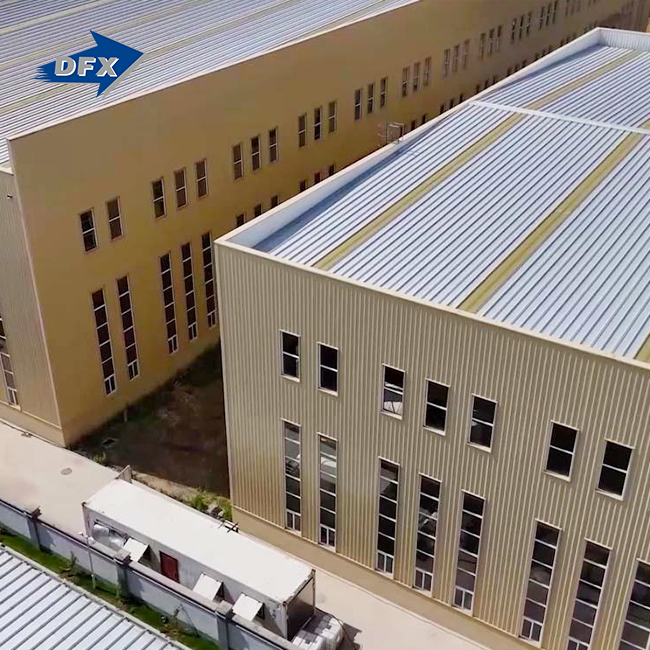
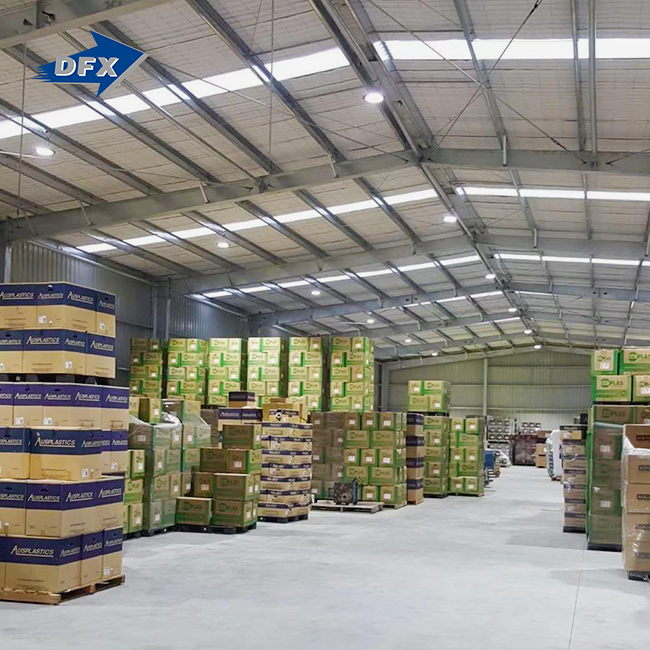
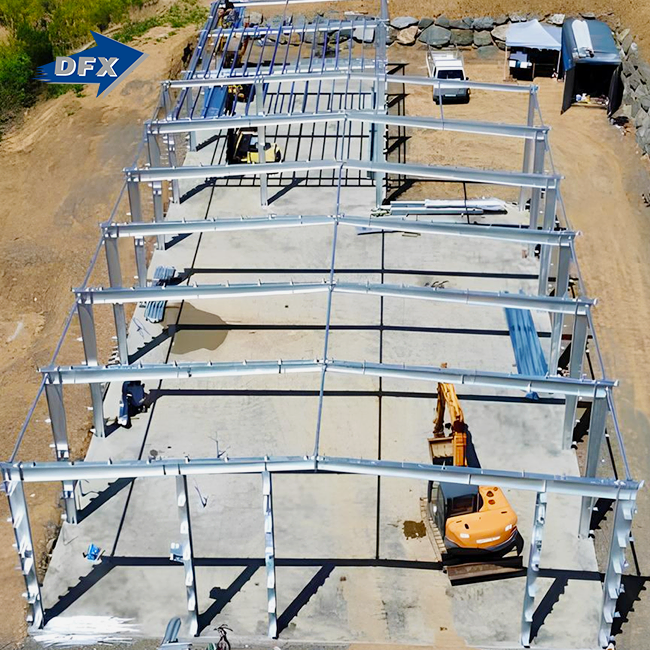
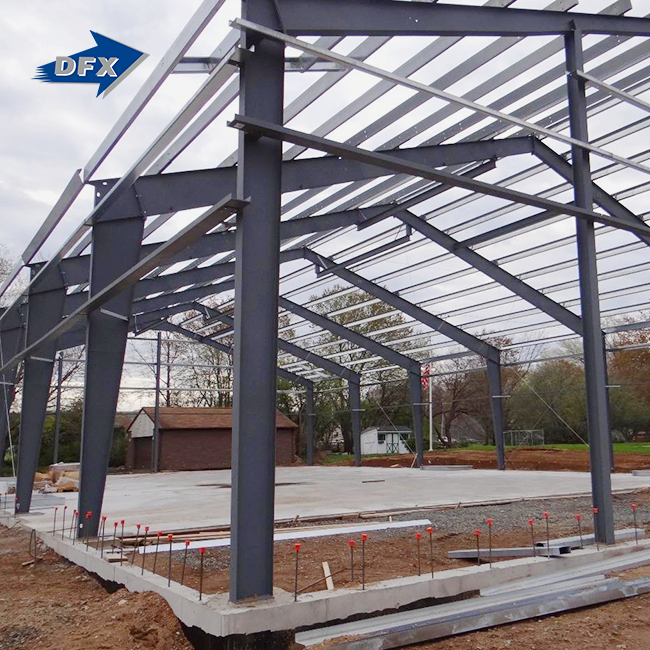
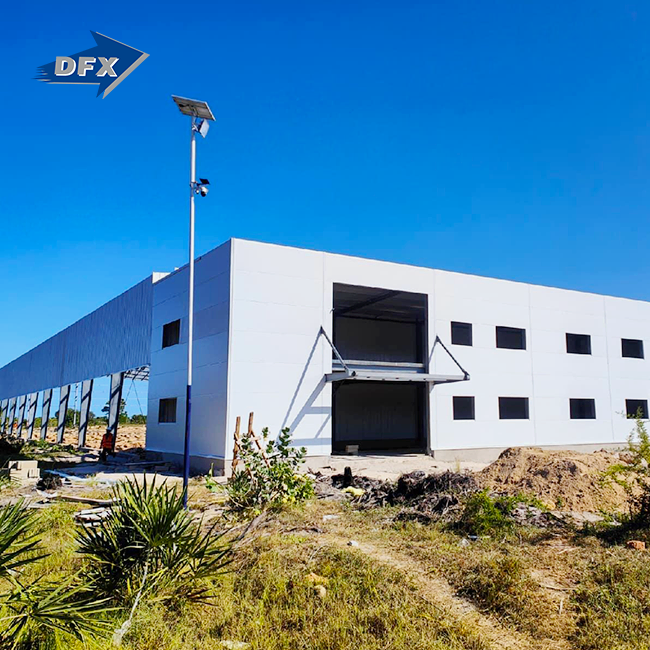
An Automotive Assembly Workshop is a specialized type of factory that is made with welded H-section steel main frames, which are usually made of Q235 or Q355 grade steel. These buildings have gaps without columns that are often longer than 30 meters. This makes the insides open, so assembly teams can set up desks in any way that fits the needs of the project. Overhead bridge cranes weighing 10 to 50 tons, hanging conveyor systems, and robotic cells can all be used without any structural problems. These workshops were made in China and have ISO9001 and CE certifications. They have bolted steel links and C/Z steel purlins that allow them to be expanded in modules. With made-to-order production, buildings can be customized to fit stamping operations, paint rooms that need to be kept in a certain temperature range, or general assembly halls where freedom is more important than speed.
Historical Evolution and Industry Context
In the early days of making cars, skilled workers put them together almost entirely by hand in Car manufacturing plant workshops. As demand rose in the early 1900s, makers started using Henry Ford's ideas about the assembly line, which changed the economy of production. Today, the industry is seeing a resurgence of sites that look like workshops along with standard lines. This change comes from more people wanting electric cars, business vehicles that are designed to fit their needs, and regional manufacturing hubs that serve a wide range of markets. Now, procurement managers know that workshops can be a good option when production rates don't allow for full automation or when a product line has a lot of different types of vehicles that need to be switched out often.
Detailed Comparison of Automotive Assembly Workshops vs Production Lines
To judge these ways of making things, you have to look at a number of practical factors that have a direct effect on buying choices and the long-term performance of the facility.
Process Workflow and Flexibility
Teams set up desks in workshops in cellular or U-shaped arrangements that allow multiple assembly processes to happen at the same time. As needed, workers move from station to station to keep up with output plans that may change every week. This deal works for companies that make between 5,000 and 50,000 units a year of different types. In return for speed, production lines take away this freedom. Vehicles move along fixed tracks where similar jobs are done at regular times at each stop. This maximizes throughput for numbers over 100,000 units per year. Because the process is rigid, changing models can take days or weeks of retooling, while classes can be set up again in hours.
Safety Protocols and Operational Environment
Different things are done to build a place based on safety concerns. It is important for workshops to have comfortable workspaces, enough space for moving things by hand, and strong ventilation systems. This is especially true in paint shops, where controlled conditions keep things from getting dirty. Steel buildings can hold special cladding that keeps the pressure positive and holds up heavy air handling units that are attached to strengthened roof beams. Machine guards, emergency stop systems built into conveyor networks, and zoning that removes human workers from robotic operations are all important parts of production lines. Both environments benefit from the natural benefits of steel construction: high seismic resistance to protect sensitive equipment; passive fire protection through intumescent coatings that achieve two to three-hour fire resistance ratings; and better thermal performance through insulated metal panels that reduce HVAC loads in car manufacturing plants.
Benefits and Challenges for B2B Procurement in Workshops and Production Lines
Professionals in procurement who are looking at industrial facilities have to weigh the pros and cons of each method.
Workshop Advantages and Limitations
Workshops are great at customizing things, which lets makers make specialty vehicles like electric buses, farm equipment, or commercial trucks without having to spend a lot of money on dedicated automation. Long-term flexibility is protected by the large-span steel frame, which lets the plan be changed as business needs change. Rapid rollout is important because steel Automotive Assembly Workshop building times are shorter by months compared to concrete options. This cuts down on time to market and increases return on investment. Skilled technicians keep an eye on quality control, and the flexible design means that operations can continue as usual while extensions are made possible by pre-drilled connection points on end columns. There are problems with growth. Workshops can handle small to medium-sized production batches well, but they can't increase output because they don't have enough workers. Variability in human processes can lead to inconsistent quality if strict rules for training and inspection are not followed. Procurement teams need to make sure that there are enough workers in the area where the plant is located, since labor is the highest ongoing cost.
Mitigation Strategies for Common Challenges
These problems can be lessened with smart buying. When workshops buy flexible automation, like robot welding cells that are easy to move or portable CMM inspection systems, they get more efficient without giving up freedom. Variability can be cut down by using lean manufacturing concepts and plans for continuous growth. Designing customizable parts that can be reconfigured for different models or investing in flexible automation systems that can handle different product changes can help a production line last longer. Both methods work better when they work together with skilled steel structure builders who offer combined services like structural design, fabrication, surface treatment, and installation advice. This makes sure that buildings can meet practical needs right from the start.

Choosing the Right Setup: Factors for Procurement Managers and OEM Clients
To choose between workshop and production Auto factory design line setups, you need to carefully look at a number of factors that are all in line with your strategic goals.
Assessing Production Volume and Product Complexity
The main thing that drives this choice is the expected volume. For factories that make fewer than 50,000 units a year of different types of vehicles, being able to change plans and handle design changes is more important than the efficiency gains that automation can bring. When you make more than 100,000 similar units, the dramatically lower costs per unit make the investment in a production line worth it. It doesn't matter how complicated the product is; workshops where engineering teams can quickly change designs are best for cars that need to be customized a lot or that use new technologies.
Cost-Benefit Analysis and ROI Considerations
The total cost of ownership must be included in financial modeling, not just the original cost of cash. Workshops usually require less money up front, can be used more quickly, which lowers the cost of funding, and offer operating freedom that protects against unstable market conditions. But because of higher labor costs per unit, it's important to make accurate number forecasts. Production lines need a lot of money to get started, but they pay off in the long run. Depending on volume and product mix, the return on investment (ROI) can be as long as five to seven years. Long-term investments are protected by help after the sale, warranties that cover structural stability and coating performance, and upkeep services from approved providers. Suppliers who offer combined services—from building design and detailing to manufacturing and on-site assembly—make it easier to carry out projects and keep track of who is responsible for what.
Future Trends Impacting Automotive Assembly Workshops and Production Lines
As industries change, so do the needs of manufacturing facilities. This means that buying plans need to be flexible and look to the future.
Industry 4.0 Integration and Digital Transformation
Industry 4.0 technologies are being used more and more in both workplaces and production lines. IoT sensors keep an eye on how things are working in real time and can tell when they need repair before they break. AI-powered quality checking systems check the accuracy of assemblies with more accuracy than humans can. Digital twins let you test different production scenarios to find the best plans and speed-ups before they are actually put into action. These technologies make automation benefits available to more people, letting workshop settings that used to rely on human processes use more advanced features. Procurement teams should put a high priority on building plans that can accommodate a lot of data infrastructure, such as cable routing, network connections, and enough electricity to support new digital systems.
Sustainability and Lean Manufacturing Principles
Environmental Auto factory design duty is becoming more and more important in facility choices. Steel buildings are naturally more environmentally friendly because they can be recycled easily, contain less carbon than concrete (if they are sourced properly), and use less energy because they insulate better, which lowers operational emissions. Lean manufacturing principles, such as getting rid of waste, improving material flow, and making things better all the time, shape the designs of both workshops and production lines. Facilities that use natural lighting from carefully placed windows, rainwater collection systems, and infrastructure for green energy are in line with companies' pledges to sustainability and save money on running costs.
Implications for Procurement Strategy
These trends make it more likely to use modular, scalable options that can adapt to changing technology without having to rebuild the whole building. Purchasing managers should look for suppliers that are committed to new ideas and can provide ongoing technical help as the needs of the manufacturing process change. Building strong relationships with steel structure makers who know how the car industry works will give you access to new best practices and tried-and-true ways to deal with new problems.

Conclusion
In conclusion, whether to use an Automotive Assembly Workshop or a production line depends on how well the building fits the needs of the business. Workshops are flexible, can be set up quickly, and are cost-effective for a wide range of production needs. Production lines, on the other hand, are very good at making a lot of things quickly and efficiently. Modern steel building methods offer better structural performance, environmental control, and flexibility, which helps both approaches. When purchasing managers carefully consider things like production volumes, product complexity, supplier skills, and long-term strategy goals, they set their companies up for success in the manufacturing world in the changing automobile scene.
FAQ
1. How does a steel structure handle vibration from heavy equipment?
For stamping presses and heavy-duty H-beams with localized support, steel workshops use separate base isolation. Vibration dampers separate the frame of the building from the movements of the process. This keeps the building from wearing out and protects the calibration of precision equipment. This engineering method keeps structures strong even when they are under a lot of dynamic stress, which is common in places where cars are put together.
2. Can workshops support future expansion without production disruption?
Because steel buildings are modular, they can be expanded by using knock-out walls and end posts with pre-drilled connection points. New sections can be bolted onto old frames so that processes don't have to be stopped too much. This feature is very helpful for companies that want to increase production or add new car models without having to pay for expensive downtime that cuts into their profits.
3. What lifespan can I expect in demanding environments?
Using the right surface preparation (Sa 2.5 standards) and marine-grade finishing systems (epoxy zinc primers with epoxy micaceous iron oxide and polyurethane topcoats), steel buildings can last longer than 50 years, even in paint shops with a lot of humidity. Regular inspections and maintenance procedures protect the worth of an investment over the long run by extending the working life.
4. How do workshops ensure roof strength for suspended systems?
During the design phase, structural analysis models are fed exact point loads from conveyor makers. To handle heavy loads, engineers specify secondary beams and stronger truss chords that are placed exactly at conveyor hanger points. This makes sure that hanging systems work safely without putting the structure at risk or needing expensive reinforcements in the future.
Partner with DFX for Your Automotive Assembly Workshop Needs
It has been over 12 years since Qingdao Director Steel Structure Co., Ltd. has been making steel frames for tough car uses. Our 40,000-square-meter factory has six automatic welded H-beam lines that make 20,000 tons of steel every year. This makes sure that we always meet project deadlines. As a maker that is ISO9001 and CE approved, our Automotive Assembly Workshop offers a full range of services, from designing the structure to packing, installing the parts on-site, and treating the surfaces. Our engineering team works directly with procurement managers to make sure that the plan for your facilities is best for your needs when putting together vehicles, whether you need high-load stamping halls, controlled environment paint shops, or open general assembly spaces. Get in touch with jason@bigdirector.com to talk about how our tried-and-true solutions can cut down on your time-to-market while giving your manufacturing investment great long-term value and structural performance.
References
1. Smith, J.R., and Thompson, M.L. (2021). Modern Steel Structures in Automotive Manufacturing: Design Principles and Applications. Industrial Press.
2. Chen, W., and Rodriguez, P. (2022). Flexible Manufacturing Systems: Workshop vs. Production Line Economics. Journal of Manufacturing Technology, 45(3), 112-128.
3. National Institute of Building Sciences (2020). Steel Construction Manual for Industrial Facilities: Seismic and Dynamic Load Considerations.
4. Anderson, K.E. (2023). Industry 4.0 Integration in Automotive Assembly Environments. Manufacturing Engineering Quarterly, 38(2), 67-84.
5. International Steel Construction Association (2022). Sustainability and Life Cycle Assessment of Pre-Engineered Steel Buildings. Technical Report Series, Volume 14.
6. Williams, D.H., and Patel, S. (2021). Cost Analysis Framework for Automotive Manufacturing Facility Investment Decisions. Journal of Industrial Economics, 29(4), 201-219.
Learn about our latest products and discounts through SMS or email