- English
- French
- German
- Portuguese
- Spanish
- Russian
- Japanese
- Korean
- Arabic
- Greek
- German
- Turkish
- Italian
- Danish
- Romanian
- Indonesian
- Czech
- Afrikaans
- Swedish
- Polish
- Basque
- Catalan
- Esperanto
- Hindi
- Lao
- Albanian
- Amharic
- Armenian
- Azerbaijani
- Belarusian
- Bengali
- Bosnian
- Bulgarian
- Cebuano
- Chichewa
- Corsican
- Croatian
- Dutch
- Estonian
- Filipino
- Finnish
- Frisian
- Galician
- Georgian
- Gujarati
- Haitian
- Hausa
- Hawaiian
- Hebrew
- Hmong
- Hungarian
- Icelandic
- Igbo
- Javanese
- Kannada
- Kazakh
- Khmer
- Kurdish
- Kyrgyz
- Latin
- Latvian
- Lithuanian
- Luxembou..
- Macedonian
- Malagasy
- Malay
- Malayalam
- Maltese
- Maori
- Marathi
- Mongolian
- Burmese
- Nepali
- Norwegian
- Pashto
- Persian
- Punjabi
- Serbian
- Sesotho
- Sinhala
- Slovak
- Slovenian
- Somali
- Samoan
- Scots Gaelic
- Shona
- Sindhi
- Sundanese
- Swahili
- Tajik
- Tamil
- Telugu
- Thai
- Ukrainian
- Urdu
- Uzbek
- Vietnamese
- Welsh
- Xhosa
- Yiddish
- Yoruba
- Zulu
What to Consider Before Investing in a Steel Structure Office Building
Before committing to a steel structure office building, procurement managers and project engineers need to evaluate structural performance, total cost of ownership, supplier reliability, and compliance with local building codes. A prefabricated steel-framed commercial building—whether single-storey or multi-storey—offers measurable advantages in construction speed, spatial flexibility, and long-term durability. Understanding these dimensions thoroughly helps B2B buyers avoid costly oversights and make confident investment decisions from the outset.

Understanding Steel Structure Office Buildings: Basics and Benefits
What Makes Steel the Preferred Material for Commercial Buildings?
In modern steel structure office building construction, structural steel frameworks are becoming more popular than traditional reinforced concrete ones. Column-beam systems made of steel types like Q235, Q355, or ASTM A572 Grade 50 have a higher strength-to-weight ratio. This lowers the load on the base and the cost of the substructure. The American Institute of Steel Construction (AISC) says that steel-framed buildings can cut overall construction times by 30–50% compared to cast-in-place concrete buildings. This is a huge benefit for buyers who are focused on projects and need to meet tight deadlines.
Design Versatility and Sustainability
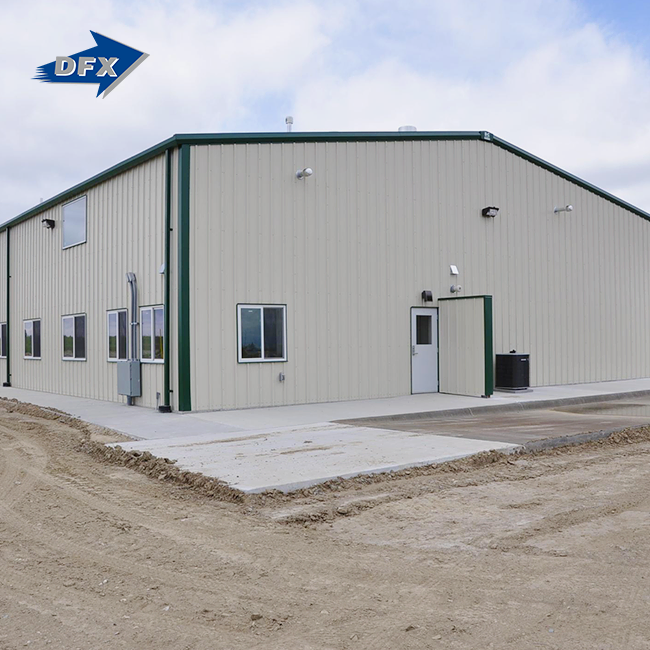
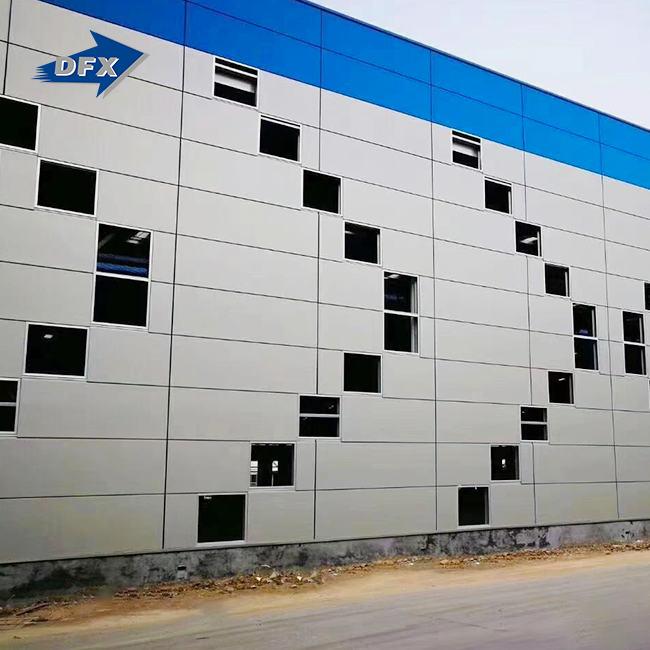
Because they have steel bracing, curtain walls, or metal panels on the outside, these buildings can be used as company offices, executive buildings, or business centers. The closed facade can be set up in either a single-story or multi-story form, and it can accommodate open-plan spaces with 12–24-meter-long spans without any columns. Steel is 100% recyclable, which helps groups meet their environmental goals and support LEED certification goals without losing structural stability.
Steel Structure Office Buildings vs. Alternative Construction Options
Comparing Steel, Concrete, and Wood
Concrete houses are still popular, but they have some major problems. Curing can add weeks to the plan of a job, and the heavier dead loads mean that the foundations need to be stronger. Wooden frames work well for smaller projects, but they aren't as flexible when it comes to fire ratings and seismic protection as designed steel systems are. A steel structure office building that has already been built comes to the job site with parts that were made to sub-millimeter tolerances. This lets them be put together quickly with bolts and cuts down on waste.
A side-by-side review of key performance criteria makes the choice clearer for procurement professionals:
- Construction timeline: Because the fabrication and site preparation phases happen at the same time, steel prefabrication cuts down on on-site labor by a large amount. Steel can often finish projects in 10 to 12 months that would take 18 months with concrete.
- Fire resistance: Steel loses its tensile strength above about 600°C, but intumescent coatings and concrete encasing can get certified rates of 2, 3, or 4 hours of fire resistance that meet IBC and local code standards without the need for complicated formwork.
- Energy performance: To meet ASHRAE 90.1 energy efficiency standards common in the U.S. market, steel buildings are designed to work seamlessly with high-performance insulation systems such as sandwich panel walls and reflective roof coatings.
When proper rust protection systems are used, these performance benefits directly lead to a lower total cost of ownership over the life of a building, which is usually more than 50 years.
Key Factors to Consider When Investing in Steel Structure Office Buildings
Structural Performance and Code Compliance
In many parts of the U.S., you can't skip over seismic and wind load resistance. Moment-resisting frames and cross-braced lateral systems make it possible for steel-structure office buildings to bend without breaking during earthquakes. This is called "ductility" by engineers. Before you sign off on a design, make sure that the structural calculations follow AISC 360, ASCE 7, and any local building codes that apply. As part of their normal service, reputable makers offer stamped engineering drawings and load estimates.
Total Cost of Ownership
The price you paid is only one line item. Building foundations, wall systems, fire protection coatings, and ongoing upkeep are all parts of the overall cost. The lighter dead load of steel usually cuts foundation costs by 15–20%. Over a 30-year period, maintenance costs are also cheaper when the right anti-corrosion method is chosen at the time of purchase. This could be epoxy zinc-rich primers or hot-dip galvanization according to ISO 1461. When buyers look at life-cycle cost instead of upfront price, they always get a better return on investment (ROI).
Supplier Credentials and Certifications
Picking a certified steel structure office building manufacturer might be the most important thing you have to do during the procurement process. Compare providers to norms that are known around the world. ISO 9001 quality management, CE marking, COC compliance, and PVOC compliance are some of the most important certifications to check. Ask for proof of pre-assembly tests done in the factory, records of Non-Destructive Testing (NDT) like Ultrasonic Testing (UT) and Magnetic Particle Inspection (MPI), and confirmation of the Dry Film Thickness (DFT) for fireproof coatings. These quality controls keep expensive repairs from having to be done on-site.
Procuring Your Steel Structure Office Building: Practical Tips for B2B Buyers Due Diligence on Contractors and Suppliers
Thorough screening is the first step to a successful purchase. Ask for references from similar-sized projects that have already been finished, look at the qualifications of the engineering team, and make sure that the provider provides a full range of services that include designing the architectural plan, calculating the structure, fabricating the parts, and giving installation instructions. When suppliers take care of the whole project lifecycle, there are fewer problems with coordination and better communication between the design and manufacturing teams.
The following procurement checkpoints help protect against common pitfalls:
- Verify dimensional accuracy: Before shipping, insist on plant pre-assembly reports that prove bolt-hole alignment and geometric tolerances. When misaligned connections are found on-site, they cause delays that affect the whole schedule.
- Clarify delivery terms and project-based fabrication timelines: Because steel structure office buildings are made for each individual project, lead times need to be included in the main construction schedule. Early in the talks, make sure you know how much can be produced and how the loading port works.
- Negotiate payment milestones tied to inspection events: Base payments on verifiable milestones like drawing approval, fabrication finish, and pre-shipment inspection to protect cash flow and encourage quality at each stage.
Taking care of these things before accepting a supply contract makes it much less likely that you will have to deal with secret costs and quality issues.
Case Studies and Future Trends in Steel-Framed Office Construction
Steel-structure office buildings have made a difference in many fields. EPC companies that are in charge of building logistics parks say that the construction times are 40% faster than for similar concrete-frame projects. Modular steel office annexes have been used by manufacturing companies in Southeast Asia to increase operating capacity without stopping production on factory floors next to them. Agricultural businesses that started out with storage buildings have since moved to executive office buildings using the same suppliers. This is because they can get the same design at a lower price when they buy in bulk.
In the near future, smart building integration—putting Internet of Things (IoT) monitors inside the structure to track energy use and load in real time—is becoming more popular in the U.S. business market. New developments in modular construction make it possible to add more floors to existing steel frames with little damage to the structure. This level of flexibility is not possible with concrete buildings. Sustainability rules are getting stricter, and steel's ability to be recycled makes it a good choice for upcoming embodied-carbon rules in several U.S. states.
Conclusion
Buying a premade steel structure office building requires careful research into how well it will hold up over time, how much it will cost over its entire life, the reliability of the seller, and compliance with building codes. Steel is fast, flexible, and has long-term value that other products have a hard time matching. Whether you are in charge of building a corporate headquarters or an administrative building for a manufacturing campus, the investment will only pay off if you have the right supplier partnership and do your research.
FAQ
1. How long does a steel structure office building typically last?
If you protect structural steel parts against rust the right way, like with hot-dip galvanization or heavy-duty epoxy coatings, they will last at least 50 years. The building envelope and facade systems may need maintenance from time to time, but the main structural frame is made to last for many decades.
2. What is the typical lead time from order to delivery?
Because fabrication is based on projects, lead times change based on the size and complexity of the building. Standard steel structure office buildings with one floor are usually built within 30 to 60 days of the drawings being approved, plus time for shipping and installation on-site.
3. How does the cost compare to a concrete building?
The starting cost of steel can be about the same as or a little higher than the cost of concrete. However, shorter building schedules lower the costs of finance and labor. Less money is spent on public works when supports are lighter. Steel usually has a better cost-per-square-meter result over the whole project duration.
4. Can the building be expanded later?
Steel frames can be changed easily. Because extra floors or extensions can be bolted onto the existing frame with little trouble, steel is the best material for businesses that expect to grow in the future.
Ready to Move Forward? Connect with DFX Director Steel
DFX — Qingdao Director Steel Structure Co., Ltd. — has manufactured and delivered certified steel structure office building solutions since 2011, serving construction contractors, manufacturers, and government project developers across multiple continents. With ISO 9001 and CE certifications, 40,000 m² of enclosed production capacity, and an in-house design team covering everything from structural calculations to installation guidance, we function as a complete steel structure office building supplier for your project. Reach our engineering team directly at jason@bigdirector.com to request a tailored quote or design consultation.
References
1. American Institute of Steel Construction (AISC). Steel Construction Manual, 16th Edition. AISC, 2022.
2. American Society of Civil Engineers. ASCE 7-22: Minimum Design Loads and Associated Criteria for Buildings and Other Structures. ASCE, 2022.
3. International Code Council. International Building Code (IBC) 2021. ICC, 2020.
4. Steel Construction Institute. Design of Steel Buildings to Eurocode 3. SCI Publication P362, 2019.
5. McGraw-Hill Construction. Prefabrication and Modularization: Increasing Productivity in the Construction Industry. SmartMarket Report, 2011.
6. U.S. Green Building Council. LEED v4 Reference Guide for Building Design and Construction. USGBC, 2019.
Learn about our latest products and discounts through SMS or email