To find a trustworthy company to build your Cow Barn (Steel Structure), you should look at their farm engineering experience, make sure the materials they use are certified, and compare quotes based on real specs instead of just one number. If farmers don't go through this process, they usually end up with a basic warehouse frame that isn't good for animal airflow or manure exposure. This guide talks about the licences, design data, and contract terms that make a provider reliable or dangerous. It does this by using a real vetting process, with Caribbean dairy growth as an example.


What Certifications Should a Steel Barn Manufacturer Have?
There's more to certifications than just letters on a page. They are proof from a third party that a maker meets strict standards for engineering and production.
ISO9001, CE, and Regional Compliance Marks
The ISO9001 quality management certification shows that the manufacturing process is consistent, and the CE marking shows that the product meets international and European building standards. If a steel cow barn building is going to be shipped to Africa, Southeast Asia, or the Caribbean, sellers should also make sure that it meets the COC and PVOC requirements of the country where it will be shipped.
These certifications don't always tell the whole story, so buyers should ask a potential manufacturer to explain how each certification applies to a livestock building in particular. They shouldn't just accept a general commercial construction certificate as proof that they have experience with farming.
Metal Building System Accreditation Standards
In markets that use international metal building standards, look for fabricators with AISC certification and members of the Metal Building Manufacturers Association, especially when sourcing projects such as Cow Barn (Steel Structure). These are some of the most important certifications to look for: IAS AC472 accreditation for metal building systems, ISO 9001 quality management certification, and membership in the Metal Building Manufacturers Association. For these credentials, design, engineering, and manufacturing must all be carefully checked by a third party, not just the factory floor. This is because the manufacturer of metal building systems must meet strict requirements in all three main areas: sales, engineering, and manufacturing. Each area must be checked by a third party in a fair and careful way.
How Can You Verify a Manufacturer's Steel Quality?
Certificates confirm a manufacturer's process, but verifying the actual steel quality on your project takes a few extra, specific steps.
Requesting Mill Test Certificates
A mill test certificate documents the chemical composition and mechanical properties of the specific steel batch used in your order. Requesting this document for a cow barn (steel structure) project gives buyers documented proof of material quality rather than relying on a supplier's word alone.
Comparing the mill test certificate against the steel grade quoted in the contract confirms the supplier delivered what was promised, rather than substituting a lower-grade steel to cut costs after the order was placed for a cow barn (steel structure). Buyers should keep this document on file for the life of the building, since insurance claims or warranty disputes may require it later.
Confirming Coating Thickness and Grade
Hot-dip galvanising performed to ASTM A123/A123M gives structural steel members a zinc coating rated for agricultural exposure, covering the requirements for zinc coating by the hot-dip process on iron and steel products made from rolled, pressed, and forged shapes, castings, plates, bars, and strips. Buyers should ask for the coating thickness specification in writing, since a thinner, cheaper coating shortens the barn's corrosion-resistant service life in high-ammonia manure environments.
A cow barn steel structure proposal that lists only "galvanised steel" without a specific coating thickness leaves too much room for interpretation, and buyers who push for exact micron or ounce-per-square-foot figures in writing protect themselves from a downgraded coating substituted after the contract is signed.
What Design Data Should You Give the Manufacturer?
The quality of a manufacturer's design proposal for a cow barn (steel structure) depends directly on the information a buyer provides upfront, and vague requirements produce vague quotes.
Herd Size, Housing Type, and Climate Data
Sharing herd size, whether the barn will house freestall, tie stall, or bedded-pack cattle, and regional wind, rain, and temperature data lets the manufacturer size the frame and coating grade correctly. A cow barn steel structure quoted without this information usually defaults to a generic design that may not fit local conditions.
Farms planning future herd growth should share that expansion timeline as well, even if the initial order covers only the earliest phase, since the manufacturer can then design bay spacing and utility connections that support later additions without a full redesign.
Site Survey and Foundation Conditions
Soil type, site slope, and drainage patterns affect foundation design, and sharing this data early avoids costly redesign after construction has already started, especially for a cow barn (steel structure) project. A manufacturer who asks detailed site questions before quoting is usually more reliable than one who provides a price without asking anything about the actual location.
Photos of the actual building site, along with any known groundwater or flooding history, give the engineering team enough context to flag foundation risks before the design is finalised rather than discovering them once excavation begins.

How Do You Compare Steel Barn Quotes Accurately?
A lower headline price can hide missing scope, and comparing quotes fairly takes more than reading the final number on each proposal.
Breaking Down Bundled Line Items
A quote that bundles "frame and roof" into one number without listing steel grade, coating thickness, panel type, and ventilation equipment separately makes fair comparison impossible. Buyers should request each competing cow barn (steel structure) proposal broken down into the same categories before comparing totals.
A supplier reluctant to provide this breakdown, or one who insists a single bundled figure is sufficient, often has something to hide in how that total was calculated.
Watching for Hidden Fees
Delivery charges to remote farm locations, crane rental for installation, foundation preparation, and engineering stamp costs frequently appear as separate line items after the initial quote, since specific hidden costs to ask about include delivery charges, especially for remote locations; crane rental or heavy equipment needed for installation; foundation and site preparation requirements; and permit fees and engineering stamp costs. Getting every cost category in writing before signing avoids budget surprises mid-project.
Buyers evaluating a cow barn steel structure proposal should also confirm the payment schedule and change order policy in writing, since unclear terms in either area frequently become the source of disputes once construction is already underway and leverage has shifted towards the supplier.
| Quote Line Item | Why It Matters |
|---|---|
| Steel grade and coating thickness | Determines corrosion resistance and service life |
| Delivery and freight to site | Can shift total landed cost significantly |
| Crane or heavy equipment rental | Often excluded from base erection price |
| Engineering stamp and permit fees | Required for code approval in many regions |
| Warranty terms and coverage period | Affects long-term repair and replacement cost |
Which Steel Grades Suit Different Cow Barn Climates?
Not every region demands the same steel specification, and matching grade to climate for a cow barn (steel structure) avoids both underbuilding and overpaying.
Coastal and High-Humidity Regions
Farms near coastlines across Oceania and the Caribbean face salt spray alongside manure gas exposure, which calls for a heavier galvanized coating than an inland site would need. Specifying this upfront protects the frame from accelerated corrosion in the harshest exposure zones.
Buyers unsure which coating grade fits their specific site should ask the manufacturer to reference comparable projects in similar coastal conditions, rather than accepting a standard inland specification simply because it appears cheaper on the initial quote.
High Wind and Storm-Prone Areas
Regions with cyclone or severe storm risk need engineered wind bracing calculated for local load codes, not a standard frame borrowed from a milder climate. A cow barn (steel structure) manufacturer with genuine engineering capability should provide stamped drawings confirming compliance with the destination region's wind load requirements.
Buyers can verify this capability early by asking a prospective supplier to describe, in specific terms, how their design approach changes between a low-wind inland site and a coastal location facing regular tropical storms, rather than accepting a one-size-fits-all answer to the question.
What Features Improve Cow Barn Ventilation and Comfort?
A manufacturer's understanding of ventilation, not just structural steel, separates a genuine livestock building specialist from a generic warehouse fabricator.
Ridge Vents and Curtain Sidewall Systems
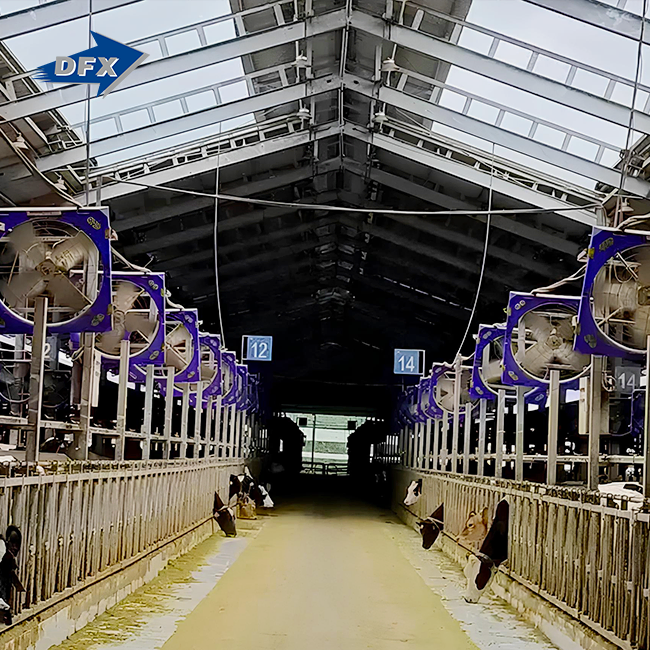
The manufacturer should understand airflow requirements, ridge vents, and curtain systems critical for preventing respiratory issues in cattle. A supplier who cannot explain how their design manages airflow across the barn likely lacks real agricultural building experience.
Asking a supplier to walk through their default ventilation strategy for your specific climate, rather than accepting a one-size-fits-all answer, quickly separates a genuine livestock steel building specialist from a fabricator that mainly builds warehouses and workshops.
Monoslope, Gable, and Freestall Layout Options
Reliable manufacturers specialize in livestock structures such as monoslope, gable, or freestall designs, rather than offering only generic industrial warehouse layouts. Asking a prospective supplier which of these configurations they have built before and requesting photos or references quickly reveals genuine livestock experience.
A manufacturer familiar with all three layout types can also recommend which configuration fits a specific herd size and climate best, rather than steering every client toward the single design their factory happens to produce most often.
How Important Are Customization and Expansion Options?
Farms grow, and a livestock steel building barn design locked into a single fixed size limits future flexibility in ways that cost money down the road.
Modular Bay Spacing for Future Growth
A cow barn (steel structure) built on standard bay intervals lets a farm add length in later phases without redesigning the original frame. Confirming this modular capability during initial design discussions saves significant rework costs when herd numbers eventually increase.
Ask the manufacturer to show a concrete example of a farm that expanded using this modular approach, since a supplier who can walk through a real phased project demonstrates the design capability in practice rather than just in theory.
Custom Span and Eave Height Requirements
Automated milking equipment, taller aviary systems, or specific machinery access needs may require custom span widths or eave heights outside a manufacturer's standard catalog. A supplier with in-house architectural design and detailing capability can adjust these dimensions properly instead of forcing the project into a generic template.
Buyers should ask specifically whether custom dimensions require a separate engineering fee or fall within the standard design service, since this detail affects both project cost and how much flexibility the manufacturer can actually offer once construction planning begins.

What Production Capabilities Should You Check Before Ordering?
A manufacturer's Cattle shed prefabricated factory capacity in a cattle shed directly affects delivery timelines, and this detail deserves verification before any deposit changes hands.
Fabrication Line Capacity and Lead Time
Qingdao Director Steel Structure Co., Ltd., operating under the DFX brand, runs six automatic welded H-beam production lines, two sandwich panel lines, two C/Z section steel lines, and twenty corrugated steel sheet lines. That capacity reaches approximately 20,000 tons of welded H-beams and columns annually, giving buyers a concrete basis for confirming whether a proposed delivery date is realistic.
Founded in 2011, the company has grown its production footprint to 40,000 square meters of enclosed manufacturing space with more than 200 trained workers, a scale that lets a genuine cow barn steel structure project run alongside other agricultural and commercial orders without competing for the same limited fabrication line.
Confirming Delivery Dates Against Real Backlog
Ask directly how many active projects sit ahead of yours in the production schedule. A manufacturer who avoids this question or gives a vague answer may be overpromising on delivery timing, which becomes a serious problem for farms working against a calving season or construction permit deadline.
Requesting a written production schedule with named milestones, rather than a single final delivery date, gives buyers an early warning if a project starts slipping behind, well before the delay threatens the farm's own construction timeline.
| Verification Step | What to Request | Why It Matters |
|---|---|---|
| Steel grade confirmation | Mill test certificate | Proves actual material matches quoted spec |
| Coating grade confirmation | Coating thickness specification in writing | Determines corrosion resistance in manure exposure |
| Structural engineering | Stamped drawings for local wind/snow codes | Required for permit approval in most regions |
| Production capacity | Current backlog and realistic lead time | Confirms delivery date is achievable |
How Can You Evaluate a Manufacturer's Project Experience?
Track record matters more in cattle shed prefabricated agricultural steel construction than in generic commercial building, since livestock housing has specific engineering demands that general contractors often overlook.
Requesting Case Studies and Reference Projects
Ask for completed cow barn steel structure project references in a similar climate and herd size to your own, not just a general portfolio of unrelated commercial buildings. A manufacturer with genuine agricultural experience should have specific examples ready, including the challenges each project faced and how the design addressed them.
Requesting direct contact with a past client, not just a written testimonial the manufacturer selected, gives buyers a more honest picture of how the supplier handled real problems during design, fabrication, and installation.
Project Snapshot: A Dairy Expansion Vetting Process in Trinidad and Tobago
A dairy operation expanding its herd near San Fernando, Trinidad and Tobago, compared three manufacturers before committing to a supplier for a new freestall barn. DFX provided stamped engineering drawings confirming compliance with the region's hurricane-season wind load requirements, along with mill test certificates for the steel and a documented coating specification rated for the island's humid, salt-exposed climate. The client's engineering consultant found that competing quotes from two other suppliers omitted wind bracing calculations entirely, a gap that would have required costly post-construction retrofitting. DFX's transparent documentation process shortened the client's permit approval timeline by roughly three weeks compared to the consultant's prior projects with less thorough suppliers.
What Should a Reliable Steel Barn Contract Include?
A contract protects both parties only when it specifies enough detail to prevent disputes once Dairy Barn steel structure construction begins.
Structural Warranty and Coverage Terms
Look for substantial structural warranties covering the frame and coating, along with clear guidance on assembly, components, and permit responsibilities, since reliable suppliers offer strong warranties and clear after-sales support regarding assembly, components, and permits. A contract without a specific warranty period and coverage scope leaves buyers exposed if a defect appears after installation.
Engineering Stamps and Code Compliance Documentation
Confirm the manufacturer provides stamped engineered drawings meeting local snow, wind, and seismic load requirements before construction begins, since building permit approval in most regions depends on this documentation. A cow barn (steel structure) contract missing this requirement risks delays or rejected permits during the approval process.
Farms working with a local architect or engineering consultant should have that professional review the manufacturer's stamped drawings independently, adding an extra layer of verification before construction commitments are finalized and materials ordered.
Conclusion
Choosing a reliable cow barn (steel structure) manufacturer takes more effort than comparing three price quotes side by side. Verified certifications, documented steel quality, genuine livestock design experience, and a contract with clear warranty and engineering terms all separate a dependable supplier from one that leaves gaps a farm discovers only after construction starts. Taking the time to vet these details upfront protects both the construction budget and the herd the barn is built to house.

FAQ
1. What certifications matter most for a steel cow barn manufacturer?
ISO9001, CE marking, and regional compliance marks like COC and PVOC matter most for international buyers, alongside documented steel coating and mill test certificates for material verification.
2. How do I know if a quote is missing important scope?
Request a line-item breakdown covering steel grade, coating thickness, delivery, crane rental, and permit or engineering stamp costs before comparing any two proposals on price alone.
3. Can a steel cow barn be customized for automated milking equipment?
Yes, provided the manufacturer offers in-house architectural design capability to adjust span, eave height, and bay spacing around the equipment's structural requirements.
4. Why does wind load engineering matter for a cow barn manufacturer?
Farms in cyclone- or storm-prone regions need stamped drawings confirming the frame meets local wind load codes, since a generic frame borrowed from a milder climate risks structural failure during severe weather.
5. What should I check before approving a steel cow barn design?
Before approval, verify the stamped structural drawings, steel grade, coating thickness, local wind and seismic loads, ventilation layout, foundation requirements, and future expansion provisions. Having a local engineer review the manufacturer's documentation can identify design gaps early and reduce permitting, construction, and long-term maintenance risks.
Start Your Steel Cow Barn Manufacturer Evaluation
DFX provides stamped engineering drawings, mill test certificates, and a documented coating specification for every Cow Barn (Steel Structure) quote, giving buyers the verification data needed to compare suppliers with confidence. Reach the engineering team at jason@bigdirector.com with your herd size, region, and target completion date to request a fully itemized proposal.
Manufacturing capacity is booked project by project, so early contact protects your place in the production schedule and gives the design team time to confirm coating grade and wind rating for your site. As a certified cow barn steel structure manufacturer, DFX pairs in-house engineering with ISO9001 and CE-certified fabrication, keeping every project transparent from concept through final erection. Contact jason@bigdirector.com to begin your evaluation.
References
1. Steel Commander Corp. How to Choose Your Steel Building Provider, 2026. Used to support the certification, hidden fee, and warranty sections. https://steelcommandercorp.com/how-to-choose-your-steel-building-provider/
2. Package Steel Systems. The Gold Standard for Metal Buildings: The IAS Accreditation. Used to support the accreditation and engineering-manufacturing integration section. https://packagesteelsystem.com/the-gold-standard-for-metal-buildings-the-ias-accreditation-package-steel/
3. Rural Builder Magazine. AC472 Accreditation: Why You Should Get Certified or Buy From Companies That Are Certified By MBMA, 2024. Used to support the accreditation and quality management discussion. https://ruralbuildermagazine.com/ac472-accreditation-why-you-should-get-certified/
4. American Institute of Steel Construction. AISC Certification Programs. Used to support the fabricator certification section. https://www.aisc.org/certification/
5. American Galvanizers Association. Overview of ASTM A123/A123M, 2025. Used to support the coating thickness and grade verification section. https://galvanizeit.org/knowledgebase/article/astm-a123-a123m
6. International Code Council. Metal Building Systems Inspection Accreditation, 2020. Used to support the accreditation and code compliance section. https://www.iccsafe.org/building-safety-journal/bsj-technical/metal-building-systems-inspection-accreditation/
About the Author
Maggie, Overseas Department Manager at DFX (Qingdao Director Steel Structure Co., Ltd.), has spent over a decade coordinating structural steel projects for agricultural and industrial clients across Africa, South America, the Caribbean, Oceania, and Southeast Asia. Her work focuses on walking overseas buyers through certification verification, engineering documentation, and contract terms, giving them a clear evaluation process before committing to a supplier.