- English
- French
- German
- Portuguese
- Spanish
- Russian
- Japanese
- Korean
- Arabic
- Greek
- German
- Turkish
- Italian
- Danish
- Romanian
- Indonesian
- Czech
- Afrikaans
- Swedish
- Polish
- Basque
- Catalan
- Esperanto
- Hindi
- Lao
- Albanian
- Amharic
- Armenian
- Azerbaijani
- Belarusian
- Bengali
- Bosnian
- Bulgarian
- Cebuano
- Chichewa
- Corsican
- Croatian
- Dutch
- Estonian
- Filipino
- Finnish
- Frisian
- Galician
- Georgian
- Gujarati
- Haitian
- Hausa
- Hawaiian
- Hebrew
- Hmong
- Hungarian
- Icelandic
- Igbo
- Javanese
- Kannada
- Kazakh
- Khmer
- Kurdish
- Kyrgyz
- Latin
- Latvian
- Lithuanian
- Luxembou..
- Macedonian
- Malagasy
- Malay
- Malayalam
- Maltese
- Maori
- Marathi
- Mongolian
- Burmese
- Nepali
- Norwegian
- Pashto
- Persian
- Punjabi
- Serbian
- Sesotho
- Sinhala
- Slovak
- Slovenian
- Somali
- Samoan
- Scots Gaelic
- Shona
- Sindhi
- Sundanese
- Swahili
- Tajik
- Tamil
- Telugu
- Thai
- Ukrainian
- Urdu
- Uzbek
- Vietnamese
- Welsh
- Xhosa
- Yiddish
- Yoruba
- Zulu
Automotive Assembly Workshop Layout: Best Practices Explained
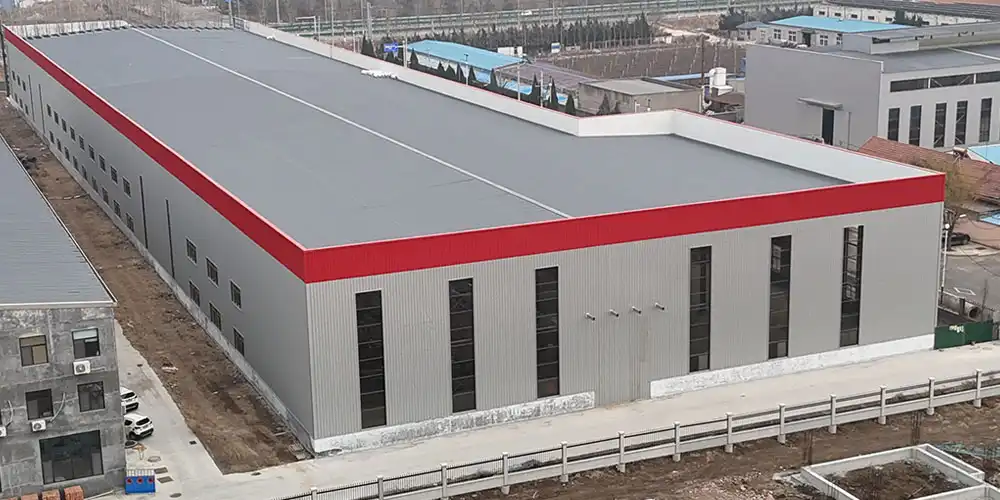
The layout of your factory area is more important than most people think, Automotive Assembly Workshop, when it comes to making cars quickly and safely. An Automotive Assembly Workshop is a special kind of factory that is designed to handle all the complicated tasks involved in making a car, from bonding the bodies together to putting them together for the last time. These steel-framed buildings have spans longer than 30 meters without any columns. They can also hold high cranes weighing between 10 and 50 tons, and they smoothly combine robotic cells and conveyor systems. We at Qingdao Director Steel Structure Co., Ltd. have been helping makers build workshops for over 12 years. These workshops cut time-to-market by up to 40% compared to traditional building and meet strict international standards like ISO9001 and CE certification.
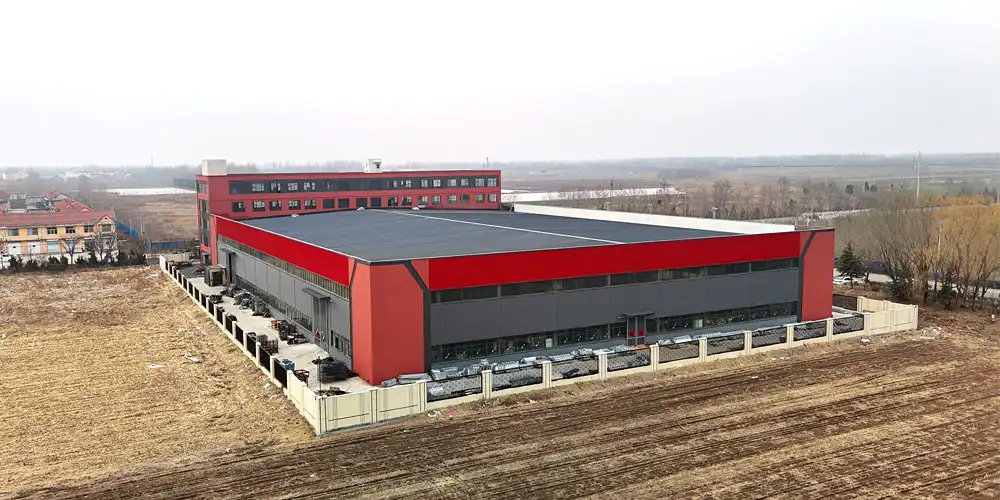
Understanding Automotive Assembly Workshop Layout Fundamentals
Core Objectives of Effective Layout Design
The main goals of a strong car assembly layout are to improve production flow, keep workers safe, keep quality control tight, and allow for future expansion. We've seen that makers who spend time planning the shape of their products get 20–35% more work done in the first year. These buildings need to be able to handle changing loads from big machines, be able to be rearranged easily as product lines change, and have safe paths for both people driving and self-driving cars.
Essential Workflow Zones
Every successful car assembly plant splits its space into clear functional zones, such as areas for accepting materials, stations for pre-assembly, main assembly lines, quality checking points, and storage for finished goods. The steel construction that supports these areas is usually made up of welded H-section beams made of Q235 or Q355 grade steel. These beams are strong enough for crane operations while still leaving enough open room inside for a flexible workflow. We use six automatic welding lines at our factory to make these H-beams, which ensures that the quality of every structural part is the same.
Integration of Equipment and Personnel
To make machines work with people's work, you need to pay close attention to things like sightlines, entry places, and ergonomics. To keep vibrations from interfering with precision assembly areas, heavy pressing tools need to be kept away from them. Paint booths need to be kept in a controlled environment with the right amount of airflow. Our steel buildings can meet these needs with airtight framing and custom cladding systems. The large-span design gets rid of the internal columns that would normally get in the way of material flow and make it hard to change the plan at a car manufacturing plant.
Best Practices for Automotive Assembly Workshop Layout Design
Workflow Optimization Principles
Cutting down on the distance that materials have to be moved is the most important plan choice. Moving vehicles one after the other through stations is easy with a linear plan for making a lot of the same type. Receiving and shipping are closer together in U-shaped layouts, which cuts down on truck travel. Cellular patterns group processes that are similar, which is great for facilities that handle different types of vehicles at the same time. Different layouts need different structure considerations. For example, linear layouts may need longer clear spans, while cellular layouts benefit from carefully placed columns that separate work cells without blocking flow.
Comparing Layout Typologies
Linear layouts are great for productivity but need a lot of floor space. U-shaped shapes make better use of the room by 15 to 25 percent and make it easier to see what's going on. Cellular plans give you the most options for making different models, but they need complex methods for moving materials. When we describe the steel structure, we change the column spacing, roof truss design, and foundation systems to fit the plan type you choose. This way, the building will support your production strategy instead of getting in the way of it.
Safety Standards and Compliance
When placing tools correctly, it's important to think about how to get out in an emergency, how to put out a fire, and how to follow OSHA and ISO standards. Our steel buildings have fire-resistant coatings that protect them for up to three hours. The thickness of the coatings is checked using dry film thickness tests. We create bolt connections with high-strength screws whose torque specs have been checked to make sure the connection doesn't break when the crane loads change. There are emergency doors every 75 meters at most, and there are clear floor markings that split areas for people and areas for cars.
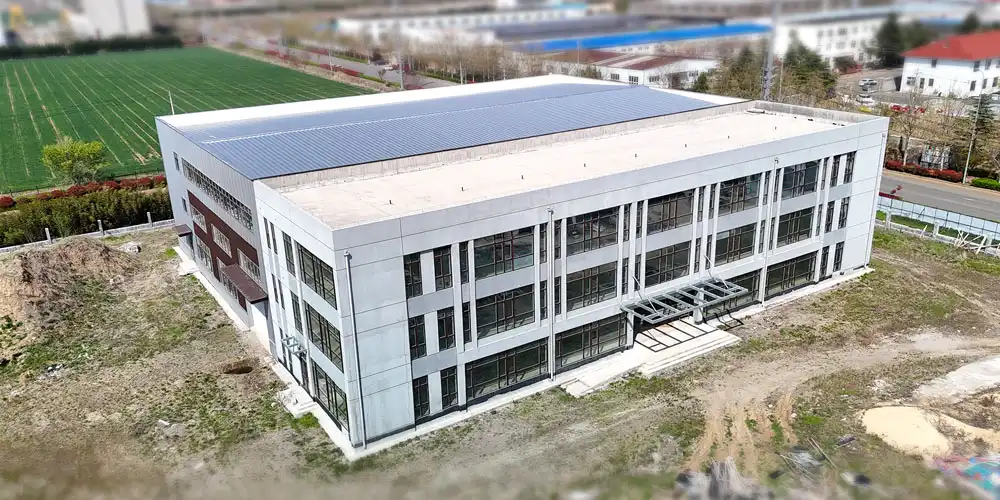
Key Equipment and Technology Integration in Workshop Layouts
Strategic Positioning of Assembly Stations
The place of the assembly stations is based on the process order and the balancing of the car manufacturing plant cycle times. Stations with longer cycle times may be in more than one place along the line, while stations with short cycles tend to be in just one place. Overhead conveyors hang from roof trusses at heights of 3.5 to 4.5 meters, which means that structural parts need to be strengthened at the hanger places. During the planning process, we put these heavy loads into structural analysis models. This helped us make sure that the truss chords and secondary beams were stronger where they needed to be. Our C/Z section steel purlins, which are made on two separate lines, are perfect for attaching hanging systems while keeping the roof's structure.
Balancing Automation with Manual Processes
Fully automatic lines are consistent, but they don't allow for changes or customizations to the models. Robots are used for repetitive, precise jobs like welding and sealing in hybrid workflows, while trained workers do the final assembly and quality check. Different floor loading limits are needed for this balance. Robotic cells tend to pack 5–8 tons into small spaces, while manual stations spread the weight out more widely. Our frame systems have fixed steel links that make it possible to change their layout in the future as the level of automation rises. This protects your initial investment while allowing technology to improve.
Partnering with Reliable Equipment Suppliers
Suppliers of equipment need to know not only about their machines but also about how those tools work with buildings. We work closely with conveyor makers, crane suppliers, and automation integrators to make sure that the mounting points, power distribution, and entry for servicing are all set up correctly. We do more than just make steel products. We also provide installation plans and on-site advice, which connects structural engineering and process engineering. When building and equipment companies work together, they often point the finger at each other, but this integrated method stops that from happening.
Overcoming Common Challenges in Automotive Assembly Workshop Layouts
Space Optimization Strategies
Vertical integration works well for small sites because it lets you use mezzanines to store parts or set up quality rooms above the production floor. Our steel structures are easily adaptable to plans with more than one level, and the placement of the columns is planned to support loads on the second floor without getting in the way of work on the first floor. Different problems arise in expansive places, such as workers having to drive long distances and having trouble communicating. By dividing big factories into linked units with their own Auto factory designfunctions, the benefits of proximity are kept while the capacity needed for high-volume production is provided.
Addressing Scalability and Expansion
Phased growth works really well with a modular steel building. We make end columns with connection points already drilled in and wall panels that can be taken off and put back on to make inner walls when additions are connected. This "knock-out wall" method lets the business grow without having to stop production. Companies that make things usually add 5,000 to 10,000 square meters of space at a time, as market demand calls for it. Our steel frame systems' bolted links can easily handle these changes, keeping the structure's integrity throughout the building process.
Identifying and Resolving Workflow Bottlenecks
When process capacity doesn't match up with material storage needs, queues form, which leads to bottlenecks. Changing the layout by moving stations or adding similar tracks can often solve these problems more cheaply than buying new equipment. Finding the right place for quality control is hard because you have to balance being careful with getting things done quickly. Inline checking finds problems quickly, but it can slow down production. End-of-line checking speeds up production, but it lets faulty units move further before they are found. Hybrid methods put important safety checks online while batching cosmetic checks at the end of the line. This improves both quality and speed.
Steps to Start an Optimized Automotive Assembly Workshop Layout
Planning and Needs Assessment
Set clear goals for production, such as the number of units per shift, the amount of model mix, the car manufacturing plant, and the quality standards. Before starting to build, make a paper map of the most important workflows. This should include material entry places, process sequences, and shipping logistics. A site study must take into account how to get to utilities, how much weight the soil can hold, and any local building rules. We offer structural design services that turn these practical needs into engineered steel frame specs. This way, you can be sure that the building helps you reach your production goals instead of getting in the way. Most made-to-order items take 25 to 48 days to be made, so when planning a timeline, it's important to include both the fabrication and building timetables.
Leveraging CAD and Simulation Tools
Computer-aided planning software lets you see your building in three dimensions before the foundations are poured. We make thorough 3D models that show where the columns are, where the crane can reach, and how much space there is for equipment. Simulation tools show how materials move, finding places where they might get backed up and making sure the plan works well. When these digital confirmation steps are used, mistakes are found quickly, before they cause weeks of building delays and production problems that cost hours of engineering time to fix. 90% of the time, clients who spend time in a thorough simulation get a plan that works on the first try, while only 60% to 70% of the time, clients who rely on experience and intuition do.
Staff Training and Change Management
When new facilities open, they mess up workers' habits and safety zones. Before production starts, full training programs make sure that workers are comfortable with the new safety rules, processes, and equipment interfaces. Concerns are dealt with directly through change management, which includes worker opinion in final layout improvements. We've seen that companies that give each employee 40 hours or more of pre-launch training hit their output goals 30% faster than companies that don't put training on their schedules until after the fact. Continuous improvement programs build feedback loops into the system so that plan changes can be made based on real-world experience instead of making the first design permanent.
Conclusion
Creating a good structure for a car assembly company requires knowledge of structural engineering, knowledge of how things work, and strategic planning. The base is made up of a properly designed steel building that is big, bendable, and made to handle the shifting loads that come with making cars. Our 40,000 square meters of production room and 200+ trained workers at Qingdao Director Steel Structure Co., Ltd. make it possible for layouts to be optimized. Our steel structures offer the column-free spans, crane support capacity, and flexibility for the future that industrial processes need. These principles will help you get from the idea stage to operational success, whether you're building your first assembly plant or adding on to one you already have.
FAQ
1. How does steel structure design accommodate heavy overhead cranes?
The main beams and columns of steel workshop frames that support vehicle assembly cranes need to be carefully designed and engineered. We figure out the loads that the crane can carry, such as its vertical lift capacity, horizontal thrust from acceleration, and impact factors. Next, we build stronger connection points for the crane lines to connect to the structure's members. Independent crane runway beams spread loads to poles that are placed 20 to 30 meters apart, depending on the crane's span needs. We use Q355 high-strength steel, which has a yield strength of more than 345 MPa. This means that the crane won't bend too much during operation, which could mess up the robotics or pose a safety risk.
2. Can existing automotive workshops expand without production interruption?
Because a steel building is flexible, it can be expanded in stages with little trouble. We plan the original buildings with clear areas for growth in mind, and we include connection details that allow for future additions. Bolt-on extensions can be added during planned pauses, like weekend shutdowns or yearly breaks, thanks to pre-engineered connection points on the end columns. Our manufacturing clients have been able to double their capacity in just 6 to 8 months of building time while keeping production going in current areas. This keeps their revenue streams safe during growth phases.
Partner with Director Steel for Your Automotive Assembly Workshop
Director Steel is an expert at making big industrial steel buildings that are great for putting together cars. Our welded H-section steel frames (Q235/Q355 grade) make the open spaces inside that are needed for flexible plan designs. Our bolted connections also make it possible to make changes in the future as your production needs change. Our ISO9001-certified factory makes all of the structural parts, from main frames to C/Z steel purlins. This guarantees consistent quality and meets CE and ASTM standards for materials. In addition to manufacturing, we offer full support for your project, including structural design, surface treatment, installation drawings, and coaching on-site throughout the whole process. We know what Automotive Assembly Workshop manufacturers need because we've been making them for a long time. Email our team at jason@bigdirector.com to talk about how our steel frame services can help your project in the assembly workshop. Go to dafanggangjiegou.aixdb.cn to see all of our producing options and what we can do.
References
1. Society of Manufacturing Engineers, "Facility Layout Planning for Automotive Assembly Operations," Industrial Engineering Handbook Series, 2021.
2. American Institute of Steel Construction, "Design Guide 7: Industrial Buildings—Roofs to Column Anchorage," AISC Publication Series, 2020.
3. International Journal of Production Research, "Optimizing Automotive Assembly Line Layouts Through Simulation Modeling," Volume 59, Issue 8, 2021.
4. National Fire Protection Association, "NFPA 101: Life Safety Code for Manufacturing Facilities," 2021 Edition.
5. Occupational Safety and Health Administration, "Guidelines for Automotive Manufacturing Workplace Safety," OSHA Publication 3853, 2020.
6. Lean Enterprise Institute, "Value Stream Mapping for Automotive Assembly Facilities," Lean Manufacturing Resource Guide, 2022.
Learn about our latest products and discounts through SMS or email