- English
- French
- German
- Portuguese
- Spanish
- Russian
- Japanese
- Korean
- Arabic
- Greek
- German
- Turkish
- Italian
- Danish
- Romanian
- Indonesian
- Czech
- Afrikaans
- Swedish
- Polish
- Basque
- Catalan
- Esperanto
- Hindi
- Lao
- Albanian
- Amharic
- Armenian
- Azerbaijani
- Belarusian
- Bengali
- Bosnian
- Bulgarian
- Cebuano
- Chichewa
- Corsican
- Croatian
- Dutch
- Estonian
- Filipino
- Finnish
- Frisian
- Galician
- Georgian
- Gujarati
- Haitian
- Hausa
- Hawaiian
- Hebrew
- Hmong
- Hungarian
- Icelandic
- Igbo
- Javanese
- Kannada
- Kazakh
- Khmer
- Kurdish
- Kyrgyz
- Latin
- Latvian
- Lithuanian
- Luxembou..
- Macedonian
- Malagasy
- Malay
- Malayalam
- Maltese
- Maori
- Marathi
- Mongolian
- Burmese
- Nepali
- Norwegian
- Pashto
- Persian
- Punjabi
- Serbian
- Sesotho
- Sinhala
- Slovak
- Slovenian
- Somali
- Samoan
- Scots Gaelic
- Shona
- Sindhi
- Sundanese
- Swahili
- Tajik
- Tamil
- Telugu
- Thai
- Ukrainian
- Urdu
- Uzbek
- Vietnamese
- Welsh
- Xhosa
- Yiddish
- Yoruba
- Zulu
PEB vs MS vs Temporary Shed: Choose the Right Structure
Selecting the right steel structure depends on your project timeline, budget, and long-term plans. Pre-Engineered Buildings (PEB) deliver engineered precision for permanent facilities, Metal Structures (MS) offer customized solutions for complex requirements, while a Temporary Construction Shed provides flexible, relocatable options for short-term site needs. If your priority is rapid deployment with minimal upfront investment, temporary sheds excel. For manufacturing expansion or commercial warehouses requiring decades of service, PEB systems prove most economical. EPC contractors managing infrastructure projects often choose MS for design flexibility. Understanding these three categories helps procurement managers make informed decisions that align with project goals.
What Makes Each Structure Different?
Three Core Differences:
- Engineering approach: PEB uses standardized components manufactured off-site. MS involves custom fabrication based on unique architectural designs. Temporary sheds utilize pre-fabricated modules assembled quickly.
- Lifespan expectations: PEB structures last 30-50 years with proper maintenance. MS buildings achieve similar durability. Portable steel sheds typically serve 5-15 years, depending on usage intensity.
- Cost structure: PEB reduces expenses through standardization, averaging $45-65 per square meter. MS costs $60-90 per square meter due to customization. Temporary facilities range $25-40 per square meter.
Director Steel's production data shows PEB projects complete fabrication 30% faster than MS equivalents. Our H-beam production lines process 20,000 tons annually, enabling consistent quality control impossible with site-built alternatives.
The structural mechanics differ fundamentally. PEB employs tapered sections, optimizing material usage—reducing steel consumption by 15-20% compared to conventional designs. MS uses uniform H-sections throughout, prioritizing load flexibility over weight efficiency. Temporary construction sheds incorporate lighter gauge materials (C/Z purlins of 2.0-3.0mm thickness versus 4.0-6.0mm in permanent structures), sacrificing some load capacity for transportability.
If you need a structure operational within 4-6 weeks, relocatable buildings provide unmatched speed. Manufacturing plants requiring specialized crane systems and heavy floor loads benefit more from MS customization capabilities.
Pre-Engineered Buildings: Efficiency Meets Standardization
PEB technology emerged from aerospace engineering principles in the 1960s, applying stress optimization to commercial construction. Modern systems use computer-aided design to calculate exact member dimensions, eliminating material waste.
Key characteristics include:
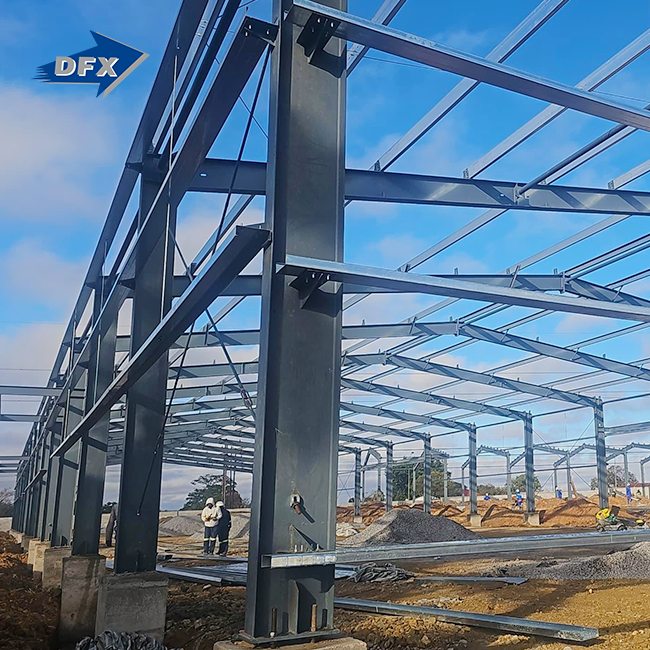
- Factory-welded primary frames with bolt-together connections
- Tapered columns and rafters match the load distribution
- Standardized roof slopes (1:10 to 1:20 ratios)
- Clear spans reaching 60 meters without intermediate supports
- Delivery timelines of 25-35 days from order confirmation
Our ISO9001-certified fabrication process maintains dimensional tolerances within ±3mm across entire frame assemblies. This precision allows construction teams to complete the erection 40% faster than site-welded alternatives.
Australian poultry farm operators particularly value PEB's ventilation integration. Ridge vents and sidewall openings are positioned precisely during the design phase, eliminating costly field modifications. A 2,400 square meter poultry house completed by Director Steel in Queensland achieved 12 air changes per hour through engineered airflow paths.
Cost analysis reveals that a 1,500 sqm warehouse using PEB costs approximately $97,500 for structure supply versus $135,000 for an equivalent MS design. Installation labor drops 30% due to simplified connections.
If your project involves standard rectangular footprints under 5,000 square meters, PEB delivers optimal value. Complex geometries with curved roofs or irregular column spacing require MS flexibility.
Metal Structures: Customization for Complex Projects
MS construction encompasses conventional steel framing using uniform-section members. This approach suits projects where architectural expression outweighs cost efficiency.
Nigerian infrastructure contractors frequently specify MS for aircraft hangars requiring 80+ meter clear spans. The structural redundancy of uniform sections provides safety margins during extreme loading events—critical for facilities housing high-value assets.
MS advantages include:
- Unlimited design flexibility for non-standard shapes
- Stronger moment connections handling lateral loads
- Easier field modifications during construction
- Better seismic performance through ductile detailing
Director Steel's engineering team supports MS projects through full design services. Our detailing department produces fabrication drawings within 15 days, coordinating with client architects to resolve interface issues before production begins.
The structural depth of MS beams (400-800 mm typical) accommodates services within ceiling voids—essential for logistics warehouses with automated storage systems. PEB's tapered sections complicate such installations.
Testing data shows MS buildings using Director Steel's H-beams (Grade Q345B steel) achieve yield strengths of 345 MPa, exceeding PEB's Q235B by 47%. This allows longer spans or reduced member sizes in critical areas.
Philippine manufacturing clients expanding existing factories choose MS to match the architectural finishes of original buildings. Color-matched cladding profiles and identical roof pitches maintain visual consistency across multi-phase developments.
If design flexibility outweighs budget constraints, MS construction accommodates virtually any specification. Standard warehouses without special architectural requirements waste 20-30% of MS's cost premium.
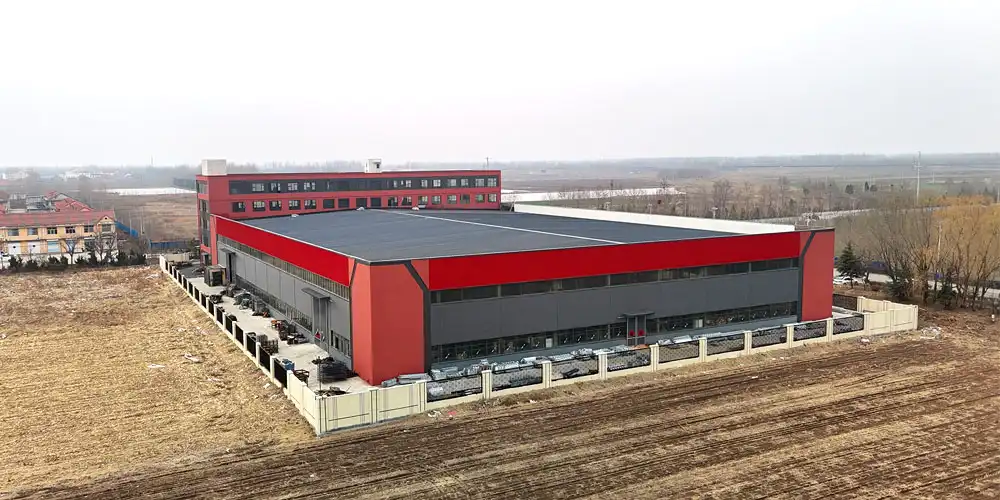
Temporary Construction Sheds: Flexible Solutions for Evolving Needs
Construction site offices, equipment storage, and interim workshops demand structures combining rapid deployment with relocation capability. Temporary construction sheds address these requirements through modular design principles.
Director Steel manufactures relocatable buildings using:
- Bolted portal frames (no site welding required)
- Hot-dip galvanized C/Z purlins resisting corrosion
- Open-sided or fully enclosed configurations
- Foundation options from concrete piers to ground screws
- Knockdown packaging reduces shipping volumes by 60%
A modular building installed at a Lagos construction site required just 8 days from delivery to occupancy. The 240 square meter structure housed project offices and equipment storage, then relocated to a second site 18 months later.
Three operational benefits:
- Minimal site preparation: Temporary facilities accept uneven terrain with adjustable base plates. Permanent structures demand precision-leveled foundations.
- Residual value retention: Portable steel sheds maintain 60-70% of their original value after 5 years. Demolished permanent buildings recover only material scrap value.
- Permit simplification: Many jurisdictions classify relocatable structures as temporary installations, bypassing complex approval processes.
The structural system uses lighter members than permanent buildings. Typical specifications include:
- Columns: 150x150 mm H-sections at 4-6 meter spacing
- Rafters: 200x150mm H-beams spanning 12-20 meters
- Purlins: 120-180mm C/Z sections at 1.2-1.5 meter spacing
- Cladding: 0.4-0.5mm color steel or left open for ventilation
Wind load capacity reaches 140 km/h for enclosed sheds, adequate for most inland locations. Coastal installations require upgraded fasteners and closer purlin spacing.
If your project timeline remains uncertain beyond 3 years, temporary structures preserve capital flexibility. Manufacturing operations with 20+ year horizons justify PEB's higher initial investment through lifecycle cost advantages.
Comparative Analysis: Finding Your Best Fit
Cost Comparison (per square meter, structure only):
| Structure Type | Material Cost | Fabrication | Installation | Total |
|---|---|---|---|---|
| PEB | $35-45 | $8-12 | $12-18 | $55-75 |
| MS | $45-60 | $12-18 | $15-22 | $72-100 |
| Temporary Shed | $18-25 | $5-8 | $8-12 | $31-45 |
These figures reflect Director Steel's 2024 pricing for export orders. Transportation and local construction costs vary by destination.
Timeline Comparison (for 1,000 sqm structure):
- PEB: Design 10 days, Fabrication 30 days, Erection 15 days = 55 days total
- MS: Design 18 days, Fabrication 40 days, Erection 20 days = 78 days total
- Temporary Shed: Standard design, Fabrication 15 days, Erection 7 days = 22 days total
Agricultural projects with seasonal constraints benefit dramatically from temporary shed speed. A poultry house commissioned in September reaches production capacity before winter demand peaks.
Durability metrics from Director Steel's project tracking:
- PEB corrosion rates: 15-20 microns annually (hot-dip galvanized coating)
- MS corrosion rates: 12-18 microns annually (thicker coating options available)
- Temporary shed corrosion rates: 18-25 microns annually (full galvanization standard)
All systems exceed 15-year service life in normal industrial environments. Coastal locations require additional protective measures regardless of structure type.
Maintenance requirements differ substantially. PEB buildings need fastener inspection every 24 months and coating touch-ups at 8-year intervals. MS structures follow similar schedules but accommodate repairs more easily due to uniform member sizing. Portable steel sheds require connection checks every 12 months due to bolted assembly—particularly important if relocated.
If procurement budgets face strict limitations, temporary facilities minimize upfront expenditure. Projects with confirmed 15+ year operational requirements achieve lower total cost of ownership through PEB selection despite higher initial pricing.
Industry-Specific Recommendations
Construction & EPC contractors managing multiple simultaneous sites gain strategic advantages from temporary shelter inventory. Site offices and tool storage are relocated between projects, spreading acquisition costs across numerous contracts. Director Steel's knockdown packaging allows container-efficient shipping—a 500 sqm shed fits within two 40-foot containers.
Manufacturing companies expanding production capacity should prioritize PEB for main workshop areas, reserving MS for specialized zones housing heavy machinery. This hybrid approach balances cost control with operational requirements. Our Philippine clients typically allocate 70% of the building area to PEB and 30% to MS for maximum efficiency.
Agricultural operations face unique ventilation and biosecurity requirements. Poultry houses benefit from open-sided temporary sheds during grow-out periods, then convert to enclosed PEB structures for breeding stock requiring climate control. The modular approach lets farm managers match building investment to cash flow from livestock sales.
Infrastructure contractors delivering government projects must satisfy prescriptive specifications, often mandating MS construction. The structural redundancy and fire-rating capabilities align with public safety standards. Airport hangars and emergency service facilities fall into this category almost universally.
Decision framework summary:
- Choose PEB when there is a standard rectangular layout, 15+ year service life, budget sensitivity, and a fast track schedule
- Choose MS when there are custom architectural designs, complex loading conditions, matching existing structures, and seismic zones
- Choose temporary sheds when the project duration is uncertain, relocation is anticipated, minimal site preparation is possible, and immediate occupancy is required
Project managers should request detailed engineering proposals comparing all three options. Director Steel provides free preliminary designs within 48 hours, allowing objective cost-benefit analysis before commitment.
Understanding Technical Specifications
Material selection impacts long-term performance significantly. Director Steel uses Q235B steel (equivalent to ASTM A36) for standard PEB applications, providing 235 MPa yield strength adequate for most commercial loads. MS projects specify Q345B (equivalent to ASTM A572 Grade 50) when architectural heights exceed 12 meters or crane capacities surpass 10 tons.
Temporary construction shed frames use Q235B with hot-dip galvanization, adding 80+ microns of zinc coating. This treatment ensures 15-year corrosion resistance even in moderately corrosive environments. Coastal applications upgrade to 120-micron coatings or consider aluminum-zinc alloy coatings for extended protection.
Connection methods reveal critical differences:
- PEB: High-strength bolted connections (Grade 8.8 or 10.9) at beam-column joints, allowing controlled erection sequences
- MS: Welded connections provide rigid moment frames, requiring skilled site welders and weather protection during installation
- Temporary sheds: Standard-grade bolts (Grade 4.8 or 6.8) enable hand-tool assembly without specialized equipment
Foundation requirements scale with structural mass. PEB systems apply 40-60 kN loads per column base, accommodated by isolated footings 1.2-1.5 meters square. MS buildings generate 60-90 kN reactions demanding larger foundations. Portable steel sheds impose just 20-35 kN per support, sometimes eliminating concrete foundations entirely through ground screw systems.
Seismic design considerations become critical in active zones. MS construction's ductile moment frames dissipate earthquake energy through controlled yielding—the preferred approach in regions experiencing frequent tremors. PEB systems accommodate seismic loads through added bracing, maintaining elastic behavior during events. Temporary facilities lack inherent seismic resistance beyond basic wind bracing.
Testing certifications matter for international projects. Director Steel's CE certification confirms that structural calculations comply with European standards EN 1993. Our COC and PVOC certificates facilitate customs clearance across African markets. ISO9001 accreditation verifies quality management throughout production processes.
Why Choose Director Steel's Temporary Construction Sheds
Manufacturing capabilities:
- Six automated H-beam lines producing precise portal frames with ±2mm tolerances
- Two C/Z purlin lines delivering 8,000 tons annually in galvanized finish
- In-house sandwich panel production (50,000 sqm capacity) for integrated supply
- Twenty corrugated sheet lines offering color-matched cladding options
Engineering support advantages:
- Free preliminary designs within 48 hours of inquiry
- Full structural calculations complying with destination country codes
- Installation drawings showing step-by-step assembly sequences
- Technical advisory available throughout the construction phase
Quality assurance standards:
- ISO9001 certified fabrication processes since 2011
- CE marking confirming European structural standards compliance
- Hot-dip galvanization to ASTM A123 (minimum 80-micron coating)
- Factory load testing of critical connections before shipment
Delivery efficiency:
- Standard designs ship within 15 days of order confirmation
- Knockdown packaging reduces freight costs 40-60% versus pre-assembled units
- Container loading plans maximizing cubic utilization
- Sea-worthy packing prevents transit damage
Flexible configurations:
- Open-sided sheds for equipment storage and maintenance workshops
- Fully enclosed buildings with insulated panels for site offices
- Mixed configurations combining enclosed offices with open storage areas
- Heights from 3.5 to 8 meters accommodate various equipment
Cost transparency:
- Detailed quotations separating structure, cladding, and accessories
- Multiple specification tiers matching budget constraints
- Volume discounts for contractors managing multiple sites
- Residual value buyback programs for well-maintained units
Global project experience:
- Successful installations across Nigeria, Kenya, the Philippines, and Australia
- Understanding of regional wind loads, seismic requirements, and climate factors
- Customs documentation expertise for smooth import processes
- Relationships with freight forwarders ensure competitive shipping rates
After-sales commitment:
- Spare parts inventory for common connection components
- Technical troubleshooting via phone, email, or video consultation
- Expansion design services when site requirements grow
- Relocation planning assistance, maximizing structure reusability
Environmental responsibility:
- 95% of temporary shed components are recyclable at the end of service life
- Galvanized steel eliminates toxic coating maintenance
- Modular design prevents demolition waste
- Energy-efficient insulation options reduce operational carbon footprint
Conclusion
Choosing between PEB, MS, and temporary construction sheds requires evaluating project permanence, budget parameters, and timeline constraints. Pre-engineered buildings optimize cost efficiency for long-term facilities with standard layouts. Metal structures accommodate complex architectural requirements, justifying premium investment. Temporary sheds deliver unmatched flexibility for evolving site needs where relocation capability preserves asset value. Director Steel's comprehensive manufacturing capabilities support all three categories, enabling procurement managers to specify the ideal solution matching operational requirements. Our engineering team provides objective recommendations prioritizing client success over sales volume, ensuring every structure delivers maximum return on investment throughout its service life.
DFX Director Steel: Your Temporary Construction Shed Manufacturer
DFX Director Steel delivers temporary construction shed solutions backed by 12 years of structural steel expertise. As an established temporary construction shed supplier, we provide complete design-to-installation support for portable steel shed requirements worldwide. Our 40,000 sqm production facility manufactures relocatable buildings using CE-certified processes, ensuring international quality standards. Contact jason@bigdirector.com to discuss your modular building specifications and receive detailed quotations within 24 hours for structures available for immediate fabrication scheduling.
References
1. American Institute of Steel Construction (2022). Steel Construction Manual, 15th Edition. Chicago: AISC Publications.
2. Newman, Alexander (2021). Pre-Engineered Metal Buildings: Design and Construction Practices. London: Structural Engineering Press.
3. Davies, J.M. (2019). Light Gauge Steel Structures: Recent Advances and Future Trends. Oxford: Blackwell Scientific Publications.
4. International Code Council (2021). International Building Code Chapter 22: Steel Structures. Washington D.C.: ICC Publications.
5. Trahair, N.S. & Bradford, M.A. (2020). The Behavior and Design of Steel Structures to EC3, 5th Edition. Boca Raton: CRC Press.
6. Portable Building Manufacturers Association (2023). Relocatable Building Systems: Standards and Best Practices. Toronto: PBMA Technical Committee.
Learn about our latest products and discounts through SMS or email