- English
- French
- German
- Portuguese
- Spanish
- Russian
- Japanese
- Korean
- Arabic
- Greek
- German
- Turkish
- Italian
- Danish
- Romanian
- Indonesian
- Czech
- Afrikaans
- Swedish
- Polish
- Basque
- Catalan
- Esperanto
- Hindi
- Lao
- Albanian
- Amharic
- Armenian
- Azerbaijani
- Belarusian
- Bengali
- Bosnian
- Bulgarian
- Cebuano
- Chichewa
- Corsican
- Croatian
- Dutch
- Estonian
- Filipino
- Finnish
- Frisian
- Galician
- Georgian
- Gujarati
- Haitian
- Hausa
- Hawaiian
- Hebrew
- Hmong
- Hungarian
- Icelandic
- Igbo
- Javanese
- Kannada
- Kazakh
- Khmer
- Kurdish
- Kyrgyz
- Latin
- Latvian
- Lithuanian
- Luxembou..
- Macedonian
- Malagasy
- Malay
- Malayalam
- Maltese
- Maori
- Marathi
- Mongolian
- Burmese
- Nepali
- Norwegian
- Pashto
- Persian
- Punjabi
- Serbian
- Sesotho
- Sinhala
- Slovak
- Slovenian
- Somali
- Samoan
- Scots Gaelic
- Shona
- Sindhi
- Sundanese
- Swahili
- Tajik
- Tamil
- Telugu
- Thai
- Ukrainian
- Urdu
- Uzbek
- Vietnamese
- Welsh
- Xhosa
- Yiddish
- Yoruba
- Zulu
Steel Structure Workshop Layout: Optimizing Industrial Flow
People in buying and project engineering always ask me the same question: how do you build a steel structure workshop out of steel that doesn't get in the way of work? To find the answer, you need to know that a workshop is more than just a roof and some walls. Plans for work projects, plans for space, and keeping things in order all work together in this way. To make the most of every inch of room, get things done faster, and keep people from getting too tired, stick to your plan to the letter. You'll save money and get more done if you plan ahead. This is true whether you're building a factory, a traffic hub, or a business.

Understanding Steel Structure Workshop Layouts
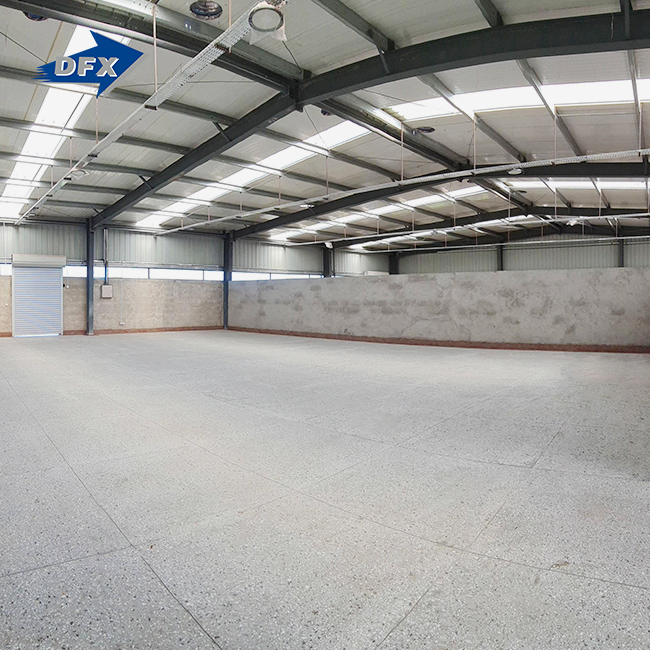
These days, businesses need steel-framed industrial buildings because they are easy to set up and have a lot of room inside, which regular buildings can't do. Steel bars formed into an H shape are used to make huge straight spans of more than 30 meters in these shops. The steel is usually grade Q235 or Q355. With the open plan, production lines don't have to worry about running out of space. Also, the structure can be changed around if production needs change in the future.
Why Does Layout Optimization Matter for Industrial Operations?
It makes a big difference in how well your things are made and how people, tools, and materials move through your building. Some places have to wait for carts, production lines to be used, and workers to walk too far because people don't plan their work well. It can cut the time it takes to move things by 25–40% if you make your plans for lean production better. What this does to your bottom line is clear. Some useful production steps that can be set up in your workshop are getting, processing, building, quality control, and sending. This way, people won't have to go back and forth between them.
Core Design Principles for Workflow Integration
Workshop plans should follow these three simple rules to work well. Your plan should be able to handle both straight lines and cells when you're making something. This is always the case, whether you do things in batches all the time or just as they come up. Piers and crane runway beams shouldn't get in the way of putting things down. They should line up with them instead. See-through roof panels let enough natural light in and let workers move around easily. This way, the room doesn't take up too much floor space. Building won't be a waste of room if these ideas help you with the plan. Instead, it will be a useful tool that helps your business reach its goals.
Critical Factors Influencing Workshop Layout Design
To make a good commercial building, you have to balance the needs of engineers with the realities of running the business. You can't separate choices about structure and process; they affect each other throughout the span of the building.
Structural Components and Their Impact on Usable Space
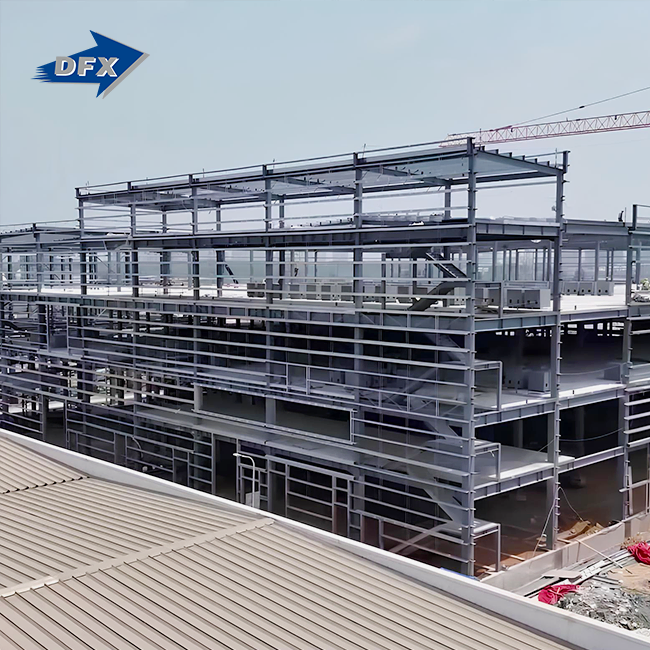
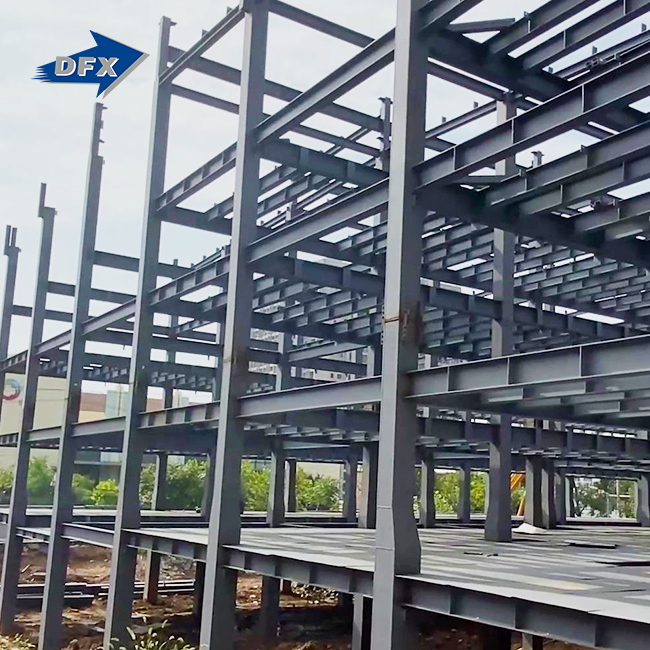
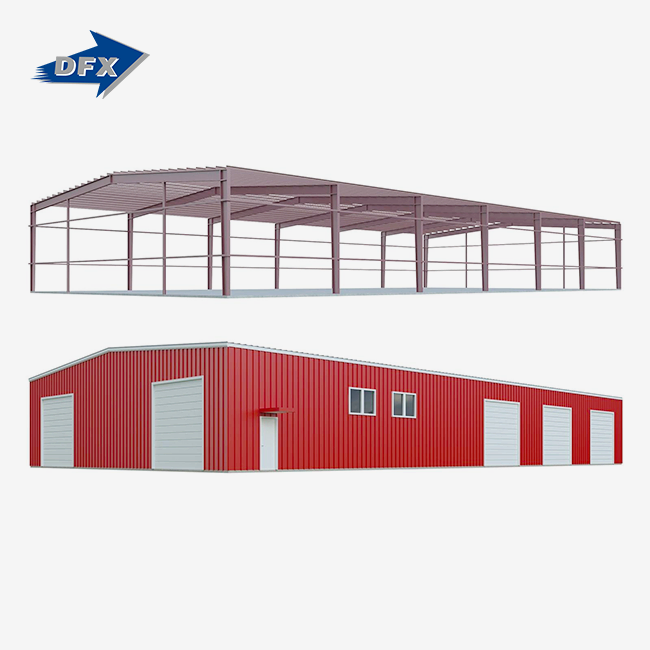
The main structure is made up of welded H-beams that are used for the poles and ceilings. They are joined together with high-strength bolts that make assembly faster and allow for future changes. The roof and wall coverings are held up by C and Z section purlins. Depending on your climate control needs, these can be anything from single-skin perforated sheets to insulated sandwich panels. The biggest benefit is that steel buildings don't need as heavy of supports as concrete ones do, which cuts down on both construction time and costs below grade. The space between columns is usually between 6 and 9 meters, and this grid tells you exactly where to put heavy equipment, high cranes, and production lines without needing to add more support to the structure.
Applying Lean Principles to Spatial Planning
Lean production teaches us to get rid of all kinds of waste, and one of the most expensive kinds is trash that takes up space. A well-planned layout cuts down on the lengths people have to walk to get to their desks, puts commonly used materials close to where they are used, and sets aside areas for storing goods that don't get in the way of production. When I work with industrial clients, I tell them to first make a map of their current material flow, which means keeping track of every move from the receiving dock to the shipping bay. This standard shows secret waste that can be fixed by making steel buildings more flexible. Because steel workshops can have wide spans, you can set up equipment in U- or L-shaped rooms that make it easier to see what's going on across the floor and cut down on the number of steps needed to move things around.
Energy Efficiency and Environmental Considerations
These days, steel structure workshops use temperature efficiency traits that weren't common ten years ago. R-values of 16 to 30 are achieved by insulated metal panels with mineral wool or polyurethane cores. This makes heating and cooling costs much lower. Putting ridge ventilators and louver systems in the right places encourages natural airflow, which is especially helpful in places where heat-generating processes happen. Installing clear plastic panels along the rooflines lets in natural light, which cuts down on electricity use and makes workers more alert and safe. These improvements to the environment have a clear return on investment (ROI) because they lower energy bills and make it easier to meet the green building standards that are being asked for more and more in government and business contracts.
Step-by-Step Construction Process and Its Impact on Layout
Understanding the construction sequence helps you plan for minimal disruption to your operational timeline and avoid costly rework when layout issues surface during building.
Pre-Construction Planning and Site Coordination
Before any steel arrives on site, thorough planning determines success. Site surveys identify soil bearing capacity, drainage patterns, and utility access points that influence foundation design and door placement. Coordination with your steel fabricator—ideally one offering integrated services from design through installation—ensures that structural drawings reflect your actual equipment dimensions and operational requirements. At Qingdao Director Steel Structure Co., Ltd., we've seen numerous projects where early collaboration between the client's operations team and our engineering staff prevented layout problems that would have been expensive to correct post-construction. This planning phase typically spans 2-4 weeks and includes finite element analysis to verify load paths and deflection limits under operational conditions.
Steel Erection Methods and Workflow Considerations
Two primary approaches exist: prefabricated components shipped for on-site bolted assembly or custom-fabricated sections welded in controlled shop conditions then transported as larger modules. Prefab systems offer faster erection—often completing the structural frame within 10-15 days for a 5,000 square meter workshop—but may limit customization. Custom fabrication provides greater design flexibility for unusual span requirements or integrated crane systems, though field assembly takes longer. The method you choose affects how quickly you can begin installing production equipment and training personnel. Bolt connections allow for easier future expansions, an important consideration if your manufacturing capacity might grow within 5-10 years.
Post-Construction Testing and Layout Validation
After structural completion, rigorous inspection ensures the building performs as designed. Non-destructive testing methods, including ultrasonic examination of critical welds and magnetic particle inspection of connection plates, verify structural integrity. Load testing of overhead crane systems—if installed—confirms safe operation at rated capacity plus 125% overload. This is also when layout validation occurs: physically positioning major equipment to verify clearances, access routes, and utility connections match your operational plans. Adjustments at this stage cost far less than modifications after production startup.
Maintenance and Sustainability for Long-Term Industrial Flow
A workshop's layout effectiveness depends on maintaining structural integrity and adapting to evolving operational needs over decades of service life.
Routine Maintenance Protocols
Steel structures require less maintenance than concrete or wood buildings, but regular inspections prevent small issues from becoming operational disruptions. Annual checks should include examining paint coatings for corrosion initiation, verifying bolt tension in connections subject to vibration, and inspecting roof penetrations where leaks could damage inventory or equipment. In coastal or industrial environments with corrosive atmospheres, surface preparation using shot blasting to SA2.5 grade followed by zinc-rich epoxy primers extends service life significantly. Maintenance intervals for different components vary: roof coatings may need renewal every 8-12 years, while properly designed structural members often last 50+ years without major intervention.
Adapting Layouts for Changing Production Needs
Manufacturing evolves, and your building should too. Steel's inherent flexibility allows for relatively straightforward modifications: adding overhead crane capacity, extending mezzanine levels for offices or storage, or reconfiguring partition walls to accommodate new production cells in a steel structure workshop design. Planning these adaptations requires understanding load paths and connection capacities. When clients approach us about expansions, we review original structural calculations to determine whether existing foundations and columns can support additional loads or if reinforcement becomes necessary. This adaptability represents a strategic advantage over rigid construction types where modifications often require partial demolition.
Sustainable Practices and Long-Term Value
Sustainability increasingly influences procurement decisions, particularly for companies with corporate responsibility goals or pursuing LEED certification. Steel structures inherently support sustainability: the material is 100% recyclable, construction waste is minimal compared to cast-in-place concrete, and the building can be disassembled and relocated if needed. Incorporating solar panel-ready roof designs, rainwater harvesting systems, and energy-efficient LED lighting further enhances environmental performance. Beyond ecological benefits, these features attract tenants if you lease the facility, improve employee recruitment, and sometimes qualify for tax incentives or utility rebates that improve project economics.
Procurement and Supplier Selection for Optimal Workshop Solutions
Choosing the right manufacturing partner determines whether your workshop meets expectations or becomes a source of ongoing frustration and unexpected costs.
Verifying Supplier Credentials and Capabilities
Start by confirming certifications: ISO 9001 for quality management systems, CE marking for European market compliance, and ASTM material compliance, ensuring steel meets specified mechanical properties. Beyond certificates, evaluate production capacity and technical depth. A supplier operating 40,000 square meters of enclosed fabrication space with automated welding lines demonstrates capability to handle large projects consistently. Ask about in-house engineering services—suppliers who provide structural design, connection detailing, and installation drawings deliver better coordination than those offering fabrication alone. Request references from projects similar to yours in scope and application, then follow up to verify on-time delivery and post-installation support quality.
Understanding Pricing Models and Value Propositions
Steel workshop pricing varies based on specification, customization level, and service scope. Three common models exist: basic supply (fabricated components only), supply and erection (including on-site assembly), and turnkey solutions (design through commissioning). While basic supply appears cheapest initially, hidden costs emerge if your team lacks steel construction expertise. Turnkey approaches cost more upfront but reduce coordination burden and timeline risks. Evaluate proposals by total project cost, including logistics, foundation work, and installation labor, rather than steel price alone. Typical lead times run 25-45 days from order to delivery for standard configurations; complex custom designs may require 60-75 days. Balance urgency against customization needs when setting project schedules.
Real-World Performance and Client Satisfaction
Measurable outcomes validate supplier selection. Case studies showing productivity improvements, construction timeline adherence, and problem resolution demonstrate real-world competence beyond marketing claims. A manufacturing client in the automotive supply sector recently reported that their optimized workshop layout and steel structure workshop design reduced assembly time per unit by 18% compared to their previous facility, directly attributable to improved material flow and better natural lighting. Another client in logistics achieved 22% energy cost reduction through upgraded insulation and ventilation design. These results stem from suppliers who understand that their role extends beyond delivering a building—they're enabling your operational success.
Conclusion
Optimizing your steel structure workshop layout creates competitive advantages that compound over years of operation. By integrating structural design with workflow planning, you eliminate inefficiencies that drain productivity and profitability. The flexibility of steel-framed construction allows you to adapt as manufacturing demands evolve, protecting your infrastructure investment. Selecting a supplier with comprehensive capabilities—from initial design through installation support and beyond—ensures your workshop performs as intended from day one. As you plan your next industrial facility, remember that the building itself should actively support your operations rather than constrain them.
FAQ
1. What span lengths can steel workshops achieve without internal columns?
Steel workshops routinely achieve clear spans of 30-40 meters using standard welded H-section frames, with engineered truss systems extending this to 60 meters or more for specialized applications like aircraft hangars. The achievable span depends on load requirements, local snow and wind conditions, and economic considerations, as extremely wide spans require heavier structural members that increase material costs.
2. How long does construction typically take compared to traditional buildings?
Steel workshop construction proceeds 30-50% faster than comparable concrete structures. A 5,000 square meter facility typically completes structural erection in 10-20 days, with total project duration from groundbreaking to operational readiness spanning 3-5 months depending on site conditions and finishing requirements compared to 6-9 months for conventional construction methods.
3. Can layouts be modified after initial construction?
Steel structures offer exceptional modification flexibility. You can add mezzanines, relocate partition walls, upgrade crane capacity, or expand the building footprint with proper engineering review. Bolted connections simplify alterations compared to welded or cast structures, though modifications affecting primary load-bearing members require structural calculations to ensure continued safety and code compliance.
Partner with DFX for Your Next Steel Workshop Project
At Qingdao Director Steel Structure Co., Ltd., we've spent over 12 years helping project managers and operations directors solve complex industrial building challenges. Our integrated approach combines structural engineering, precision fabrication using automated welding lines, and comprehensive installation support to deliver steel structure workshop solutions that genuinely optimize your production flow. With 200+ skilled workers, 20,000 tons of annual H-beam capacity, and ISO 9001 and CE certifications, we manufacture reliable structures that meet international standards while maintaining competitive pricing as a direct steel structure workshop supplier.
Whether you're building a new manufacturing plant, expanding existing capacity, or relocating operations, our team at DFX understands that every detail—from column spacing to ventilation placement—affects your operational efficiency. We provide complete turnkey services including architectural design, fabrication, surface treatment, and on-site guidance, ensuring seamless coordination throughout your project. Typical delivery runs 25-45 days, and our technical staff remains available for consultation long after installation completes.
Ready to discuss how an optimized workshop layout can transform your industrial operations? Contact Jason at jason@bigdirector.com to schedule a consultation. We'll review your specific requirements, provide preliminary design concepts, and develop a proposal tailored to your production needs and timeline.
References
1. American Institute of Steel Construction (2022). Steel Construction Manual, 15th Edition. Chicago: AISC.
2. Tompkins, J.A., White, J.A., Bozer, Y.A., & Tanchoco, J.M.A. (2010). Facilities Planning, 4th Edition. Hoboken: John Wiley & Sons.
3. European Convention for Constructional Steelwork (2019). Design of Steel Structures: General Rules and Rules for Buildings, Eurocode 3. Brussels: ECCS.
4. Mehta, M. & Scarborough, W. (2018). Building Construction: Principles, Materials, and Systems, 3rd Edition. Upper Saddle River: Pearson Education.
5. Heragu, S.S. (2016). Facilities Design, 4th Edition. Boca Raton: CRC Press.
6. Metal Building Manufacturers Association (2021). Metal Building Systems Manual. Cleveland: MBMA.
Learn about our latest products and discounts through SMS or email