- English
- French
- German
- Portuguese
- Spanish
- Russian
- Japanese
- Korean
- Arabic
- Greek
- German
- Turkish
- Italian
- Danish
- Romanian
- Indonesian
- Czech
- Afrikaans
- Swedish
- Polish
- Basque
- Catalan
- Esperanto
- Hindi
- Lao
- Albanian
- Amharic
- Armenian
- Azerbaijani
- Belarusian
- Bengali
- Bosnian
- Bulgarian
- Cebuano
- Chichewa
- Corsican
- Croatian
- Dutch
- Estonian
- Filipino
- Finnish
- Frisian
- Galician
- Georgian
- Gujarati
- Haitian
- Hausa
- Hawaiian
- Hebrew
- Hmong
- Hungarian
- Icelandic
- Igbo
- Javanese
- Kannada
- Kazakh
- Khmer
- Kurdish
- Kyrgyz
- Latin
- Latvian
- Lithuanian
- Luxembou..
- Macedonian
- Malagasy
- Malay
- Malayalam
- Maltese
- Maori
- Marathi
- Mongolian
- Burmese
- Nepali
- Norwegian
- Pashto
- Persian
- Punjabi
- Serbian
- Sesotho
- Sinhala
- Slovak
- Slovenian
- Somali
- Samoan
- Scots Gaelic
- Shona
- Sindhi
- Sundanese
- Swahili
- Tajik
- Tamil
- Telugu
- Thai
- Ukrainian
- Urdu
- Uzbek
- Vietnamese
- Welsh
- Xhosa
- Yiddish
- Yoruba
- Zulu
Walkway Steel Canopy Shed Design for Outdoor Protection Systems
When you're in charge of infrastructure projects like factories, farms, or building sites, the weather shouldn't affect when you work. A Walkway Steel Canopy Shed gives you that freedom—engineered overhead protection that links buildings, blocks pedestrian paths, and keeps gear safe from rain, snow, and UV rays. These structures are made from strong H-section beams and galvanized purlins. They can be set up in a variety of ways, including fully enclosed or open-sided, to meet the needs of different industries. Steel canopy solutions are long-lasting and cost-effective, so your operations can keep going no matter what the weather is like. They can be used to store farm hay safely, cover parking for vehicles, or make weatherproof paths between production areas.

Understanding Walkway Steel Canopy Sheds: Essentials and Benefits
What Makes Steel Canopy Structures Essential for Modern Facilities
Industrial and commercial locations usually have issues like workers getting between buildings during storms, equipment being outside, and keeping things dry. Walkway Steel Canopy Sheds solve these issues by providing safe walkways and valuable storage for seamless operations. Steel frameworks don't require much maintenance and can last through years of environmental stress, unlike temporary cloth awnings or timber structures.
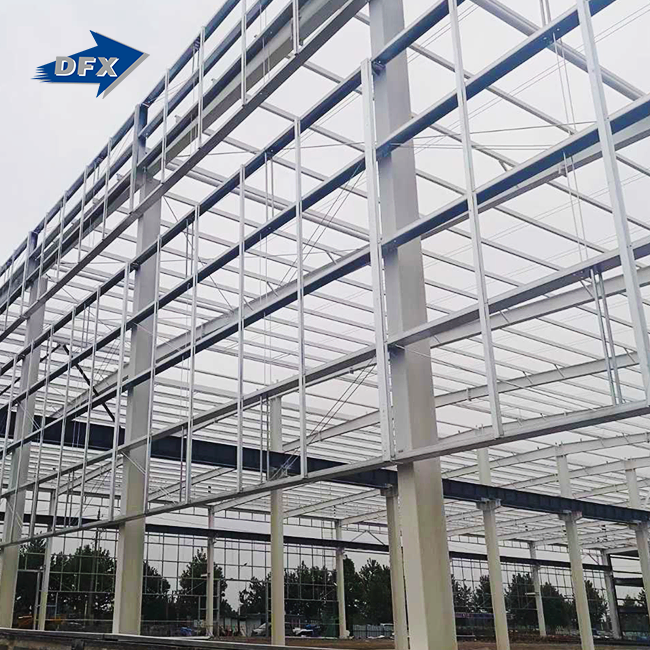
H-section steel beams and columns with C/Z galvanized purlins form the main building. These heavy-duty pieces can withstand snow and wind. This level of structural integrity ensures that infrastructure will perform dependably in a variety of climates, from humid coastal to icy northern. When properly maintained, hot-dip galvanization makes goods corrosion-resistant and lasts more than 25 years.
Key Benefits That Impact Your Bottom Line
Project engineers and procurement managers enjoy that steel offers demonstrable advantages over other materials. Prefabricated pieces save on-site construction time by a lot. In a hurry or during seasonal weather windows, this modular method reduces effort and costs and speeds up project completion.
Cost-effectiveness extends beyond location. Steel canopy sheds are simpler to maintain than timber sheds that require regular treatment to prevent rotting and insect damage, or fabric sheds that shred and fade after a few years. Recyclability of steel supports sustainability objectives that many organizations increasingly value, enabling responsible material options without losing performance. Steel always outperforms other materials in 20-year total ownership costs.
Another advantage is improved safety. Covered walkways reduce wet-weather slip-and-fall incidents, protecting your workers and company. These structures protect hay storage and livestock equipment from water damage, which may cost farmers and reduce output.
Design Considerations and Weather Resistance for Walkway Steel Canopy Sheds
Structural Planning for Your Specific Application
First, assess your facility's requirements to create effective cover security. The span lengths between support columns dictate structural size. Industrial companies require large aisles for forklifts, whereas agricultural locations want to cover as much territory as possible for less money. Regional snow and wind ratings are used while calculating loads. This ensures local construction regulations are met for structural strength.
Working with building builders and EPC businesses has taught us that thorough customisation during design prevents costly revisions later. Current traffic patterns and expansion plans shouldn't be affected by column position. More expensive materials are needed for steeper roof pitches, which drain rainfall more quickly. Your engineering team and fabrication partner must collaborate to balance functional objectives with costs.
Beauty matters more than people realize. Roofing and trim might match corporate logos or building colors. It makes the site seem professional, impressing customers and inspectors. Transparent polycarbonate roofs bring light in and keep out rain; therefore, some companies enjoy them. This cuts daytime lighting expenditures.
Weather Performance You Can Depend On
Walkway Steel Canopy Shed systems work well in harsh areas because they are designed to withstand extreme conditions from the start. Galvanized steel doesn't rust in salty or damp environments. Rain and snow weights are considered during construction. Large columns and beams can support weight without bending or breaking.
Wind resistance requires additional care in exposed areas. Anchor bolts secure columns to concrete foundations, preventing lifting or movement in severe winds. Open-sided designs may protect against rain while allowing airflow and moisture control with the correct orientation and roof overhang, according to certain customers.
Many construction materials become brittle and colorless due to UV exposure. Good paint systems on galvanized steel prevent corrosion and UV damage with zinc and colored finishes. Steel frames may survive over 50 years if properly maintained; however, roofing materials vary. Metal sheets endure 20–25 years, polycarbonate panels 12–15 years, and glass may last the building.
Comparing steel to aluminum, wood, and linen shows why the industry uses so much of it. Aluminum doesn't corrode, but it can't hold as much weight as steel; therefore, it requires more support posts and can't be utilized for long spans. Wood is attractive, but it requires constant maintenance and is susceptible to fire, decay, and vermin. Fabric systems are cheaper initially, but they must be renewed every 5–7 years, negating any savings and adding to project management.
Installation and Maintenance: Ensuring Optimal Performance
Professional Installation Versus DIY Approaches
Long-term performance and safety depend on installation quality. Professional teams have specialized equipment, technological understanding, and speed that DIY ventures lack. Pouring a concrete foundation needs precise dimensions and enough drying time before attaching columns. Any missteps here might jeopardize the framework. When welding structural connections, trained welders must follow AWS D1.1 requirements to ensure joints can bear intended loads.
Installation typically involves preparing the site and constructing the foundations, installing the columns and confirming their location, assembling the beams and purlins, installing the roofing panels, and sealing the details. Skilled personnel can erect medium-sized canopies in a few days without disrupting activities. Your project management team doesn't have to worry about permissions and inspections since they handle them.
DIY installation may seem like a wonderful way to save money on minor works, but it may lead to weak structures, voiding warranties, and liability if the building fails or damages someone. Many insurance plans exclude non-professionally built buildings. Installation should be done by specialists for spans above 6 meters or in public spaces where safety requirements are mandatory.
Maintenance Practices That Extend Service Life
Walkway Steel Canopy Sheds are low-maintenance and robust. Every year, inspect anchor bolt tightness, structural link stability, and roofing panel condition. Debris in gutters and drainage points may cause water to back up and leak. Cleaning these regions twice a year prevents issues.
Monitor the galvanized coating and paint finish to prevent corrosion. To prevent rust, treat small scratches or abrasions on steel immediately. In coastal or industrial settings with corrosive air, frequent checks help detect issues more quickly. Galvanization with a marine-grade finish increases security in adverse situations.
Warranty and after-sales service distinguish respectable manufacturers from inferior ones. Most complete warranties cover structural integrity for 10–15 years and coating performance for 5–7 years. Technical support can answer inquiries regarding maintenance or building adjustments quickly. This continuing relationship protects your investment and ensures the structure performs well for years.
Procurement Insights: Choosing and Purchasing the Best Walkway Steel Canopy Shed
Decision Criteria for Procurement Specialists
You must consider several factors to get the best Walkway Steel Canopy Shed. Steel grade criteria determine frame quality. Q235B and Q355B are strong-to-weight for most applications. Make sure dealers provide mill test papers showing material characteristics and chemistry. When choosing a roof, consider metal sheets for durability, polycarbonate for light, or insulated sandwich panels for temperature stability.
Various firms provide various installation services. Some just fabricate and transport, leaving installation to local contractors. Some provide "turnkey" solutions that design, make, distribute, install, and check everything. This eliminates communication issues and clarifies who is accountable for what—one seller manages the whole system, not several persons who point fingers when problems arise.
Pricing arrangements must be examined beyond square meter rates. Ordering several units or covering a broad area gets you a discount. Maintaining and supplying services jointly is typically cheaper than separately. Transportation is expensive. Domestic providers may send things cheaper and quicker than offshore suppliers to offset higher material costs.
Evaluating Suppliers and Sourcing Strategies
ISO 9001 and CE certifications demonstrate quality commitment by certified manufacturers. These certificates demonstrate that items are created according to international standards and tested extensively. Request recommendations from similar-industry clients. Their experiences will demonstrate the supplier's reliability in meeting delivery schedules, providing high-quality items, and solving issues.
Many global business-to-business customers see advantages in purchasing from Chinese manufacturers. Qingdao manufactures items thanks to advanced manufacturing equipment and cheap labor costs. This cuts costs without sacrificing quality. Short manufacturing cycles speed up projects, and well-established transportation networks ensure seamless overseas shipment. Communication technology has essentially eliminated collaborative issues that made international trade difficult.
Modern Chinese manufacturing is shown by Qingdao Director Steel Structure Co., Ltd. They have 40,000 square meters of manufacturing area with high-tech automation lines and 12 years of experience constructing steel structures. International requirements for careful procurement are met by our ISO-certified procedures and CE-approved goods. Projects of any scale can be finished on schedule since we can create 20,000 tonnes of H-beams and 8,000 tonnes of C/Z section steel annually.
Because of their proximity, local providers offer quick site visits and perhaps faster emergency aid. However, limited manufacturing capacity might generate scheduling issues during busy building seasons. Even with slower shipment, well-known worldwide merchants sometimes provide greater value for total landing costs, which include materials, shipping, customs, and installation.
Design Inspirations and Future Trends in Walkway Steel Canopy Sheds
Innovative Features Enhancing Functionality
More and more, modern Walkway Steel Canopy Shed designs include technology that makes them useful for more than just keeping out the weather. Putting LED lighting systems into canopy structures makes operations safer at night and saves money on separate lighting infrastructure. Signage mounting holes let people find their way around and promote your business without the need for extra support structures. Some more modern setups have photovoltaic panels on the roofs of canopy structures. These panels produce clean energy that balances out the power used by the building.
Smart technology integration is the cutting edge. For example, sensors can check for structural stress, maintenance needs, or changes in the environment inside covered areas. Large industrial sites that use centralized facility management systems to run their buildings will benefit the most from these features. Smart features cost more up front, but they give information that helps plan maintenance better and keep records of how well structures are working for insurance and government purposes.
Neutral tones, like grays, brown, and earth tones, are now in style because they go with a lot of different types of architecture and don't stand out too much in farming settings. Sleek structural profiles with tapered beams or curved roof designs add a touch of class that's perfect for places that customers will see or where appearance is important, like corporate campuses.
Sustainability and Future-Proof Solutions
Environmental duty is becoming more and more important in purchasing decisions. Because steel can be recycled, old buildings are used to make new things instead of ending up in a landfill. Specifying recycled steel content—which is now easy to find and doesn't cost much—also lowers the impact on the environment. Traditional paint systems release volatile organic chemicals that powder coating finishes get rid of. This helps meet goals for indoor air quality and lowers environmental waste.
More modern ways of building stress a flexible design that can be expanded or rearranged in the future. When canopy sections are built with standard connection points, they can be moved or covered over as the needs of the facility change. This flexibility protects against obsolescence, so your investment will still be worth it even if operations change over the years.
As standards for corporate ethics rise, companies expect more and more documentation of supply chain sustainability. Your organization's reporting needs will be met if you work with makers who provide environmental product statements and carbon footprint analyses. These things might not seem important when you're in a hurry to get things done, but a progressive buying strategy takes into account changes in regulations and what stakeholders want, which will affect how businesses work in the future.
Conclusion
Walkway Steel Canopy Sheds are useful answers to common facility problems. They keep workers, tools, and supplies safe from the weather and improve working efficiency in a wide range of fields, from manufacturing to farming. The basics of engineering are still simple: strong H-beam frames, galvanized protection against corrosion, and a variety of covering choices that can be used in different situations. Careful attention to plan details, high-quality fabrication, skilled installation, and ongoing upkeep are what set successful projects apart.
Total lifecycle value, not just initial costs, should be taken into account when making purchasing decisions. This is because properly specified steel structures last for decades with little maintenance. As being environmentally friendly and using technology more and more becomes the norm, modern canopy systems go beyond just keeping out the weather and become complex parts of infrastructure. Strategic partnerships with experienced manufacturers give you access to knowledge that can help you deal with these issues and find solutions that are perfect for your needs.
FAQ
Q1: How do steel canopy sheds perform in extreme climates?
When they are built right, Walkway Steel Canopy Sheds can handle a wide range of weather conditions. In humid coastal areas, hot-dip galvanization keeps metal from rusting, and in the north, structural calculations take into account the weight of heavy snow. Most places can handle wind speeds up to 120 km/h, and stronger anchoring options are available for areas with very high winds. UV-resistant coats keep finishes from wearing down in places with a lot of sun. When choosing roofing panels, the weather should be taken into account. Insulated panels should be used in places with extreme temperatures, and impact-resistant polycarbonate should be used in places where hail is common.
Q2: Can I customize dimensions and colors to match existing facilities?
One of the best things about steel roof systems is that they can be customized. Within the limits of structural engineering, manufacturers can make spans that are almost any length, width, and height design. The space between columns can be changed to avoid obstacles or line up with other building pieces. Standard RAL or Pantone references are used for color matching, which makes sure that the colors blend in perfectly with the company branding. Some suppliers offer design services that model proposed structures in the context of your facility. This makes sure that the structures will look good before they are built.
Q3: What lifespan should I expect with proper maintenance?
When galvanized and maintained according to the manufacturer's instructions, steel frames usually last more than 50 years. Metal sheets last 20 to 25 years, plastic panels 12 to 15 years, and toughened glass might last as long as the structure. Annual checks that fix small problems stop things from breaking down faster. Many buildings with steel canopies that were put up in the 1980s say they have continued to work well with only regular maintenance and the replacement of a few roofing panels here and there. When you compare this to alternatives like fabric structures that need to be replaced every 5 to 7 years, you can see that steel has a better lifecycle value.
Partner with DFX for Your Steel Canopy Solution
Protection measures for your building should be reliable and last a long time. Through Qingdao Director Steel Structure Co., Ltd., DFX makes high-quality Walkway Steel Canopy Sheds that are intended to meet the needs of challenging industrial, business, and farming uses. Our "turnkey" approach takes care of everything, from designing the structure to fabrication, installation drawings, and technical support. This saves you time and effort while making sure everyone is responsible.
We've been a trusted manufacturer for over 12 years and have sent thousands of buildings to happy customers all over the world. Our production sites are ISO 9001-certified and use high-tech automated equipment that ensures uniform quality and short production cycles. Our products are certified by CE, COC, and PVOC, which means they meet international standards and can be bought by anyone. We can design solutions that are exactly what you need, whether you need open-sided parking for cars, fully enclosed storage for tools, or weatherproof walks for people to use.
Email our team at jason@bigdirector.com to talk about the needs of your project. Based on your specific operational needs, we'll give you technical advice, competitive quotes, and design suggestions. Find out why purchasing managers in a wide range of fields choose DFX for long-lasting outdoor security systems.
References
1. Smith, J.R., & Chen, L. (2021). Structural Steel Design for Industrial Facilities: Engineering Principles and Best Practices. Industrial Press.
2. Anderson, M.K. (2020). "Corrosion Protection Systems for Steel Structures in Harsh Environments," Journal of Protective Coatings & Linings, 37(4), 45-58.
3. Thompson, D.W., & Martinez, S.A. (2022). Prefabricated Steel Construction: Modern Methods and Applications. Construction Industry Institute.
4. Lee, H.S., & Park, J.Y. (2019). "Comparative Life Cycle Assessment of Building Material Systems for Industrial Canopy Structures," Journal of Cleaner Production, 246, 118-127.
5. Williams, R.T. (2023). Building Code Compliance for Steel Accessory Structures: A Practical Guide for Engineers and Contractors. American Society of Civil Engineers.
6. Zhang, Q., & Johnson, P.E. (2021). "Optimization of Steel Frame Design for Long-Span Canopy Applications," Engineering Structures, 198, 342-356.
Learn about our latest products and discounts through SMS or email