- English
- French
- German
- Portuguese
- Spanish
- Russian
- Japanese
- Korean
- Arabic
- Greek
- German
- Turkish
- Italian
- Danish
- Romanian
- Indonesian
- Czech
- Afrikaans
- Swedish
- Polish
- Basque
- Catalan
- Esperanto
- Hindi
- Lao
- Albanian
- Amharic
- Armenian
- Azerbaijani
- Belarusian
- Bengali
- Bosnian
- Bulgarian
- Cebuano
- Chichewa
- Corsican
- Croatian
- Dutch
- Estonian
- Filipino
- Finnish
- Frisian
- Galician
- Georgian
- Gujarati
- Haitian
- Hausa
- Hawaiian
- Hebrew
- Hmong
- Hungarian
- Icelandic
- Igbo
- Javanese
- Kannada
- Kazakh
- Khmer
- Kurdish
- Kyrgyz
- Latin
- Latvian
- Lithuanian
- Luxembou..
- Macedonian
- Malagasy
- Malay
- Malayalam
- Maltese
- Maori
- Marathi
- Mongolian
- Burmese
- Nepali
- Norwegian
- Pashto
- Persian
- Punjabi
- Serbian
- Sesotho
- Sinhala
- Slovak
- Slovenian
- Somali
- Samoan
- Scots Gaelic
- Shona
- Sindhi
- Sundanese
- Swahili
- Tajik
- Tamil
- Telugu
- Thai
- Ukrainian
- Urdu
- Uzbek
- Vietnamese
- Welsh
- Xhosa
- Yiddish
- Yoruba
- Zulu
How Much Does an Automotive Assembly Workshop Cost to Build?
The cost of building an automotive assembly workshop is substantial and varies greatly based on a number of variables. A 50,000-square-foot Automotive Assembly Workshop building might cost between $7.5 million and $20 million in the US, where the entire project cost ranges from $150 to $400 per square foot. Structural steel frameworks, equipment purchases, automation systems, installation, and compliance needs are all included in this comprehensive figure. Manufacturers looking for robust yet reasonably priced solutions are increasingly choosing steel buildings. Due to quicker construction schedules and cheaper labour costs, costs for an Automotive Assembly Workshop utilizing pre-engineered steel building solutions tend to be in the lower-to-mid range.

Key Factors Influencing the Cost of Building an Automotive Assembly Workshop
Understanding the variables that drive construction costs helps project managers and procurement professionals develop realistic budgets and avoid unexpected expenses.
Location and Regional Cost Variations
A job's overall cost is greatly influenced by its location. Because labour rates in coastal cities might be 30–50% more than those in the Midwest or Southeast, geographic location has a significant impact on project costs. The cost of acquiring land varies as well, with industrial zoning in developed areas fetching higher rates. Another level of complication is added by the logistics of material and equipment transportation; for instance, shipping specialized machinery and structural steel components to remote locations frequently results in increased freight costs. Budgeting is also impacted by regional construction rules and permitting deadlines, since some jurisdictions have more stringent requirements that lengthen approval procedures and raise compliance expenses.
Regulatory and Safety Compliance Standards
Project budgets are greatly impacted by auto factory design in order to comply with industry-specific standards. Obtaining environmental permits for hazardous material storage, wastewater treatment systems, and paint shop emissions necessitates both initial investment and continuing operating costs. Specific ventilation rates, emergency exits, and fire-resistant structural coatings—especially intumescent coatings with 2-3 hour fire resistance ratings—are required by OSHA safety regulations. Certain places have seismic design standards that call for improved foundation strengthening and structural bracing. In addition to validating quality management systems, ISO9001 certification procedures include training, documentation, Auto factory design and recurring audits that account for the overall cost of ownership.
Breakdown of Automotive Assembly Workshop Equipment Costs
Equipment procurement often represents the single largest expenditure category after structural construction, with technology choices profoundly affecting both initial investment and operational efficiency.
Essential Machinery and Automation Systems
Conveyor systems, which range in price from $50,000 to $300,000 depending on length and technological level, robotic welding cells, which start at $200,000 per unit, and overhead bridge cranes, which cost between $80,000 and $500,000 depending on lifting capability, are essential pieces of equipment for an automotive assembly workshop. Each assembly line costs an additional $100,000 to $500,000 for quality inspection stations, torque systems, and precision tooling kits. Although they cost between $30,000 and $100,000 per unit, automated guided vehicles (AGVs) for material handling significantly lower labour expenses over time. These numbers highlight the significant design capital needed for an auto manufacturing plant before production starts, making equipment selection a crucial procurement choice.
Supplier Selection and Total Cost Considerations
Selecting equipment suppliers involves more than just comparing prices. Although premium companies like ABB, KUKA, and Fanuc are more expensive, they offer extensive training programs, dependability, and prompt technical assistance that reduces expensive downtime. China and Southeast Asian emerging producers offer competitive prices, sometimes 30–40% less than their Western competitors, with rising quality standards confirmed by ISO and CE certificates. The procurement plan should balance the initial savings against possible hazards, such as the availability of spare parts, the conditions of the warranty, and the vendor's experience working with the automobile industry. Building connections with vendors who offer turnkey solutions—which include installation, commissioning, and operator training—often yields greater value than purchasing components one at a time.
Automotive Assembly Workshop Process and Its Impact on Cost
Process design fundamentally shapes both construction requirements, Auto factory design and operational expenses, making it a central consideration during the planning phase.
Assembly Sequence and Process Complexity
Body-in-white welding, paint application, trim installation, powertrain marriage, and final quality checks are all done in the Automotive Assembly Workshop according to a predetermined order. Specific equipment configurations, environmental controls, and space constraints are required for each stage. Complex product portfolios that call for several vehicle platforms on a single line complicate layouts and require adaptable tooling solutions, which raise equipment costs by 15% to 25%. Facility space requirements are directly impacted by process flow optimization, which minimizes work-in-progress inventory and decreases material handling. Applying lean manufacturing concepts at the Auto factory design stage can result in significant factory design and construction savings by reducing the required square footage by 10–20%.

Quality Control and Lean Manufacturing Impact
Strict quality control procedures stop expensive rework and warranty claims, which reduce profitability. Coordinate measuring machines (CMMs), automated vision systems, and in-line inspection stations increase equipment expenditures by $200,000 to $600,000 yet detect flaws before value-added operations take place downstream. Cellular layouts, just-in-time material supply, and visual management systems are examples of lean manufacturing concepts that reduce waste and maximize labour utilization. Lean-oriented facilities use 15–30% more space and cut operating expenses by comparable amounts. These approaches create cycles of continuous improvement that compound savings over the facility's lifetime, although they do need an initial investment in process engineering and training.
Comparing Procurement Options for Automotive Assembly Workshop Setup
Strategic procurement decisions determine not only immediate capital requirements but also operational flexibility and financial risk exposure throughout the facility's lifecycle.
Buying Versus Leasing Equipment
Although outright equipment acquisitions offer long-term cost advantages and asset ownership, they need significant upfront capital, which presents a problem for businesses with low liquidity or those financing several projects at once. Although overall expenditures during 5-7 year terms usually surpass purchase prices by 20–35%, leasing agreements lower initial cash outlays and provide tax benefits through operational expense treatment. Manufacturers can upgrade technology as production requirements change, thanks to hybrid techniques that combine leased specialized machinery with purchased core equipment for auto plant design. The best course of action depends on the size of the business, the financing structure, and the certainty of the production schedule; startups tend to lease, while experienced manufacturers frequently purchase.
Hidden Costs in Installation and Training
Production line implementation costs are rarely included in quoted equipment pricing. Rigging, positioning, utility connections, and commissioning are installation services that increase equipment costs by 10% to 20%. Although they cost between $5,000 and $15,000 per person, operator and maintenance training programs are nevertheless necessary to achieve rated equipment performance and prevent misuse that violates warranties. Another often disregarded expenditure is spare parts inventory, which can cost anywhere from $50,000 to $150,000 depending on the intricacy of the equipment. Contracts for ongoing maintenance, which range from 3 to 8% of equipment value per year, offer priority service and predictable budgeting, but they must be taken into account when estimating overall costs. Rather than considering these factors as surprises, smart financial planning takes them into consideration.
Recommendations for Cost-Effective Automotive Assembly Workshop Building
Achieving cost efficiency demands strategic planning that balances initial investment in the production line against operational performance and long-term sustainability.
Optimizing Structural Design and Materials
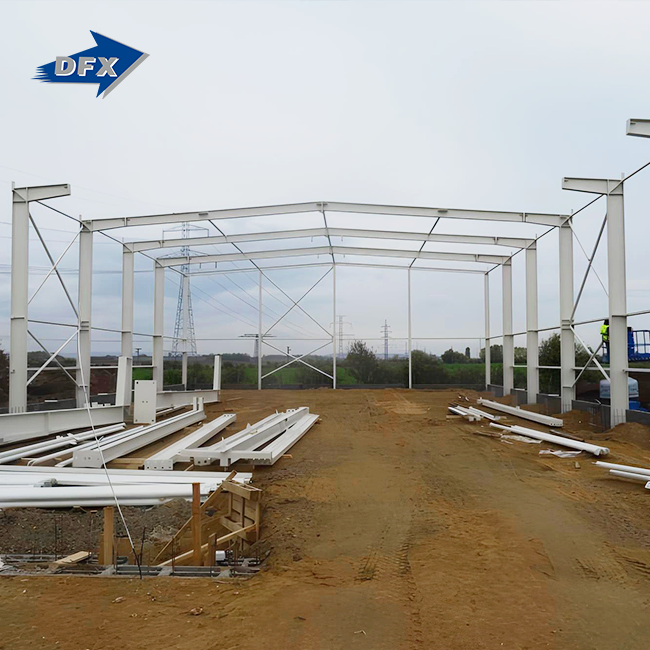
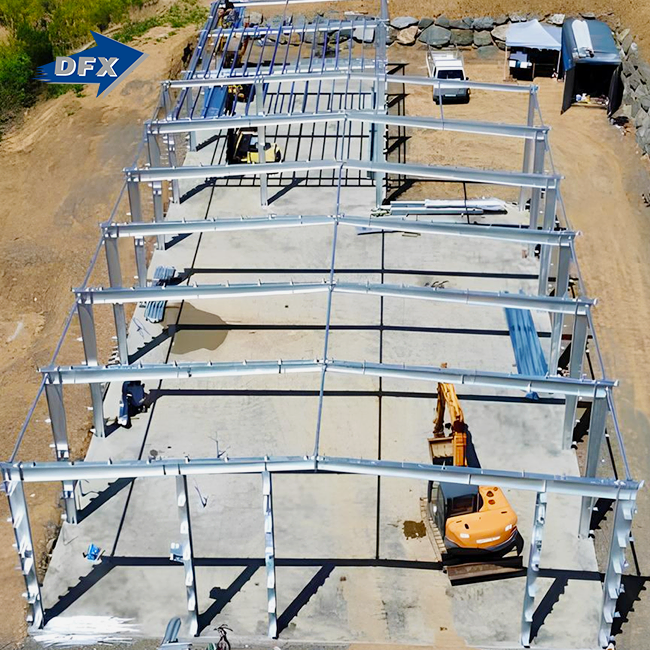
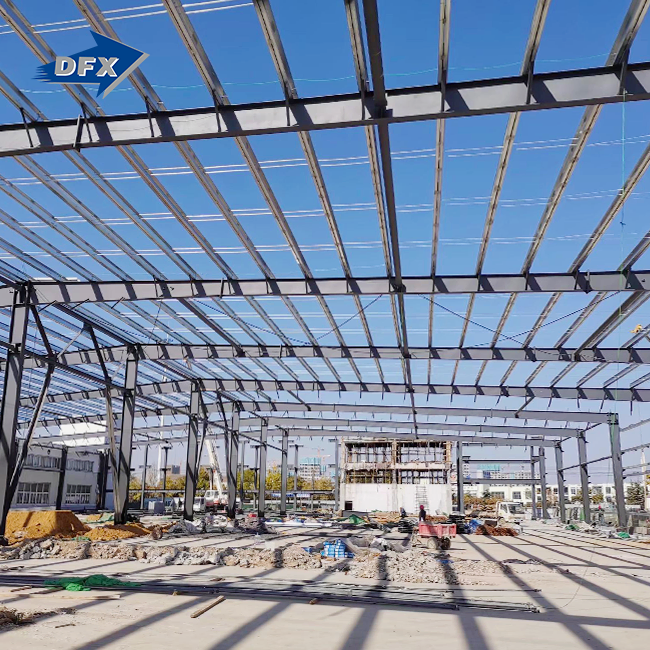
Pre-engineered steel building solutions provide strong benefits for constructing an Automotive Assembly Workshop. Faster construction timelines—usually 25–48 days from fabrication to delivery—are made possible by the use of welded H-section steel main frames made from Q235 or Q355 steel with bolted connections, which produce sturdy structures that can handle large crane loads. Without the higher cost of traditional structural steel or concrete construction, these technologies offer the broad, clear spans necessary for variable production layouts. Superior thermal performance (U-values < 0.35 W/m²K) is provided by C and Z steel purlins supporting insulated metal panels, which lowers heating and cooling costs. The modular design preserves the initial investment value by enabling future growth through bolt-on additions without interfering with existing operations.
Here are the core advantages this structural approach delivers:
- Design Flexibility: Column-free spans exceeding 30 meters accommodate overhead conveyors and crane systems throughout the facility, enabling production line reconfiguration as product portfolios evolve without structural modifications.
- Accelerated Construction: Factory fabrication of structural components under controlled conditions ensures precision and quality while site work proceeds simultaneously, reducing overall project timelines by 30-50% compared to production-line cast-in-place concrete construction.
- Seismic Resilience: Steel's inherent ductility and engineered bracing systems provide superior earthquake resistance, protecting expensive production equipment and maintaining business continuity in seismically active regions.
- Cost Predictability: Detailed engineering and off-site fabrication minimize field labour requirements and weather-related delays, keeping projects on budget and schedule compared to traditional construction methods prone to cost overruns.
Real-World Cost Optimization Examples
By using pre-engineered steel construction, choosing a rural location with favourable incentives, and putting in place a hybrid automation plan for low-volume components, a mid-sized automotive component maker in the Southeast was able to lower facility expenses by 22%. In contrast to earlier bids of $15.2 million, their 65,000-square-foot plant came online for $11.8 million, meeting production goals in six months. In another instance, an EPC contractor in the Midwest achieved set pricing that prevented cost overruns and eliminated coordination issues by negotiating turnkey agreements with equipment suppliers for installation and training. These illustrations show that well-informed procurement choices based on production-lineaccurate needs analyses regularly produce better financial results.

Conclusion
When building an automotive assembly workshop, structural specifications, equipment selection, process design, and procurement strategy must all be carefully considered. Steel structural solutions produced in accordance with ISO9001 and CE requirements offer affordable foundations that facilitate advanced production processes and expedite building schedules. Welded H-beam frameworks, insulated cladding, robotic systems, and quality inspection equipment are only a few of the categories in which the investment falls. The overall expenses are determined by the size of the facility, the degree of automation, and local conditions. Successful projects select suppliers who offer complete support during the design, fabrication, and commissioning stages in order to strike a balance between upfront capital efficiency and operating performance. Manufacturers can make well-informed judgements that safeguard capital while constructing facilities capable of long-term competitive performance by having a thorough understanding of these cost factors and optimization techniques.
FAQ
1. What is the typical payback period for an automated assembly workshop?
The payback period for automation investments varies based on production volume and labour cost differentials. Facilities producing 40+ units daily typically achieve payback within 24-36 months through labour savings and productivity gains. Lower-volume operations may require 48-60 months, making partial automation strategies more appropriate for manufacturers with uncertain demand projections or constrained capital.
2. How does steel construction compare to concrete for automotive workshops?
Steel structures offer faster construction timelines, superior clear-span capabilities for flexible layouts, and easier future expansion compared to concrete. While initial material costs may be comparable, steel's off-site fabrication reduces on-site labour and weather delays, typically completing projects 30-40% faster. The structural flexibility particularly benefits automotive applications requiring overhead crane systems and reconfigurable production lines.
3. Can existing buildings be retrofitted for automotive assembly operations?
Retrofitting existing structures depends on their original design specifications. Buildings with adequate floor loading capacity (typically 150-250 PSF for assembly operations), sufficient ceiling heights (minimum 24-30 feet for overhead systems), and robust structural framing can be adapted. Retrofit projects often cost 60-75% of new construction but may involve compromises in layout optimization and future expansion capabilities that new purpose-built facilities avoid.
Partner with DFX for Your Automotive Assembly Workshop Project
Building your next manufacturing facility requires a trusted steel structure supplier with Automotive Assembly Workshopproven expertise in industrial applications. DFX brings over 12 years of specialized experience fabricating large-span steel buildings for automotive assembly plants, equipped with six automatic welded H-beam production lines and comprehensive manufacturing capabilities reaching 20,000 tons annually. Our ISO9001 and CE certified processes ensure structural integrity and international compliance, while our turnkey service scope covers everything from initial structural design through fabrication, surface treatment, and on-site installation guidance. We understand the unique demands of production environments—heavy crane loads, flexible layouts, and rapid deployment timelines—and engineer solutions that protect your investment while supporting operational excellence. Contact our team at jason@bigdirector.com to discuss your project requirements and discover how our automotive assembly workshop solutions deliver measurable value from concept through commissioning.
References
1. Smith, J. & Anderson, K. (2022). Industrial Building Cost Analysis: Automotive Manufacturing Facilities. Journal of Construction Engineering and Economics, 48(3), 287-304.
2. Manufacturing Engineering Society. (2023). Automation Integration in Automotive Assembly: ROI and Implementation Strategies. Detroit: MES Publications.
3. National Steel Construction Institute. (2021). Pre-Engineered Steel Buildings for Industrial Applications: Design Guidelines and Cost Comparisons. Chicago: NSCI Press.
4. Wilson, R. (2023). Lean Manufacturing Facility Design: Optimizing Space and Workflow in Automotive Plants. New York: Industrial Press Inc.
5. American Institute of Steel Construction. (2022). Structural Steel Design for Heavy Industrial Applications. AISC Technical Manual Series, Volume 15.
6. Chen, L. & Martinez, P. (2023). Global Procurement Strategies for Manufacturing Equipment: Quality, Cost, and Supplier Evaluation. International Journal of Production Research, 61(8), 2456-2473.
Learn about our latest products and discounts through SMS or email