- English
- French
- German
- Portuguese
- Spanish
- Russian
- Japanese
- Korean
- Arabic
- Greek
- German
- Turkish
- Italian
- Danish
- Romanian
- Indonesian
- Czech
- Afrikaans
- Swedish
- Polish
- Basque
- Catalan
- Esperanto
- Hindi
- Lao
- Albanian
- Amharic
- Armenian
- Azerbaijani
- Belarusian
- Bengali
- Bosnian
- Bulgarian
- Cebuano
- Chichewa
- Corsican
- Croatian
- Dutch
- Estonian
- Filipino
- Finnish
- Frisian
- Galician
- Georgian
- Gujarati
- Haitian
- Hausa
- Hawaiian
- Hebrew
- Hmong
- Hungarian
- Icelandic
- Igbo
- Javanese
- Kannada
- Kazakh
- Khmer
- Kurdish
- Kyrgyz
- Latin
- Latvian
- Lithuanian
- Luxembou..
- Macedonian
- Malagasy
- Malay
- Malayalam
- Maltese
- Maori
- Marathi
- Mongolian
- Burmese
- Nepali
- Norwegian
- Pashto
- Persian
- Punjabi
- Serbian
- Sesotho
- Sinhala
- Slovak
- Slovenian
- Somali
- Samoan
- Scots Gaelic
- Shona
- Sindhi
- Sundanese
- Swahili
- Tajik
- Tamil
- Telugu
- Thai
- Ukrainian
- Urdu
- Uzbek
- Vietnamese
- Welsh
- Xhosa
- Yiddish
- Yoruba
- Zulu
How Does an Automotive Assembly Steel Workshop Improve Efficiency?
An Automotive Assembly Steel Workshop improves efficiency by providing large-span, column-free spaces that enable flexible production layouts, rapid reconfiguration of assembly lines, and seamless integration of heavy machinery like bridge cranes and robotic cells. Built with pre-engineered steel structures using high-strength Q355 H-beams and modular bolted connections, these workshops reduce construction time by 30-50% compared to traditional concrete buildings, allowing manufacturers to start production faster while minimizing downtime during future expansions or layout changes.

Introduction
At every step of the production process, the car industry needs accuracy, speed, and cost control. Steel workshops made just for putting cars together have become the backbone of modern auto manufacturing. They have a direct effect on production throughput, component quality, and operating dependability. From body-in-white welding lines to paint booths and final trim stations, these specialized buildings have to be able to handle heavy dynamic loads, complicated MEP systems, and constant changes to the plan without affecting the building's strength.
When it comes to increasing manufacturing capacity, procurement managers and project engineers have to make important choices, like how to cut down on time-to-market through workshop design. What structural features protect precision machinery and keep equipment from shaking too much? Which partner offers "turnkey" options that include designing the structure, building it, and providing help on-site? This guide looks at how Automotive Assembly Steel Workshops can help improve efficiency and what you should look for in a production partner.
Understanding the Role of an Automotive Assembly Steel Workshop
Defining Scope and Core Functions
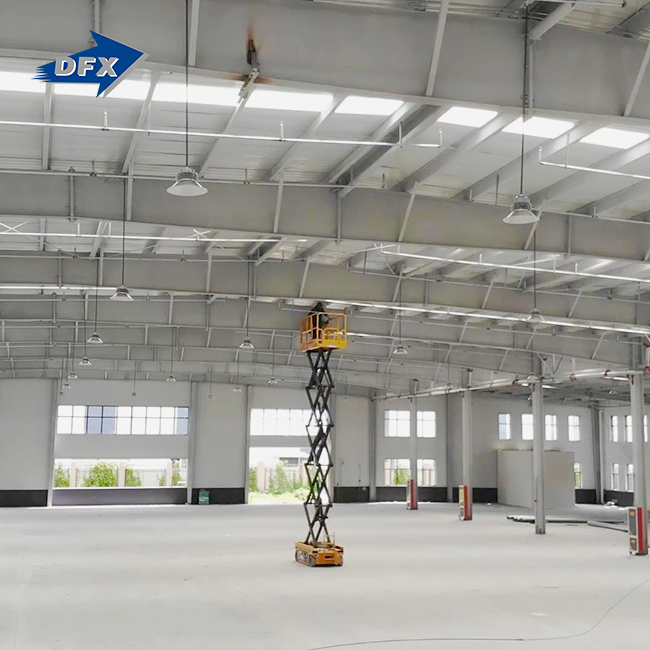
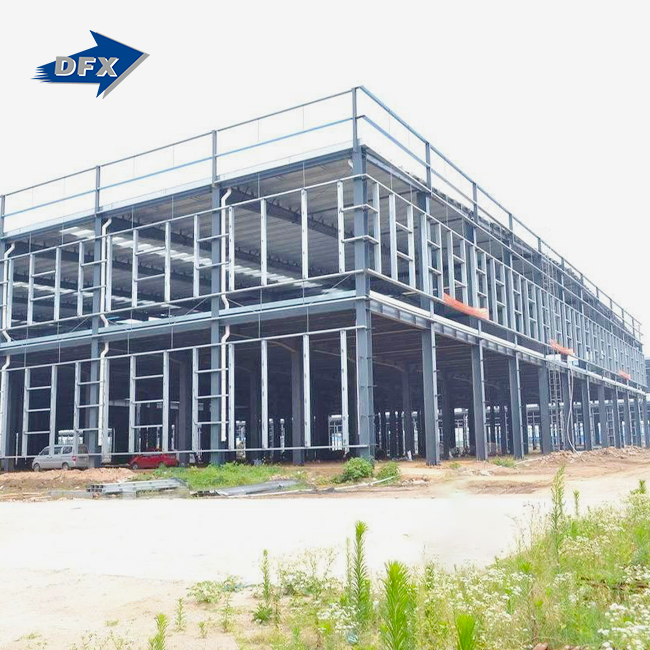
The purpose of Automotive Assembly Steel Workshops is to provide a specialized work environment designed to meet the specific needs of making cars. In contrast to general warehouses or light industrial buildings, these places handle heavy loads from 10- to 50-ton overhead bridge cranes, hanging conveyor systems that move vehicle bodies, and heavy stamping presses that make a lot of sound. The structure usually uses pre-engineered building technology or custom-welded H-beam systems to make clear spans longer than 30 meters. This gets rid of interior columns that would get in the way of flexible production layouts.
Material Selection and Structural Components
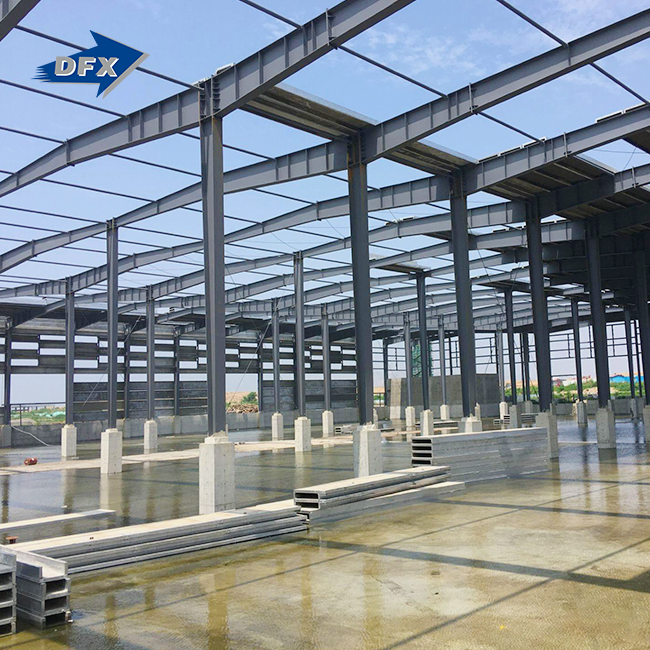
Automotive workshops that work well are built on high-grade solid steel. The steel grades Q235 and Q355, which are the same as ASTM A36 and Grade 50, have yield strengths of 235 to 355 MPa, which are strong enough for big industrial equipment. The main structure is made up of bonded H-section poles and beams that are joined together with high-strength bolts. This makes it easy to put together quickly in the field and make changes in the future. Lattice trusses can span long distances without any supports in the middle, which saves important floor space for production equipment. C and Z purlins hold up metal roof and wall cladding systems.
Integration into Manufacturing Workflows
Because they house important production steps, these workshops are connected to larger car supply lines. To protect the fine equipment next to stamping shops, the supports need to be strengthened, and vibrations need to be isolated. Paint booths need special cladding and airtight steel framing to keep the environment clean and under positive pressure. General assembly halls try to be as flexible as possible by supporting marriage stations where chassis meet bodies, AGV traffic patterns, and systems that move materials above the floor. Knowing about this combination helps people who work in buying choose Automotive Assembly Steel Workshop features that meet the needs of the manufacturing process.
Key Efficiency Challenges in Automotive Assembly Steel Workshops
Equipment Downtime and Maintenance Bottlenecks
Equipment failures that stop production have a direct effect on how efficiently goods are made and when they are delivered. When overhead cranes break down, they can stop whole assembly lines, and when welding robots break down, they slow down body shop operations right away. These problems are made worse by bad structural design. For example, crane runway beams that bend too much speed up the wear on hoist mechanisms, and mounting places for heavy equipment that don't have enough support cause premature stress cracking. Operational needs must be balanced with the fact that putting off maintenance increases the amount of downtime that will happen in the future.
Workforce Skill Gaps and Safety Compliance
Modern car manufacturing is very complicated, so techs need to be skilled enough to run CNC machines, program robotic cells, and keep hydraulic systems in good shape. A lack of workers in specialized trades makes them less efficient, especially when demand for their products goes up. Safety rules make things even more complicated. For example, OSHA rules say that there must be certain amounts of space around moving equipment, that elevated work platforms must have enough fall protection, and that strict lockout/tagout procedures must be followed. Workshops that weren't built with these needs in mind will have to pay a lot to fix up and have problems that stop them from working, which takes away from any productivity gains.
Structural Limitations and Layout Inflexibility
Facilities that were built using traditional methods don't always have the flexibility that is needed for current car production. Concrete column grids make it hard to move equipment around and make it harder to change the layout when companies release new car models or production technologies. Ceilings that are too low make it impossible to install multi-level systems for moving materials, and floors that are too light make it impossible to add heavier stamping presses or more advanced assembly equipment. Because of these fundamental problems, producers have to either lower the efficiency of their production or spend a lot of money to make their facilities bigger.
Proven Strategies to Improve Efficiency in Automotive Assembly Steel Workshops
Implementing Lean Manufacturing and Bottleneck Analysis
Lean principles focus on getting rid of waste at every stage of the production process. This directly boosts the efficiency of the workshop. Value stream mapping finds activities that don't add value, like moving materials around too much, checking quality twice, and storing goods when they're not needed. The bottleneck-breaking approach systematically deals with problems that are slowing down throughput, like not enough welding stations or cranes that can do the job. When these methods are used in steel workshops that are properly built, they have a bigger effect because the structure allows for quick changes without a lot of downtime.
Buildings that are flexible allow for ongoing efforts to make things better. Modular steel framing has link places that are already planned out so that they can be used when the production line grows. Wide column spacing makes it easier to move equipment, and strengthened floor sections make it possible to add heavy machinery without having to change the base. These design features turn the ideas behind lean manufacturing into real-world improvements to how things are done.
Balancing Automation with Manual Operations
When robots are integrated into high-precision, repeated jobs like welding body panels and painting, they make the work much more efficient. Automated material handling systems cut down on the cost of labor and keep parts from getting damaged while they're being moved. But deliberate implementation is more important than automating everything. Skilled manual labor is still needed for complex assembly tasks that need dexterity and the ability to solve problems, but maintenance and troubleshooting of automated systems need specific technical knowledge.
Designing a workshop must take both methods into account. Robotic gantries and hanging conveyor systems are held up by high-bay areas with strengthened ceilings. Adjacent zones have enough room for manual tasks that are designed to be comfortable and have easy access to materials. The electrical infrastructure provides enough power for robotic cells while keeping the safe routing of cables away from foot traffic. This balanced approach gets the most out of automation without adding new safety risks or bottlenecks.
Establishing Preventive Maintenance Protocols
Preventive repair makes equipment last longer and cuts down on unplanned breaks that can throw off production plans. The design of a steel Automotive Assembly Steel Workshop has a direct effect on how well it is maintained. Enough space above allows a crane to reach large pieces of equipment so that they can be replaced. Technicians can get to important systems without stopping work in busy production areas thanks to wide service paths. Maintenance bays with heavy-lifting tools make planned overhauls easier while not taking up too much room on the production floor.
Maintenance tasks are supported by structural factors. Access platforms with reinforcements make working around high tools safe. When the internal ceiling systems aren't enough, cranes can help remove the equipment because the roof panels are removable. Electrical and compressed air utilities have isolation points that are easy to get to and make lockout/tagout procedures faster. These design elements turn maintenance from something that slows down production into something that is managed and keeps things running smoothly over time.
Innovative Technologies and Solutions Driving Workshop Efficiency
Robotic Welding and Automated Material Handling
Modern robotic welding units make sure that the standard is always the same while speeding up output. Six-axis robots with adaptive seam tracking can keep the torch precisely positioned even if the fit of a part changes slightly. This lowers the amount of rework and scrap that needs to be done. AGVs, overhead monorails, and roller conveyors are examples of automated material handling systems that move parts between workplaces without any help from a person. This prevents damage from handling and lowers the cost of labor.
These technologies must be able to work with steel workshop buildings. Robotic cells need to be mounted on a floor that is strengthened and can withstand dynamic forces when moving quickly forward and backward. Overhead material handling systems put a lot of weight on certain hanger points on roof structures, which means that truss chords need to be tightened or extra beams need to be added. Proper structural design makes sure that these systems work effectively without putting the building at risk or needing expensive strengthening after installation.
Real-Time Data Analytics and Process Optimization
Manufacturing execution systems get data from production equipment in real time and give us useful information that helps us work more efficiently. Bottlenecks can be found before they affect overall throughput by keeping an eye on cycle times at each workstation. Equipment usage measures show which assets aren't working well and need to be fixed, or the process needs to be changed. Quality data collected during production lets you fix problems quickly, which lowers the cost of scrap and repairs.
To use these systems, you need a strong IT infrastructure that is built into the design of the Automotive Assembly Steel Workshop. Networked sensors and edge computing devices can work with enough power. Structured cable systems keep high-voltage power lines away from data networks so that electromagnetic waves don't conflict. Equipment rooms with climate control keep fragile electronics safe from high temperatures and airborne pollutants that are common in industrial settings. These pieces of infrastructure let makers use data analytics without having to make expensive changes to their buildings.
Case Study: Measurable Efficiency Improvements
A North American car supplier just finished building a 12,000-square-meter steel workshop that is just for putting together battery trays. The building has 35-meter clear spans supported by welded H-beam frames. This allows for flexible production plans that can change as electric car designs do. Overhead bridge cranes that can lift up to 20 tons serve many workstations without having fixed crane bays that would make it hard to place equipment.
When robotic MIG welding cells were put in place, cycle time was cut by 40% compared to manual welding. With automated material handling, there was no need for forklift traffic in areas where work was being done. This made the workplace safer and cut part damage by 65%. Real-time tracking of production found slowdowns in the staging of parts, which led to changes in the structure that raised total throughput by 28%. It only took 11 months to finish the project from the time the plan was approved to the time production began, which allowed the seller to meet tight customer deadlines.
Choosing the Right Automotive Assembly Steel Workshop Partner
Evaluating Supplier Capabilities and Certifications
When looking for a manufacturing partner, it's important to think about their professional skills, quality processes, and project experience. Getting ISO 9001 approval shows that you are committed to consistent quality management, and getting CE marking shows that you meet European safety and performance standards. ASTM material compliance makes sure that the mechanical qualities of structural steel are met. In addition to certifications, you should look at the supplier's list of completed automotive projects. Facilities that work with major OEMs or Tier 1 suppliers show that they can handle difficult tasks.
Manufacturing ability is very important. Suppliers with more than one automatic H-beam production line can meet the needs of big projects without delaying the plan and provide uniform quality. Being able to make C/Z purlins, sandwich panels, and corrugated sheets in-house is an example of vertical integration, which makes purchasing and quality control easier. Enclosed production sites keep steel parts out of the weather while they are being made, which stops rust problems that hurt the long-term performance of structures.
Turnkey Solutions and Design Support
Full project delivery makes it easier for buying teams and building managers to work together. Turnkey suppliers offer a wide range of services, including structural engineering, fabrication, surface treatment, logistics, and help with installation. With in-house design skills, unique production needs can be met through customization, such as reinforced areas for heavy equipment, specialized crane runway systems, or connection with existing facilities.
Problems in the field that slow down the project's completion are kept to a minimum by having detailed installation drawings and technical support on-site. Expert providers know how to deal with common problems during assembly and make sure that connection details make it easier to put together without affecting the structure's performance. Complex truss sections can be pre-assembled in the workshop, which checks the fit-up accuracy of the parts before they get to the job site and avoids expensive changes made in the field. You can measure the value of these services by how quickly they speed up construction schedules and lower the risk of quality problems.
Financial Considerations and Delivery Timelines
The total costs of owning a project are included in its economics, not just the initial purchase price. Steel structures have good lifecycle economics because they don't need much maintenance, can be designed in a way that allows for future growth, and can be built quickly, which lowers the cost of financing. With normal wait times of 25 to 48 days, made-to-order production lets you plan your project around the schedule of building, so you don't have to worry about late material deliveries that cost money in storage fees or damage from the weather.
Terms of payment and warranties protect project assets. Payment schedules that are tied to fabrication milestones and delivery acceptance keep cash flow in line with the progress of the project. If problems happen during the first few days of operation, you can get help from comprehensive structural warranties that cover both material flaws and poor workmanship. Clear records of coating specs, material certifications, and quality inspections back up warranty claims and show that the supplier is responsible.
Conclusion
Automotive Assembly Steel Workshops make factories more efficient by using building plans that are best for today's industrial needs. Large-span, column-free plans make it possible to change the way production is set up to fit new car designs and technologies. High-strength steel framing holds up heavy loads of equipment while reducing the amount of vibration that hurts sensitive machinery. Using modular building techniques shortens the time it takes to finish a job, which gives the company a competitive edge.
If you choose the right manufacturing partner, these perks will become real in your business. When suppliers combine their technical know-how with a wide range of services and years of project experience, they can offer full solutions that stay within budget and time limits while also providing long-lasting structural performance. Automotive companies can stay competitive in the market and improve their efficiency over time by designing their facilities in a way that is in line with lean manufacturing principles and new automation technologies.
FAQ
1. How does the steel structure handle vibration from heavy stamping presses?
Independent foundation isolation separates the stamping equipment from the building structure, which stops vibrations from being sent to the building. In the steel frame, heavy-duty H-beams with localized diagonal bracing and tuned mass dampers absorb leftover vibrations. This keeps nearby precise equipment safe and stops fatigue-related structural failures.
2. Can the workshop support future expansion without halting production?
Knock-out wall panels and pre-drilled connection points on end columns are used in modular steel construction. By bolting directly to existing framing, expansion sections can increase capacity without having to shut down production areas for long periods of time.
3. What is the expected lifespan in humid automotive painting environments?
When you combine marine-grade coating systems—epoxy zinc-rich primer, epoxy micaceous iron oxide intermediate, and polyurethane topcoat—with advanced surface preparation up to Sa 2.5 standards, the corrosion resistance is more than 50 years, even in paint shops with a lot of humidity.
4. How do you ensure the roof supports heavy suspended conveyors?
When they are designed, structural analysis models take specific point loads from conveyor makers into account. Stronger truss chords and secondary beams placed at hanger sites handle heavy loads and keep the conveyor from deflecting too much, which would throw off its alignment.
Partner with DFX for Your Next Automotive Assembly Steel Workshop Project
DFX excels in providing full steel structure solutions that are specifically designed to meet the needs of the car production industry. We are an experienced Automotive Assembly Steel Workshop seller with more than 12 years of experience in the field. We offer a full range of services, from designing the structure to guiding the installation on-site. Our enclosed 40,000-square-meter production center has six automated H-beam lines and more than 200 skilled techs working there. This makes sure that quality is always high and that deliveries are always on time.
We can make welded H-section frames out of Q235 and Q355 steel, bolted connections for quick assembly in the field, and full cladding systems with sandwich panels and corrugated roofing. Our ISO 9001 and CE certifications show that we follow international quality standards. For example, ASTM material compliance makes sure that structural steel has the right mechanical properties. Lead times for most projects are between 25 and 48 days, which helps meet tight construction schedules without sacrificing quality.
We want to talk to project managers, sourcing experts, and engineering leaders about how our Automotive Assembly Steel Workshop products can help you make your manufacturing more efficient. Email our technical team at jason@bigdirector.com to set up a meeting, get full-price quotes for your project, or look into creating a unique facility that fits your exact production needs. These facilities serve clients in North America, Europe, and the Asia-Pacific region.
References
1. American Institute of Steel Construction. (2017). Steel Design Guide 7: Industrial Buildings—Roofs to Column Anchorage. AISC Publications.
2. Mehta, M., Scarborough, W., & Armpriest, D. (2020). Building Construction: Principles, Materials, and Systems (3rd ed.). Pearson Education.
3. Society of Automotive Engineers. (2019). Automotive Manufacturing Facilities: Design and Construction Standards. SAE International Technical Paper Series.
4. European Convention for Constructional Steelwork. (2016). Design of Steel Structures for Buildings in Seismic Areas. ECCS Publication No. 135.
5. Womack, J.P., Jones, D.T., & Roos, D. (2007). The Machine That Changed the World: The Story of Lean Production. Free Press.
6. International Organization for Standardization. (2018). ISO 14122-3: Safety of Machinery—Permanent Means of Access to Machinery—Part 3: Stairs, Stepladders and Guardrails. ISO Standards Catalogue.
Learn about our latest products and discounts through SMS or email