- English
- French
- German
- Portuguese
- Spanish
- Russian
- Japanese
- Korean
- Arabic
- Greek
- German
- Turkish
- Italian
- Danish
- Romanian
- Indonesian
- Czech
- Afrikaans
- Swedish
- Polish
- Basque
- Catalan
- Esperanto
- Hindi
- Lao
- Albanian
- Amharic
- Armenian
- Azerbaijani
- Belarusian
- Bengali
- Bosnian
- Bulgarian
- Cebuano
- Chichewa
- Corsican
- Croatian
- Dutch
- Estonian
- Filipino
- Finnish
- Frisian
- Galician
- Georgian
- Gujarati
- Haitian
- Hausa
- Hawaiian
- Hebrew
- Hmong
- Hungarian
- Icelandic
- Igbo
- Javanese
- Kannada
- Kazakh
- Khmer
- Kurdish
- Kyrgyz
- Latin
- Latvian
- Lithuanian
- Luxembou..
- Macedonian
- Malagasy
- Malay
- Malayalam
- Maltese
- Maori
- Marathi
- Mongolian
- Burmese
- Nepali
- Norwegian
- Pashto
- Persian
- Punjabi
- Serbian
- Sesotho
- Sinhala
- Slovak
- Slovenian
- Somali
- Samoan
- Scots Gaelic
- Shona
- Sindhi
- Sundanese
- Swahili
- Tajik
- Tamil
- Telugu
- Thai
- Ukrainian
- Urdu
- Uzbek
- Vietnamese
- Welsh
- Xhosa
- Yiddish
- Yoruba
- Zulu
Steel Structure Shopping Mall vs Concrete Mall: Which Is Better?
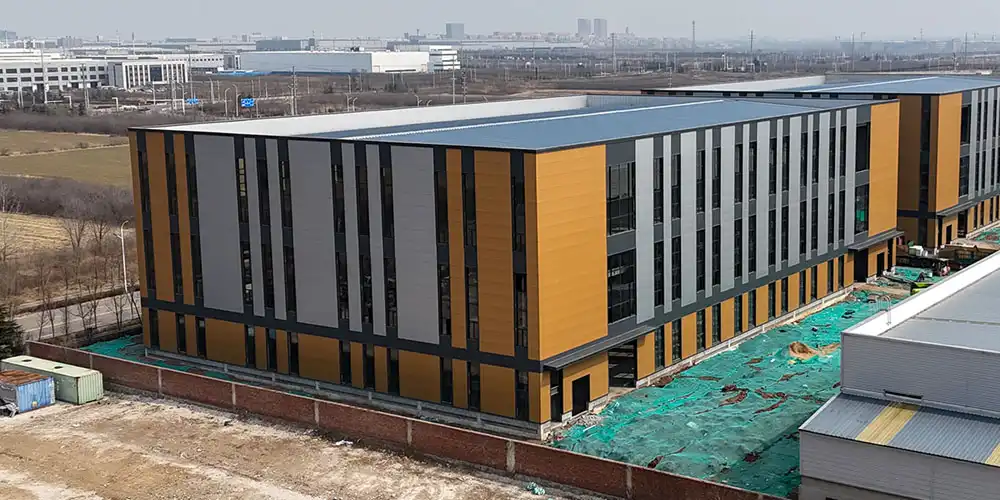
One of the most important choices procurement managers and project engineers have to make when planning a modern retail development is whether to build a shopping mall with a steel structure or a standard concrete mall. Steel structure shopping malls are the best choice for difficult business projects because they are quick to build, allow for a lot of design options, and save money in the long run. Instead of concrete, steel frames use High-Strength Low-Alloy (HSLA) steel, usually Grade Q355B or ASTM A572 Gr. 50, to make big, column-free spaces that change the way people shop and cut the time it takes to get products to market by 30 to 50 per cent. Because of this clear advantage, steel buildings are especially appealing to business-to-business clients who want to make money quickly and have flexible plans in competitive retail markets.

Introduction
The shopping centre's structure affects project schedules, operating costs, and renter satisfaction throughout its lifespan. Qingdao Director Steel Structure Co., Ltd. has witnessed building workers, EPC contractors, and real estate developers realise that material choice affects investment returns and market competitiveness. This detailed comparison examines environmental responsibility, building efficiency, longevity, and system lifetime cost. Procurement experts converting industrial warehouses, building mixed-use retail complexes, or expanding commercial spaces must understand these variations. It provides the technical clarity they need to align building procedures with strategic business goals and stakeholder expectations.
Understanding Steel-Structure Shopping Malls and Concrete Malls
What Defines a Steel Structure Shopping Mall?
Steel structure shopping malls use prefabricated H-beams, box columns, and lattice trusses as load-bearing structures. These systems use high-strength low-alloy steel with yield strengths over 345 MPa. Steel is protected from rust via hot-dip galvanisation or zinc-rich epoxy primers. Steel-framed business building features a customer-focused plan. Steel and concrete composite floor decks improve soundproofing and diaphragm action. Off-site production and on-site base work are simultaneous in this building process, solving real estate development issues. This greatly reduces time-to-market. Its increased strength-to-weight ratio allows it to handle huge clear spans for flexible retail layouts, critical tenant needs, and enormous atriums, which concrete systems cannot do cost-effectively.
Traditional Concrete Mall Construction
Columns, beams, and slabs made of reinforced concrete that are formed on-site using formwork methods are what make concrete malls work. Portland cement, aggregates, and steel reinforcement bars (rebar) ordered according to structural formulas are some of the traditional building elements. In order to build something, steps must be done in a certain order. For example, the base must cure before the columns can be shaped, and the floor slab must be poured. Even though concrete buildings are naturally fireproof and can be built using standard methods, they are limited in space because the columns have to be closer together, and they need longer curing times, which makes project plans much longer than with prefabricated options.
Key Comparison Dimensions: Steel Structures vs. Concrete Malls
Construction Timelines and Project Efficiency
Prefabrication completely changes how projects are delivered. When steel parts are made in a controlled factory setting, site preparation and member fabrication can happen at the same time. This cuts schedules by 30 to 50 per cent compared to concrete buildings. Our 40,000-square-metre production plant for Director Steel has six automatic welded H-beam lines that make about 20,000 tons of steel every year. The dimensions are accurate to within ±2mm, which is checked by laser scanning before assembly. This accuracy means that on-site adjustments, which can take a long time in concrete buildings, are no longer needed. Meanwhile, concrete buildings need to be poured one layer at a time and then left to cure for a certain amount of time (usually 28 days for full strength). The weather can change the plans, which can make the wait time unpredictable. When project managers have to meet tight deadlines for deliveries, steel's predictability is very helpful. For example, earlier tenant occupancy means faster income growth and a better return on investment.
Durability and Structural Performance
Both technologies solve environmental issues differently, yet have lengthy lifespans when properly designed and operated. Steel buildings are flexible and can withstand great earthquake energy without breaking down. This is great for earthquake-prone areas. Quality standards like AISC 360 and Eurocode 3 protect the load path, and intumescent layers give fire resistance scores that match concrete's intrinsic safety. Director Steel's ISO9001 and CE standards use ultrasonic testing and magnetic particle inspection on full-penetration butt welds that meet AWS D1.1 structural welding guidelines to ensure structural strength. Concrete thrives in coastal dampness without coatings. ISO 1461 hot-dip galvanised steel resists salt rust. Steel is one-third the weight of concrete, so it minimises the need for foundations, especially in weaker soil.
Cost Analysis: Initial Investment and Lifecycle Economics
At first glance, the cost of materials tends to favour concrete, but a full analysis of the project's economy shows that steel is better. Material price differences were balanced out by lower base costs due to lighter structural loads, faster building plans that cut down on finance costs, and fewer workers needed for prefabricated assembly. When engineering leaders look at lifetime costs, they know that steel is easier to maintain than concrete. For example, composite slabs with vibration isolators don't need as much work as concrete, which can crack, spall, and need fixes for reinforcement corrosion. Our building cladding systems work well with MEP and façade systems, making the merging process easier, which can be hard for concrete projects. Project-based production models eliminate the costs of keeping supplies and ensure that customised solutions meet the needs of each place exactly.
Environmental Impact and Sustainability Metrics
As companies try to get green building certifications, sustainability issues become more important in the buying process. Steel buildings are great for the environment because they can be recycled almost completely. Steel that has reached the end of its useful life keeps its value and can be used again without losing any of its quality. Precision in the factory cuts down on material waste, which is beneficial for the energy economy. Modular building also reduces site disturbance and construction trash. Making cement, which is used to make concrete, releases a lot of carbon into the air. Steel, on the other hand, can be recycled and used efficiently, which is in line with business environmental responsibility goals. Optional certifications like COC and PVOC show that foreign projects are environmentally friendly, meeting the certification needs of procurement managers in a range of legal settings.
Strategic Benefits of Steel Structure Shopping Malls for B2B Clients
Design Flexibility and Future Expansion Capability
Large-span capability transforms interior design. Retail stores and high-traffic areas benefit from the large, open spaces provided by portal rigid frames or space frame roofs. Their structural rigidity makes them ideal for windy environments. Owners can adjust partition walls to create a way for new renters or change floor plans without changing the building because there are fewer internal structural walls. This is great since retail ideas change frequently. Manufacturers and site growers prefer this flexibility since it enables them to adjust manufacturing line layouts as needed. Urban mixed-use structures support high-rise apartment and office skyscrapers with steel box columns and hefty transfer trusses for shopping podiums. This maximises site space in crowded metropolitan centres when land costs necessitate vertical construction.
Modular Construction Benefits for Complex Commercial Demands
Turnkey solutions that encompass double-slope shopping centre steel structure design, manufacture, and MEP/facade coordination simplify purchase. Director Steel's in-house architectural design and detailing service helps customers from concept to manufacture and installation. This comprehensive approach recognises that building firms need reliable suppliers who can assist with planning, quality control, and installation using unified project management frameworks. Modular solutions are best for retail centres, shopping malls, and commercial plazas that require gradual delivery, tenant fit-out during construction, and operational flexibility. Modular steel building simplifies the supply chain and gives EPC contractors sole responsibility for infrastructure projects.
Maintenance Requirements and Operational Efficiency
Protective coating systems are the major focus of preventive maintenance for steel buildings. Checking the Dry Film Thickness on a regular basis with magnetic pull-off gauges guarantees life in corrosive urban environments. Composite floor decks successfully block out noise from people walking and HVAC movements, making shopping more enjoyable without the need for ongoing acoustical treatments. Concrete shops could get concrete cancer, which is when rebar corrosion causes the concrete to flake off. This would require expensive fixes that would stop tenants from doing their business. Operations managers like that steel has predictable repair plans and needs little downtime, which keeps income streams going and keeps tenants happy. Checking the soundness of key moment connections with regular checks instead of invasive concrete testing methods is possible by torque tensioning high-strength bolt assemblies.
Procurement Insights: Selecting Certified Suppliers and Partners
Choosing a supplier that focuses on manufacturing capabilities, quality systems, and expert help depth is a key part of completing successful steel building projects. People who work in procurement should give more weight to producers that can show they follow the ISO quality management system and have CE certification, which means they meet foreign and European standards. Director Steel has 200 well-trained workers and state-of-the-art facilities, such as two sandwich panel lines, two C/Z section steel lines, and twenty corrugated steel sheet lines. These facilities show that Director Steel can safely meet the needs of big commercial buildings. Supplier partnerships that offer full services, from making structural steel to roofs and covering systems to windows and doors, make it easier to coordinate, lower the risk of interface issues, and speed up delivery. When working with well-known makers in China, you can save money without sacrificing quality as long as they follow strict quality control procedures like checking for errors in measurements and testing for resistance to rust.
How to Decide: Which is Better for Your Shopping Mall Project?
Conducting a Thorough Project Needs Assessment
Decision frameworks start with a full review of all the project parameters. The size of the project affects how efficiently the materials are used. Steel's benefits become even more noticeable in large-span projects with more than 30 meters of column spacing, where concrete becomes physically useless and expensive. When planning a budget, it's important to consider not only the unit prices of materials but also the total cost of the project, which includes borrowing costs during building. Location is very important. For example, steel is more flexible in seismic zones, all materials must be protected against rust in coastal areas, and places with difficult soil conditions benefit from steel's lower base loads. When properly designed, environmental challenges like harsh industrial environments, extreme temperature changes, or high humidity guide the choice of protective systems instead of ruling out either structure method completely.
Quantitative Evaluation Framework
Structured comparison matrices help engineering directors look at things like expected service life, maintenance intervals, and environmental resistance. They also look at cost drivers like initial construction, financing during the build, lifecycle maintenance, and expansion plans. Finally, they look at sustainability indicators like embodied carbon, recycling, waste generation, and certification pathways. Steel structures usually do very well in terms of construction speed measures. They can finish projects 30–50% faster, which means that procurement managers can start making money earlier and do better IRR estimates. Although current defensive technologies have mostly gotten rid of this benefit, concrete may be better in places where special coatings would cost a lot for a steel system. Agricultural project managers who are looking at adding on to livestock buildings or manufacturing facilities know that steel's flexible structure makes it easier to match business development timelines for phased growth than concrete's single-piece construction.
Expert Recommendations for Long-Term Project Success
Successful commercial projects strike a balance between urgent building needs and operating freedom that supports changing business models. Speed to market has a huge effect on retail projects because tenants' promises depend on being sure of when the goods will arrive, and the times that leases start determine how much money the project will make. When compared to weather-dependent concrete processes, steel buildings have a much lower chance of not finishing on time. Future scalability should be carefully thought through. Steel makes it easy to grow by adding more bays or vertical additions, which saves original investments as companies grow. Infrastructure workers who are in charge of public buildings or government projects should look for ways to brand their work, since architects who want to make unique buildings often choose steel's design freedom over concrete's physical limitations. Building partnerships with reliable makers that allow engineers to work together on projects ensures that technical solutions are tailored to the specific problems of each project and don't force designs into standard models that limit performance or raise costs for no reason.
Conclusion
Steel structure shopping malls have many benefits, including faster building, more design options, lower costs over their lifetime, and less impact on the environment. These benefits are in line with current commercial development objectives. The 30–50% shorter timeline, large-span features that allow for flexible store layouts, and easier future growth options all help to solve problems that procurement managers, engineering directors, and project developers face at all stages of a project's lifecycle. Traditional concrete buildings are still useful in some situations, but steel is the better choice for most modern store developments because it can be made in modules, is long-lasting with the right protection systems, and can be recycled in its entirety. Twelve years of manufacturing excellence and dedication to international quality standards at Qingdao Director Steel Structure Co., Ltd. show the kind of solid partnerships that are needed to see a project through from the idea stage to the finished product.
FAQ
1. How does the fire resistance of steel structures compare to that of concrete malls?
Steel that isn't protected loses strength at high temperatures, but passive fire protection, like intumescent paints or cementitious sprays, can get fire ratings of 2 to 4 hours, which is the same as concrete safety standards. These coating systems are put through thorough testing according to ASTM E119 or ISO 834 standards. When properly specified and applied, they provide the same level of safety for people and property as concrete buildings.
2. Is steel construction viable for malls in coastal environments?
Of course. Hot-dip galvanisation according to the ISO 1461 standard or marine-grade paint systems are good ways to stop rusting caused by salt. Checking the dry film thickness on a regular basis during maintenance intervals makes sure that protective systems stay in good shape. This way, they can last as long as installations in inland areas without having to worry about premature wear and tear, as long as the engineering specs take weather risk into account properly.
3. What drives steel's faster return on investment?
A 30–50% drop in construction speed lets tenants move in and start making money earlier, which directly improves IRR estimates. Additionally, lower financing costs during shorter building times, lower foundation costs due to lighter structure loads, and minimal business disruptions during future growth all contribute to long-term financial benefits that extend beyond initial construction savings.
4. Can internal layouts change after initial construction?
Steel's ability to span big areas means that there are fewer interior structural walls, which lets the floor plan be changed completely without having to change the structure. It's easy for owners to rearrange partition walls to make room for new tenants, adapt to changing store ideas, or change the spaces reserved for anchor tenants. However, operational flexibility and concrete structures rarely match without expensive structural changes that make it harder to adapt to changing market conditions.
Partner with DFX for Your Next Retail Development Project
Director Steel Structure Co., Ltd. is ready to make your business dreams come true with approved steel structure shopping mall options that combine top-notch engineering, precise manufacturing, and full project support. Our production sites in Qingdao, China, are ISO 9001 and CE certified. They offer complete services for retail centres, shopping malls, and business plazas around the world, including structural design, fabrication, MEP coordination, and the integration of façade systems. We have been making steel structure shopping malls for over twelve years and have worked with building companies, EPC firms, and real estate developers. We have the technical knowledge and production ability that your project needs. Get in touch with Jason at jason@bigdirector.com to talk about your specific needs, ask for detailed engineering consultations, or learn more about how our integrated design-fabrication-installation approach makes procurement easier while ensuring quality, schedule certainty, and competitive pricing throughout the lifecycle of your project.
References
1. American Institute of Steel Construction (2016). Specification for Structural Steel Buildings (ANSI/AISC 360-16). Chicago: AISC.
2. European Committee for Standardisation (2005). Eurocode 3: Design of Steel Structures - Part 1-1: General Rules and Rules for Buildings. Brussels: CEN.
3. Lawson, R.M. & Ogden, R.G. (2008). Sustainable Steel Construction. Journal of Constructional Steel Research, 64(11), 1194-1209.
4. Chen, W.F. & Lui, E.M. (2005). Handbook of Structural Engineering, Second Edition. Boca Raton: CRC Press.
5. International Organization for Standardisation (2015). ISO 1461: Hot-Dip Galvanised Coatings on Fabricated Iron and Steel Articles. Geneva: ISO.
6. American Welding Society (2015). AWS D1.1/D1.1M: Structural Welding Code - Steel. Miami: AWS.
Learn about our latest products and discounts through SMS or email