- English
- French
- German
- Portuguese
- Spanish
- Russian
- Japanese
- Korean
- Arabic
- Greek
- German
- Turkish
- Italian
- Danish
- Romanian
- Indonesian
- Czech
- Afrikaans
- Swedish
- Polish
- Basque
- Catalan
- Esperanto
- Hindi
- Lao
- Albanian
- Amharic
- Armenian
- Azerbaijani
- Belarusian
- Bengali
- Bosnian
- Bulgarian
- Cebuano
- Chichewa
- Corsican
- Croatian
- Dutch
- Estonian
- Filipino
- Finnish
- Frisian
- Galician
- Georgian
- Gujarati
- Haitian
- Hausa
- Hawaiian
- Hebrew
- Hmong
- Hungarian
- Icelandic
- Igbo
- Javanese
- Kannada
- Kazakh
- Khmer
- Kurdish
- Kyrgyz
- Latin
- Latvian
- Lithuanian
- Luxembou..
- Macedonian
- Malagasy
- Malay
- Malayalam
- Maltese
- Maori
- Marathi
- Mongolian
- Burmese
- Nepali
- Norwegian
- Pashto
- Persian
- Punjabi
- Serbian
- Sesotho
- Sinhala
- Slovak
- Slovenian
- Somali
- Samoan
- Scots Gaelic
- Shona
- Sindhi
- Sundanese
- Swahili
- Tajik
- Tamil
- Telugu
- Thai
- Ukrainian
- Urdu
- Uzbek
- Vietnamese
- Welsh
- Xhosa
- Yiddish
- Yoruba
- Zulu
The Best Types of Insulated Steel Garage
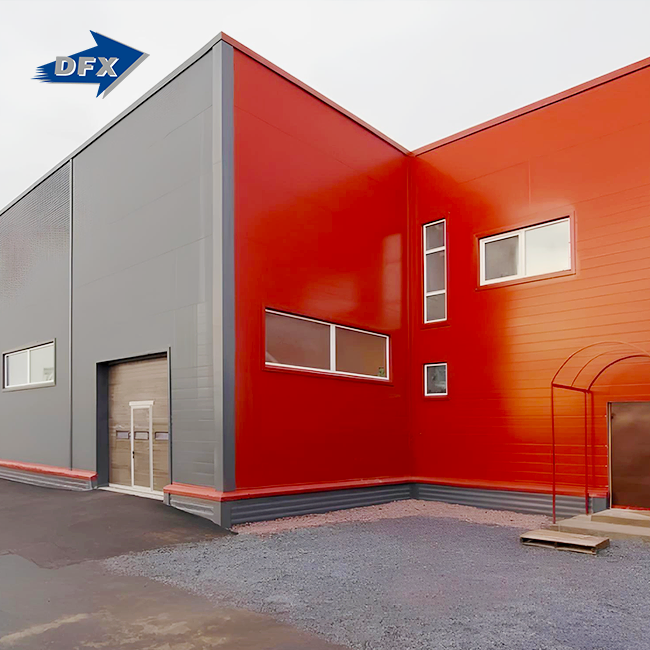
When evaluating building solutions for equipment storage, vehicle parking, or workshop facilities, an insulated steel garage stands out as a superior choice. This prefabricated structure combines a robust steel framework—typically constructed from light H-section or square tube steel—with composite sandwich panels featuring closed-cell polyurethane or polystyrene foam cores. Unlike conventional single-skin metal buildings, these garages deliver exceptional thermal efficiency, moisture control, and structural rigidity. They solve critical challenges such as condensation damage, temperature instability, and acoustic pollution while offering rapid installation and long-term durability. With R-values ranging from R-12 to R-32 depending on panel thickness, insulated steel structures dramatically reduce HVAC costs and create comfortable, controlled environments suitable for precision work, cold-chain logistics, and industrial applications.

Understanding Insulated Steel Garages
What Defines an Insulated Steel Garage?
Insulated steel garages are high-performance buildings with galvanized steel structures and factory-bonded composite panels. A thermally efficient envelope is created by sandwiching insulation between two coated steel skins. The insulating core, typically closed-cell polyurethane foam at 40-42 kg/m³, achieves 0.022 W/m·K thermal conductivity. The outer steel skins, usually 24 to 29 gauge high-tensile steel, are galvanized with AZ150 Galvalume or G90 for corrosion protection and coated with PVDF or silicone-modified polyester to resist chalking and fading for 40+ years.
The dew point is moved outside internal cavities to prevent "sweating" in typical metal structures, safeguarding stored automobiles, tools, and sensitive equipment. Bonded panels give the frame shear strength, outperforming sheet metal skins.
Core Technical Advantages
Understanding technological advantages helps procurement managers justify investments. Insulated steel garages alleviate operational issues that conventional constructions cannot.
Thermal stability is a major benefit. R-values between R-12 and R-32 are achieved with panel thicknesses of 50mm to 150mm, reducing heating and cooling loads. Automotive repair businesses need heat management to cure paint properly, while precision machining workshops need it to maintain equipment tolerances. Standardized environmental conditions preserve inventory quality and equipment life.
Another important benefit is moisture management. The insulated enclosure reduces internal condensation that accelerates car, tool, and machinery corrosion. Cold-chain logistics and high-humidity situations where moisture penetration concerns product integrity benefit from this protection.
These buildings are also structurally distinct. The excellent strength-to-weight ratio allows clear spans of 30 metres without internal columns, maximizing production, warehouse, and equipment storage floor area. The panels' stiffness reduces the frame needs compared to conventional construction.
Fire safety certificates boost value. Smoke-suppressant chemicals in the foam core give quality panels B1 or A2 fire ratings, outperforming wood-frame detached garages. ASTM A792 steel sheet requirements and ISO 9001 maintain panel lamination quality across production batches.
Top Types of Insulated Steel Garages on the Market
Polyurethane Panel Systems
Current market leaders in thermal performance are polyurethane (PU) foam cores. The panels' thermal conductivity of 0.022 W/m·K results in higher R-values than other materials with narrower profiles. Over the insulated steel garage's 50+ years, the closed-cell construction has avoided moisture absorption and retains over 90% of the initial R-value.
Manufacturing enterprises building production facilities prefer polyurethane systems for their quick installation and low maintenance. The material's chemical stability prevents sagging and settlement like fibreglass, retaining thermal performance forever. The foam core and steel skins of polyurethane panels adhere well, reducing delamination under solar heat loads.
These lightweight panels speed up erection and decrease foundation requirements for time-sensitive construction firms. The panels' high insulation allows smaller wall assemblies, optimizing interior clearances without losing energy efficiency.
Polystyrene Insulated Solutions
A cost-effective option with good thermal performance is expanded polystyrene (EPS) cores. These solutions have lower R-values per inch than polyurethane but provide a reasonable price for budget-conscious procurement managers. In applications that prioritize moisture resistance and structural integrity above severe heat performance, EPS panels shine.
Polystyrene systems are popular with farmers creating livestock or equipment storage facilities because of their performance and value, as is insulated steel garage. Moisture-resistant material protects stored feed, machinery, and seasonal equipment from humidity damage. EPS prevents thermal bridging and energy loss by maintaining dimensional stability at varied temperatures.
Manufacturing workplaces like polystyrene cores' acoustic dampening, which reduces rain, traffic, and neighbouring equipment noise. The sound attenuation improves workplace comfort and helps facilities fulfil residential noise restrictions.
Composite and Advanced Material Options
New hybrid insulation technologies enhance performance by mixing several materials. With thermal efficiency equivalent to polyurethane systems, polyisocyanurate (PIR) foam cores improve fire resistance. These innovative materials meet rising sustainability and regulatory requirements.
Some manufacturers use phase-change materials or reflecting barriers in panel assemblies to enhance thermal mass and limit radiant heat transmission. These improvements are useful in severe climates or institutions that need precise temperature management. These cutting-edge choices can save operating costs that justify premium initial expenditures through lower energy consumption and prolonged service intervals, so procurement experts should consider them for long-term operational efficiency.
Comparing Insulated Steel Garages with Other Garage Types
Performance Versus Traditional Construction
Side-by-side comparison shows significant advantages over wood-frame and non-insulated metal options. Wood construction requires costly painting, rot repair, and insect care during its lifetime. In many areas, moisture intrusion weakens timber frames within 15-20 years. Through corrosion-resistant coatings and impermeable panel assembly, insulated steel garages remove these risks.
Uninsulated metal garages have extreme temperature changes and moisture that harm contents. Thin single-skin structure quickly transfers external temperatures, making work unpleasant and increasing equipment wear. Retrofitting insulation to metal structures seldom performs as well as factory-bonded systems because it traps moisture between the insulation and metal skin, exacerbating concealed corrosion.
Return on Investment Analysis
Insulated steel garage ROI is high due to energy efficiency. Non-insulated buildings cost 40-60% more to heat and cool than R-20 to R-32 buildings. These savings quickly repay the extra investment in 5-7 years through lower utility expenditures in places with severe seasonal temperature changes.
Durability boosts finances. Steel frameworks can endure 60 psf snow loads and severe winds that harm lighter structures. Properly maintained steel structures last 50+ years, twice or triple the lifespan of wood-frame garages, which need substantial replacement after 20-25 years. Long-term value is consistently higher with these systems, according to procurement managers.
Maintenance is another cost-saving factor. No repainting is needed since factory-applied PVDF or SMP coatings last for decades. Steel frameworks don't need termite treatments, rot repair, or structural strengthening like wood. Lower maintenance needs mean lower operating costs and business interruptions.
Procurement Insights: How to Select and Buy the Best Insulated Steel Garage?
Critical Evaluation Criteria
To guarantee system selection meets project objectives, procurement managers must evaluate several technical specifications. 50mm panels provide R-12 to R-16 for mild climes, while 100-150mm panels provide R-24 to R-32 for high temperatures or precision temperature control.
Examining steel skin-foam core bonding is crucial for the insulated steel garage. Request ASTM D1623 peel strength test data to validate solar heat load delamination resistance. Corrosion resistance depends on steel skin, zinc or aluminum-zinc coating thickness; parameters should fulfil G90 galvanizing or AZ150 Galvalume standards.
Joint air tightness greatly impacts building performance. Tongue-and-groove or standing seam panel interlocks must avoid heat bridging. Quality manufacturers evaluate blower doors for energy efficiency and give air infiltration statistics below industry standards.
Vetting Suppliers and Manufacturers
When buying insulated steel garages, check manufacturer's credentials. ISO 9001 accreditation shows quality management and process consistency. CE certification reassures multinational procurement teams that European requirements are met. Ask about ASTM B117 salt spray testing to ensure paint system durability—quality coatings last 1000+ hours without blistering, which is crucial for coastal or road-salt situations.
Projects with several buildings or tight delivery dates need production capacity. Manufacturing dedicated sandwich panel plants with a yearly capacity of 50,000 square metres may deliver large orders quickly. Check in-house engineering support for unique designs, foundation engineering, and connection details. Turnkey suppliers simplify project execution and coordination by providing structural design, fabrication, delivery, and installation assistance.
Warranties show manufacturer confidence in product lifetime. Warranty coverage should include panel delamination, coating deterioration, and structural performance for 10-15 years. Post-sales technical assistance and component replacement prevent operational interruptions throughout the construction lifespan.
Pricing and Purchasing Strategy
Budgeting must include costs beyond base panel pricing. Engineered reinforced concrete piers or thicker slab edges are needed because steel concentrates loads at column points rather than spreading them constantly. Build foundation engineering and construction into project budgets.
Project location and panel quantity affect transportation costs. Manufacturing with effective packing reduces shipment volumes and freight costs. Containerized shipments simplify customs clearance and protect supplies during transit; therefore, consider suppliers for international projects.
Crew experience with prefabricated steel structures and site accessibility affects installation costs. Standardized connection specifications and detailed erection drawings decrease field labour. Suppliers that supervise or train installers speed up construction and ensure appropriate assembly. Request comprehensive installation schedules during the procurement assessment to match building delivery with project milestones.
Cost optimization is possible with volume purchase. Many manufacturers provide bulk discounts for numerous structures or repeat orders. Building preferred supplier relationships gives construction organizations preferential scheduling and cost stability across several projects.
Future Trends and Innovations in Insulated Steel Garages
Smart Materials and Energy Integration
Buildings are using smart technology to improve efficiency. Insulated Steel Garages now include solar panels, smart thermostats, and energy-efficient building management systems. Phase-change materials in panel assemblies store thermal energy at peak output and release it during low demand, flattening energy use curves and lowering utility demand costs.
Innovative insulation compositions boost fire resistance without losing thermal performance. Polymer chemistries with A2 fire ratings are non-combustible and have R-values equivalent to polyurethane cores. These solutions meet stricter building rules and insurance requirements for high-value equipment storage and manufacture.
Sustainability and Regulatory Compliance
North America and Europe need energy-efficient architecture due to environmental restrictions. LEED and BREEAM value high-performance envelope systems. Insulated Steel Garages earn certification points for thermal performance, recycled steel content, and energy efficiency.
Steel constructions are more appealing due to a decrease in carbon footprint. Nearly all structural steel is recycled, which fits circular economy principles. These buildings' extended lifespan minimizes the embodied carbon effect per year compared to replacement-intensive structures.
Innovations in manufacturing lessen environmental effects, such as with Insulated Steel Garage. Leading foam manufacturers use closed-loop chemical processes to reduce waste and emissions. Solar-powered manufacturing and efficient material handling reduce product carbon intensity. Sustainability-focused procurement teams should assess supplier environmental management systems and require lifecycle impact environmental product declarations.
Evolving Service Models
Manufacturers adjust business strategies to meet changing B2B needs. By centralizing engineering, manufacturing, and installation, integrated design-build services simplify project delivery. This strategy eliminates coordination risks and speeds up schedules over design-bid-build.
Digital technologies alter the procurement-cycle customer contact. Web-based building configurators let project teams examine design possibilities, create preliminary prices, and visualize without engineering. BIM integration reduces field disputes and modification orders by coordinating steel structures and other construction systems.
Flexible financing suits varied customers. Lease-to-own and delayed payment plans let firms acquire buildings while managing cash flow. Financial advancements enable expanding enterprises to develop high-performance buildings without delaying expansion due to capital restrictions.
Conclusion
Insulated steel garages are a versatile architectural option that provides superior thermal performance, structural durability, and value. Procurement managers may match construction specifications to operational needs by carefully evaluating polyurethane, polystyrene, and advanced composite insulation. These buildings outperform wood and non-insulated metal in energy efficiency, maintenance, and lifespan costs. Successful procurement needs careful manufacturer verification, attention to technical standards like R-value and panel bond quality, and project budgeting for foundations, delivery, and installation. Insulated steel systems position enterprises for operational efficiency and regulatory compliance as sustainability rules tighten and building technologies progress.
FAQ
1. What R-Value Should I Target for Industrial Applications?
100-150mm panel thicknesses provide R-20 to R-32 insulation for industrial applications. The range saves energy in climate-controlled facilities and meets precision temperature requirements for manufacturing and storage. In moderate climates, R-12 to R-16 may provide enough protection.
2. Do Insulated Steel Garages Pay Off Over Time?
Absolutely. Reduced energy expenditures (40-60% savings against non-insulated alternatives), minimum maintenance, and a 50+ year structural lifespan generate an appealing ROI. Energy savings paybacks are 5-7 years, with durability benefits lasting decades.
3. How Long Does Installation Take?
Standard installs take 2-4 weeks, depending on building size and site circumstances. Compared to traditional building, prefabricated components and standardized connection details speed field assembly. Insulated steel systems erect faster than traditional building types, even with complex bespoke designs or difficult site access.
4. Can These Structures Handle Heavy Snow and Wind Loads?
Yes, well-engineered systems handle snow loads of 60 psf and severe winds. Steel framework and composite panel stiffness outperform wood and light-gauge metal. Specify regional design loads during procurement to meet local construction codes.
Partner with DFX for Your Next Insulated Steel Garage Project
A good facility demands competence, excellent materials, and dependable execution. DFX's Qingdao Director Steel Structure Co., Ltd. has over 12 years of expertise in constructing and installing Insulated Steel Garages for builders, manufacturers, and agricultural businesses worldwide. Advanced sandwich panel lines produce 50,000+ square meters per year in our 40,000-square-meter production facility with design and engineering services.
Light H-section and square tube steel frames with galvanized purlins and high-performance insulated panels with R-12 to R-32 values are used to build buildings. ISO 9001, CE, COC, and PVOC certifications guarantee worldwide quality for each project. Our short production cycles and complete service scope—design, fabrication, packing, and installation—simplify your procurement procedure from inquiry to project completion. Our staff customizes car parking, equipment storage, and maintenance facilities to meet your operating needs and budget.
Contact our engineers immediately to discuss project details. Jason@bigdirector.com offers technical advice, reasonable pricing, and thorough product catalogues. As a reputable insulated steel garage manufacturer, we provide facilities that improve operating efficiency and give decades of reliable service.
References
1. American Society for Testing and Materials. (2021). ASTM A792: Standard Specification for Steel Sheet, 55% Aluminum-Zinc Alloy-Coated by the Hot-Dip Process. ASTM International.
2. International Organization for Standardization. (2020). ISO 9001:2015 Quality Management Systems — Requirements. ISO Publications.
3. Building Research Establishment. (2019). Thermal Performance of Metal-Faced Insulated Panels for Building Envelopes. BRE Press.
4. National Association of Home Builders Research Center. (2018). Comparative Life-Cycle Assessment of Steel-Frame and Wood-Frame Buildings. NAHB Publications.
5. Metal Construction Association. (2022). Insulated Metal Panel Systems: Design, Installation, and Performance Standards. MCA Technical Guidelines.
6. U.S. Department of Energy. (2021). Commercial Building Energy Efficiency: Envelope System Performance Metrics. DOE Office of Energy Efficiency and Renewable Energy.
Learn about our latest products and discounts through SMS or email