- English
- French
- German
- Portuguese
- Spanish
- Russian
- Japanese
- Korean
- Arabic
- Greek
- German
- Turkish
- Italian
- Danish
- Romanian
- Indonesian
- Czech
- Afrikaans
- Swedish
- Polish
- Basque
- Catalan
- Esperanto
- Hindi
- Lao
- Albanian
- Amharic
- Armenian
- Azerbaijani
- Belarusian
- Bengali
- Bosnian
- Bulgarian
- Cebuano
- Chichewa
- Corsican
- Croatian
- Dutch
- Estonian
- Filipino
- Finnish
- Frisian
- Galician
- Georgian
- Gujarati
- Haitian
- Hausa
- Hawaiian
- Hebrew
- Hmong
- Hungarian
- Icelandic
- Igbo
- Javanese
- Kannada
- Kazakh
- Khmer
- Kurdish
- Kyrgyz
- Latin
- Latvian
- Lithuanian
- Luxembou..
- Macedonian
- Malagasy
- Malay
- Malayalam
- Maltese
- Maori
- Marathi
- Mongolian
- Burmese
- Nepali
- Norwegian
- Pashto
- Persian
- Punjabi
- Serbian
- Sesotho
- Sinhala
- Slovak
- Slovenian
- Somali
- Samoan
- Scots Gaelic
- Shona
- Sindhi
- Sundanese
- Swahili
- Tajik
- Tamil
- Telugu
- Thai
- Ukrainian
- Urdu
- Uzbek
- Vietnamese
- Welsh
- Xhosa
- Yiddish
- Yoruba
- Zulu
Office Building Steel Structure Contractor Selection Guide
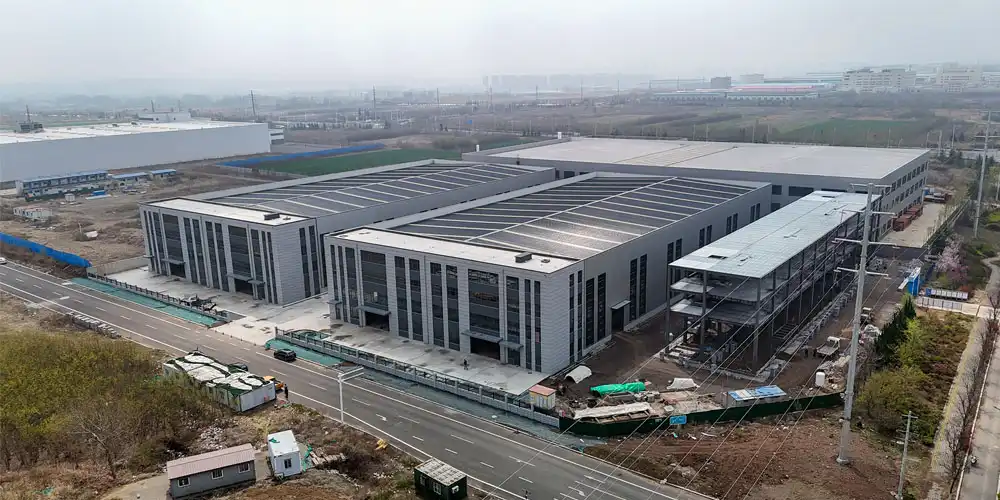
Choosing the right contractor for an office building steel structure job will decide whether your investment is a great success or a costly lesson. In modern business buildings, steel-framed solutions are becoming more popular because they offer faster construction times and lower long-term costs. When procurement managers, project engineers, and building directors look at possible partners, they have to choose from a wide range of makers with different certifications, service models, and abilities. This complete guide talks about the important factors that set great steel structure builders apart from average providers. It will help you make smart choices that protect your project's schedule, budget, and quality goals.

Understanding Office Building Steel Structure Projects: Key Considerations
Engineering Standards and Design Principles
For office building steel structures, engineers have to do very accurate estimates that take into account things like load distribution, earthquakes, wind resistance, and thermal expansion. Good builders use complex structural analysis tools to find the best beam-column arrangements, making sure that every part meets both safety standards and the architect's vision. Choosing between Q235 and Q355 steel types has a big effect on how well a structure works. Q355 has a higher tensile strength, which means that it can be used for lighter parts and lower base costs in multi-storey buildings.
Steel Frames Versus Concrete: A Practical Comparison
When construction companies compare office building steel structures to regular concrete buildings, they find a number of differences in how well they work. Office building steel structures usually have 30–40% shorter construction times because the parts are sent in already precisely measured to the millimetre, so there are no delays in the drying of concrete that can add months to the schedule. Steel has a much higher strength-to-weight ratio than concrete, so foundation requirements are much lower. For example, a 10-storey office building steel structure may need 25% smaller footings than its concrete counterpart, which directly cuts down on material costs and drilling work.
When you think about maintenance over a 50-year lifetime, you can see more benefits. When steel parts are properly coated with hot-dip galvanisation or marine-grade epoxy systems, they don't rust in urban areas and don't need as much maintenance as concrete buildings that can have support bars oxidise and spall. Cavity wall designs that allow for thicker insulation layers without making the building's general size bigger make it more energy efficient. Concerns about fire resistance are often raised. Strict safety standards are met by intumescent coatings that expand when exposed to heat, giving approved protection rates of two to four hours.
Common Construction Challenges and Solutions
Contractors with a lot of experience know what problems to expect in office building steel structure projects. Steel transmits vibrations more easily than concrete, so acoustic performance needs to be taken into account. Leading manufacturers solve this problem by making composite floor systems that combine steel decking with concrete toppings and viscoelastic damping materials that achieve STC ratings good for professional settings. When architectural plans call for internal spans without columns that are longer than 15 metres, foundation coordination becomes difficult. This is because they require special truss systems and careful load transfer planning that can only be done effectively by experienced engineering teams.
How to Choose the Right Steel Structure Contractor for Office Buildings?
Defining Project Scope and Prefabrication Benefits
Being clear about what the office building's steel structure needs is the first step in choosing the right provider. The procurement team should write down if the project needs single- or multi-storey plans, how far apart the columns need to be for open-plan designs, the preferred external material (curtain wall systems vs. metal panel cladding), and any time limits. When contractors give factory-controlled manufacturing settings, where welding quality, dimensional accuracy, and surface treatment application happen under uniform conditions instead of changing on-site weather, the benefits of prefabrication become clear.
Critical Evaluation Metrics
Certification files show that a worker is real and committed to quality. ISO9001 approval shows that quality management standards have been met, and CE marking shows that European standards have been met, which is very important for office building steel structure projects that need to be recognised around the world. The COC and PVOC licenses show that you can handle complicated export paperwork for projects in controlled markets. Aside from certifications, production ability is also very important. Contractors who use specialised H-beam production lines, sandwich panel manufacturing equipment, and C/Z section steel machinery show that they have invested in the infrastructure that supports reliable delivery and consistent output quality.
Experience samples should show finished projects that are similar to the type and size of the building you want to buy. A contractor who only works on industrial buildings might not know enough about architectural details to work on a high-profile corporate office with complicated curtain wall integration. Ask for specific case studies with original dates, records of sticking to the budget, and client references that you can check on your own.
Cost Transparency and Value Assessment
Professional sellers can be told apart from opportunistic vendors by clear price structures. Complete quotes should include different lists for structural steel parts, facade systems, engineering design services, fabrication costs, transportation costs, and assembly instructions. This level of detail lets you accurately compare bids from different sellers and find any possible hidden costs. When quotes are much lower than the market average, be wary. This is usually a sign of poor steel grades, coating systems that don't work, or not enough technical support, all of which can lead to costly problems during the building phase.
Steel Structure Office Building Solutions: Innovations and Best Practices
Prefabricated Steel Buildings: Modern Construction Methodology
The construction business has changed a great deal since the construction of steel office buildings became popular. Office building steel structure methodology fixes the main problems with traditional building methods, like uncertain schedules, hard work on-site, and quality problems caused by changes in the environment.
Modern prefabrication has real benefits that have an effect on the economy of a project. Tolerances of within 2 to 3 millimetres are reached for parts made in controlled factory settings. This makes sure that bolt holes line up properly during field assembly and avoids costly modification delays. Because foundation work and steel production happen at the same time instead of one after the other, construction plans get slashed by a huge amount. Using office building steel structure construction, a normal 5,000-square-metre office building can be weathertight in 8–10 months, compared to 16–18 months using traditional concrete methods. This cuts down on finance costs and speeds up occupancy income.
Customisation options go beyond what most people think about premade systems. Advanced builders give architectural layout design services that can meet special space needs, such as column-free meeting rooms that are 18 to 20 metres long, mezzanine levels for support functions, and different facades that combine curtain wall sections with insulated metal panels. Because office building steel structures are so flexible, they can be used for more than just warehouses. They can also be used for high-profile company offices.
Advanced Steel Grades and Component Integration
Improvements in material science have made it possible for office building steel structures to perform better. High-strength low-alloy steel grades can now carry the same amount of weight as traditional standards while still having the same load capacity. This saves money on foundations and makes transportation easier. Corrosion-resistant weathering steel doesn't need to be coated in some areas, which cuts down on upkeep costs by a large amount over the life of the structure.
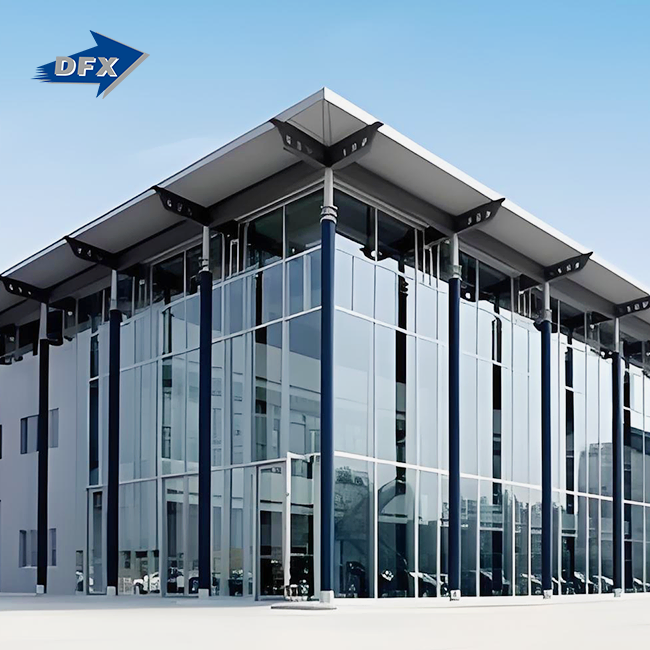
Integrating the facade system is a key point of teamwork where the contractor's skill shines through. A lot of modern office buildings have both structural steel frames and glass curtain wall systems. These systems need exact attachment points and thermal break features. Building information modelling is used by good builders to solve interface problems digitally before manufacturing starts. This keeps costly changes from having to be made in the field.
Lifecycle Management and Sustainable Practices
As more businesses try to get LEED and BREEAM certifications, environmental duty plays a bigger role in their buying choices. Office building steel structures are naturally more environmentally friendly because the material can be recycled over and over again without losing any of its strength, and in modern factories that use computer-controlled cutting systems, almost no trash is made during the manufacturing process. Using composite wall sections and roof systems with R-values above 30 can help cut down on thermal bridges, which makes buildings more energy efficient.
Planning for maintenance should start during the design phase, not after the building is finished. Contractors who offer lifetime management advice help building owners set up inspection schedules, coating replacement schedules, and growth plans that keep the structure's integrity over 50-year service lives.
Comparative Analysis of Top Steel Structure Suppliers and Contractors in 2026
Evaluating Manufacturing Capabilities and Reliability
Leading office building steel structure providers set themselves apart by having production capacity that can be checked and facilities for quality control. Automatic H-beam welding lines in factories make sure that the welds go through evenly and with few flaws compared to human methods. When projects need combined roof and wall systems with certain thermal performance scores, the ability to make sandwich panels is important. A production output of more than 20,000 tonnes per year means that the supply chain and workers are stable, which is something that smaller fabricators can't do when demand goes up.
Logistics prices and fitting help are affected by where you live. International providers that make steel in places where prices are competitive can offer good prices on materials, but buying teams need to look at the total landed costs, which include shipping, customs taxes, and possible delays. Exporters with a lot of experience keep clear contact about production stages and provide a lot of paperwork that makes customs clearance go more quickly.
Pricing Models and Turnkey Service Offerings
Value measurement is more than just looking at unit prices for steel tonnes. Contractors who offer turnkey solutions handle design, manufacturing, material supply, and installation all under one roof. This makes planning easier and stops people from blaming each other when problems happen. Before construction starts, architectural plan design services make sure that the structural systems meet the needs of the functions. Documentation of structural calculations made by qualified engineers gives the building department faith in the approval process.
To compare price models, you need to know what each quote covers. Some sellers give prices that are "ex works", which means that the buyer has to take care of foreign shipping, customs clearance, and inland delivery. Others offer prices that include shipped and duty-paid parts that come to the building site ready to be put together. Installation instructions can be as simple as basic assembly guides or as complex as on-site supervision by experienced techs. The latter greatly reduces mistakes and speeds up the building process.
Initiating Productive Supplier Relationships
Planning a full search is the first step in strategic procurement. Requests for quotes that work include architectural plans showing column grid layouts, floor loading requirements, references to local building codes, desired delivery dates, and specific questions about how the products are made. This level of detail shows that you are serious and lets providers give correct answers instead of general ones.
To negotiate successfully for an office building steel structure, you need to know what the supplier's limits are and what the industry rules are. Payment terms usually include a deposit amount when the order is confirmed, progress payments based on fabrication stages, and full payment when the product is delivered or the installation is finished. Quality workers are happy for factory reviews to happen during production. This shows that they are confident in their methods and gives buyers a chance to check them out before the goods are shipped.
Conclusion
Choosing a provider based on a thorough analysis of their technical skills, quality systems, and service scope is key to the success of office building steel structure projects. This guide's procurement framework, which focuses on checking certifications, figuring out manufacturing capacity, being clear about costs, and quality control protocols, helps building workers find partners who can deliver great results. As office building steel structure technology improves through better materials and prefabrication methods, it becomes clearer that working with well-known, qualified contractors gives you a competitive edge. Strategic relationships with suppliers based on open communication, reasonable expectations, and shared responsibility turn buying steel structures from a one-time purchase into a partnership that consistently meets project goals.
FAQ
1. How does fire resistance work in steel office buildings?
At temperatures around 600°C, an office building's steel structure loses its tensile strength, which is a real safety issue. In modern buildings, this is taken care of by intumescent coatings that spread when heated up, making a layer of char that keeps heat in. These systems offer certified protection rates of 2 to 4 hours, based on the thickness of the application. They meet the strict standards of business building codes. On the other hand, encasing critical columns in concrete can provide passive fire protection for projects that need to leave the structure visible in non-critical places for aesthetic reasons.
2. What maintenance does a steel structure office building require?
When coating systems are properly defined, they greatly lower the need for upkeep. In most places, hot-dip galvanisation protects against rust for 50 years or more without having to be re-coated. Marine-grade epoxy paint systems that can handle being exposed to saltwater work well in places with a lot of wetness. Every 5 to 7 years, regular checks find small damage to the coating before rust spreads. This level of upkeep is much lower than that of concrete buildings, which need to have cracks fixed and reinforcements protected.
3. Can steel office buildings be modified or expanded later?
Steel construction has a big edge over concrete construction when it comes to structural flexibility. Adding floors, taking down walls that aren't supporting weight, or strengthening frames for equipment loads can be done with little trouble. Bolted connections let you replace only certain members, and bonding new parts onto old structures makes changes that last. This adaptability keeps the value of long-term investments safe as business needs change.
Partner with DFX for Your Steel Structure Office Building Project
Qingdao Director Steel Structure Co., Ltd. has been making high-quality office building steel structures for business buildings, company offices, and administrative facilities around the world for more than 12 years. Our 40,000-square-meter factory has six automatic H-beam lines and more than 200 trained workers who follow ISO9001 and CE certification standards to make sure that every part of the project meets the highest quality standards around the world. We offer full turnkey solutions that include architectural layout design, structural calculations that meet U.S., European, and international building codes, precise fabrication using Q235 and Q355 steel grades, and detailed installation instructions that cut down on the time it takes to build your project. Our engineering team creates unique solutions that meet your exact needs, whether you're building a one-story business centre or a multi-story company headquarters with complex curtain wall integration. Get in touch with jason@bigdirector.com right away to talk about your office building steel structure project and get a full feasibility assessment with clear pricing from a reputable maker that wants you to succeed.
References
1. American Institute of Steel Construction. (2022). Steel Construction Manual, 15th Edition. Chicago: AISC Publications.
2. Chen, W.F., & Lui, E.M. (2020). Handbook of Structural Engineering, Second Edition. Boca Raton: CRC Press.
3. European Convention for Constructional Steelwork. (2021). Eurocode 3: Design of Steel Structures – Commentary and Worked Examples. Brussels: ECCS Publications.
4. Lawson, R.M., & Ogden, R.G. (2019). Sustainable Steel Construction: Development and Design. London: The Steel Construction Institute.
5. Newman, Alexander. (2023). Prefabricated Steel Buildings: Modern Construction Methodology and Economic Analysis. Journal of Construction Engineering and Management, 149(4), 112-128.
6. Trahair, N.S., Bradford, M.A., & Nethercot, D.A. (2021). The Behaviour and Design of Steel Structures to AS 4100, Fifth Edition. Boca Raton: CRC Press.
Learn about our latest products and discounts through SMS or email