- English
- French
- German
- Portuguese
- Spanish
- Russian
- Japanese
- Korean
- Arabic
- Greek
- German
- Turkish
- Italian
- Danish
- Romanian
- Indonesian
- Czech
- Afrikaans
- Swedish
- Polish
- Basque
- Catalan
- Esperanto
- Hindi
- Lao
- Albanian
- Amharic
- Armenian
- Azerbaijani
- Belarusian
- Bengali
- Bosnian
- Bulgarian
- Cebuano
- Chichewa
- Corsican
- Croatian
- Dutch
- Estonian
- Filipino
- Finnish
- Frisian
- Galician
- Georgian
- Gujarati
- Haitian
- Hausa
- Hawaiian
- Hebrew
- Hmong
- Hungarian
- Icelandic
- Igbo
- Javanese
- Kannada
- Kazakh
- Khmer
- Kurdish
- Kyrgyz
- Latin
- Latvian
- Lithuanian
- Luxembou..
- Macedonian
- Malagasy
- Malay
- Malayalam
- Maltese
- Maori
- Marathi
- Mongolian
- Burmese
- Nepali
- Norwegian
- Pashto
- Persian
- Punjabi
- Serbian
- Sesotho
- Sinhala
- Slovak
- Slovenian
- Somali
- Samoan
- Scots Gaelic
- Shona
- Sindhi
- Sundanese
- Swahili
- Tajik
- Tamil
- Telugu
- Thai
- Ukrainian
- Urdu
- Uzbek
- Vietnamese
- Welsh
- Xhosa
- Yiddish
- Yoruba
- Zulu
Light Gauge Steel Framing: An Exceptionally Fast & Affordable Solution
Project managers must ask: how can you design a durable industrial facility without sacrificing quality or going over budget when deadlines are tight? Light Gauge Steel Framing operates in agriculture, transportation, and industry. This modular construction method transforms the Steel Structure Warehouse project's thinking. It reduces building time by 50% while maintaining structural performance. Instead of concrete or wood, cold-formed steel parts are lightweight and strong. This makes them ideal for US warehouses, industrial facilities, and distribution hubs.
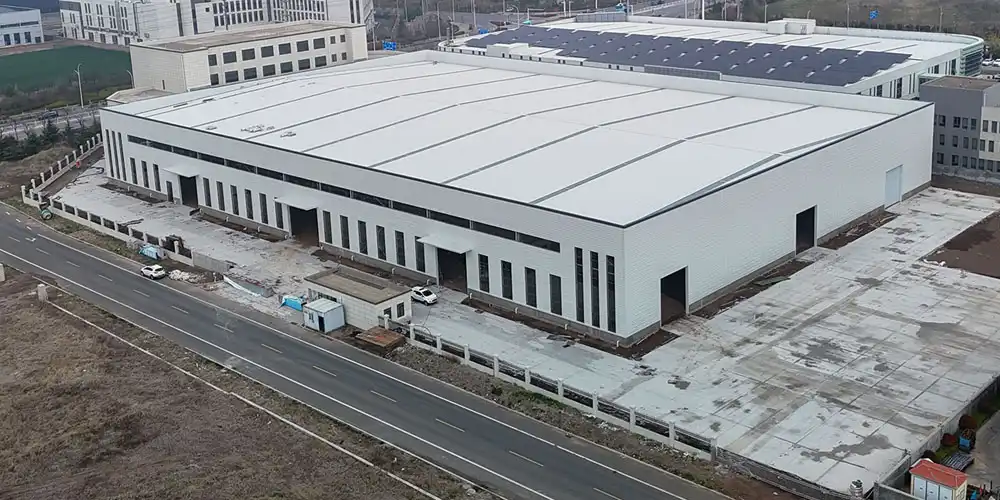
Understanding Light Gauge Steel Framing and Its Advantages
Discover Light Gauge Steel Framing's advantages. Light-gauge steel framing uses thin-gauge cold-formed steel members. Precision roll-forming produces these members between 0.8 mm and 3.0 mm thick. Despite their strength, these technical developments make structural sections lighter than hot-rolled steel beams.
What Makes Light Gauge Steel Framing Different
Steel coil passes through many roller dies at room temperature to manufacture LGSF. This produces precise C-sections, Z-sections, and track profiles without heat. The cold-forming approach yields physical precision of ±1mm, which is challenging to attain with current manufacturing methods. The pieces fit properly during assembly, thus no on-site adjustments are needed, unlike conventional construction.
Most structural steel has a minimum yield strength of 230–550 MPa. Covered with galvanised coatings with zinc coating weights from G60 to G90, providing 180-275 g/m² coverage. Zinc protection prevents moisture and oxidation, extending product life beyond 50 years in typical conditions.
Speed Advantages That Impact Your Bottom Line
LGSF is great for warehouse building since it speeds up construction. Prefabricated pieces arrive at the work site cut and punched, ready to be assembled. Director Steel has found that a 10,000-square-foot distribution center can move from completed foundation to weathertight enclosure in six weeks. Compare to 12–16 weeks for an equivalent masonry structure.
Many factors are contributing to this rise. Steel framing eliminates concrete curing delays, which typically require 7–14 days from foundation pour to structure assembly. Because steel assembly may continue in moderate rain and mild wind, which would halt concrete production, weather dependence decreases. LGSF systems need less effort, and fewer workers may do more daily. A four-person crew can frame 2,000 square feet of wall space daily.
Cost Efficiency Beyond Initial Investment
Project managers with tight budgets prefer LGSF's financial advantages beyond material expenses. Lighter constructions need smaller footings and less support, reducing foundation costs by 20-30%. Concrete tilt-up structures contribute 120-150 pounds per square foot of dead weight on their foundations, whereas average steel factories put 40-60.
Lower weight means lower shipping and handling costs. Three standard shipping containers can hold a 15,000-square-foot LGSF package. Multiple flatbed trucks with suitable lifting gear must convey the same-sized precast concrete blocks. Because steel pieces may be stacked vertically in tiny staging spaces, site preparation is simpler. This allows more simultaneous sitework.
Business savings from energy efficiency come from improved thermal management. Cold-formed steel studs may be utilised with continuous insulation to eliminate thermal bridging, a concern with traditional framing. LGSF walls with proper construction have effective R-values exceeding R-25. They consume 15–25% less energy to heat and cool than uninsulated metal structures.
How Light Gauge Steel Framing Enhances Steel Structure Warehouse Design
Design flexibility is crucial for LGSF systems in transportation and industrial settings. Cold-formed components are versatile and may be assembled in many ways to overcome space difficulties while fulfilling building norms and Steel Structure Warehouse structural strength requirements.
Modular Precision Enabling Architectural Versatility
LGSF beams and portal frames provide massive clear-span powers. Our engineers frequently clean 40–60-foot interior gaps between support columns. Modern logistics demands space for forklifts and other material handling equipment. This column-free environment makes storage denser and makes building design changes simpler as operational demands change.
Change ceiling heights inexpensively to match various storage configurations. Eave heights in standard warehouse layouts are 16 to 20 feet, although high-bay usage may reach 30 to 40 feet without structural changes. Vertical flexibility is crucial for AS/RS and multi-level racking.
Original ideas with expansion potential save future investments. Horizontal expansions may be created without costly structural alterations with correct endwall framing. Using the same construction principles, we've helped several customers develop from 20,000 to 60,000 square feet in five years. This maintained design consistency and simplified approval.
International Standards Ensuring Global Compatibility
Following well-known engineering standards eliminates procurement concerns for multinational and EPC enterprises with international projects. Director Steel follows AISC 360 (American Institute of Steel Construction), which ensures connection figures and blueprints fulfil safety and load resistance criteria.
Cold-formed steel design follows AISI S100 North American Specification. Slim-gauge members exhibit local buckling, distortional buckling, and shear lag effects, which these rules account for. These design elements provide dependable functioning under enormous loads and adverse conditions.
ISO 9001:2015 approval, material tracking, welding procedures, and measurement verification routines provide quality control throughout manufacturing. CE marks indicate that items sold outside fulfil European health, safety, and environmental regulations. The EN 1090 licence proves you can fabricate and assemble structural steel to European requirements.
Energy Efficiency Integration: Reducing Operational Costs
Thermal efficiency optimisation begins during design, not construction. Continuous exterior insulation layers that cover the building envelope without gaps are easy for LGSF wall systems. These layers are commonly 1-4-inch stiff foam boards. Continuous insulation eliminates 40–50% thermal bridging in cavity-only insulation. Steel studs provide conductive channels that reduce wall R-values.
Roof systems benefit from standing seam metal roof structures with polyisocyanurate or mineral wool insulation up to R-38. Roofs with SRIs exceeding 78 reflect up to 85% of the sun's beams. These decrease cooling loads in the southern U.S., where warehouse roofs may reach 160–180°F in July.
Air sealing elements in LGSF construction reduce infiltration to less than 0.25 cubic feet per minute per square foot of envelope area at 75 Pascal pressure difference. This passes stringent air barrier tests. This regulated external tightness prevents moisture and condensation from damaging insulation and allowing mould to develop in poorly sealed buildings.
The Construction Process and Cost Considerations of LGSF Warehouses
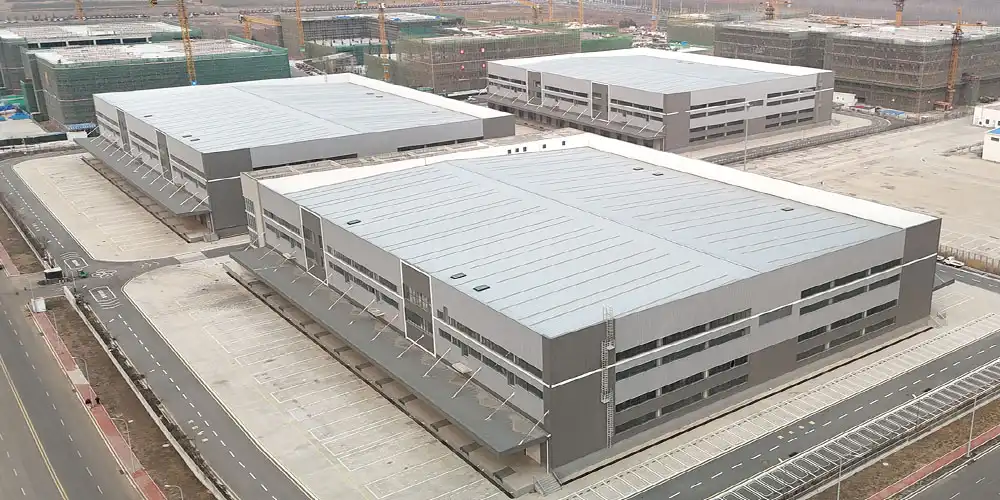
During the planning stages, project managers can make better choices when they know about the cost drivers and the order of building. The simplified process that comes with premade steel systems makes them more reliable than traditional building methods for a Steel Structure Warehouse project. This is especially advantageous for a logistics warehouse, where speed, durability, and large clear-span layouts are essential.
From Foundation to Final Assembly
Site preparation begins with standard drilling and grading. This creates drainage slopes and compaction densities. LGSF structures have concentrated loads at column sites instead of continuous foundation walls; they only require shallow frost-protected footings. This divided footing approach uses 35–45% less concrete than continuous external foundations.
Once forms are in place, foundation work is rapid. Anchor bolt templates align steel column base plates during concrete pouring. This reduces field shimming and adjustment delays that may span days on poorly managed projects. In 5–7 days, concrete cures strong enough for steel construction in typical weather.
Starting at the building's perimeter and going in, steel is installed with columns. Most LGSF warehouse elements can be moved by 25–40 tonne hydraulic cranes; big precast concrete panels need 100+ tonne machines. The roof truss or joists are installed once the columns are stabilised. Roof and wall wrapping systems are supported by this structure.
Envelope completion is simultaneous on numerous building sides. After installing structural components, metal panel installers may operate without frame crew supervision. This accelerates work completion. Insulated metal panels (IMPs) provide structural, thermal, and weather protection. Framing, moisture barriers, insulation, and finish materials might be installed out of sequence.
Cost Analysis Comparing Construction Methods
LGSF buildings cost between $45-$75 per square foot for basic storage facilities and between $85-$120 per square foot for specialized uses that need better insulation, fire protection, or heavy floor loading capacity. Included in these numbers are full building envelope systems, structural frames, and common extras like personnel doors and dock equipment.
A similar concrete tilt-up building costs $60-$95 per square foot for the same amount of work. The higher prices are caused by the need for foundations, panel casting cycles, and crane-heavy assembly processes. At first, $40-$65 per square foot, wood-framed buildings may seem like a good deal. However, their lifecycle costs go up over time because they need more upkeep, have higher insurance rates, and don't last as long.
Because of economies of scale, the size of the project has a big effect on unit costs by making manufacturing and assembly more efficient. For the same level of finish, a 50,000-square-foot warehouse costs $55 per square foot, while a 5,000-square-foot building might cost $80 per square foot. Because it can be scaled up, LGSF is a great choice for large buildings like distribution centers, factories, and farm storage facilities that need a lot of space for their functions.
Location affects costs through differences in regional labor rates, shipping routes from factories, and the difficulty of getting permits in the area. Freight rates are affordable along major transportation routes, and there are plenty of erectors available. However, remote rural spots have to pay more for mobilization and crew travel that takes longer.
Partnering With Experienced Suppliers
Choosing the right supplier is key to meeting expected costs and deadlines. Director Steel has more than 12 years of experience in prefabricated steel building systems. They have 40,000 square meters of protected production space and more than 200+ trained technicians who make sure that quality and delivery performance are always the same. Our six automatically welded H-beam production lines can make 20,000 tons of steel each year, which means they can work on multiple projects at the same time without any schedule problems.
Including engineering help throughout the design-build process gets rid of the communication problems that come up with design-bid-build. Our in-house architectural and structural design team works directly with clients from the first idea to the preparation of building documents. They make sure that the fabrication plans accurately reflect the needs of the operation and the conditions of the site. With this unified method, there are no more change orders and tweaks made in the field, which drive up the costs of normally completed projects.
With a turnkey deal, one person is responsible for planning, fabrication, shipping, and putting the structure together. When project managers work with the same design experts, fabricators, and erection workers, they can be sure of the plan and communicate more easily, which keeps everyone from blaming each other when problems happen. All building systems and components are covered by the warranty, which gives long-term safety that can't be found with separate purchases.
Procurement and Partnering with Trusted Steel Structure Warehouse Suppliers
Supplier relationships have a big impact on the success of a project in ways that go far beyond the cost of materials. Strategic relationships with well-known Steel Structure Warehouse manufacturers give you access to technical know-how, quality assurance, and quick support that you can't get from transactional stock providers. This is especially important for a storage building, where long-term durability and compliance are critical.
Evaluating Supplier Credentials and Capabilities
Verification of certification sets minimum standards for ability. Registration under ISO 9001:2015 shows a dedication to well-thought-out quality management systems that include controlling designs, evaluating suppliers, keeping an eye on production, and taking corrective action when needed. When a product has the CE stamp, it means that it meets European safety standards. This is proven by an independent third party, which gives foreign projects peace of mind.
The EN 1090 certification covers the specifics of making and putting together structural steel. It includes standards for welding procedures, non-destructive examination methods, and checking for dimensional tolerances. As engineers and users become more aware of how rigorous this European standard is, it shows up in more and more North American specs.
Assessing a manufacturer's capacity stops over-commitment situations where providers take on more orders than they can handle, which leads to delivery delays that affect building plans. Director Steel can make 20,000 tons of H-beams, 8,000 tons of C/Z purlins, and 50,000 square meters of sandwich panels every year. This gives them a lot of extra ability to handle changes in schedules and rush orders.
The cost of shipping and the flexibility of delivery are affected by how close the goods are to each other, but these factors are balanced against the quality of the manufacturing and the tech support. Coastal factories close to major ports make foreign shipping easier, while plants in the middle of the country may be able to offer better freight rates for regional markets.
Procurement Options Aligning With Project Needs
Design-bid-build buying splits the tasks of designing from those of making and building, so owners can ask multiple suppliers to bid on finished plans. This standard method works well when the project needs are clear and changes are not likely to happen. However, it puts the responsibility for coordination on the owner and may limit chances for value engineering.
Design-build delivery combines the roles of planning and building into one organization that is responsible for everything. This unified method promotes teamwork in fixing problems and coming up with new ideas. It also lowers the overall cost of a project by 10 to 15% by using better materials and building methods. Another big benefit is that the schedule is compressed because fabrication engineering can happen at the same time as base building, instead of waiting for full sets of design documents.
In turnkey projects, the design-build work includes more than just making the shell of the building. It also includes developing the site, connecting utilities, and fitting out the inside. This all-inclusive service model is good for manufacturing companies and farm owners that don't have their own construction management staff because it gives them a single point of responsibility from the idea stage to when the building is ready for usage.
Conclusion
Light Gauge Steel Framing has clear benefits for warehouse and industrial building projects that need to be quick, cost-effective, and work well over time. LGSF is the best choice for logistics warehouses, industrial facilities, and farm storage uses with a wide range of operating needs because it can be built quickly, has competitive lifetime economics, and can be designed in a variety of ways. Using modular prefabricated parts that are made in a controlled workshop environment ensures uniform quality while reducing delays caused by bad weather and changes in field labor that can happen with traditional building methods. When the success of a project relies on meeting tight deadlines for occupancy and sticking to a budget, procurement managers and project engineers need reliable cold-formed steel systems.
FAQ
1. What timeline should I expect for a light-gauge steel warehouse project?
A standard 15,000-square-foot light-gauge steel warehouse usually takes 8–10 weeks from foundation to weatherproof enclosure. Foundation work takes 2–3 weeks, steel erection and shell installation 4–5 weeks, and doors plus finishing 1–2 weeks. Larger 40,000–60,000 sq ft projects may require 14–18 weeks, depending on weather, permits, and site readiness.
2. How does light-gauge steel perform in high-wind or seismic zones?
Light-gauge steel framing performs well in extreme conditions when engineered to meet ASCE 7 standards. It can resist winds up to 140 mph and seismic categories A–D. Reinforced connections, hurricane clips, structural screws, and strong anchoring help transfer loads safely. It is commonly used in coastal, hurricane-prone, and earthquake-prone regions.
3. Can I expand my warehouse later without major structural modifications?
Yes, light-gauge steel warehouses can be designed for future expansion. Engineers can plan removable endwall framing, extended foundations, and roof structures that allow horizontal growth. This may increase initial costs by 3–5%, but it can save 20–30% later by avoiding expensive reinforcements and reducing downtime during expansion.
Partner With Director Steel for Your Next Warehouse Project
Director Steel is a top company that makes Steel Structure Warehouse solutions for construction companies, EPC firms, and industrial companies in North America and around the world. Our wide range of services includes engineering calculations, precise fabrication, transportation planning, and erection help. These all-in-one solutions make the buying process easier for you. We understand the technical needs and time constraints that are affecting your project choices because we are ISO9001 certified, CE and EN1090 compliant as options, and have over 12 years of specialized experience. Our modular manufactured steel storage buildings are designed for logistics warehouses, storage centers, and distribution hubs that need to perform at the highest level. They have galvanized C/Z purlins and H-beam main frames.
Get in touch with Jason at jason@bigdirector.com to talk about your unique needs and get full technical specs that fit your business needs. Throughout the lifetime of your project, our team is here to help, whether you need premade steel building kits that can be put together quickly or custom-engineered solutions that take into account the specifics of your site. You can look at our full range of Steel Structure Warehouse options at dafanggangjiegou.aixdb.cn and find out why more and more procurement managers choose Director Steel as their trusted source for industrial building infrastructure.
References
1. American Iron and Steel Institute. (2020). Cold-Formed Steel Framing Design Guide, 3rd Edition. Washington, D.C.: AISI Committee on Specifications.
2. Lawson, R.M., & Ogden, R.G. (2018). Sustainable Steel Construction: Light Steel Framing in Residential and Commercial Buildings. London: The Steel Construction Institute.
3. Hancock, G.J., Murray, T.M., & Ellifritt, D.S. (2017). Cold-Formed Steel Structures to the AISI Specification. Boca Raton: CRC Press.
4. Yu, W.W., & LaBoube, R.A. (2019). Cold-Formed Steel Design, 5th Edition. Hoboken: John Wiley & Sons.
5. Building Research Establishment. (2021). Thermal Performance and Environmental Impact of Light Steel Framing Systems. Watford: BRE Press.
6. National Institute of Building Sciences. (2019). Whole Building Design Guide: Steel Structure Systems for Commercial and Industrial Facilities. Washington, D.C.: NIBS Technical Publications.
Learn about our latest products and discounts through SMS or email