- English
- French
- German
- Portuguese
- Spanish
- Russian
- Japanese
- Korean
- Arabic
- Greek
- German
- Turkish
- Italian
- Danish
- Romanian
- Indonesian
- Czech
- Afrikaans
- Swedish
- Polish
- Basque
- Catalan
- Esperanto
- Hindi
- Lao
- Albanian
- Amharic
- Armenian
- Azerbaijani
- Belarusian
- Bengali
- Bosnian
- Bulgarian
- Cebuano
- Chichewa
- Corsican
- Croatian
- Dutch
- Estonian
- Filipino
- Finnish
- Frisian
- Galician
- Georgian
- Gujarati
- Haitian
- Hausa
- Hawaiian
- Hebrew
- Hmong
- Hungarian
- Icelandic
- Igbo
- Javanese
- Kannada
- Kazakh
- Khmer
- Kurdish
- Kyrgyz
- Latin
- Latvian
- Lithuanian
- Luxembou..
- Macedonian
- Malagasy
- Malay
- Malayalam
- Maltese
- Maori
- Marathi
- Mongolian
- Burmese
- Nepali
- Norwegian
- Pashto
- Persian
- Punjabi
- Serbian
- Sesotho
- Sinhala
- Slovak
- Slovenian
- Somali
- Samoan
- Scots Gaelic
- Shona
- Sindhi
- Sundanese
- Swahili
- Tajik
- Tamil
- Telugu
- Thai
- Ukrainian
- Urdu
- Uzbek
- Vietnamese
- Welsh
- Xhosa
- Yiddish
- Yoruba
- Zulu
Military Aircraft Steel Hangar: Design, Construction, and Strategic Applications
Specialised infrastructure comes to mind when you think about protecting things worth millions of dollars, like planes. A military aircraft steel hangar is more than just a place to keep things safe. It's a precision-engineered building that's meant to house, operate, and protect everything from fighter jets to heavy transport planes like the C-130. These buildings solve important operating problems: they have clear spans of more than 60 metres, spaces that are free of obstacles, and the ability to withstand harsh weather conditions like desert heat and salt spray from the coast. They also work perfectly with modern fire suppression and maintenance systems. These hangars were made to meet strict standards like the Unified Facilities Criteria (UFC 4-211-01), which are specific to the needs of military flight facilities.

Understanding Military Aircraft Steel Hangars: Design and Features
Defining Characteristics and Dimensional Requirements
Military airports need buildings that can fit a wide range of aircraft types. A well-made military aircraft steel hangar needs to have enough room for different tail heights, wing spans, and rotor sizes. From working with building builders, we know that most projects need doorways that are 25 to 40 metres wide and have clearances of 12 to 18 metres high. We make long-span steel buildings with welded H-section steel main structures that don't have internal beams. This makes room that is needed for moving planes and doing repair work that isn't blocked.
Structural Integrity and Load-Bearing Capacity
The skeletal engineering of a military aircraft steel hangar is what makes it work. The main frame is made of high-tensile structural steel, usually ASTM A572 Grade 50 or a similar EN S355JR. This steel has great strength-to-weight ratios. It is important for these buildings to be able to handle heavy things like roofs, insulation packages, and overhead crane installs. Our strengthened bracing system evenly spreads horizontal forces, keeping things stable even when winds are over 180 km/h. As a result of taking earthquakes in high-risk areas into account in the design, the building is strong enough to keep operations going when other buildings might fail.
Material Selection and Corrosion Resistance
Picking the right steel types has a direct effect on how long a military aircraft steel hangar lasts, especially in harsh settings. Facilities near the coast are constantly exposed to salt spray, while facilities farther inland have to deal with temperature changes and industry pollution. We use hot-dip galvanising with a zinc covering of at least 600 g/m², along with epoxy zinc-rich primer systems and polyurethane topcoats. This multiple-layer defence stops jet fuel spills, hydraulic fluid touch, and rust from the air. As part of the design process, environmental data specific to the site is looked at to match coating systems with expected exposure conditions. If proper upkeep procedures are followed, the structure can last longer than 50 years.
Climate Control and Insulation Systems
Temperature regulation is very important for keeping sensitive electronics in good shape and keeping aeroplane systems safe while they are being serviced. Our sandwich panel systems have cores made of rock wool or polyurethane that have R-values higher than 20. These create thermal walls that lower the cost of heating and cooling. This protection also reduces the noise from the engine running, keeping people close safe and meeting noise control standards. The panels fit perfectly into the steel frame, keeping the structure weathertight while allowing for future changes as the goal changes.
Together, these design aspects make buildings that meet daily needs while keeping costs low over their entire life, such as military aircraft steel hangars. Every standard choice we make, from choosing the steel grade to how the finish is applied, shows that we understand the problems that project managers and engineering directors who are in charge of buying infrastructure face in the real world.
Construction Process and Best Practices for Military Aircraft Steel Hangars
Site Preparation and Foundation Requirements
A careful examination of the groundwork is the first step in any successful military aircraft steel hangar project. Strong base systems are needed for wide-span buildings and overhead crane loads because they cause strong column reactions. We work with geotechnical engineers to figure out how much weight the dirt can hold and then build footings or pile foundations made of reinforced concrete that stop the ground from shifting. When preparing a site, water patterns, utility routes, and security barrier needs are all taken into account. Usually, this planning part takes four to six weeks. It costs money, but it saves a lot of money in repairs during building.
Prefabrication Advantages and Timeline Management
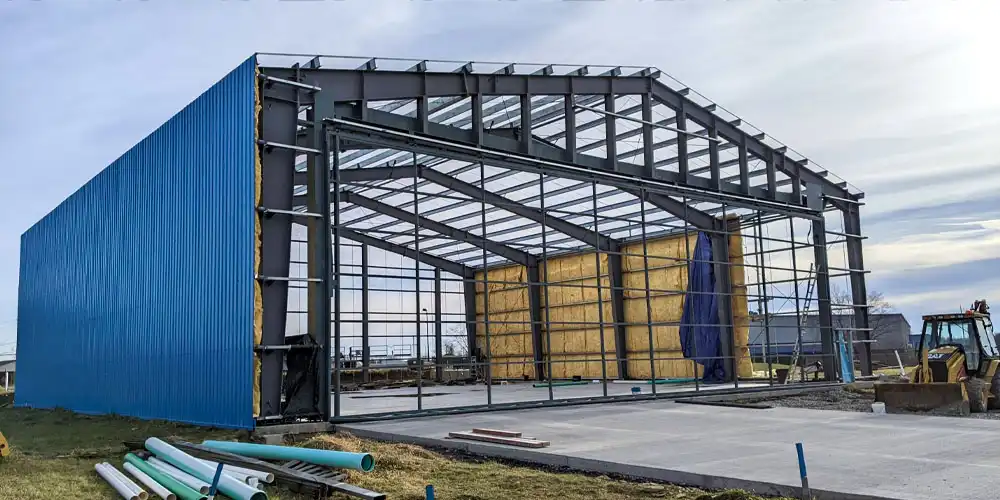
Our factory in China has six automatic welded H-beam production lines that allow for precise work to be done in controlled conditions. Prefabrication has many benefits over traditional on-site building. For example, welding quality is much better in climate-controlled settings, laser-guided processes make measurements more accurate, and construction timelines are much shorter. A normal 3,000-square-meter hangar frame can be built in 8 to 10 weeks, with parts arriving at the job site ready to be put together quickly. This method works especially well in remote areas where it can be hard to find skilled workers.
The process of custom manufacturing starts with technical drawings and structural calculations. Our design team gives full paperwork packages that include information on how to connect things and how to put them together. By planning ahead, EPC workers can move quickly because they know exactly what will arrive and how the parts will fit together. Our technical staff's help with installation speeds up the process even more by taking into account conditions on the job site and making sure quality standards are met throughout assembly.
Energy Efficiency and Environmental Considerations
Modern airport design puts more and more emphasis on being environmentally friendly without sacrificing efficiency. When we combine motion monitors with energy-efficient LED lighting systems, the amount of electricity used is 60% less than with traditional lights. During the day, artificial lighting is used along with natural sunshine coming in through clear roof panels. When you size an HVAC system based on real usage trends instead of total volume, you can save money on both equipment and running costs. These methods help meet goals for environmental impact while also cutting costs in real ways that raise the project's return on investment (ROI).
Maintenance Accessibility and Longevity Planning
A well-designed military aircraft steel hangar from a Chinese modular steel aircraft hangar factory takes into account the upkeep that will be needed in the future from the start. Roof access places make it safe to check the state of structural members and coatings. Panel systems have parts that can be replaced, so when something breaks, the whole piece doesn't have to be taken apart. We suggest setting up regular review times to check the connection nuts, the stability of the coating, and the function of the drainage system. Corrosion protection is still very important—fixing small coating damage right away saves money on bigger fixes later. Recording maintenance tasks makes useful records for lifetime planning, which helps building managers set aside the right amount of money for long-term maintenance.
Our building method, which we've improved over hundreds of projects, strikes a good mix between speed and quality. We help builders meet tight deadlines while keeping the structural integrity needed for military uses by overseeing the fabrication process and providing full support during installation.
Comparative Analysis: Steel Hangars vs Alternative Solutions
Steel vs Aluminium: Performance and Cost Evaluation
Material choice has a big impact on how well and how cheaply a military aircraft steel hangar works. But steel is stronger and costs less than aluminium, even though aluminium is lighter and naturally resistant to rust. A comparison shows that steel structures usually cost 15–25% less than comparable aluminium frames when only looking at the main frame. When supporting 10- to 25-tonne overhead bridge cranes, which are common in MRO sites where engine swaps and heavy component replacements are done, the strength edge becomes very important.
Aluminium is good for coastal sites because it doesn't rust, but current coating systems can make steel last just as long for a lot less money. When figuring out the total cost, you have to include the time it takes to make, move, and put it together. Because steel is easier to weld and there are more fabricators who can work with it, lead times are faster, and bidding is more competitive. Because of these things, workers who are in charge of multiple building projects and need to stick to a budget choose steel over other materials.
Prefab vs Custom Design: Matching Structure to Mission
The choice between standard constructed units and custom-engineered solutions is based on the needs of the business and the limitations of the site. Faster delivery—often just 6 to 8 weeks from order to shipment—and a more stable price are two benefits of prefab systems. They work well in situations where you need to set them up quickly or use normal facility networks in various places. Our movable hangar designs have bolted links that make them easy to move in the future. This makes them good for expeditionary uses and short-term installs.
Custom solutions are made to deal with problems that are unique to each situation, like uneven site boundaries, specific requirements for aeroplane clearance, or integrating with existing infrastructure. During the planning process, our engineering team and customer stakeholders work together closely to create facilities that are best for specific workflows and equipment setups. Custom projects add three to four weeks to the schedule, but the improvements in operating efficiency often make it worth the extra planning time. Based on the specifics of their goal, project managers should decide if the benefits of uniformity are greater than the benefits of customisation.
Return on Investment Considerations
There are several ways that modern steel buildings improve return on investment. Speeding up construction lowers the cost of funding and speeds up the time it takes for operating facilities to start making money. Designs that use less energy mean lower electricity costs over the life of the building. Accessibility for maintenance cuts down on fix costs and increases the time between services. When purchasing managers look at different bids, they should look at the total cost of ownership over 30 years instead of just the original capital spending to see how much cheaper steel is. A Chinese modular steel aircraft hangar factory offers a military aircraft steel hangar that was built to the right standards and only needs regular coating upkeep. On the other hand, a hangar that wasn't built to the right standards needs frequent repairs that cost a lot of money and stop operations.
Conclusion
A military aircraft steel hangar represents an important investment in infrastructure that needs to be carefully planned and sourced. The right structure strikes a balance between the needs of the current project and the needs of long-term operations. This way, the structure can provide decades of steady service in tough circumstances. The information in this article about design basics, best practices for building, and buying strategies will give project managers the confidence they need to easily go through the specification and supplier review processes. When you put together advanced engineering, high-quality manufacturing, and a wide range of support services, you get buildings that protect valuable assets and keep mission-critical processes running. Partnerships between informed buyers and skilled makers who are dedicated to providing infrastructure that works reliably throughout its service life are the key to successful hangar projects.
FAQ
1. What determines the lifespan of a steel aircraft hangar in harsh environments?
How long a structure lasts relies mostly on the quality of the finishing system and how well it is maintained. When hot-dip galvanising is done right and topcoats of epoxy and polyurethane are added, steel is protected from rust for more than 50 years in coastal areas. Regular checks that find small flaws in the layer allow for focused fixes before rust sets in. The steel framework will always be structurally sound as long as it is kept from rusting. Environmental factors, such as the amount of salt spray and industry pollutants, affect how quickly things break down. This is why it's important to choose the right coating for the job site during the planning process.
2. Can hangar designs accommodate future operational changes?
Modern steel buildings are very flexible because they are made using modular design principles. Portal frame configurations make it possible to add bays along the length of an existing building with little disruption to operations. The end walls act as non-load-bearing parts that can be quickly taken down during growth. The clear-span interior doesn't have any beams that would make it hard to move the equipment. As the mission needs change, the roof structures can be changed to fit new crane systems, extra utilities, and better mechanical systems. Because of this, investments in infrastructure don't become useless as aeroplane fleets and repair methods change over time.
3. How do fire protection requirements affect hangar design?
Aviation sites must follow NFPA 409 rules for putting out fires in buildings that hold burning materials and fuels. The steel frame supports deluge pipes, foam makers, and water monitors with estimated dead loads. The structure is made to withstand the heat that builds up during a fire, keeping it stable while the control systems work. Ceiling heights and airflow make it easier for smoke to escape, which protects people and equipment. Including these built-in safety features in the design from the start is necessary because adding fire protection to buildings that are already built is expensive and difficult.
Partner with DFX for Your Next Hangar Project
DFX, operating as Qingdao Director Steel Structure Co., Ltd, brings 12 years of specialised experience manufacturing precision-engineered steel structures for demanding infrastructure applications. Contractors and project managers looking for a reliable military aircraft steel hangar provider can use our all-in-one services, which include structural calculations, fabrication, and fitting advice. We manufacture aeroplane hangars, heavy equipment storage areas, and big industrial shelters out of welded H-section steel main structures with strengthened bracing systems.
Our production centre is ISO 9001 certified and offers turnkey solutions that are backed by CE, COC, and PVOC certificates. This makes sure that they meet international quality standards. Our technical team has the engineering skills to turn your needs into reliable infrastructure, whether your project needs to be deployed quickly or requires a lot of customisation. Email Jason at jason@bigdirector.com to talk about how our production skills can help with your next aviation building project to learn more about all the services we offer.
References
1. Smith, J. R., & Williams, M. P. (2019). Structural Steel Design for Aviation Infrastructure: Principles and Applications. American Society of Civil Engineers Press.
2. Department of Defense. (2020). Unified Facilities Criteria (UFC 4-211-01): Aircraft Maintenance Hangars. Washington, DC: US Government Publishing Office.
3. Chen, L., Zhang, Q., & Anderson, R. T. (2021). Corrosion Protection Systems for Steel Structures in Coastal Military Installations. Journal of Protective Coatings & Linings, 38(4), 22-35.
4. National Fire Protection Association. (2021). NFPA 409: Standard on Aircraft Hangars. Quincy, MA: NFPA Publications.
5. Thompson, K. D., & Martinez, E. S. (2018). Prefabricated Steel Building Systems: Design, Fabrication, and Erection Best Practices. Construction Industry Institute Research Report.
6. Peterson, A. H., Reynolds, C. W., & Hughes, M. J. (2022). Life Cycle Cost Analysis of Military Infrastructure: Comparative Study of Hangar Construction Methods. Defense Acquisition University Journal, 29(2), 145-168.
Learn about our latest products and discounts through SMS or email