- English
- French
- German
- Portuguese
- Spanish
- Russian
- Japanese
- Korean
- Arabic
- Greek
- German
- Turkish
- Italian
- Danish
- Romanian
- Indonesian
- Czech
- Afrikaans
- Swedish
- Polish
- Basque
- Catalan
- Esperanto
- Hindi
- Lao
- Albanian
- Amharic
- Armenian
- Azerbaijani
- Belarusian
- Bengali
- Bosnian
- Bulgarian
- Cebuano
- Chichewa
- Corsican
- Croatian
- Dutch
- Estonian
- Filipino
- Finnish
- Frisian
- Galician
- Georgian
- Gujarati
- Haitian
- Hausa
- Hawaiian
- Hebrew
- Hmong
- Hungarian
- Icelandic
- Igbo
- Javanese
- Kannada
- Kazakh
- Khmer
- Kurdish
- Kyrgyz
- Latin
- Latvian
- Lithuanian
- Luxembou..
- Macedonian
- Malagasy
- Malay
- Malayalam
- Maltese
- Maori
- Marathi
- Mongolian
- Burmese
- Nepali
- Norwegian
- Pashto
- Persian
- Punjabi
- Serbian
- Sesotho
- Sinhala
- Slovak
- Slovenian
- Somali
- Samoan
- Scots Gaelic
- Shona
- Sindhi
- Sundanese
- Swahili
- Tajik
- Tamil
- Telugu
- Thai
- Ukrainian
- Urdu
- Uzbek
- Vietnamese
- Welsh
- Xhosa
- Yiddish
- Yoruba
- Zulu
Why Choose a Logistics Park Steel Warehouse for Large-Scale Storage?
When it comes to durability, speed of building, and operating flexibility, a Logistics Park Steel Warehouse is the best choice for large-scale storage. The high-strength H-beam main frames and galvanized C/Z purlins in these Logistics Park Steel Warehouses make for great clear-span architecture by getting rid of interior beams that get in the way of work. Compared to traditional concrete buildings, this design cuts project timelines by up to 50%, increases cubic storage density, and makes room for automatic systems. Logistics Park Steel Warehouses made in China meet international quality standards and are cost-effective for construction companies, EPC firms, manufacturing companies, and infrastructure developers who need storage that can grow as the needs of the supply chain change. They are certified by ISO9001 and CE.

Understanding Logistics Park Steel Warehouses
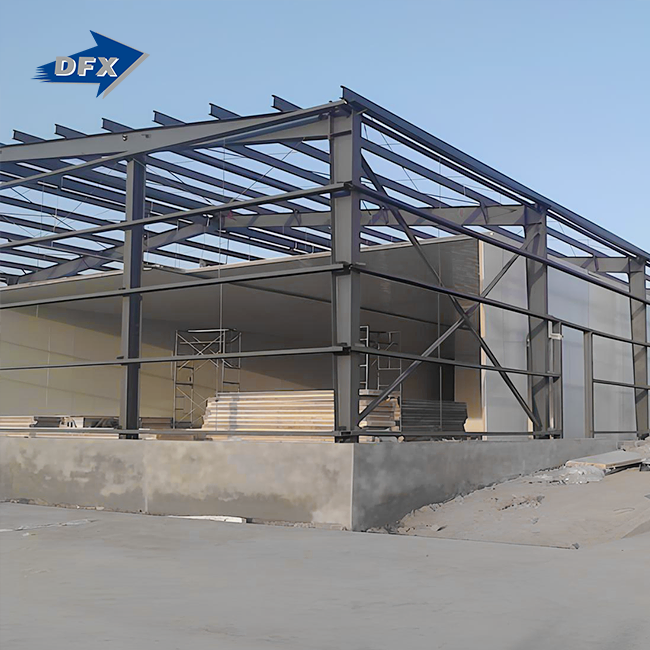
There is a specific type of industrial storage facility designed for high-volume transport operations: Logistics Park Steel Warehouses. Instead of using a mix of materials like most warehouses, these structures are made with Pre-Engineered Steel Building (PEB) methods that combine precise production with structural design. As a result, the building comes to the site already made up of parts that can be put together quickly. This makes the building process much shorter.
What Makes These Warehouses Different?
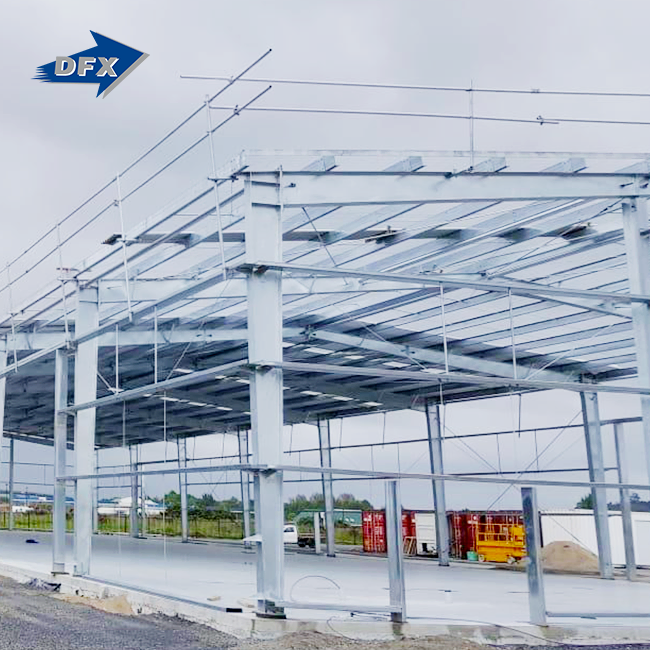
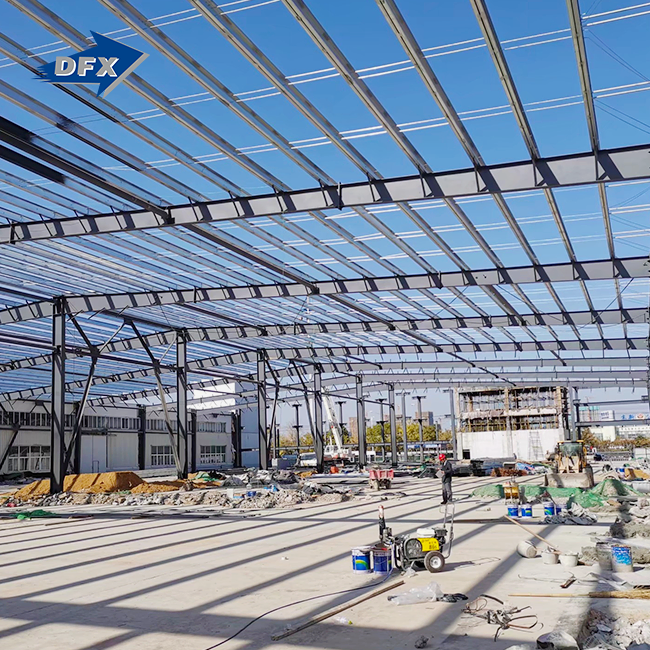
Modern transportation requires infrastructure that can handle various items and integrate technology. Logistics Park Steel Warehouses' clear-span features, which often exceed 30 meters, eliminate the need for support beams. This open floor concept accommodates high-bay shelving, VNA trucks, and AS/RS. Steel beams with 345 MPa strength form the construction. These beams support roof-mounted solar panels, ceiling-mounted conveyor systems, and large HVAC equipment.
Integration with Modern Supply Chains
For e-commerce fulfillment, cross-docking, and intermodal freight movement, distribution centers need buildings that are built to make work run smoothly. Logistics Park Steel Warehouse construction lets you have many wide-span loading bays and long roof overhangs that keep the areas where you move goods from the weather. Because Logistics Park Steel Warehouse framing is modular, buildings can grow linearly as business needs increase, adding new rooms without stopping current activities. This ability to shift is very helpful for businesses that have to deal with changing market conditions and regular changes in demand.
Key Advantages of Steel Warehouses for Large-Scale Storage
Logistics Park Steel Warehouse construction has real benefits that have an effect on both the starting cost of capital and the long-term cost of running the business. When project managers and buying heads look at storage options, they know that these benefits will help them stay competitive and make money.
Superior Structural Performance and Safety
Steel has great strength-to-weight ratios because of the way it is made. This means that lighter platforms can hold heavy loads. Depending on the weather in the area, buildings can be built to survive earthquakes with a magnitude of 8 or higher and winds of up to 150 km/h. Intumescent coatings that expand when heated insulate structure members, and non-combustible sandwich panels with PIR or Rockwool bases are used to protect against fire for two to four hours.
The galvanizing covering that is put on secondary steel members protects them with zinc at levels higher than 275g/m². This makes them last much longer in wet or corrosive environments. This resistance to corrosion is especially useful in cold chain facilities, where differences in temperature can cause condensation, and in seaside cargo parks, where salt air is present.
Economic and Timeline Benefits
One of the best things about Logistics Park Steel Warehouses is how quickly they can be built. Pre-engineered parts made in a controlled workshop environment guarantee accuracy in measurements and quality stability that can't be reached with pouring concrete on-site. Focusing on preparing the base and putting together the parts, site work cuts down on worker needs and delays caused by bad weather. With Logistics Park Steel Warehouse building, projects that would take 12 to 18 months to finish with standard methods can be finished in 6 to 9 months, which speeds up the return on investment.
Here are the main financial reasons why Logistics Park Steel Warehouses are becoming more popular:
- Lower Initial Investment: Logistics Park Steel Warehouse construction is a good choice for manufacturing companies and farms that are on a tight budget because it is efficient with materials and easy to put together, which cuts total project costs by 20 to 30 percent compared to concrete options.
- Minimal Maintenance Requirements: Logistics Park Steel Warehouses only need to be inspected and coated a few times a year. The frames can last 50 years or more, and the cladding systems can work effectively for 20 to 30 years before they need to be replaced.
- Energy Efficiency: The thermal insulation values can be changed by choosing the right sandwich panel. For climate-controlled storage areas, polyurethane cores can achieve R-values that lower heating and cooling costs.
- Salvage and Relocation Value: If a business's needs change, Logistics Park Steel Warehouse parts can be taken apart and moved, which is something that concrete buildings can't do.
Environmental Sustainability Credentials
Sustainability claims by firms are influencing buying decisions across all sectors. Logistics Park Steel Warehouses achieves environmental goals in numerous ways. Steel is one of the most recyclable materials. Structural steel is recycled up to 90% and can be reused. Unlike producing concrete, which releases a lot of CO₂, this steady flow of materials reduces carbon storage.
The correct insulation scheme can save energy and reduce your building's carbon impact over time. Facilities can add solar panels on their rooftops to offset grid energy, and the panels' framework can support greater weight without reinforcement. These green features help with LEED certification and public sector building criteria.
Design and Customization Options Tailored for Logistics Parks
Standardization and project-specific needs must be balanced in order for storage spaces to work well. Logistics Park Steel Warehouse building methods can be changed in a lot of ways, and they are still very efficient, which keeps costs down.
Maximizing Storage Capacity Through Structural Design
Optimising cubic storage space is crucial to warehouse efficiency. The Logistics Park Steel Warehouse frame allows this in several ways. Column spacing is normally 24–36 meters, allowing normal racking aisle layouts without concealed column obstructions that take up space. Comparing this concept to tighter column-grid buildings, storage efficiency increases 15–20%.
Vertical rack systems can enhance storage capacity due to high ceilings (12–15 meters). Monitor panels or ridge vents on the roof let air flow freely, reducing the requirement for a motorised device to store outdoor heat. The floor systems fulfil "Superflat" criteria with Fmin values of 100 or greater for VNA forklift operations that need little floor variation.
Technological Integration Capabilities
These days, warehouses are data-driven places where real equipment helps digital management systems work. This is possible with Logistics Park Steel Warehouses because their flexible interior plans make it easier to add things like sensor networks, automated guided vehicles (AGVs), and conveyors. Picking and packing can be done on mezzanine floors, which use vertical space without slowing down throughput at ground level.
There are easy-to-use mounting places for lighting systems, sprinkler networks, and ceiling elevators on the structure grid. Building management systems include controls for the HVAC system, security monitoring, and inventory tracking. Logistics Park Steel Warehouse framing provides cable routing paths that keep the building looking clean and make upkeep easier.
Modular Expansion Planning
Businesses often grow faster than the initial plans for their facilities. This issue is taken care of by SS316 efficient steel logistics warehouse designs, which leave room for growth. End-wall frames are designed to be load-bearing "expandable frames" instead of simple closing panels. This means that they can be used to add bays in the future by removing the cladding and expanding the structural grid. This feature is very helpful for investors in manufacturing and building companies that are in charge of handling phased project development.
Planning for an expansion should include things like adding dock doors, utilities, and parking areas. Working with manufacturers that offer full technical support ensures that these things are thought of during the initial design, so you don't have to pay a lot of money for expensive upgrades that stop operations.
Procurement Considerations for B2B Clients
Buying storage infrastructure requires a big investment of money, so Logistics Park Steel Warehouse providers, finance options, and project delivery models need to be carefully considered.
Evaluating Supplier Capabilities
Managers in charge of buying things must make sure that companies that make Logistics Park Steel Warehouses have the technical know-how and production capacity that the project needs. Some important things that are looked at when deciding who to hire are ISO9001 quality certifications, CE markings that show the product meets European standards, and proven project files that show experience working with logistics facilities of a similar size.
Capacity to produce is important, especially for big projects that need thousands of tons of structural steel in a short amount of time. Manufacturers who have specialized C/Z purlin roll-forming equipment, multiple automatic welding lines for H-beams, and sandwich panel production facilities can make sure that delivery dates are in line with building goals. Director Steel's 40,000 square meters of protected production space and 200-person staff are a good example of the size needed to get big projects done reliably.
Turnkey Solutions Versus Component Supply
Buyers must choose project delivery methods wisely. Logistics Park Steel Warehouse supplies structural steel, roofing, and wall panels. Buyers plan and install the panels themselves. Building companies with experience, reputable subcontractors, and planning personnel benefit from this strategy.
Turnkey solutions include design, manufacture, delivery, and setup help from one source. This unified paradigm simplifies collaboration for industrial and farming companies without constructing management systems. Turnkey companies provide engineering estimates, container logistics, and on-site expert assistance. This speeds up project completion and clarifies roles.
Financial Structuring Options
Depending on your cash flow needs and balance sheet, Logistics Park Steel Warehouse projects can be set up as direct purchases, lease-to-own agreements, or vendor partnerships. Companies that have the money and long-term plans for their facilities are more likely to buy an asset outright because it improves their long-term value and gets rid of the need to hire it. Lease structures keep operating cash for core business operations and secure necessary infrastructure, but the total costs over the lifecycle of the structure usually exceed the purchase price.
Another model is developer partnerships, in which owners of specialized logistics parks build facilities and then rent them back to renters. This works well for businesses that are entering new markets or need temporary space when demand spikes. Each method has its own tax effects and financial reporting issues that finance teams should discuss with professional advisers.
Comparing Steel Warehouses to Other Storage Solutions for Logistics Parks
In order to make smart purchasing choices, you need to know how Logistics Park Steel Warehouses compare to other building types and construction methods.
Steel Versus Traditional Concrete Construction
Even though concrete warehouses are more stable and known, Logistics Park Steel Warehouses perform as well as or better than concrete warehouses in most evaluation categories. Logistics Park Steel Warehouse construction schedules are much more flexible than concrete ones, and parts that are made in a workshop avoid the weather delays that plague concrete projects. Cost comparisons show that Logistics Park Steel Warehouse structures save 20–30% on the original cost of construction, and the benefits of less upkeep add up over time.
In some situations, the thermal mass of concrete helps keep the temperature stable passively. However, modern insulated Logistics Park Steel Warehouse panels can do the same or even a better job thanks to their designed thermal breaks and high-R-value cores. Performance during earthquakes and resistance to wind rely on engineering details rather than the choice of material. Both materials can meet strict regional codes if they are built correctly.
Modification adaptability is often what makes the difference. Logistics Park Steel Warehouses are much easier to move, grow, or change their layout than solid ones. This is especially useful in industries that change quickly, like contract logistics and e-commerce fulfillment.
Specialized Applications and Hybrid Approaches
Facilities in the cold chain that store temperature-sensitive goods need to pay extra attention to thermal efficiency and controlling condensation. Here, the Logistics Park Steel Warehouse building really shines thanks to the exact panel joint details and special coatings that stop corrosion caused by water. Temperature ranges from -25°C to +5°C can be accommodated by panels that are 100–200 mm thick. Vapour barriers and thermal breaks stop energy waste.
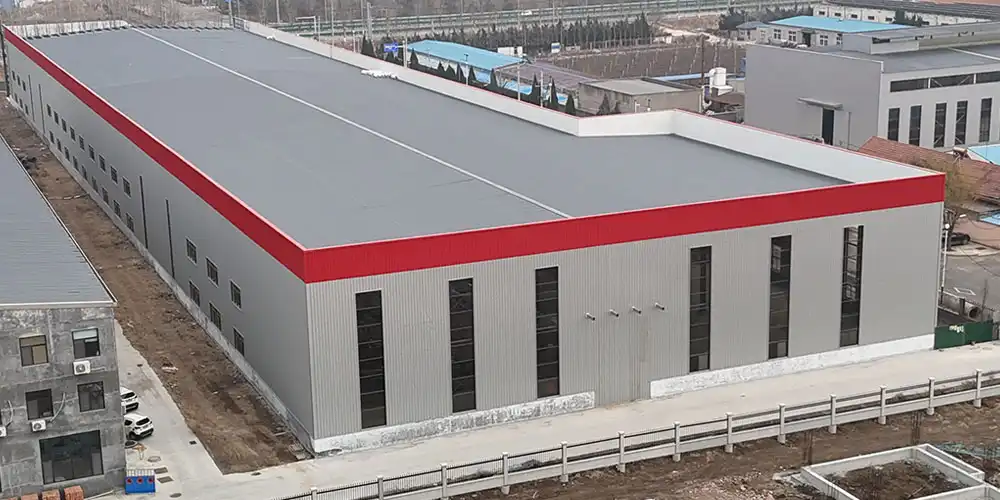
A hybrid building, which uses both the strengths of concrete foundation walls and Logistics Park Steel Warehouse superstructures, is useful for some tasks. For lower wall sections next to loading docks, concrete provides strong side bracing and impact protection, while Logistics Park Steel Warehouse framing provides clear-span roofs and upper walls. These hybrid methods work well for cross-docking sites that get a lot of traffic and could be hit by vehicles.
Conclusion
In conclusion, when it comes to large-scale storage in a number of categories, Logistics Park Steel Warehouses offer clear benefits. For building workers, manufacturers, and infrastructure developers, the most important things to look for in a purchase are structural performance, economic efficiency, and environmental sustainability. International clients can get high-quality materials that meet ISO9001 and CE standards at reasonable prices with the modular, premade method made in China. Short building times also speed up project returns. As supply lines get more complicated and operational flexibility is needed more than ever, Logistics Park Steel Warehouse construction gives businesses the freedom and dependability they need to stay competitive in the global market.
FAQ
1. What is the typical construction timeline for a steel logistics warehouse?
Building times depend on the size of the project, but Logistics Park Steel Warehouses are usually finished 30–50% faster than concrete options. A 10,000-square-metre building can usually be covered and ready to use 6 to 9 months after the ground is broken, compared to 12 to 18 months for normal construction. This speeding up is because base work and Logistics Park Steel Warehouse manufacturing are done at the same time, and then prefabricated parts are quickly put together on-site.
2. How do maintenance requirements compare to traditional warehouses?
Logistics Park steel warehouses need a lot less upkeep than buildings made of concrete or stone. Once a year checks that include cleaning the gutters, lubricating the door locks, and doing small touch-ups to the paint are usually enough. The galvanised secondary framing doesn't rust for decades, and the structure frames work effectively for more than 50 years with little maintenance. Compared to concrete buildings that need crack repairs and surface treatments on a regular basis, this cuts down on lifetime costs by a large amount.
3. Can steel warehouses support heavy automated equipment installations?
Heavy tools can be used with Logistics Park Steel Warehouse framing because beams and columns are sized ahead of time to meet specific needs. During the planning phase, load effects can be calculated for suspended conveyor systems, overhead cranes, and rooftop solar arrays so that they can all work together. Because of this, facilities can use automation technologies as their operations grow, which saves money on expensive structure upgrades that are needed in buildings that weren't designed with the future in mind.
Partner with DFX for Your Logistics Park Steel Warehouse Needs
Choosing the right logistics park steel warehouse provider is important for the success of the project because they offer quality, dependability, and full support. Since 2011, DFX has been doing business as Qingdao Director Steel Structure Co., Ltd. They have more than 12 years of experience making logistics park steel warehouses, storage centres, and transportation hubs around the world. Our 40,000-square-metre production centre and 200-person team can make more than 20,000 tons of welded H-beams every year using six automated production lines. This makes sure that your project gets precisely designed parts that meet ISO9001 and CE certification standards.
We offer complete solutions that include technical calculations, fabrication, logistics planning, and advice on how to set up the equipment. This makes buying easier for building companies and factory investors. Our in-house architectural design service helps with projects from the beginning to the end, no matter if you need a standard modular prefabricated logistics park steel warehouse or a solution that is specifically made for your needs. Get in touch with Jason at jason@bigdirector.com to talk about your logistics warehouse needs and get a full project evaluation from a seasoned logistics park steel warehouse builder dedicated to giving you the infrastructure you need for operational success and long-term growth.
References
1. Smith, J. & Anderson, R. (2021). Prefabricated Steel Building Systems for Modern Logistics Infrastructure. Industrial Construction Press.
2. Chen, L. (2020). "Comparative Analysis of Construction Methods for Large-Scale Warehouse Facilities," Journal of Structural Engineering and Construction Management, Vol. 15, No. 3, pp. 112-128.
3. International Building Code Council (2022). Steel Structure Design Standards for Commercial Warehousing Applications, 4th Edition.
4. Williams, M. (2023). "Lifecycle Cost Analysis of Steel Versus Concrete Industrial Buildings," Construction Economics Quarterly, Vol. 38, No. 2, pp. 45-67.
5. European Committee for Standardisation (2021). EN 1090: Technical Requirements for Steel Structures in Logistics Applications.
6. Thompson, K. & Garcia, P. (2022). Sustainable Building Materials and Practices in Global Supply Chain Infrastructure. Green Construction Institute.
Learn about our latest products and discounts through SMS or email