- English
- French
- German
- Portuguese
- Spanish
- Russian
- Japanese
- Korean
- Arabic
- Greek
- German
- Turkish
- Italian
- Danish
- Romanian
- Indonesian
- Czech
- Afrikaans
- Swedish
- Polish
- Basque
- Catalan
- Esperanto
- Hindi
- Lao
- Albanian
- Amharic
- Armenian
- Azerbaijani
- Belarusian
- Bengali
- Bosnian
- Bulgarian
- Cebuano
- Chichewa
- Corsican
- Croatian
- Dutch
- Estonian
- Filipino
- Finnish
- Frisian
- Galician
- Georgian
- Gujarati
- Haitian
- Hausa
- Hawaiian
- Hebrew
- Hmong
- Hungarian
- Icelandic
- Igbo
- Javanese
- Kannada
- Kazakh
- Khmer
- Kurdish
- Kyrgyz
- Latin
- Latvian
- Lithuanian
- Luxembou..
- Macedonian
- Malagasy
- Malay
- Malayalam
- Maltese
- Maori
- Marathi
- Mongolian
- Burmese
- Nepali
- Norwegian
- Pashto
- Persian
- Punjabi
- Serbian
- Sesotho
- Sinhala
- Slovak
- Slovenian
- Somali
- Samoan
- Scots Gaelic
- Shona
- Sindhi
- Sundanese
- Swahili
- Tajik
- Tamil
- Telugu
- Thai
- Ukrainian
- Urdu
- Uzbek
- Vietnamese
- Welsh
- Xhosa
- Yiddish
- Yoruba
- Zulu
Steel Structure School Building: The Complete Expert Guide
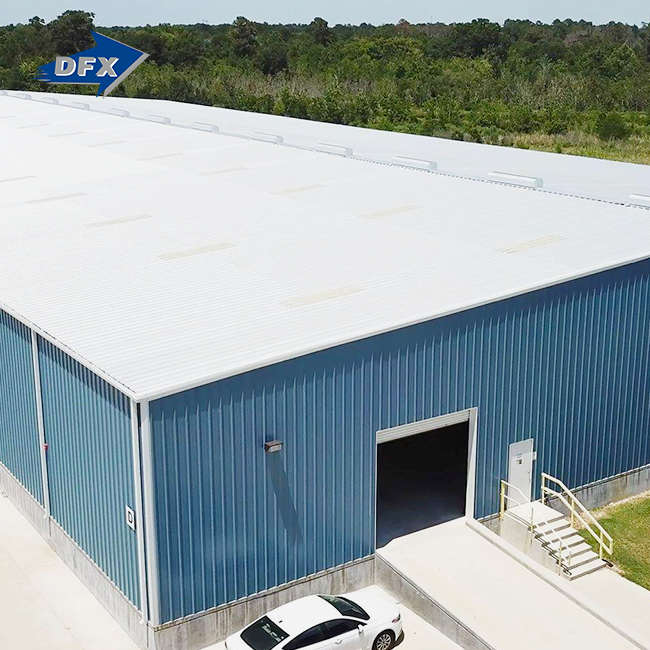
When we talk about modern school buildings, Steel Structure School Buildings are a big deal because they change the way we build places to learn. These special frameworks use load-bearing steel parts like H-beams, box columns, and C/Z purlins instead of regular reinforced concrete. This lets schools meet tight project deadlines while still making sure the structure is safe. As a company that has been in business since 2011, DFX has seen firsthand how pre-engineered building systems can help project managers with some of the most important problems they face today. These problems include shortening construction timelines to fit school schedules, making buildings safer during earthquakes, and allowing for flexible layouts that can fit gyms and classrooms without columns getting in the way.

Understanding Steel Structure School Buildings – Concepts and Benefits
Steel Structure School Building designs blend the best of engineering accuracy and new ideas in architecture. The unique thing about these buildings is that they are made up of separate modules. These modules are made in controlled factories, where the dimensions and quality are always the same, which is not possible with standard on-site construction.
Why Steel Outperforms Traditional Materials
When you compare lifetime performance, the benefits become clear. Steel Structure School Building projects made from Q235 or Q355 grade materials have yield values higher than 345 MPa, which means they can hold more weight per unit of weight than concrete or brick. This means that the base costs will go down and the job will be finished faster. Our factory has six automatic welded H-beam lines that make about 20,000 tons of steel every year. This shows how steel construction can be scaled up to fit big school grounds. Another important benefit is that it lasts a long time. Steel frames can last between 50 and 100 years if they are properly covered with hot-dip galvanization over 600g/m² or marine-grade coating systems. The material can be recycled over and over again, which meets environmental requirements that are becoming more important to school boards and government buying teams.
Fire and Seismic Resistance
Modern Steel Structure School Building developments have intumescent fireproof Educational facility coatings that expand when heated, keeping structure parts warm for two to three hours, which is longer than most fire rules for educational buildings. During earthquakes, steel's high ductility lets it bend without falling apart completely, which is an important safety trait for areas that are likely to have earthquakes. Director Steel makes sure that all plans meet the requirements of AISC 360, Eurocode 3, or GB 50017, based on where the project is located.
Design and Engineering of Steel Structure School Buildings
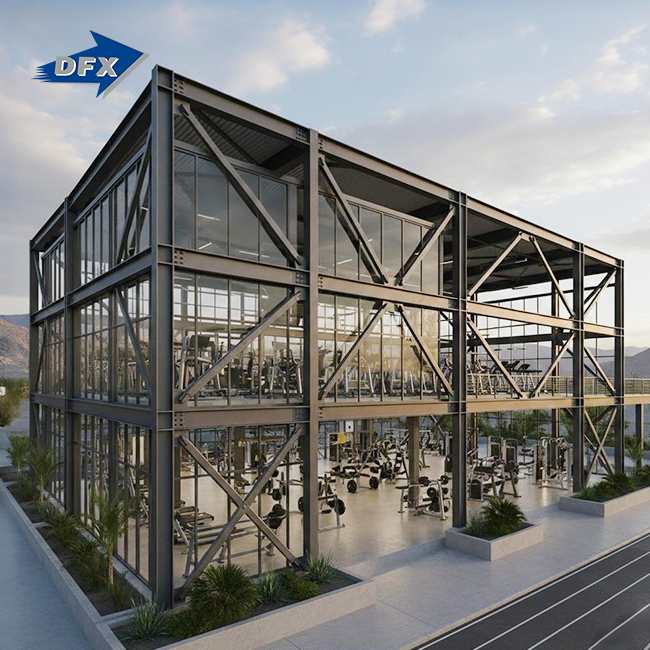
Modern Steel Structure School Building facilities are defined by their architectural freedom. With the steel column-beam frame system we make, planners can make inspiring places like schools with curtain walls that let in natural light and administrative buildings with metal panel siding that go up several stories.
Modular Layouts and Space Optimization
Pre-engineered parts make it possible to create a wide range of Steel Structure School Building types, from elementary schools with one story to high school complexes with several floors. Clear-span trusses longer than 30 meters get rid of the need for internal columns in cafeterias and auditoriums, making the area more useful. Composite floor systems have a steel base and a concrete top. They can handle the shifting weight of science labs and library records while keeping the structure's depth low. From the first idea to the finished product, our in-house architectural design service works with project managers. We provide structural estimates that are checked against local building rules to make sure they meet the needs of PVOC, COC, and CE approval. This turnkey method meets the need for single-source accountability that many EPC companies have said they want.
Construction Process and Quality Control
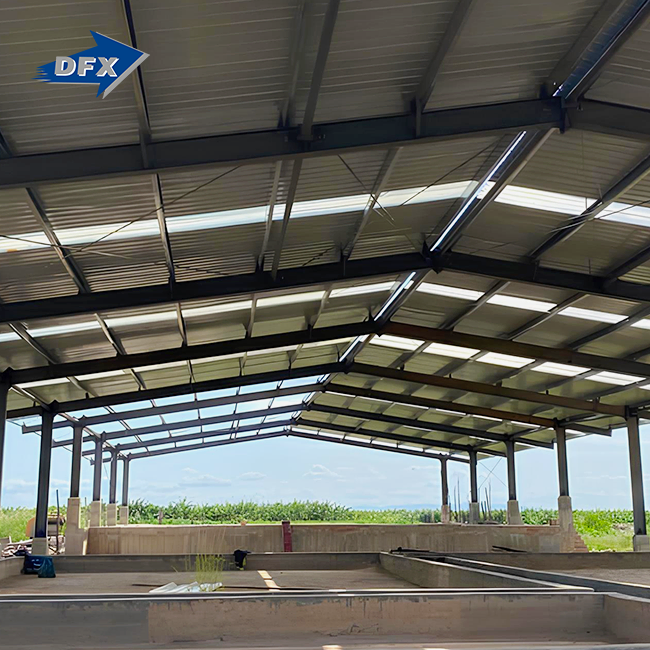
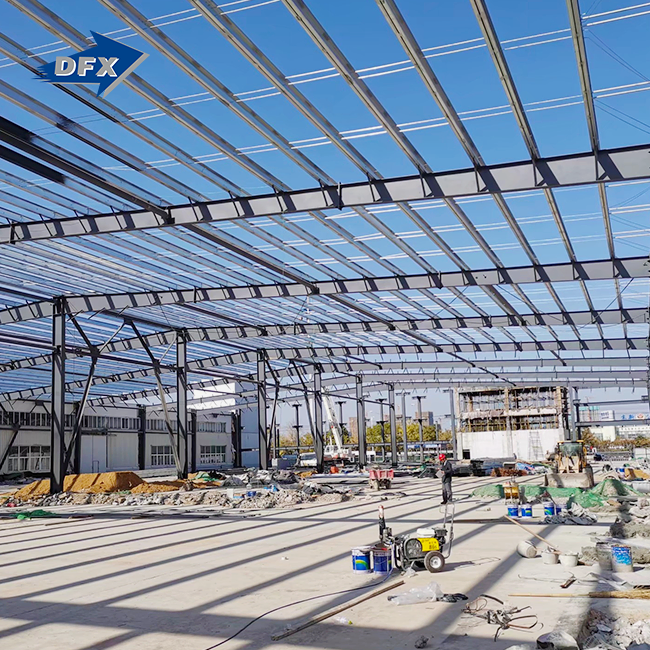
Making precise Steel Structure School Building products starts with checking the raw materials. Before fabrication starts, we look at Mill Test Certificates that prove the chemical makeup. Welding quality meets AWS D1.1 standards, and before shipping, underlying flaws are found with Ultrasonic Testing on full-penetration joints and Magnetic Particle Testing on fillet welds. Pre-assembly tests in our 40,000-square-meter building make sure that the alignment of the pin holes is within a 2-mm range. This keeps expensive delays from happening on-site. Over 200 trained workers oversee this factory-based quality control, which cuts the need for field labor by 40–60% compared to traditional building. This has a direct effect on the project's educational facility budgets and schedules.
Procurement and Cost Considerations for Steel Structure School Buildings
To make budget choices, you need to know about the total ownership economics, not just the starting costs. When purchasing managers compare building a Steel Structure School Building or a concrete facility, they should look at a number of cost factors that show steel to be more cost-effective.
Comparative Cost Analysis
When faster plans and fewer foundation needs are taken into account, Steel Structure School Building projects usually get the same cost or save 15 to 25 percent per square meter. The lighter weight of the structure—steel frame weighs about a third as much as a similar concrete structure—lowers the cost of footings and pilings, which is especially helpful when the soil is bad. Prefabrication cuts the time it takes to build something by 30 to 50 percent, which means the building can be used sooner and the cost of financing is lower. With pre-engineered steel systems, a 5,000-square-meter elementary school can be built in 8–10 months instead of 14–16 months with standard ways.
Prefabricated vs. Custom Solutions
Project-based Steel Structure School Building creation lets you make changes that fit the needs of your classroom. Standard modular classes can be set up quickly, while custom-engineered solutions can be used for specific design goals or difficult site circumstances. Timeliness, budget freedom, and design complexity all play a role in the choice. We offer both ways, and during the initial talks, our tech teams help clients figure out the best way to proceed.

Maintenance, Safety, and Environmental Impact
The long-term success of a Steel Structure School Building rests on good maintenance and materials that don't break down easily.
Routine Maintenance Requirements
Steel Structure School Building facilities used for schools need less upkeep than concrete ones that crack easily or brick ones that need to be tuck-pointed. Inspections that happen once a year check for damage to the paint, loose connections, and problems with the drainage system. We use weather-resistant Corten steel or enhanced galvanization with chlorinated rubber topcoats in coastal areas where saltwater contact speeds up corrosion. This means that repair gaps are longer. Since there is no wet building during installation, there are no delays in curing and no problems with the Modular classroom moisture. Steel assembly makes less dust and noise than concrete work, so schools can stay open during growth projects. This keeps the learning setting safe.
Environmental Stewardship
Credentials for sustainability are becoming more and more important in buying decisions. Making Steel Structure School Building components releases less carbon into the air per ton than making cement, and because buildings can be recycled at the end of their useful lives, they are reused in new construction instead of being thrown away. The way we make things follows rules for environmental management, which means we use as little energy and materials as possible. Insulated wall panels with R-values of 20 to 30 improve thermal performance by lowering the building's heating and cooling needs over its entire duration. Energy modeling shows that steel schools can meet the requirements for LEED approval, which supports the green goals of the institutions involved.
Making the Right Choice: Decision-Making Guide for B2B Clients
To choose the right Steel Structure School Building options, you need to carefully look at both technical and financial factors that are in line with your company's goals.
Critical Selection Metrics
Specifications for corrosion protection, structure support, and material approvals should all be looked at in a durability analysis. Ask for proof that the steel grade meets the requirements—a tensile strength of between 470 and 630 MPa for Q355B steel provides enough safety gaps for teaching loads. Cost-effectiveness includes more than just the original purchase price. It also includes things like energy efficiency, upkeep costs, and useful flexibility that lets you make changes in the future. If you build a Steel Structure School Building the right way, you can change the layout of the inside to fit new ways of teaching that you can't do with load-bearing stone walls.
Matching Building Types to Project Needs
Single-story modular Steel Structure School Building designs work well for small elementary schools with 200 to 400 kids because they keep base costs and building complexity to a minimum. Multi-story layouts work well on college grounds in cities where limited space means building higher up. Our engineering team helps clients find the best building shape based on the site's features, registration forecasts, and the client's budget. Material choice and details are affected by climate. In places where it snows a lot, roof framing needs to be improved. In places where hurricanes are common, links need to be tightened, and cladding needs to be impact-resistant. We build Steel Structure School Building sites that work with the Modular classroom climate where they are located, from -30°C in the Arctic to +50°C in the desert.
Supplier Capabilities and Support
Service after the sale is what sets strategic partners apart from basic Steel Structure School Building providers. Look for makers that offer installation instructions. For example, our expert teams supervise the assembly process on-site to make sure it's done right. Help with architectural layout design lets clients see how they'll use their room before they agree to the final arrangements. Delivery dependability is very important for keeping to project plans. From order approval to shipping, project-based fabrication timelines usually take 8 to 12 weeks, but the length depends on how complicated the job is and how many are being made. Clear contact throughout the manufacturing process keeps surprises from happening that could delay finish dates.
Conclusion
Procurement managers, project engineers, and facility planners dealing with today's educational infrastructure needs can benefit greatly from Steel Structure School Buildings. Steel is the best material for forward-thinking businesses because it can be built quickly, is strong, can be designed in a variety of ways, and is cost-effective over its entire life. We've built a wide range of Steel Structure School Building facilities, from single-story country schools to multi-level urban sites. This shows that steel is useful for a wide range of project sizes and locations. As requirements for sustainability get stricter and budgets stay tight, steel-framed school buildings have been shown to be a good way to balance short-term needs with long-term value creation.

FAQ
1. How long do steel structure school buildings last?
Steel Structure School Building frames can hold their weight for 50 to 100 years if they are properly protected against corrosion with hot-dip galvanization or high-performance coating systems. Some parts of the building envelope, like roof panels and wall covering, may need to be replaced every 25 to 30 years, but the main steel frame will last longer than most institutional planning goals.
2. What are typical lead times for prefabricated steel schools?
Manufacturing takes between 8 and 12 weeks, based on how complicated the Steel Structure School Building job is and how long the production line is. Custom-engineered multi-story buildings that need detailed shop plans take longer to build than simple prefab classroom buildings. On-site construction usually takes 6–10 weeks for a full grade school. This means that the whole project takes 5–7 months from the time the order is placed to the time the school is occupied.
3. How do steel schools perform in earthquake zones?
Steel is better at handling earthquakes because it is very flexible, which lets it bend in a controlled way during ground motion. When Steel Structure School Building braced frames are built correctly, they release earthquake energy by giving predictably instead of breaking easily, which protects the people inside. Our designs include seismic details that meet the standards of the UBC, IBC, or local building codes. The connection designs are checked by engineering studies that are acceptable for the amount of seismic risk at the site.
Partner with DFX for Your Next Educational Facility
Director Steel is ready to change the way your school building project is done by using tried-and-true Steel Structure School Building solutions that are made to meet international standards. Our ISO9004-certified factory in Qingdao makes safe, cost-effective, and architecturally excellent school buildings. We work with construction companies, engineering and procurement firms, and educational institutions that need reliable Steel Structure School Building suppliers who can plan, manufacture, and install the buildings. Email our experienced team at jason@bigdirector.com to talk about your project needs and get thorough technical offers with fair prices.
References
1. American Institute of Steel Construction (AISC). Seismic Design Manual, 3rd Edition. Chicago: AISC, 2016.
2. Chen, W.F., and Lui, E.M. Handbook of Structural Engineering, Second Edition. Boca Raton: CRC Press, 2005.
3. Gorse, Christopher, et al. A Dictionary of Construction, Surveying, and Civil Engineering. Oxford: Oxford University Press, 2012.
4. Lawson, R.M., and Ogden, R.G. Application of Modular Construction in High-Rise Buildings. Journal of Architectural Engineering, Vol. 18, No. 2, 2012.
5. Tata Steel Construction. Steel Building Design: Introduction to Design Concepts. SCI Publication P387, 2014.
6. United States Green Building Council. LEED Reference Guide for Building Design and Construction. Washington, DC: USGBC, 2019.
Learn about our latest products and discounts through SMS or email