- English
- French
- German
- Portuguese
- Spanish
- Russian
- Japanese
- Korean
- Arabic
- Greek
- German
- Turkish
- Italian
- Danish
- Romanian
- Indonesian
- Czech
- Afrikaans
- Swedish
- Polish
- Basque
- Catalan
- Esperanto
- Hindi
- Lao
- Albanian
- Amharic
- Armenian
- Azerbaijani
- Belarusian
- Bengali
- Bosnian
- Bulgarian
- Cebuano
- Chichewa
- Corsican
- Croatian
- Dutch
- Estonian
- Filipino
- Finnish
- Frisian
- Galician
- Georgian
- Gujarati
- Haitian
- Hausa
- Hawaiian
- Hebrew
- Hmong
- Hungarian
- Icelandic
- Igbo
- Javanese
- Kannada
- Kazakh
- Khmer
- Kurdish
- Kyrgyz
- Latin
- Latvian
- Lithuanian
- Luxembou..
- Macedonian
- Malagasy
- Malay
- Malayalam
- Maltese
- Maori
- Marathi
- Mongolian
- Burmese
- Nepali
- Norwegian
- Pashto
- Persian
- Punjabi
- Serbian
- Sesotho
- Sinhala
- Slovak
- Slovenian
- Somali
- Samoan
- Scots Gaelic
- Shona
- Sindhi
- Sundanese
- Swahili
- Tajik
- Tamil
- Telugu
- Thai
- Ukrainian
- Urdu
- Uzbek
- Vietnamese
- Welsh
- Xhosa
- Yiddish
- Yoruba
- Zulu
Steel Structure Exhibition Trends: Modular Buildings and ROI
If you've been tracking the construction industry lately, you already know that modular steel buildings are no longer a niche concept. At every major steel structure exhibition held globally, modular prefabricated systems consistently dominate the conversation. Whether you manage procurement for an EPC contractor, oversee factory expansion, or run a large agricultural operation, understanding these trends can directly shape how you invest in your next building project—and what kind of return you realistically expect.

Understanding Steel Structure Exhibitions and Modular Building Trends
How Exhibitions Reflect a Shifting Industry
Steel structure exhibitions are no longer just trade shows. These places now serve as live intelligence hubs where buyers can check out new technologies such as BIM integration, AI-assisted structural detailing, and precision robotic welding. According to the Global Construction Review, modular steel construction made up about 18% of all new industrial building starts in the Asia-Pacific region in 2024. This number keeps going up. Expert talks, live fabrication comparisons, and interactive demos are now part of these events. These give procurement managers real-world information about cost, speed, and scalability.
The Modular Shift and What It Means for Buyers
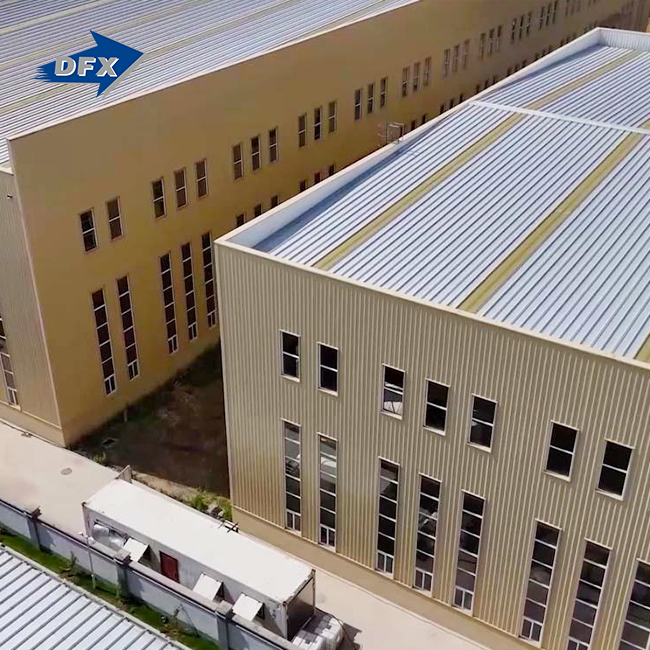
The move toward pre-engineered steel buildings with no columns shows a big change in how budgets and timelines are managed for construction projects. Modular steel buildings made of Q235 or Q355 grade steel let quality control happen in the mill before the parts even get to the job site. Compared to traditional reinforced concrete methods, this cuts down on on-site labor by a lot and speeds up project schedules by 30–50%. For buyers at construction or metal building shows, it's easy to see what they need to know: modular steel technology is no longer a test case; it's now the normal way to buy materials for competitive projects.
The Impact of Modular Buildings on ROI for B2B Clients
Why ROI Calculations Favor Steel
When purchasing managers look at building a new plant or warehouse for logistics, flexible steel structure exhibitions make a strong financial case. The Steel Construction Institute says that foundations can be loaded less when steel framing is used. This lowers the initial cost of civil work. For manufacturing investors and EPC contractors working on tight project schedules, faster assembly means earlier occupancy, which speeds up revenue generation. This is a key benefit.
Here are the main financial benefits that modular steel construction always gives:
- Reduced foundation costs: Because steel is strong for its weight, buildings that are made of it put less stress on the ground. This lowers the costs of civil work for big industrial projects.
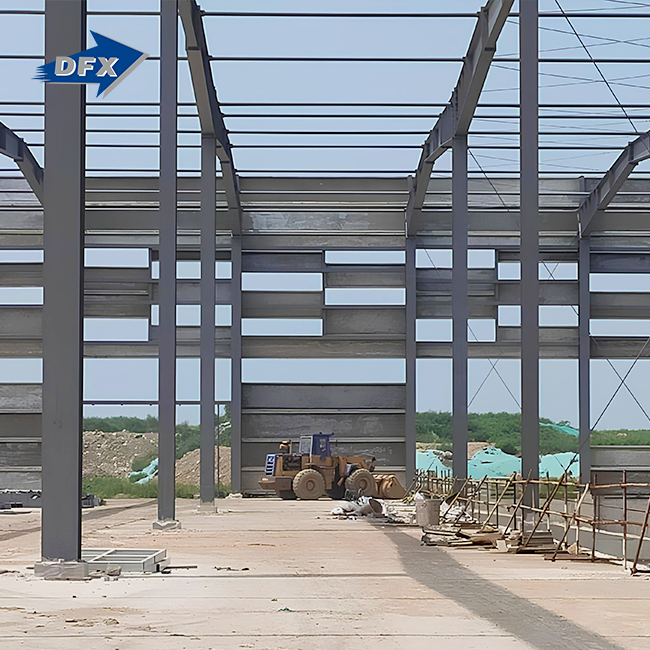
- Faster project delivery: Factory-made parts come to the job site already cut and drilled, which lets erection teams work quickly and accurately, often finishing structural frameworks in weeks instead of months.
- Lower lifecycle maintenance: High-performance anti-corrosion systems, like hot-dip galvanizing or three-layer marine-grade coatings, make the service life 25–50 years longer without any maintenance, which lowers the long-term cost of running the business.
- Flexible reconfiguration: Unlike concrete frames, modular steel frames can have their structures changed in the future. This is useful for manufacturing companies that expect to make changes to how they run their business.
These benefits directly lead to measured ROI improvements in a wide range of businesses, from chicken coops to big office buildings. When buyers see these systems at steel structure exhibitions, they always say that seeing full-size mockups and looking over real project data makes them more confident in their decision to buy.
Preparing for Steel Structure Exhibitions to Maximize Business Benefits
Building Your Pre-Exhibition Strategy
Going to a steel structure exhibition without being ready is like missing out on a chance. The most useful buyers come to these events with a clear idea of what they want, a short list of potential suppliers, and meetings already planned. I think you should look through the exhibitor directories at least three weeks ahead of time and sort vendors by how well they can provide full turnkey solutions, which include designing the structure, making it, and helping you set it up.
On-site, you should focus your review on three things: the supplier's track record of meeting delivery dates, product quality certifications like CE and ISO compliance, and the supplier's ability to create and engineer products. Ask sellers directly about their steel grade standards, how they check welds, and if they can give you Mill Test Certificates to show where the raw materials came from. These questions quickly separate trustworthy manufacturers from people who just sell generic goods.
Leading Steel Structure Exhibitions to Watch in 2026 Key Events Shaping Procurement Decisions
In 2024, there will be a number of foreign events that building and industrial procurement teams will remember. The Canton Fair in China is still a major place for EPC companies from Africa, Southeast Asia, and the Middle East to find pre-engineered metal buildings. European buyers can get access to cutting-edge manufacturing technology and structural innovation at METEC in Düsseldorf and BAUMA in Munich. In North America, the METALCON expo is only for people who work with metal buildings. This makes it a great place for US procurement managers looking for industrial steel building suppliers.
One important difference between these events and general construction expos is that vendors at specialized steel structure exhibitions usually have more engineering knowledge, better product documentation, and stronger after-sales support structures. These are all things that are very important when looking for materials for big or complicated projects.
Leveraging Exhibition Opportunities: Booking, Vendor Contacts, and Partnerships
Turning Exhibition Contacts into Long-Term Supply Relationships
In the steel building business, connections that last a long time often start at a steel structure exhibition booth. Early booth registration, usually three to six months ahead of time, gets exhibitors better placement and lets them make special presentations for visitors who are most likely to be interested. For buyers, setting up one-on-one technical meetings with chosen sellers during the event is more useful than just walking around the floor.
Strategic partnership evaluation at these events should cover the supplier's annual production capacity, available certifications, and whether they offer full services from planning to installation. There is a lot less risk in buying from vendors who can show they can do architectural detailing in-house and make structural calculations that meet local building codes. A supplier's dedication to openness in the market and long-term client relationships can also be seen by how often they show up at industry events.
Conclusion
Modular steel construction is changing how the construction, manufacturing, and farming industries buy things. Steel structure exhibitions are still the best places to learn about new manufacturing technologies, compare the skills of different suppliers, and make connections in the supply chain that lower project risk. When B2B buyers are looking at new industrial buildings, business offices, or agricultural facilities, modular steel is a high-ROI investment that should be seriously thought about because it delivers faster, has lower lifecycle costs, and allows for more engineering versatility.
FAQ
1. What are the main advantages of modular steel structures over concrete?
Modular steel buildings can be put together 30–50% faster than concrete ones. They also have lower foundation costs because they carry lighter loads, and they can be reconfigured in the future. They also offer better quality control because the parts are made ahead of time in the plant.
2. What steel grades are typically used in pre-engineered commercial buildings?
Most structural steel is made from grades Q235 and Q355. Q355 has a higher yield strength and can be used in large-span or multi-story buildings, such as industrial plants and business office buildings.
3. What certifications should I look for when selecting a steel structure supplier?
Give more weight to sellers who have CE certification, follow ISO 9001 or ISO 9004, and have product approvals like COC or PVOC. These labels show that the ways things are made and the materials used meet quality and safety standards around the world.
4. Can steel-structure buildings be customized for specific project layouts?
Yes, suppliers that offer in-house architectural design services can change the structure of composite floors, curtain walls, or metal panels, column-beam shapes, and steel bracing patterns to meet specific functional and aesthetic needs.
5. How long does a steel-structure commercial building typically last?
The design service life is more than 50 years with regular upkeep and normal C3-level anti-corrosion treatment. Marine-grade coating systems keep things working well for 25 to 50 years without any maintenance in damp places.
Partner with DFX for Your Next Modular Steel Structure Project
Since 2011, DFX (Qingdao Director Steel Structure Co., Ltd.) has been making and delivering pre-engineered steel buildings. They have more than 200 skilled workers and 40,000 m² of production space. Our steel structure exhibition supplier can do everything, from designing the structure to making it in a way that is CE-certified and providing full installation instructions. Please email our team at jason@bigdirector.com to talk about your project needs right away, whether you need a single-story industrial warehouse or a multi-story commercial office building that meets local codes.
References
1. Steel Construction Institute. Steel Designers' Manual. 8th ed. Wiley-Blackwell, 2020.
2. McGraw-Hill Construction. Prefabrication and Modularization: Increasing Productivity in the Construction Industry. SmartMarket Report, 2011.
3. World Steel Association. Steel in Buildings and Infrastructure. World Steel Association, 2023.
4. BRE Global. Sustainability of the Steel Construction Industry. BRE Press, 2021.
5. Global Construction Review. Asia-Pacific Construction Outlook and Modular Building Adoption Trends. RICS, 2024.
6. METALCON International. Annual Industry Trends Report: Metal Building Systems and Pre-Engineered Structures. METALCON, 2023.
Learn about our latest products and discounts through SMS or email