- English
- French
- German
- Portuguese
- Spanish
- Russian
- Japanese
- Korean
- Arabic
- Greek
- German
- Turkish
- Italian
- Danish
- Romanian
- Indonesian
- Czech
- Afrikaans
- Swedish
- Polish
- Basque
- Catalan
- Esperanto
- Hindi
- Lao
- Albanian
- Amharic
- Armenian
- Azerbaijani
- Belarusian
- Bengali
- Bosnian
- Bulgarian
- Cebuano
- Chichewa
- Corsican
- Croatian
- Dutch
- Estonian
- Filipino
- Finnish
- Frisian
- Galician
- Georgian
- Gujarati
- Haitian
- Hausa
- Hawaiian
- Hebrew
- Hmong
- Hungarian
- Icelandic
- Igbo
- Javanese
- Kannada
- Kazakh
- Khmer
- Kurdish
- Kyrgyz
- Latin
- Latvian
- Lithuanian
- Luxembou..
- Macedonian
- Malagasy
- Malay
- Malayalam
- Maltese
- Maori
- Marathi
- Mongolian
- Burmese
- Nepali
- Norwegian
- Pashto
- Persian
- Punjabi
- Serbian
- Sesotho
- Sinhala
- Slovak
- Slovenian
- Somali
- Samoan
- Scots Gaelic
- Shona
- Sindhi
- Sundanese
- Swahili
- Tajik
- Tamil
- Telugu
- Thai
- Ukrainian
- Urdu
- Uzbek
- Vietnamese
- Welsh
- Xhosa
- Yiddish
- Yoruba
- Zulu
AISC-certified large-span steel structure hangar Size Guide
If you're sourcing a large-span aviation or industrial shelter, understanding AISC-certified large-span steel structure hangar sizing is the first step toward a smart procurement decision. AISC certification — issued by the American Institute of Steel Construction — signals that a fabricator meets rigorous engineering, material, and fabrication standards that directly affect structural safety and long-term value. This guide walks you through span dimensions, design variables, procurement criteria, and maintenance essentials, giving project managers, procurement engineers, and EPC contractors the practical framework needed to evaluate and acquire the right certified steel hangar solution.

Understanding AISC-Certified Large-Span Steel Structure Hangars
What AISC Certification Actually Means
AISC approval isn't just a badge of quality. Fabricators must show that they have documented quality management systems, can trace their materials, know how to weld properly, and are qualified to be inspectors. Structures made with this framework are in line with AISC 360 (Specification for Structural Steel Buildings) and AISC 303 (Code of Standard Practice). This makes sure that all projects have the same level of accuracy in measurements and structural reliability.
Core Benefits for B2B Procurement
Buying a certified large-span steel hangar has clear benefits throughout the project's lifecycle. Before you spend money, you should know about these main structural and business benefits:
- Structural integrity under extreme loads: AISC-compliant welded H-section steel frames are strong enough to withstand wind uplift, snow accumulation, and seismic lateral forces all at the same time, which is very important for open airfield environments.
- Material traceability: Each steel plate and section comes with a mill certificate that proves that Q355B (equivalent to ASTM A572 Gr.50, yield strength ≥355 MPa) or a similar high-strength steel was used.
- Insurance and permits: A lot of places in the U.S. and around the world that regulate flying need proof that structures are safe. Documentation that is AISC-certified makes it easier to get a building permit and go through checks by the airport authority.
- Lifecycle cost reduction: The Metal Building Manufacturers Association (MBMA) says that pre-engineered steel buildings cut construction time by 30–50% compared to regular concrete buildings, which means that a lot less money is spent on labor.
All of these benefits lower the risk of the project, which is why procurement managers and engineering directors always put it ahead of the original unit price.
Size and Design Considerations for Large-Span Steel Hangars
Recommended Span Ranges by Application
The single most important dimension choice in aisc certified large-span steel structure hangar procurement is picking the right span. If you get it wrong, you'll either waste structural steel on widths that aren't needed or build a building that can't hold the planes or equipment that it was meant to hold.
In the table below, you can see how common span values are related to common uses:
| Application | Clear Span | Eave Height | Typical Floor Load |
|---|---|---|---|
| Light aircraft / GA hangar | 30 m – 50 m | 6 m – 9 m | 5–10 kN/m² |
| Commercial MRO facility | 60 m – 90 m | 12 m – 18 m | 15–25 kN/m² |
| Wide-body aircraft hangar | 90 m – 120 m | 18 m – 24 m | 20–30 kN/m² |
| Heavy equipment / industrial shelter | 40 m – 80 m | 8 m – 14 m | 20–40 kN/m² |
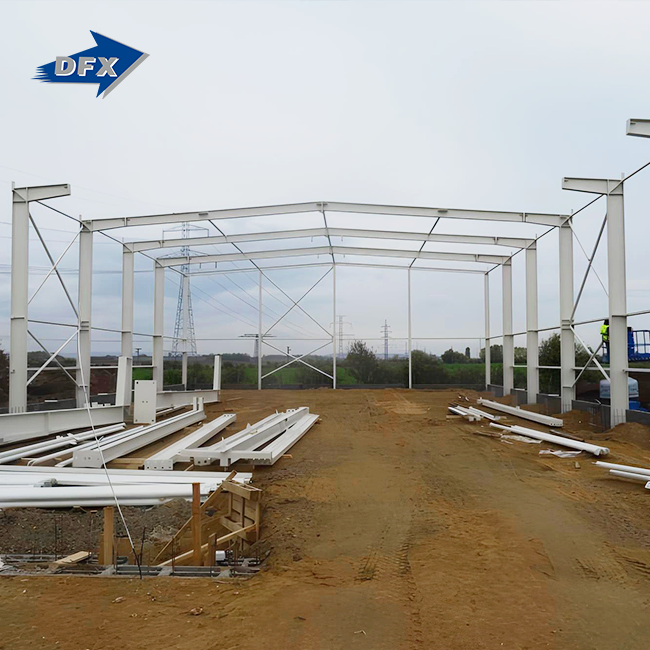
Clear span, or the internal width that isn't blocked by columns in the middle, is the defining factor because it directly controls how easily the plane can turn and where equipment can be staged. There are clear spans from 30 m to over 100 m on our welded H-section steel main structure, and the frame stays stiff the whole time.
Roof Profile and Clearance Height
The inner space is affected by the eave height and roof pitch in ways that aren't always clear when the plans are being made. A double-slope (pitched) roofimprovess drainage and lowers the dead load on long spans of the building. For spans longer than 60 meters, flat roofs need specially designed drainage systems to keep water from pooling. Most flight projects call for a minimum interior clearance height of 1.5 times the highest point of the tail of the largest aircraft. For example, a Boeing 737 repair hangar usually needs a minimum of 12 m clear interior height.
Comparing AISC-Certified vs. Non-Certified Steel Hangars for Procurement
Why Certification Gap Matters
Non-certified steel hangars may seem like a good deal when they are being quoted, but buying teams often run into problems later on. Not recording the grades of materials, having uneven welds, or not doing load calculations can lead to insurance problems and expensive repairs during building inspections. An aisc certified large-span steel structure hangar, on the other hand, comes with engineering documents that can be checked and meet the needs of both business insurers and airport authority compliance teams.
According to a study by the Steel Construction Institute (SCI, 2020), certified steel structures have a 15–20% lower total cost of ownership over 30 years than non-certified alternatives. This is mostly because they require less maintenance and don't need to be fixed up as often.
Material and Design Flexibility
Fabricators who are AISC-certified can offer design innovations that most non-certified providers can't successfully carry out. These include built-in runway beams for overhead cranes that can hold 2 to 20 tons, blast-resistant covering for defense uses, and PVDF-coated sandwich panel covers for resistance to corrosion along the coast. In order for these engineered choices to work, the column sizes must be carefully calculated during the initial engineering phase. This is a process that can only be documented and guaranteed by licensed fabricators.
Procurement Guide: How to Choose and Buy AISC-Certified Large-Span Steel Hangars
Supplier Verification Checklist
Before sending out a purchase order, procurement managers should make sure that the following important facts about the supplier are true:
- ISO 9001 certification that is still valid, and audit records are available
- CE certification proves that the building meets European building standards
- Certificate of Conformity (COC) and PVOC compliance paperwork for the areas you want to reach
- Proven ability to make things—look for welded H-beam production lines and the ability to do structural calculations in-house.
- Refer to projects whose release dates can be checked.
Cost Component Breakdown
For accurate planning, you need to know what makes the total cost of the job go up or down. Usually, 45–55% of the total project value goes to making the materials. Shipping costs (8–15% more for knocked-down steel kits) depend on the port of destination. Another 10–20% is added for installation and erection help, which includes expert on-site control. Having a supplier who does structural calculations, customized designs, fabrication, and installation guidance as part of their service eliminates the need for multiple contractors to coordinate, which can be time-consuming and expensive.
Maintenance and Longevity of AISC-Certified Large-Span Steel Hangars
Inspection and Corrosion Prevention
If you keep an approved steel cage in good shape, it will last longer than 50 years. The most important upkeep factor is the anti-corrosion solution. For airfields, the standard procedure is to clean the surface with shot blasting up to a Sa2.5 level, then use a high-build epoxy zinc-rich primer and a polyurethane topcoat. Hot-dip galvanizing with coating thicknesses of 85 μm or more works well in coastal or high-humidity areas.
Weld quality at main column-beam connections, fastener torque at high-strength bolt joints (Grade 10.9), and drainage channel blockages on roof panels should all be checked visually once a year. Using strain gauges on key joints for modern structural health tracking lets building managers find load irregularities before they become safety issues. This extends the time between maintenance visits and lowers the cost of fixing problems after the fact.
Conclusion
Not only should you look at the starting price of a certified aisc certified large-span steel structure hangar, but you should also think about the span standards, structural load factors, supplier qualifications, and lifetime cost. AISC certification gives procurement teams a tried-and-true way to check the quality of structures and the accuracy of engineering work. When these things come together with a dependable fabricator who offers a full service from design to construction, the result is a building that lasts for decades and protects valuable assets. When you are looking at proposals and bargaining with sellers, use this size guide as a standard.
FAQ
1. Does AISC certification affect my building permit approval timeline?
Yes, cities and airports usually speed up the review process for permits when engineering packages include AISC-certified paperwork. The back-and-forth with plan reviewers is a lot shorter when load estimates are checked and materials can be tracked.
2. What is the typical lead time from order to delivery for a custom steel hangar?
There are different lead times for different types of projects. From the time the design is finalized to the time it leaves the workshop, a 60 m clear-span hangar kit with custom portal frames usually takes 60 to 90 days. The time it takes to put up on-site depends on the size of the crew and how ready the foundation is.
3. Can I add overhead cranes after the hangar is built?
Crane runway beams can be added to an existing frame, but it costs a lot of money to do so. Most of the time, columns need to be strengthened or replaced. The most cost-effective method is to specify crane loads during the initial structural calculation.
4. How does AISC certification interact with CE and ISO 9001?
They work well together. ISO 9001 sets the rules for quality management; CE certification shows that European building standards are met; and AISC certification talks about meeting U.S. standards for making structural steel. The most international regulatory coverage is provided by a supplier who has all three.
Get Your Custom AISC-Certified Large-Span Steel Hangar Quote from DFX
Since 2011, DFX (Qingdao Director Steel Structure Co., Ltd.) has built approved steel hangars, industrial shelters, and large-span buildings for clients in several countries. As a reputable AISC-certified large-span steel structure hangar supplier, we offer end-to-end service, including structural calculations, custom design, fabrication in our 40,000 m² production space, and installation assistance. Our goods are certified by ISO 9001, CE, COC, and PVOC. To get a custom-size plan and price quote for your next project, email our tech team at jason@bigdirector.com.
References
1. American Institute of Steel Construction (AISC). Steel Construction Manual, 16th Edition. AISC, 2022.
2. Metal Building Manufacturers Association (MBMA). Metal Building Systems Manual. MBMA, 2021.
3. Steel Construction Institute (SCI). Design of Steel Structures: Lifecycle Cost Analysis. SCI Publication P376, 2020.
4. National Fire Protection Association (NFPA). NFPA 409: Standard on Aircraft Hangars. NFPA, 2022.
5. American Society of Civil Engineers (ASCE). ASCE 7-22: Minimum Design Loads and Associated Criteria for Buildings and Other Structures. ASCE, 2022.
6. Gorenc, B., Tinyou, R., & Syam, A. Steel Designers' Handbook, 8th Edition. UNSW Press, 2012.
Learn about our latest products and discounts through SMS or email