- English
- French
- German
- Portuguese
- Spanish
- Russian
- Japanese
- Korean
- Arabic
- Greek
- German
- Turkish
- Italian
- Danish
- Romanian
- Indonesian
- Czech
- Afrikaans
- Swedish
- Polish
- Basque
- Catalan
- Esperanto
- Hindi
- Lao
- Albanian
- Amharic
- Armenian
- Azerbaijani
- Belarusian
- Bengali
- Bosnian
- Bulgarian
- Cebuano
- Chichewa
- Corsican
- Croatian
- Dutch
- Estonian
- Filipino
- Finnish
- Frisian
- Galician
- Georgian
- Gujarati
- Haitian
- Hausa
- Hawaiian
- Hebrew
- Hmong
- Hungarian
- Icelandic
- Igbo
- Javanese
- Kannada
- Kazakh
- Khmer
- Kurdish
- Kyrgyz
- Latin
- Latvian
- Lithuanian
- Luxembou..
- Macedonian
- Malagasy
- Malay
- Malayalam
- Maltese
- Maori
- Marathi
- Mongolian
- Burmese
- Nepali
- Norwegian
- Pashto
- Persian
- Punjabi
- Serbian
- Sesotho
- Sinhala
- Slovak
- Slovenian
- Somali
- Samoan
- Scots Gaelic
- Shona
- Sindhi
- Sundanese
- Swahili
- Tajik
- Tamil
- Telugu
- Thai
- Ukrainian
- Urdu
- Uzbek
- Vietnamese
- Welsh
- Xhosa
- Yiddish
- Yoruba
- Zulu
Steel Frame Exhibition Hall: How Large a Span Can You Achieve?
When project managers ask what the Steel Frame Exhibition Hall can do, the answer is based on material science and engineering accuracy. Clear spans on modern steel buildings often go over 60 meters, and some designs can go 100 meters or more without any intermediate beams. This performance depends on the type of steel used (usually Q355B or ASTM A572 Gr. 50), as well as complex truss designs and careful structural estimates. The span decides how the floor can be used, how flexible the display can be, and how long it can be used in a variety of settings, from trade shows to aerospace showrooms.

Understanding Steel Frame Exhibition Halls and Span Importance
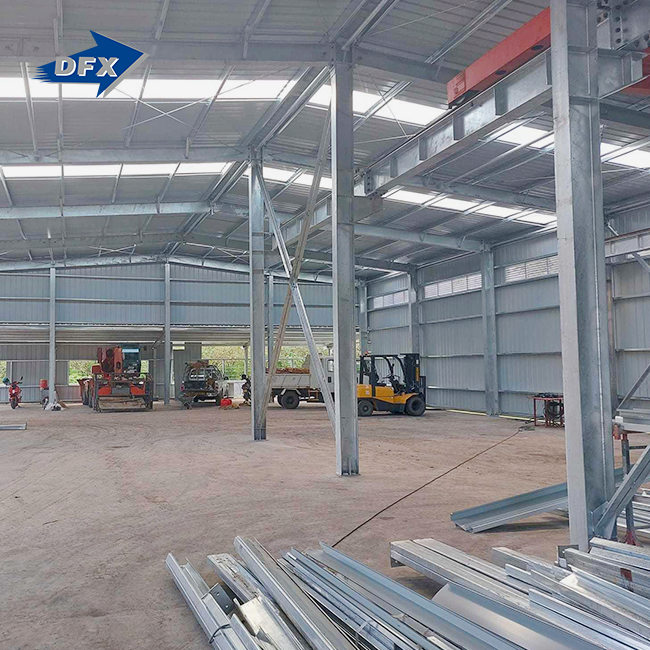
In business and industrial design, large-span structures change what is possible. High-strength parts like H-beams, box columns, and designed joists are used in a steel frame exhibition hall to make huge rooms with no columns inside. This way of thinking about design directly solves a problem that building companies and factories have had for a long time: making the most of the usable floor space while keeping the structure strong under changing loads.
Why Span Capacity Matters for B2B Projects
Every part of planning a building is affected by the clear span potential. Exhibition managers need trade displays to be easy to see. Logistics professionals need building plans that can be changed to accommodate changing inventory systems. When production lines are set up so that they don't interfere with structures, they work better in factories. Each extra meter of span has practical benefits, such as better placement of equipment, better flow of visitors, and lower costs for future changes.
Structural Freedom Meets Economic Reality
Column-free areas aren't just a matter of taste; they're also investments in the speed of operations. When EPC workers look at steel vs. concrete choices, they compare how long it takes to build, how much the foundation needs to be, and how much it costs over its lifetime. Because steel has a lighter dead load, base costs are 20–30% less than with reinforced concrete. Prefabrication speeds up project plans, which is very important for procurement managers who have to meet tight dates for commissioning.
Factors Influencing the Maximum Span of Steel Frame Exhibition Halls
To get amazing lengths for a steel frame exhibition hall, engineers have to balance a lot of different factors. Performance boundaries are set by the properties of the materials, the structure, and the accuracy of the production.
Material Selection and Steel Grade Performance
The specifications of the materials used are the basis of any big building. Most industrial uses are for Q235 and Q355 steel types. Q355 has a yield strength of more than 345 MPa, which is important for longer spans. How well something welds and how well it resists rust depend on its chemical makeup. Hot-dip galvanizing with a zinc coating that is up to 85 micrometers thick guards against damage from the environment and makes things last longer than 50 years in most conditions.
Design Principles: Portal Frames, Trusses, and Space Frames
Large spans are possible with three main structure methods, each of which is best for a different project:
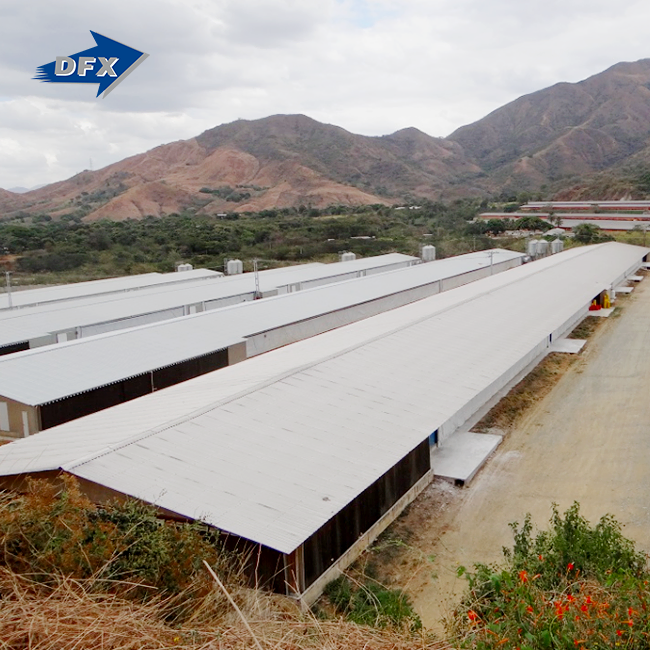
Portal frame systems are good for lengths up to 40 meters because the rigid links between the poles and rafters keep the load from moving side to side. This layout works well for farm buildings and smaller manufacturing workshops where keeping costs low and keeping things simple are the most important factors.
Truss structures can span up to 80 meters because they use triangulated member arrangements to spread loads across multiple load lines. Warren or Pratt truss designs are often used in convention centers and airplane hangars because they allow builders to add skylights and mechanical systems that are hung from the ceiling.
Space frame structures are the best way to build spans because they use three-dimensional geometric lines to make clear lengths of 100 meters or more. These systems work great in international show halls that need more than 10,000 square meters of space without columns, but they need complex connection details and strict quality control during production.
Connection Technology and Load Distribution
Modern bolted links allow assembly in the field and keep the same level of structural performance as welded joins. Grade 8.8 or 10.9 high-strength bolts pass forces through friction and bearing, which is very important for prefabricated systems that are shipped worldwide. Ultrasonic and magnetic particle inspection are non-destructive tests that check the quality of the welds at key points. This makes sure that safety margins are higher than what the code requires.
Comparison: Steel Frame Span vs Traditional Construction Methods
The choice of materials has a big impact on how the job turns out in terms of cost, schedule, and function.
Structural Efficiency and Construction Speed
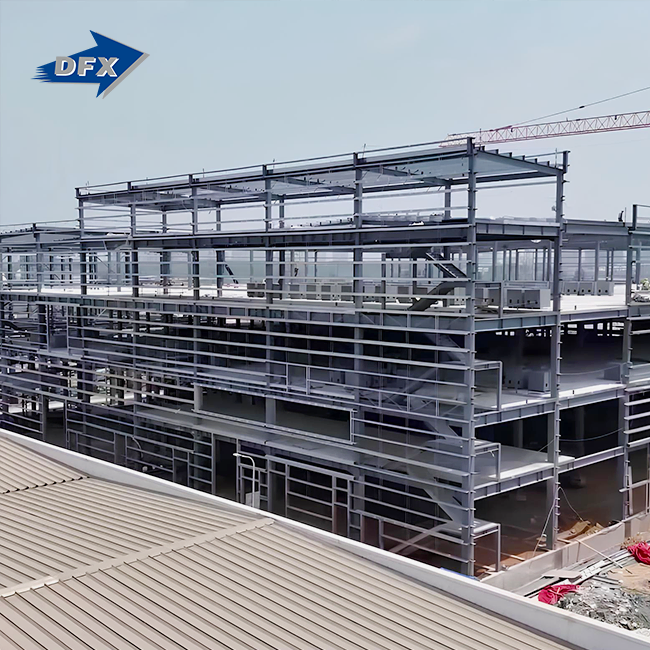
When compared to cast-in-place concrete, steel frames allow building to happen 30–50% faster, which has a direct effect on project costs and completion dates. Off-site fabrication happens at the same time as base work, which speeds up plans for projects that need to be finished quickly. A 5,000-square-meter steel-frame exhibition hall that would take 18 months to build with concrete can usually be finished in 10 to 12 months using prefabricated steel. This is a huge benefit when lease agreements or event schedules decide when the hall can be used.
Cost Analysis: Initial Investment vs Lifecycle Economics
Even though steel may be more expensive per tonne than concrete, steel buildings are more cost-effective overall for large-span uses. Foundation savings, fewer hours worked, and cheaper site overhead all work together to close or get rid of original cost gaps. During the operational phase, benefits include better thermal performance when paired with insulated sandwich panels, which lowers HVAC costs over the decades that the building is in use. Maintenance needs are still very low—yearly checks of the shell and reviews of structure connections every five years are enough for most installations.
Environmental Performance and Sustainability Credentials
Steel can be recycled over and over again, which is in line with the sustainability goals that building and government companies are increasingly requiring of businesses. End-of-life disassembly gets full material value back, which is very different from concrete disposal trash. 30–40% recycled stuff is now used in manufacturing methods without changing the mechanical qualities. Energy performance goals needed for green building standards can be met with low-emissivity glass curtain walls and thermal-bridge-minimized panel systems.
Practical Guidelines for Achieving Large Spans in Steel Frame Exhibition Halls
Turning design ideas into structures that work requires knowledge from many fields and project stages. How to Make Large Spans Possible in Steel Frame Exhibition Halls: A Guide.
Design Phase: Structural Calculations and Load Modeling
To do a full analysis, you must first define the different types of loads that could happen. These include dead loads from the roof and mechanical systems, live loads from equipment that is hung and snow buildup, wind pressures based on local weather data, and seismic forces in areas that are prone to earthquakes. Software like SAP2000 and Tekla Structures can model how a structure will behave under joint loads, which tells you how big the members need to be and how they need to be connected. Our architectural layout design service combines space planning with the practicality of the structure, making sure that the plans of show floors are in line with the limitations of the column grid.
Fabrication Precision and Quality Assurance
How well a field assembly works is directly related to how accurate the parts are. Cutting and drilling tools that are handled by a computer keep the limits for size within ±2 mm even on beams longer than 20 meters. Before sending parts abroad, they are put together in a trial assembly to make sure they fit together correctly. This keeps expensive site delays from happening. Degreasing, abrasive blasting, and multi-coat painting systems that meet ISO 12944 rust protection standards are all part of surface treatment routines. These are necessary for buildings that are exposed to a range of weather conditions.
Installation Challenges and Solutions
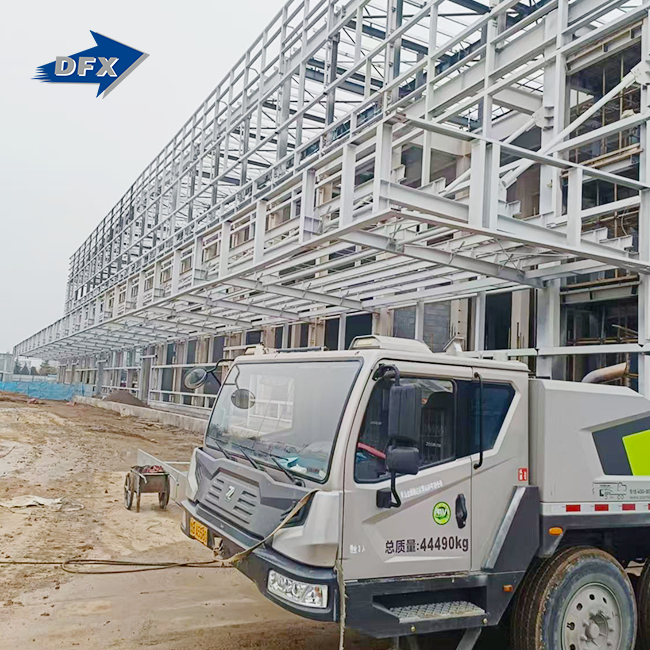
For erection sequence, crane capacity, site access, and member weights are all taken into account. Modular truss pieces keep the structure's efficiency while lowering the weight of each individual part below what a crane can handle. During the building process, temporary bracing keeps frames that are only partly up steady against wind loads. Installation instructions from expert teams with a lot of experience stop mistakes in assembly that hurt the performance of the structure. Activities that depend on the weather get priority in the schedule, since installing bolts correctly needs dry conditions for force to be applied.
Procuring Large Span Steel Frame Exhibition Halls: What B2B Clients Should Know?
For buying to go smoothly, technical needs must be balanced with business facts. This means that suppliers' skills and project delivery models must be carefully examined. How to Buy Large Span Steel Frame Exhibition Halls: What Business Clients Need to Know.
Evaluating Manufacturer Credentials and Track Record
Certifications are a basic way to make sure that an OEM steel frame exhibition space company is competent at making things. The ISO 9001 quality systems show that the process is being controlled, and the CE label shows that the product meets European building standards. In addition to certifications, you should look closely at finished project portfolios that fit your application type and span needs. Experience with aircraft hangars shows that it can handle heavy loads on the roof and big door spaces. Convention center projects show that you can manage complicated architectural connections and work together with others.
Prefabricated Kits vs Fully Customized Solutions
Standard premade systems are cheaper for simple rectangular shapes and widths that aren't longer than 40 meters. When site conditions, design needs, or span goals go beyond what is normally possible, customization becomes necessary. Our turnkey service includes structural calculations, manufacturing, and installation help. This way, you only have to deal with one company from the idea stage to the final approval. This integration lowers the organizational risks that come with buying from more than one seller.
Cost Transparency and Schedule Realism
In-depth quotes should list the cost of structural steel, secondary framing, roofs and wall panels, and doors and windows, as well as help with installation. Shipping costs a lot for foreign projects, and the amount depends on the infrastructure of the port and the customs processes. Lead times rely on how complicated the fabrication is and how long it takes to make everything. Usually, it takes 45 to 90 days for fabrication and 30 to 45 days for ship freight. With project-based fabrication, production only starts after full engineering approval. This means that getting involved early is very important for meeting finish dates.
Conclusion
In conclusion, through engineered material selection and advanced structural systems, steel frame exhibition halls have changed the way large-span building is done by providing column-free areas that are more than 60 to 100 meters long. When you compare these new methods to old ones, you can see that they are clearly better in terms of speed, cost, and care for the environment. For a project to be delivered successfully, the plan must be exact, the fabrication must be of high quality, and the fitting must be done by experts. Procurement professionals should work with manufacturers that offer full services, from the initial structure estimates to on-site erection help. These manufacturers should also have the right certifications and a history of completing projects in similar situations.
FAQ
1. What is the maximum achievable span without intermediate supports?
Using truss designs, standard engineered systems can safely provide clear spans of 60 to 80 meters. With space frame technology, this ability can be extended beyond 100 meters for specific uses like international meeting centers and space centers. The exact limits rely on how much weight the roof needs to hold, the wind and earthquake risk in the area, and finding the best balance between member size and manufacturing complexity for cost-effectiveness.
2. How does span length affect project costs and timelines?
The costs of materials and labor go up proportionally as the spans get longer. This is because longer spans need heavier structure parts and more complex connection details. When comparing 40-meter spans, spans longer than 60 meters usually cost 15 to 25 percent more in structural steel. The only real change to the schedule is an extra two to four weeks for planning and manufacturing. This is because fewer but bigger prefabricated pieces are often more efficient when putting them together.
3. Can steel exhibition halls perform reliably in cold climates?
When the right materials are used and the building is properly designed, steel frame exhibition halls work well in cold places. Sandwich walls that are insulated and have polyurethane or mineral wool bases have high thermal resistance values that keep heat from escaping. Because steel is flexible, it performs better in areas where both cold weather and earthquake risk are present. Coating systems keep things from rusting when they are exposed to de-icing salt during winter upkeep.
Partner with DFX for Your Next Large-Span Steel Frame Exhibition Hall Project
DFX has been providing Steel Frame Exhibition Hall options to building companies, manufacturers, and infrastructure producers around the world for more than 12 years. Our 40,000-square-meter factory has six automatic H-beam lines that can make more than 20,000 tons of goods every year. This makes sure that quality is always high and that deliveries are always on time. We offer full turnkey services that are tailored to the needs of your project, from designing the building plan to calculating the structure, making the parts, and helping with the installation. Our dedication to international quality standards is shown by the fact that our methods are ISO 9001 approved and our goods have the CE mark. Email our engineering team at jason@bigdirector.com to talk about your span needs and get a full technical plan. As a reliable builder, we can make your idea come true without any columns.
References
1. American Institute of Steel Construction. (2016). Steel Construction Manual, 15th Edition. Chicago: AISC.
2. Chen, W.F. & Lui, E.M. (2005). Handbook of Structural Engineering, 2nd Edition. Boca Raton: CRC Press.
3. European Convention for Constructional Steelwork. (2010). Design of Steel Structures: General Rules and Rules for Buildings. Brussels: ECCS Publications.
4. Trahair, N.S., Bradford, M.A., Nethercot, D.A., & Gardner, L. (2008). The Behaviour and Design of Steel Structures to EC3, 4th Edition. London: Taylor & Francis.
5. Owens, G.W. & Cheal, B.D. (1989). Structural Steelwork Connections. Oxford: Butterworth-Heinemann.
6. International Organization for Standardization. (2015). ISO 12944: Paints and Varnishes - Corrosion Protection of Steel Structures by Protective Paint Systems. Geneva: ISO Standards.
Learn about our latest products and discounts through SMS or email