- English
- French
- German
- Portuguese
- Spanish
- Russian
- Japanese
- Korean
- Arabic
- Greek
- German
- Turkish
- Italian
- Danish
- Romanian
- Indonesian
- Czech
- Afrikaans
- Swedish
- Polish
- Basque
- Catalan
- Esperanto
- Hindi
- Lao
- Albanian
- Amharic
- Armenian
- Azerbaijani
- Belarusian
- Bengali
- Bosnian
- Bulgarian
- Cebuano
- Chichewa
- Corsican
- Croatian
- Dutch
- Estonian
- Filipino
- Finnish
- Frisian
- Galician
- Georgian
- Gujarati
- Haitian
- Hausa
- Hawaiian
- Hebrew
- Hmong
- Hungarian
- Icelandic
- Igbo
- Javanese
- Kannada
- Kazakh
- Khmer
- Kurdish
- Kyrgyz
- Latin
- Latvian
- Lithuanian
- Luxembou..
- Macedonian
- Malagasy
- Malay
- Malayalam
- Maltese
- Maori
- Marathi
- Mongolian
- Burmese
- Nepali
- Norwegian
- Pashto
- Persian
- Punjabi
- Serbian
- Sesotho
- Sinhala
- Slovak
- Slovenian
- Somali
- Samoan
- Scots Gaelic
- Shona
- Sindhi
- Sundanese
- Swahili
- Tajik
- Tamil
- Telugu
- Thai
- Ukrainian
- Urdu
- Uzbek
- Vietnamese
- Welsh
- Xhosa
- Yiddish
- Yoruba
- Zulu
Efficient Military Aircraft Steel Hangar Designs for Military & Commercial Use
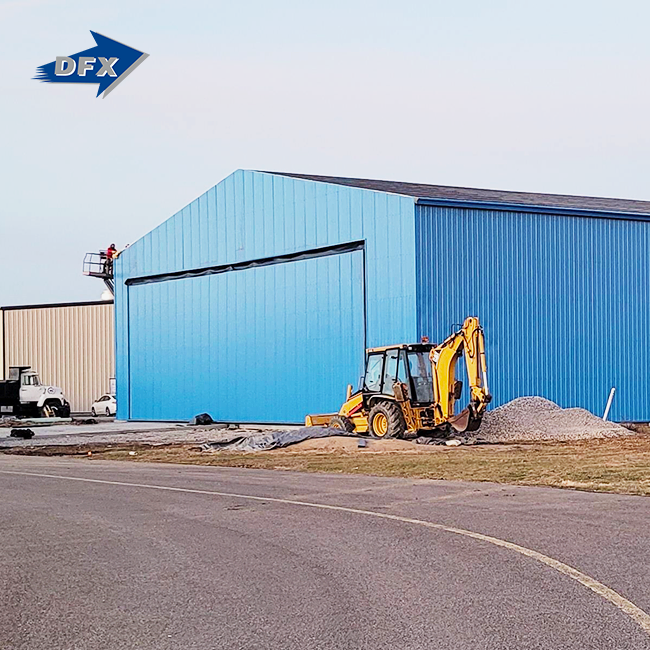
A military aircraft steel hangar is a unique type of structure designed to protect valuable aviation assets and meet the strict operating needs of both the defence and business aviation sectors. The frames of these long-span steel buildings are made of welded H-section steel and have reinforced bracing systems. This gives them the exceptionally clear-span powers and high clearance needed to fit everything from fighter jets to heavy passenger planes. These structures were carefully made to meet the strict requirements of ISO9001, CE, COC, and PVOC certifications. They solve important problems like the need for quick deployment, resistance to corrosion in harsh climates, and the ability to include high-tech maintenance equipment, all while keeping the costs low for project-based procurement decisions.

Understanding Military Aircraft Steel Hangars: Features and Benefits
To make an effective aircraft protection system, you must first understand what makes these special buildings different from regular industrial buildings.
Core Engineering Specifications
Modern hangars are made with high-tensile structural steel that meets ASTM A572 Grade 50 standards. This steel has a great strength-to-weight ratio and lets buildings have clear-span lengths of 30 metres to over 100 metres without having to add inner columns. This design, without columns, is very useful for moving big planes around and putting repair tools in the right place without having to worry about space. The main structure is made of welded H-section steel, which evenly distributes loads across the building envelope. Reinforced bracing systems keep the building stable in wind speeds that often exceed 180 km/h, which is very important for military bases and commercial airports near the coast that are prone to hurricanes.
The structural stability is more than just being able to hold weight. These buildings are designed to accommodate high cranes that can lift up to 25 tonnes, which makes it possible to remove engines and service heavy parts. Seismic activity, snow loads, and operating vibrations from engine start-ups are all taken into account in site-specific structural estimates. This makes sure that the facility keeps working well for as long as it is used.
Protection and Environmental Control
Aircraft are multimillion-dollar purchases that need to be kept safe from damage from their surroundings. Advanced coating systems that use hot-dip galvanising, epoxy zinc-rich primers, and polyurethane topcoats protect against jet fuel, hydraulic fluid spills, and salt spray rust. This is especially important for military air stations. Hot-dip galvanisation usually covers at least 600 g/m² of metal with zinc. With proper upkeep, the structure can last longer than 50 years.
Operating costs and device longevity are directly affected by thermal efficiency. Sandwich panel cladding systems with rock wool or polyurethane bases can achieve R-values above 20. This keeps the inside of the building stable so that sensitive electronics work can be done while also cutting down on heating and cooling costs. The soundproofing in these panels reduces the noise from testing engines, which meets safety standards at work and has a smaller effect on the surroundings nearby.
Operational Flexibility
Because they can be designed to fit the needs of a specific task, these buildings are flexible. Modular layouts let the building grow as the fleet does. The end walls are designed to be non-load-bearing so that adding bays is easy and doesn't affect how things are running now. This ability to grow is especially helpful for commercial flight companies that are expanding and military bases whose missions are changing.
By giving installation instructions during the whole building process for the Military Aircraft Steel Hangar, project schedules are kept stable. When compared to traditional building methods, prefabricated parts come ready to be put together, which cuts down on the need for on-site work and delays caused by bad weather. Usually, a 5,000-square-metre military aircraft steel hangar is put up 6 to 10 weeks after the base is finished. This keeps operations running as smoothly as possible for current buildings that are being expanded.
Comparison of Military Steel Hangars Against Alternatives
When building a hangar, procurement managers have to make decisions about what materials to use that have a big effect on the building's working capability and long-term costs.
Steel Versus Aluminium Structures
Steel is stronger than aluminium, which is important for large-span uses because it doesn't rust naturally. Because of the difference in strength, steel buildings need less material to reach the same load values, which lowers the cost of the material at the start. Aluminium's thermal expansion rate is almost twice as high as steel's, which makes making buildings that experience big changes in temperature even harder. Welding steel lets you make changes and fixes in the field using standard tools, but welding aluminium requires special skills and tools that aren't always available.
When looking at costs, steel is always the best choice for buildings bigger than 3,000 square metres. Steel's recycling system is still better established around the world, which helps meet green goals and keeps the metal's value when it's no longer useful. The magnetic features of the material make non-destructive testing methods easier to use. This lets quality be checked thoroughly during production and throughout its useful life.
Prefabricated Versus Cast-In-Place Concrete
Traditional concrete hangars need a lot of work to be done on-site, and the drying process depends on the weather, which adds months to the project timeline. Concrete is vulnerable to freeze-thaw cycles in cold areas, but prefabricated steel buildings make foundations simpler by lowering the weight of the structures. Tensile strength of steel is many times higher than that of concrete. This allows for the clear-span designs that are needed for aircraft to be able to manoeuvre freely.
There are limits to what can be changed in concrete buildings. Adding doorways or making a building bigger requires expensive removal and strengthening of the structure. Steel frames can be changed by adding bolt-on extensions or replacing panels, so operations can keep going while upgrades are being made. The difference in weight directly affects foundation savings—steel hangars usually need 40% less foundation mass than similar concrete buildings. This means that much less money is spent on digging and materials.
Custom-Built Solutions for Strategic Applications
Because rapid deployment shelters are made with bolted connections instead of welded parts, military supply teams can set up forward operating base facilities in days instead of months. Because these modular systems are portable, they don't have the highest level of power. This makes them perfect for temporary setups that support expeditionary activities. Custom solutions include blast-resistant design elements like stronger links and energy-absorbing panel systems that keep the structure strong during blasts or threats from outside sources.
Designs that are hermetically sealed are used for specific tasks that need controlled atmospheres, like maintaining stealth aircraft or doing work that is sensitive to chemicals, from a Chinese modular steel aircraft hangar factory. For these uses, the manufacturing must be very precise, going beyond the normal business tolerances. To keep contamination from getting in, gasket systems and positive-pressure ventilation are used.

Efficient Design and Construction Process for Military Steel Hangars
A well-executed project relies on careful planning that takes into account technical needs while keeping costs and schedules in check.
Dimensional Planning and Layout Optimisation
Minimum equipment needs are set by the size of the aircraft. Fighter planes like F-16s need door spaces that are 18 to 22 metres wide and up to 8 metres high. C-130 passenger planes, on the other hand, need 35-metre lengths and 12-metre clearances. Not only do design teams have to think about the aircraft's envelope, but they also have to think about repair stands, tow equipment, and safe distances for people to walk around the body and wing edges. The width between internal columns should match how planes are usually parked, making the best use of the floor space without getting in the way of movement.
The layout of the bays is affected by the study of the maintenance process. Having separate places for planned upkeep, unplanned repairs, and storing parts cuts down on operating conflicts. Coverage areas for overhead cranes should overlap so that loads can be moved without having to change the gear at ground level. Service pits for vehicle access are built into the floor plans when the base is designed, so expensive changes don't have to be made later.
Fabrication and Quality Assurance
Before production starts, the material is checked by mill test results that show its chemical makeup and a yield strength of more than 345 MPa. Automated welding H-beam production lines make sure that the dimensions are always the same within very small ranges, which is very important for the speed of field assembly. Beam camber estimates account for the deflection caused by dead loads, keeping the roof slope for draining without putting too much stress on the connections.
How well a structure is welded decides how reliable it is. Ultrasonic testing and magnetic particle screening procedures based on AWS D1.1 standards find flaws below the surface before a coating is put on. Critical links are inspected one hundred per cent of the time, while minor elements are inspected using random sampling that is right for their load class. Using laser measurement tools to check the dimensions ensures that the bolt holes are lined up correctly, which stops delays in the field that would otherwise happen during the building process.
Coatings are applied in controlled settings that make sure the surface is ready and the film is the right thickness. Dry film thickness scales check the minimum covering in key exposure areas, and adhesion testing checks the strength of the coating bond. Each shipment comes with a package of paperwork that makes it easier to clear customs for foreign projects and allows for easy tracking during quality checks.
Site Work and Assembly
The design of the foundation is based on the results of the geotechnical study. Deep pile systems are used when the soil's holding capacity isn't enough to handle the column reactions caused by long spans and crane loads. Anchor bolt templates make sure that the bolts are placed precisely within millimetre limits. This keeps expensive shimming from happening during steel building. The most important part of many projects is the time it takes for the concrete to harden, so starting the foundations early is necessary to meet tight deadlines.
Picking the right crane means balancing the lift's power with the site's entry issues. Large-span main frames can weigh up to 15 to 20 tonnes per section, so mobile cranes that can lift 200 tonnes and have booms longer than 50 metres are needed. Erection sequencing usually starts at one end and sets the standard shape before moving on to the next bays. Temporary bracing keeps the structure stable until the secondary frames and roof panels can support the sides permanently.
Installing the panels completes the building shell. It is important to make sure that the seals at the panel joints are strong so that water doesn't get in and heat escapes. Whether they are bi-fold, sliding, or vertical lift, door systems from a Chinese modular steel aircraft hangar factory need to be carefully prepared for the opening and coordinated with the route of electrical and hydraulic services. Before the owner accepts the building, commissioning activities check the door systems, lights, and any built-in fire control equipment to make sure they work.
Conclusion
To choose efficient aircraft hangar options, you need to carefully look at the technical needs, the supplier's skills, and the costs over the life of the building. Steel buildings have been shown to be stronger, more flexible, and easier to set up quickly. These benefits work well for both military operations and the needs of civilian aviation businesses. Knowing the details of the materials, how to get them, and how to buy them will help project managers make smart choices that will pay off in the long run. These buildings are great for many uses because they can be built in a modular way, have clear-span designs, and are engineered to prevent corrosion. They can be used as forward operating bases or as repair facilities for teams that are growing. Partnerships between informed buyers and skilled suppliers who are committed to quality delivery lead to successful projects.
FAQ
1. How do the clear-span features change how the hangar works?
A clear-span building gets rid of internal columns on widths greater than 30 metres, which lets aircraft and repair tools be placed wherever they need to be. This design feature is necessary for facilities that work with a lot of different kinds of aircraft of different sizes. It lets them be flexible with their operations without having to deal with physical barriers that get in the way of work. The open interior makes it easier for the crane to cover the whole floor area and makes it easier to change the layout in the future as the fleet changes.
2. What differentiates military-grade hangars from commercial structures?
Specifications for the military often call for higher load ratings for tools used to load weapons, stronger roofs that can support specialised maintenance platforms, and security features like places where access control can be integrated. Options for blast-resistant design include links that absorb energy and panel systems that are stronger. NFPA 409 standards are used for fire suppression integration, and the loads for deluge systems and foam producers are estimated and built into the structure.
3. Can these structures accommodate future expansion?
The modular steel design lets the structure grow along its length by adding more bays without affecting the strength of the current structure. Non-load-bearing end walls are easier to take down and put up again as the building grows. During the initial engineering phase, the design papers should include provisions for growth. This is to make sure that the link details and base systems can easily handle future additions.
Partner with DFX for Your Aircraft Hangar Requirements
Qingdao Director Steel Structure Co., Ltd. has been making aircraft protection facilities for military and business flight clients around the world for more than 12 years. Our 40,000-square-meter factory has six automatic riveted H-beam lines that can produce up to 20,000 tonnes of steel each year. This helps us meet tight project deadlines without lowering quality standards. As a well-known provider of military aircraft steel hangars, we offer a wide range of services, including structural calculations, custom design, precise manufacturing, and installation advice. We offer real turnkey solutions that make buying easier for project managers and EPC contractors.
Our ISO 9001, CE, COC, and PVOC certifications show that we are committed to meeting international quality standards. Also, we have an in-house architectural design team that makes sure the specifications of your facility meet all practical needs and price limits. Our technical knowledge and production skills allow us to provide cost-effective solutions for all of your project needs, from forward operating base shelters that need to be set up quickly to permanent repair facilities that need to last 50 years. Email our engineering team at jason@bigdirector.com to talk about your project needs and get thorough proposals that are made to fit your unique aircraft security needs.
References
1. Unified Facilities Criteria (UFC 4-211-01): Aircraft Maintenance Hangars. Department of Defense, 2019.
2. American Institute of Steel Construction. Steel Construction Manual, 15th Edition. AICC, 2017.
3. National Fire Protection Association. NFPA 409: Standard on Aircraft Hangars. NFPA, 2021.
4. American Welding Society. AWS D1.1/D1.1M: Structural Welding Code—Steel. AWS, 2020.
5. International Organization for Standardization. ISO 12944: Paints and Varnishes—Corrosion Protection of Steel Structures by Protective Paint Systems. ISO, 2017.
6. Society for Protective Coatings. Guide to Protective Coatings Inspection and Maintenance for Industrial and Commercial Structures. SSPC, 2018.
Learn about our latest products and discounts through SMS or email