- English
- French
- German
- Portuguese
- Spanish
- Russian
- Japanese
- Korean
- Arabic
- Greek
- German
- Turkish
- Italian
- Danish
- Romanian
- Indonesian
- Czech
- Afrikaans
- Swedish
- Polish
- Basque
- Catalan
- Esperanto
- Hindi
- Lao
- Albanian
- Amharic
- Armenian
- Azerbaijani
- Belarusian
- Bengali
- Bosnian
- Bulgarian
- Cebuano
- Chichewa
- Corsican
- Croatian
- Dutch
- Estonian
- Filipino
- Finnish
- Frisian
- Galician
- Georgian
- Gujarati
- Haitian
- Hausa
- Hawaiian
- Hebrew
- Hmong
- Hungarian
- Icelandic
- Igbo
- Javanese
- Kannada
- Kazakh
- Khmer
- Kurdish
- Kyrgyz
- Latin
- Latvian
- Lithuanian
- Luxembou..
- Macedonian
- Malagasy
- Malay
- Malayalam
- Maltese
- Maori
- Marathi
- Mongolian
- Burmese
- Nepali
- Norwegian
- Pashto
- Persian
- Punjabi
- Serbian
- Sesotho
- Sinhala
- Slovak
- Slovenian
- Somali
- Samoan
- Scots Gaelic
- Shona
- Sindhi
- Sundanese
- Swahili
- Tajik
- Tamil
- Telugu
- Thai
- Ukrainian
- Urdu
- Uzbek
- Vietnamese
- Welsh
- Xhosa
- Yiddish
- Yoruba
- Zulu
Customizing Metal Warehouse Buildings for Any Need
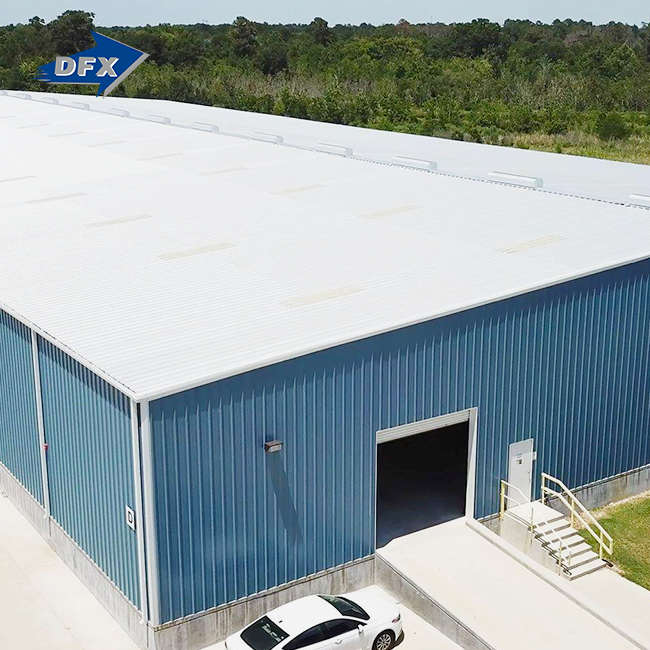
When your business needs more than just basic storage, a custom industrial steel warehouse is the perfect solution. It is designed to fit your specific needs. These modular prefabricated steel storage buildings are used in logistics centres, distribution hubs, and manufacturing sites all over the United States. They are designed to be flexible and strong at the same time. With their H-beam main frames and steel C/Z purlins, these buildings can be expanded without losing their strength. If you're an EPC contractor in charge of building infrastructure projects or a manufacturing operations manager looking to increase production, knowing how customisation improves performance will help you make smart purchasing decisions that protect your investment and speed up project timelines.
Learn about the design, benefits, and standards of custom industrial steel warehouses.

Understanding Custom Industrial Steel Warehouses: Design, Benefits, and Standards
Engineered Structural Design for Diverse Applications
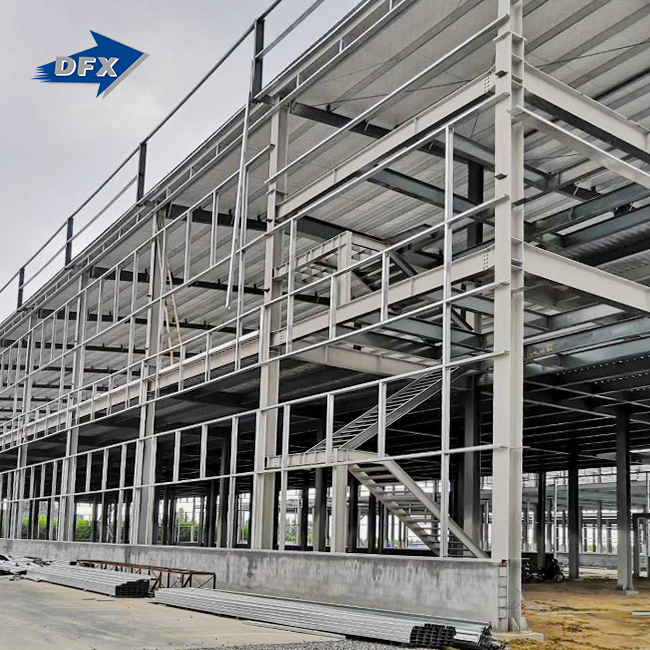
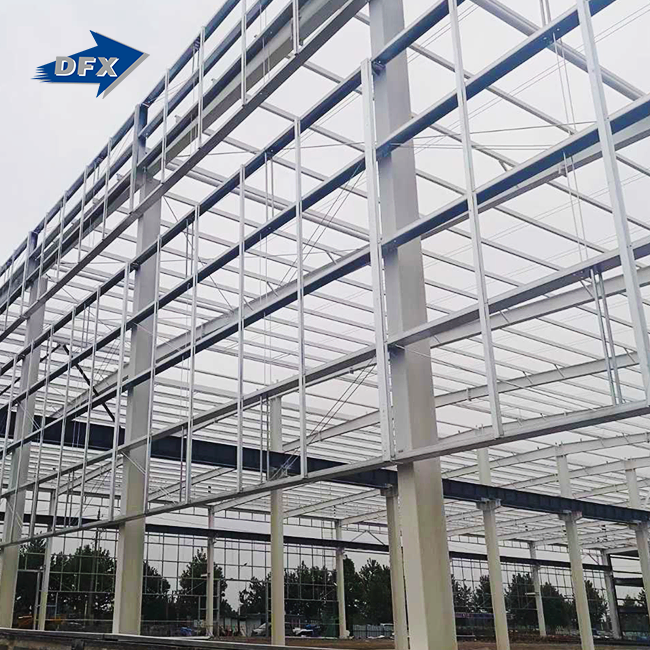
The structure is the most important part of any building system that works. Custom industrial steel warehouses are made from high-tensile steel, usually Q355B or ASTM A572 Grade 50, and are designed to have clear spans of more than 30 metres without any support beams in the middle. This design doesn't have any columns, so the floor space that can be used is maximised. This makes it easier to use forklifts and allows for flexible plan arrangements.
The first step in our manufacturing process is engineering estimates that take into account the conditions at the spot. We look at wind loads of up to 280 km/h, snow loads of more than 3.0 kN/m², and the right level of earthquake protection for your area. The H-beam basic steel frame has a great strength-to-weight ratio, which means it costs less to build on than concrete options while still being strong.
The structure's supporting system keeps it stable on the sides even when the surroundings are stressful. We use both X-bracing and portal frame setups, based on the height of your building and the rules in your area. Paying attention to how the loads are distributed keeps the frame from warping and increases the building's useful life.
Core Benefits That Drive Business Value
Choosing a custom metal building option has measured benefits during both the construction and use phases of a project. When compared to traditional concrete structures, modular design cuts down on construction times by 30 to 50 per cent. This means that buildings can be occupied and make money faster. Pre-engineered parts come ready to be bolted together, which cuts down on the need for on-site work and delays caused by bad weather.
Another important benefit is that it saves energy. When combined with the right insulation systems, like polyurethane sandwich panels that are up to 200 mm thick, these buildings keep the temperature under control while cutting down on HVAC costs. The steel frame can hold solar panels placed on the roof without any structural changes. This supports green building efforts and lowers operating costs.
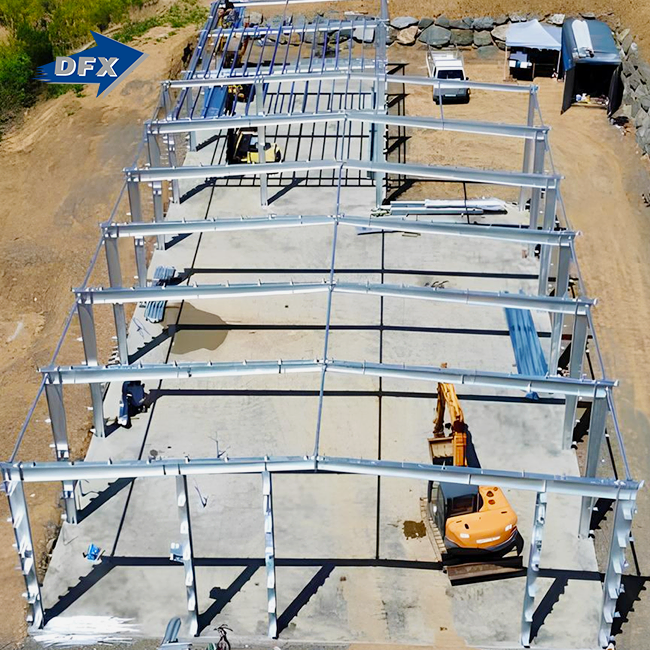
Scalability solves the problem of how to grow a business. The flexible framework can be extended along its length using rigid frame links, which lets it handle more storage space or production capacity without stopping what's already going on. This ability to protect against the future saves your cash investment as market needs change.
Compliance with International Building Standards
Following well-known building standards will make sure that your warehouse meets the needs of the government and your insurance company. The quality control system at our factory is certified by ISO9001, and the CE mark shows that it meets European standards. Optional EN1108 approval adds another layer of assurance for projects that need more detailed proof of compliance.
For structural construction, AISC 360-16 guidelines and AWS D1.1 structural welding rules are used. Material choice, connection design, and manufacturing tolerances are all controlled by these structures. These are important factors that decide the long-term stability of a structure. Before fabrication starts, we check the chemical makeup of all steel plates against mill test certificates and do spectrographic analysis and tensile strength tests.
Fire protection rules are different depending on what the local government wants for a custom industrial steel warehouse. At 600°C, steel loses about half of its power, so buildings that need F90 or F120 fire standards need to take extra safety precautions. We use intumescent protective layers that expand when heated. This keeps the steel core warm and gives people important time to get out in case of an emergency.
Comparing Materials and Construction Types for Industrial Warehouses
Steel Versus Alternative Building Materials
The choice of materials has a big effect on how well a building works, how much upkeep it needs, and how much it costs over its whole life. Custom Industrial Steel Warehouses are better than metal and wood in many ways that are important for commercial uses.
When it comes to weight, steel is better than aluminium at supporting weight. Aluminium naturally doesn't rust, but it's not as strong as steel when it comes to installing big machinery or high cranes. Bridge cranes with capacities ranging from 10 to 100 tonnes can be used on steel buildings thanks to their reinforced runway beams and stepped columns, which are not possible with aluminium frames.
Wooden buildings have limits on how long they can last and how much weight they can hold. In wet places, wooden buildings need to be maintained more often, and they can't fight fire without being treated with a lot of chemicals. Steel is naturally safe for storing valuable items and dangerous materials because it doesn't catch fire. This often leads to lower insurance rates.
Concrete buildings have great compression strength, but it's not flexible enough for businesses. Changing things about a concrete warehouse requires expensive structural changes, but changing things about a steel building is as easy as changing a link. Because steel can be made off-site, it can be built faster, which means that the return on investment comes sooner.
Custom Versus Prefabricated Warehouse Solutions
The difference between normal premade kits and custom engineering has a big impact on how well the building meets your needs. Prefabricated choices have shorter wait times and lower initial costs, but they have design restrictions that could make operations less efficient.
Custom solutions are made to fit specific needs that can't be met by normal designs. Customised engineering is helpful in heavy industrial settings that need to isolate vibrations, chemical storage facilities that need special coatings to resist corrosion, and cold chain shipping centres that need to have high thermal performance. We base each project on your operational process, the tools you need, and your plans for growth in the future.
When used for simple storage tasks with standard sizes and normal weather conditions, prefabricated buildings, including industrial steel structure warehouses, work well. Adding on to these structures, though, to make room for special tools or building improvements, is often more expensive than designing them from scratch in the first place. During the planning part of custom projects, problems are found before they are built, which saves money on changes that need to be made in the field during installation.

Cost Considerations and Procurement Guidance for Custom Steel Warehouses
Comprehensive Cost Analysis Beyond Initial Quotes
To make good budget plans, you need to know about all the costs that come up during the whole job. The initial costs of materials and assembly are only a small part of the total investment for a custom industrial steel warehouse.
The prices of preparing a site depend a lot on the type of dirt and how easy it is to get to. The design of your foundation must take into account how your steel frame will be loaded, and it must include anchor bolt plates (Grade 8.8 or 10.9) that can withstand wind lifting forces. A geotechnical study shows how much weight the dirt can hold, which helps with foundation planning and keeps buildings from sinking.
International purchasing is harder because of the need to coordinate transportation and operations. As part of our service, we plan logistics, which includes finding the best shipping methods and grouping packages together to save money on demurrage fees and storage costs. The configuration of the container improves the efficiency of the load while protecting the parts during transport.
Installation advice from experienced engineers stops mistakes in the field that weaken the structure. We give your local builders the erection plans, connection specs, and quality control processes to follow. This expert help cuts down on building delays and makes sure that the finished structure works the way it was designed to.
Step-by-Step Procurement Process
To easily buy things from a warehouse, you need an organised method that looks at both technical skills and business dependability.
Start by writing down all of your specific needs, such as the size of the building, the clearance heights, the loads on the equipment, the weather conditions, and the time frame you expect. Include practical details like where the doors are, how much air flow is needed, and how to connect the utilities. This standard is what correct quotes are based on.
Get quotes from several providers who have a history of doing business in your field. In addition to price, you should look at the technical quality of the submission, the project experience that was used as an example, and any proof of paperwork that is included. Our 12 years of experience in business buildings, aeroplane hangars, and process plants show that we can handle a wide range of difficult tasks.
Check the supplier's manufacturing ability and quality processes when you're evaluating them. Our protected 40,000-square-metre production space and six automatic welded H-beam production lines make sure that we can deliver on time without lowering the quality of our work. With a capacity of 20,000 tonnes per year, the facility can handle both big one-time jobs and long-term supply relationships.
Learn about the payment terms and the different ways you can get credit. When you buy something through project-based fabrication, you usually make three payments: a deposit when you confirm the order, progress payments while the item is being made, and the final payment before it is shipped. Some sellers offer payment plans that work with the cash flow of your project.
Maximising Value Through Customisation Options
The variety of tools and system interfaces keeps costs low while increasing functionality.
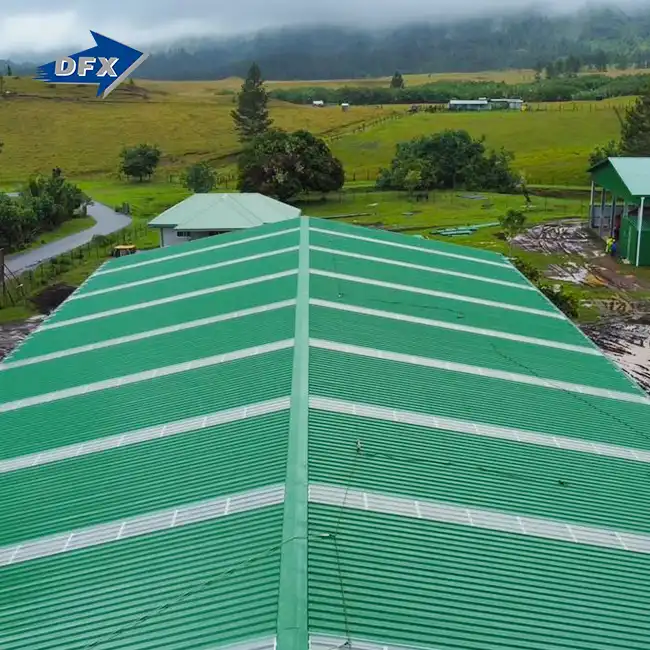
Roofing and siding systems protect against the weather while also staying within a budget. For basic storage, corrugated steel sheets are a cheap way to cover the walls, and insulated sandwich panels keep heat in for climate-controlled areas. We make 50,000 square metres of sandwich panels every year, and our combined supply of tailored metal buildings makes buying easier.
When designing, windows, doors, and air parts need to be coordinated with the frame of the building. Ridge ventilators help control moisture, which is a common problem in metal buildings, by balancing the temperatures inside and outside of the building through natural air exchange. Powered air fans help keep buildings with heat-generating equipment cool.
Crane systems interaction needs to be thought about early on by engineers. It's hard to add big overhead cranes after they've been built if the bracket connections and beam stiffness weren't planned for dynamic loads in the first place. Specifying the crane needs during the planning phase makes sure that the structure is the right size and doesn't need any expensive changes.
Conclusion
Customising metal warehouse buildings to meet your unique business needs gives you strategic benefits beyond just more space to store things. Using high-tensile steel frames, full design services, and quality-controlled fabrication, the engineered method makes buildings that work successfully in a wide range of demanding industrial settings. Customised solutions are used to solve problems that standard buildings can't, like in shipping stores that need to have the most clear spans possible or manufacturing facilities that need to support heavy equipment. Procurement experts can choose warehouse systems that meet the needs of both current projects and future business growth by understanding the technical specs, cost factors, and long-term value proposition.

FAQ
1. How is the planning of the base for a steel warehouse different?
When it comes to wind, steel buildings have higher lifting forces, but their dead loads are lower than those of concrete buildings. Foundation engineering needs to take these lifting moments into account by using deeply buried anchor bolt cages and making sure the dirt has enough bearing capacity. Geotechnical research finds out the conditions of the soil, which determines the type of foundation used: spread footings for good soils or pile foundations when the soil's bearing ability is not enough.
2. Can we add ceiling cranes after the building is done?
It's hard to add big crane systems to structures that weren't built to handle changing loads in the first place. Vertical impact forces, horizontal surge loads, and repeated stress cycles are caused by crane operations. These need column flanges that are too big and specific support arrangements. Talk about plans for future tools during the initial planning phase to avoid having to make costly changes to the structure.
3. What kind of upkeep does hot-dip galvanising need?
Galvanised steel works well in mild conditions and doesn't need much upkeep. Once a year, checks find damage to the covering before it exposes the steel underneath. Marine settings with a corrosivity level of C4 or C5 may need a touch-up treatment every 5 to 7 years, based on how bad the exposure is. Long-term coating performance can be predicted by tests with salt spray during manufacturing.
4. How do you keep metal houses from getting condensation?
Vapour barriers, thermal breaks, and air devices must all work together to stop condensation. Insulation has vapour shields that face the inside of the house and stop moisture from getting in. Thermal break tapes at the purlin joints keep cold spots from forming, where condensation can form. Ridge ventilators or driven exhaust fans keep the air exchange rates steady so that the temperatures inside and outside are the same.
Partner with a Trusted Custom Industrial Steel Warehouse Manufacturer
Our 12 years of experience at DFX (Qingdao Director Steel Structure Co., Ltd.) in steel fabrication help us turn our clients' needs into designed solutions that work successfully in harsh industrial settings. Our ISO9001-certified factory makes 20,000 tons of welded H-beams every year, and we offer full technical calculations, fabrication knowledge, and installation guidance services to back them up. We make Custom Industrial Steel Warehouses for logistics stores, production facilities, and storage centers and sell them to construction companies, manufacturing companies, and farms all over the United States. From idea planning to on-site erection support, our all-in-one method makes sure that your project meets all of its technical requirements, deadlines, and budgets. Get in touch with our technical team at jason@bigdirector.com to talk about your specific warehouse needs and get a detailed project quote from a trusted supplier dedicated to providing high-quality buildings that help your business succeed.
References
1. American Institute of Steel Construction. (2016). Specification for Structural Steel Buildings (ANSI/AISC 360-16). Chicago: AISC.
2. Newman, Alexander. (2019). Pre-Engineered Metal Buildings: Design and Construction Practices. New York: McGraw-Hill Professional.
3. Davies, J. Michael. (2021). Steel Building Design: Design Data and Fire Safety. London: The Steel Construction Institute.
4. Salmon, Charles G., and Johnson, John E. (2020). Steel Structures: Design and Behavior. Upper Saddle River: Pearson Education.
5. Trebilcock, Peter. (2018). Understanding Industrial Building Structures: Design Principles for Functional Warehouses. Boston: Architectural Press.
6. Nethercot, David A. (2022). Limit States Design of Structural Steelwork. London: CRC Press.
Learn about our latest products and discounts through SMS or email