- English
- French
- German
- Portuguese
- Spanish
- Russian
- Japanese
- Korean
- Arabic
- Greek
- German
- Turkish
- Italian
- Danish
- Romanian
- Indonesian
- Czech
- Afrikaans
- Swedish
- Polish
- Basque
- Catalan
- Esperanto
- Hindi
- Lao
- Albanian
- Amharic
- Armenian
- Azerbaijani
- Belarusian
- Bengali
- Bosnian
- Bulgarian
- Cebuano
- Chichewa
- Corsican
- Croatian
- Dutch
- Estonian
- Filipino
- Finnish
- Frisian
- Galician
- Georgian
- Gujarati
- Haitian
- Hausa
- Hawaiian
- Hebrew
- Hmong
- Hungarian
- Icelandic
- Igbo
- Javanese
- Kannada
- Kazakh
- Khmer
- Kurdish
- Kyrgyz
- Latin
- Latvian
- Lithuanian
- Luxembou..
- Macedonian
- Malagasy
- Malay
- Malayalam
- Maltese
- Maori
- Marathi
- Mongolian
- Burmese
- Nepali
- Norwegian
- Pashto
- Persian
- Punjabi
- Serbian
- Sesotho
- Sinhala
- Slovak
- Slovenian
- Somali
- Samoan
- Scots Gaelic
- Shona
- Sindhi
- Sundanese
- Swahili
- Tajik
- Tamil
- Telugu
- Thai
- Ukrainian
- Urdu
- Uzbek
- Vietnamese
- Welsh
- Xhosa
- Yiddish
- Yoruba
- Zulu
Industrial Steel Building vs. Concrete: Which Is Better?
When comparing industrial steel building solutions to traditional concrete structures, steel emerges as the superior choice for most modern industrial applications. Steel-framed facilities offer faster construction timelines, enhanced design flexibility, and lower upfront costs while maintaining exceptional structural integrity. Prefabricated steel components reduce on-site labor requirements dramatically, allowing projects to reach operational status weeks or even months ahead of concrete alternatives. The modular nature of steel construction enables future expansions without compromising existing structures, making it particularly valuable for growing manufacturing operations and logistics facilities that anticipate capacity increases.

Introduction
One of the most important decisions purchase managers and project engineers have to make today is whether to use steel or concrete for industrial construction. Choosing the right materials has a direct effect on project costs, timelines, operational efficiency, and the long-term performance of the building. At DFX, we've helped a huge number of clients make this important decision, ranging from EPC contractors overseeing complex infrastructure projects to manufacturing companies increasing their production capacity.
This comparison is based on more than twelve years of experience making things out of structural steel and thousands of projects finished around the world. Through the lens of real-world industrial uses, we look at metrics for durability, cost structures, building timelines, energy performance, and upkeep needs. If you're building a warehouse for logistics, a factory, a farm, or an airplane hangar, knowing the properties of the materials you use will help you make decisions about how to build that are in line with your operational goals and budget.
Understanding Industrial Steel and Concrete Buildings
What Defines Modern Steel Construction?
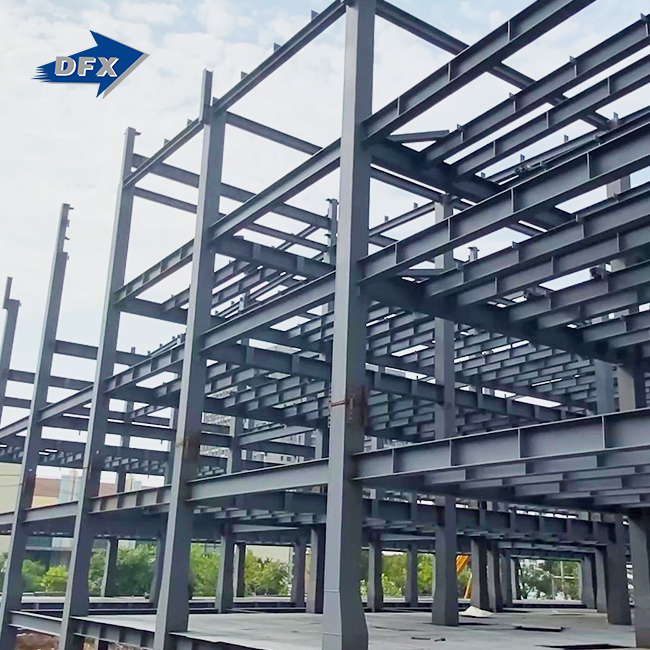
Industrial steel buildings that are made in modules are mostly made up of H-beam main frames, galvanized C/Z purlins, and designed support systems. When these parts get to building sites, they have already been made to exact specs and are ready to be put together quickly. The main building material is usually high-strength Q355B steel with a paint covering of at least 60 μm. It has a great ability to hold a lot of weight while still being relatively light. Galvanized Q235B steel purlins don't rust in harsh industrial settings, which greatly increases their service life.
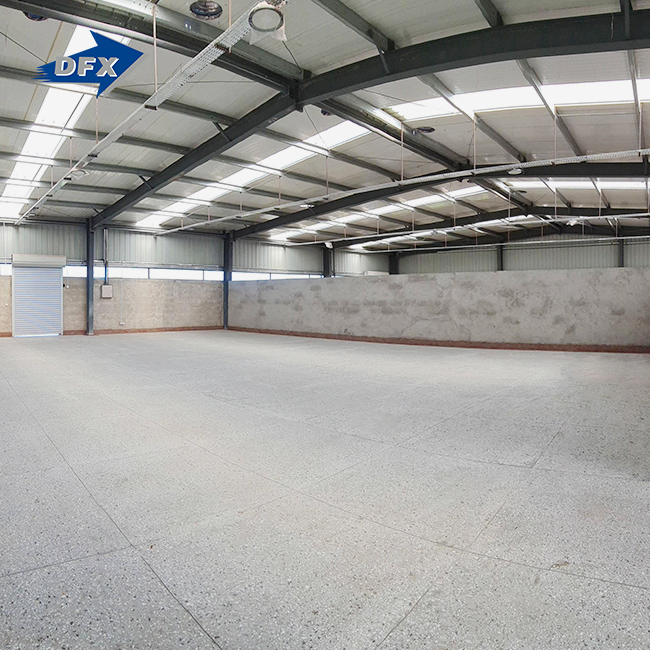
Industrial steel buildings are great for places that need large open areas, like storage centers, production workshops, and distribution hubs. The prefabrication process takes place in controlled factories with quality control measures that make sure results are always the same. Tight tolerances can't be kept with on-site concrete pouring, but they can be kept with modern welding equipment and automated production lines.
Concrete Construction Characteristics
Walls, beams, and floors in concrete buildings are made of cast-in-place or precast concrete parts. The thermal mass of the material keeps the temperature stable naturally, and its density makes it resistant to fire and quiets noise. Formwork, curing time, and on-site worker planning are all very important for building with concrete. Weather conditions have a big effect on when concrete is poured, and projects may have to be put off during rainy or cold periods.
In industries that need very high load-bearing capacity or specific thermal qualities, concrete supports are often chosen even when steel superstructures are chosen. The material works well in places with big machines or processes that put a lot of weight on the floors.
Construction Process Differences
Putting up an industrial steel building starts with preparing the foundation. Next come the columns and frames. Building work can be done in weeks instead of months by crews. Our engineering calculations make sure that designs are the best they can be for local wind loads, snow loads, and seismic coefficients. This way, we can make sure that buildings can stand up to magnitude 7 earthquakes without getting damaged or tilting. Help with installation from skilled makers speeds up the process and avoids costly delays.
Putting up concrete requires a series of steps: putting up the forms, adding the reinforcements, pouring the concrete, waiting for it to cure, and then removing the forms. Each step depends on how the weather cooperates and how long it takes for the materials to cure. The longer schedule makes the project more expensive to carry out and delays its readiness for operation.
Comparing the Advantages and Disadvantages
Speed and Construction Efficiency
Steel construction gives you unbeatable speed advantages. Parallel processes are not possible with concrete because the parts have to be prefabricated and made while the site is being prepared. A normal 5,000-square-meter industrial steel warehouse becomes an enclosure in 30 to 45 days, while similar concrete buildings need at least 90 to 120 days. When construction goes faster, commercial buildings can start making money sooner and pay for themselves more cheaply.
Our ability to fabricate, which includes six automatic welded H-beam production lines and advanced C/Z section steel equipment, makes sure that materials are delivered on time. Even the most bold project plans can be met with an annual production capacity of more than 20,000 tons of structural components. Together, this level of production and careful planning of processes keep projects going forward steadily.
Cost Analysis and Financial Considerations
When it comes to initial spending, industrial steel building solutions are better for most industry uses. For the same load values, the cost of materials per square meter is 15–25% less than concrete. Savings are increased by the fact that foundations are not needed as much for lighter steel frames. Shorter building times and smaller on-site crews mean that labor costs go down by a lot.
A life cycle cost study shows more benefits. Steel's design flexibility lets it be changed in the future without having to pay a lot of money for demolition and rebuilding. When proper corrosion protection methods are used during manufacturing, there isn't much maintenance that needs to be done. Our ISO9001 and CE certifications guarantee high quality standards that keep you from having to make too many repairs over time, protecting your investment.
Steel projects usually get better financing options because they can be finished faster and have lower risk profiles. Because prefabricated building is more predictable, lenders are more likely to offer better terms than risky concrete builds that could be delayed by bad weather or cost more than planned.
Structural Performance and Design Flexibility
High-strength steel can span longer lengths without the need for middle supports, which makes the most of the floor room that can be used. Clear-span designs that are 20 to 60 meters long can be used for a variety of manufacturing processes and warehouse layouts. The material's strength-to-weight ratio is much higher than that of concrete, which means that multi-story commercial buildings can be built without having to pay a lot for foundations.
Design freedom goes beyond the original building phase. Industrial steel buildings are easy to modify to accommodate increases in capacity, new equipment, or changes in how they are used. Adding bay sections, changing roof heights, or putting in overhead crane systems doesn't have to stop operations too much. This ability to change is very helpful for manufacturing businesses that are growing or whose technologies are changing.
When extreme floor loads or resistance to impact damage are needed, concrete's compressive strength is the best choice. But because they are hard to change, concrete buildings are less flexible when business needs change.
Energy Efficiency and Environmental Impact
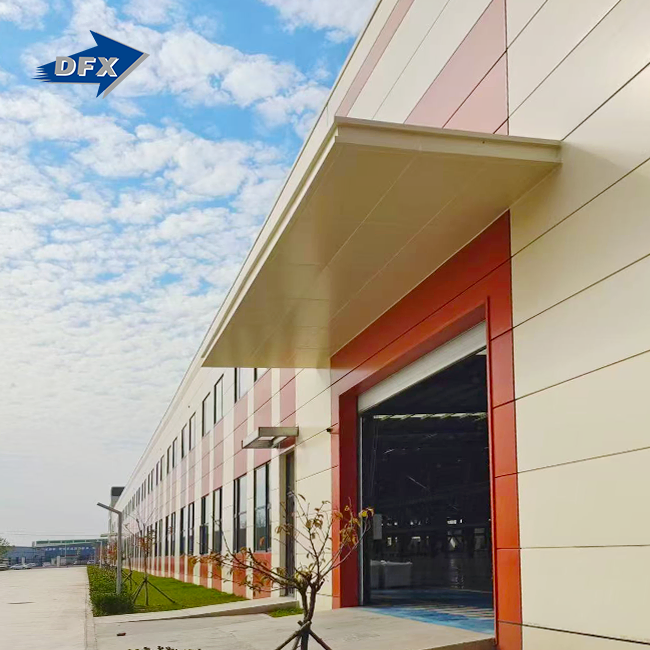
Modern industrial steel buildings have high-tech insulation systems that keep the heat inside very well. Our facility can produce 50,000 square meters of sandwich panels every year. This technology gives R-values that are on par with traditional construction while still allowing for faster installation times. In warm places, the need for cooling is lessened by reflective roof coats and smart airflow designs.
Steel's ability to be recycled is very good for the environment. End-of-life buildings produce valuable scrap steel that can be used in new production processes without losing any of its performance. This circular economy approach fits with efforts by businesses to be more environmentally friendly and with government rules that want to see carbon footprints get smaller.
Making concrete releases a lot of CO₂ into the air, and tearing down buildings makes it hard to get rid of the waste. In some areas, the thermal mass of concrete lowers the need for heating and cooling. However, general environmental profiles tend to favor steel construction, especially when looking at the whole lifetime of an industrial steel building.
Decision-Making Criteria for B2B Procurement
Matching Materials to Operational Requirements
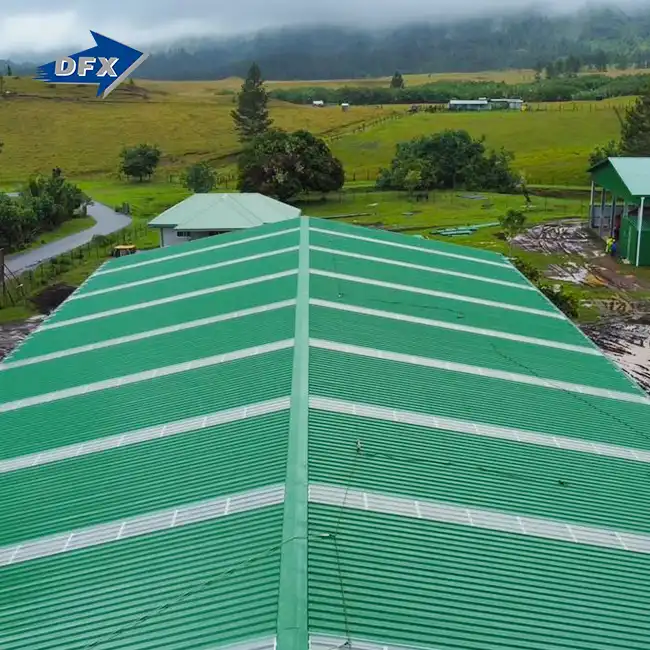
The best materials to use depend on the specifics of the project. Industrial steel buildings are very flexible, which is great for manufacturing facilities that need to change their layouts all the time. Logistics centers that want to get goods to market quickly can't afford the longer lead times for concrete. Buildings for farming, like chicken coops and barns for animals, need to be durable and cost-effective, and prefabricated steel always meets those needs.
Climate affects the choices we make about what to buy. Coastal areas with a lot of salt need better rust protection for all materials, but current galvanizing methods do a great job of protecting steel. Areas that have a lot of earthquakes benefit from steel's ability to bend and bend easily, which makes it better at absorbing earthquake forces than hard concrete. As part of our planning services, we take into account the wind speeds, rainfall patterns, and temperature ranges in the area. This makes sure that buildings work reliably for their whole lives.
Material specs are based on how much and how often the material will be used. Heavy manufacturing operations that put a lot of weight on the floors might use both steel framing and reinforced concrete floors together. With full steel systems, distribution centers that handle normal pallet loads get the best efficiency. Understanding operating needs lets you match materials precisely instead of using a one-size-fits-all method.
Maintenance and Lifecycle Management
Industrial steel buildings need to be inspected and maintained on a regular basis with the main goal of stopping rust. Cleaning, touching up the coating, and checking the fasteners on a regular basis will keep the structure in good shape for decades. When compared to traditional painted-only systems, our galvanized parts require a lot less maintenance. When properly maintained, steel buildings often last longer than 50 years with few structural changes.
Maintenance for concrete takes care of cracks, flaking, and water getting in. Damage to structures can quickly lead to higher repair costs, especially in cold places where freeze-thaw cycles speed up the breakdown. Even though concrete doesn't need to be fixed as often as badly protected steel, it usually costs more and is harder to fix than steel.
When working in a factory setting, downtime is very important. Steel repairs usually go faster and cause less downtime for businesses. Bolted connections make it easier to replace broken parts or strengthen existing buildings than cast-in-place concrete repairs, which need time to cure and a lot of support.
Evaluating Suppliers and Manufacturing Partners
The choice of supplier is just as important to the success of a project as the choice of materials. You can be sure that the materials meet foreign standards if they come from well-known makers with a wide range of quality certifications. Our CE and ISO9001 licenses show that we follow the rules and can be used for projects anywhere in the world. The EN1108 certification, which is available upon request, meets the specific needs of the European market.
Project timelines are directly affected by how much can be manufactured. Facilities that make whole building systems, including frames, roofing, siding, windows, and doors, make it easier to buy things and work together. Our 40,000-square-meter production center with over 200 trained workers makes sure that the quality of our work is always high and that we always meet our delivery dates. Integrated planning, fabrication, and installation help get rid of the need for different companies to coordinate with each other.
Premium suppliers are different from commodity suppliers because they offer technical support. Engineering calculation services that make designs work best for a given site add a lot of value. Errors in the field can be very expensive, but installation advice can help you avoid them. Lifecycle support, such as planning for growth and making changes to existing systems, creates long-lasting relationships that help many projects over time.
Conclusion
When speed, flexibility, and cost-effectiveness are important in industry settings, industrial steel building is clearly the best choice. When prefabricated systems are made to exacting standards, they can be delivered on time and with consistent quality that can't be achieved with on-site concrete construction. Modern industrial needs are properly met by the material's strength-to-weight ratio, design flexibility, and lower lifetime costs. While concrete is still used in some situations where specific thermal or load properties are needed, steel is better for manufacturing plants, logistics warehouses, agricultural facilities, and most commercial buildings. When companies work with skilled steel fabricators, they get access to technical knowledge, quality certifications, and a wide range of combined services that turn building from a necessary burden to a long-term operating success-boosting strategic benefit.
FAQ
1. How does fire resistance compare between steel and concrete structures?
Because it is noncombustible and has a high heat mass, concrete naturally resists fire. To get the same ratings, steel needs extra protection, usually in the form of intumescent coatings or fire-rated insulation. But current fire protection systems that are used during construction make it possible for industrial steel buildings to meet any fire resistance standard without spending a lot of money. Sprinkler systems are often required in industrial buildings, no matter what the building material is. These systems protect against fire first, so the fire defense of the building material is not as important.
2. What maintenance costs should we expect over a 25-year service life?
A properly galvanized steel structure usually only needs periodic inspections, minor coating touch-ups, and fastener checks, which add up to 0.5 to 1.0% of the initial construction costs per year. Maintenance for concrete is slightly lower on average, at 0.3% to 0.8% per year, but it costs more to fix problems when they happen. The weather in a region has a big effect on both materials. For example, seaside areas need more upkeep for steel, and freeze-thaw cycles speed up the breakdown of concrete.
3. Can prefabricated steel buildings accommodate specialized industrial equipment requirements?
Of course. Custom engineering can handle any load design, from processing equipment hanging from the ceiling to overhead crane systems. As part of our design services, we figure out exact load paths and recommend the right reinforcement. Modular construction actually makes it easier to add equipment than concrete, where changes cost a lot. Steel's natural adaptability makes it easier to make changes to equipment as a building ages.
Partner with DFX for Your Next Project
DFX has been providing prefabricated industrial steel building solutions to clients all over the world for more than twelve years. With six automated H-beam lines, advanced purlin production, and complete envelope systems, we can make sure that you only deal with one company from the idea stage to the installation. As a reliable steel structure supplier, we keep our ISO9001 and CE certifications up to date to make sure that your projects meet the highest quality standards.
We know that procurement managers need partners they can trust to keep their promises. Our engineering team makes plans that work best for your place by taking into account things like area loads and seismic needs. Over 20,000 tons of production per year can support projects of any size, and combined logistics planning makes sure that everything gets delivered on time. Installation advice from skilled professionals speeds up the process, protecting your budget and schedule. Email Jason at jason@bigdirector.com right away to talk about your industrial building needs and find out how our modular steel options can help you finish your project faster and for less money. Let's work together to make your building smarter and faster.
References
1. American Institute of Steel Construction. (2022). Steel Construction Manual, 15th Edition. Chicago: AISC Publications.
2. Portland Cement Association. (2021). Concrete Buildings: Design and Construction Practices for Industrial Facilities. Skokie: PCA Engineering Publications.
3. Lawson, R.M. & Ogden, R.G. (2020). Comparative Structure Cost of Modern Commercial Buildings, 3rd Edition. Berkshire: Steel Construction Institute.
4. Metal Building Manufacturers Association. (2021). Low-Rise Building Systems Manual. Cleveland: MBMA Technical Publications.
5. National Ready Mixed Concrete Association. (2023). Concrete in Practice Series: Industrial Construction Applications. Alexandria: NRMCA Educational Resources.
6. Bjorhovde, R. (2019). Development and Use of High-Performance Steel in Industrial Structures. Journal of Constructional Steel Research, Volume 158, pp. 459-470.
Learn about our latest products and discounts through SMS or email