- English
- French
- German
- Portuguese
- Spanish
- Russian
- Japanese
- Korean
- Arabic
- Greek
- German
- Turkish
- Italian
- Danish
- Romanian
- Indonesian
- Czech
- Afrikaans
- Swedish
- Polish
- Basque
- Catalan
- Esperanto
- Hindi
- Lao
- Albanian
- Amharic
- Armenian
- Azerbaijani
- Belarusian
- Bengali
- Bosnian
- Bulgarian
- Cebuano
- Chichewa
- Corsican
- Croatian
- Dutch
- Estonian
- Filipino
- Finnish
- Frisian
- Galician
- Georgian
- Gujarati
- Haitian
- Hausa
- Hawaiian
- Hebrew
- Hmong
- Hungarian
- Icelandic
- Igbo
- Javanese
- Kannada
- Kazakh
- Khmer
- Kurdish
- Kyrgyz
- Latin
- Latvian
- Lithuanian
- Luxembou..
- Macedonian
- Malagasy
- Malay
- Malayalam
- Maltese
- Maori
- Marathi
- Mongolian
- Burmese
- Nepali
- Norwegian
- Pashto
- Persian
- Punjabi
- Serbian
- Sesotho
- Sinhala
- Slovak
- Slovenian
- Somali
- Samoan
- Scots Gaelic
- Shona
- Sindhi
- Sundanese
- Swahili
- Tajik
- Tamil
- Telugu
- Thai
- Ukrainian
- Urdu
- Uzbek
- Vietnamese
- Welsh
- Xhosa
- Yiddish
- Yoruba
- Zulu
Best Steel Pig House Barn Layouts for Efficient Herd Management
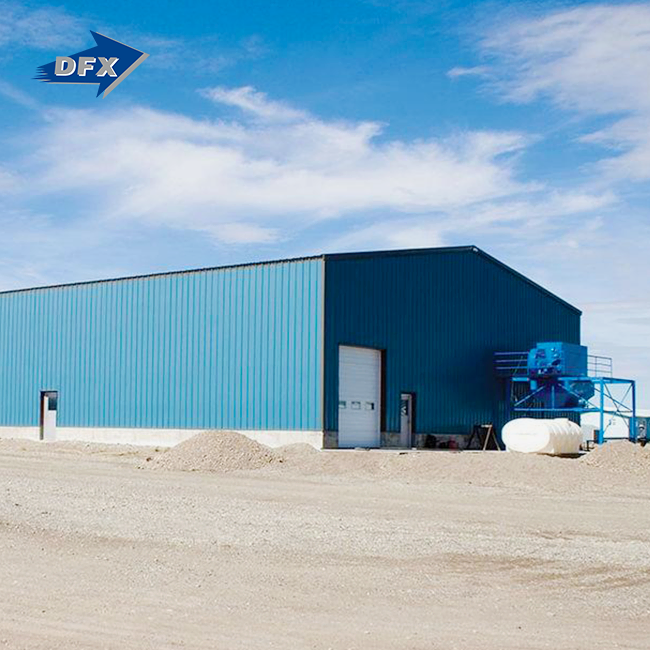
The best steel pig house barn layouts separate production stages, keep clean and dirty routes apart, and give workers short, safe paths to every pen. A good plan matches herd size, climate, feeding systems, and manure handling before any steel is cut. An enclosed steel pig house barn with a galvanized frame, insulated panels, and longitudinal ventilation gives producers stable indoor conditions, easier cleaning, and room to expand. I wrote this guide for farm owners, procurement managers, and contractors who want a clear layout plan, realistic cost checks, and a supplier they can evaluate with confidence.

Why Zoning Decides Herd Management Results
Layout Shapes Health, Labor, and Operating Cost
It's like what people and pigs do every day. People can check on animals and find sick pigs more quickly when food, water, and pen lines are set up in a way that makes sense. Staff always have to walk farther when they don't have to clean floors that are wet. Pig poop gives off ammonia and hydrogen sulfide. Buildings that don't get enough airflow or have tough-to-clean corners may have more gas and wear out faster. Long clear spans are possible with steel, which lets manufacturers put pens in a more flexible way with fewer columns inside. This is what you should think about before getting a quote: the size of the herd, the stages of production, the weather, the tools, and your plans for growth.
Core Zoning Principles for Every Production Stage
Good zones split the different steps of production and keep track of how the pigs, workers, feed, and waste move. There should be room in a standard plan for quarantine, breeding, labor, birthing, a nursery, finishing, loading, and service. The service hallways should have enough room for carts, treatments, and repairs. The Ag Guide and the weight of the pigs should be used to figure out how big the pen should be. So that trucks don't get too close to the animal rooms, I put the loading area on the yard's edge. When a company grows, they can add bays and walls to a modular steel frame barn without having to rebuild the whole thing.
Separating Clean and Dirty Routes for Biosecurity
A better way to keep things safe is to keep clean and dirty things away from each other. Outside cars should stay away from the barn with a filling chute. One exit should be for staff and goods, and another should be for waste and dead animals. At the front door, there are changing rooms and places to wash your hands, so you are less likely to bring germs inside with you. Also, animals and other pests are less likely to get into a building that is closed off. It takes less time between batches when the steel panels are smooth and don't have any holes. This is because they clean up faster than rough concrete or wood. If a farmer is worried about diseases like PRRS or African swine fever, they can seal a steel envelope and add filtered air systems to it.
Recommended Layouts by Production Stage and Herd Size
Farrowing and Nursery Barn Layouts
This room must stay warm and be simple for sows and piglets to get to. It is common for rooms to be between 22°C and 25°C, and piglets are kept warmer in some places. Each box should be easy for workers to get to, so I think there should be rows of them in the middle hallway. For pigs to grow, the feed needs to be changed, and the air in the barn needs to stay still. Insulation in the roof and walls helps keep the temperature even in both sets of rooms. Hooked-up heaters and feed lines can also be held by the steel pig house barn frame, as long as the engineer plans for their weight.
Breeding, Gestation, and Finishing Layouts
It's important that these areas are safe for animals to move around in and are easy for vets to get to. There is a short, flat path between them and the boar and heat-check area that leads to the birthing rooms. Grain-finishing barns make a lot of dung, so I put rows of pens on either side of the middle aisle. I put feed lines above the rows and thought of a way for a scraper or flusher to work from the start. Long, clear gaps let liquids flow automatically and keep columns from getting into pen rows. Always make sure the paths are big enough to load and sort boards. Moving air and cleaning at different times for each area work best.
Layouts for 100 Pigs and Larger Herds
You need to do more than just measure the pen area for a barn with 100 pigs. The plan needs to include the type of pig, how much it weighs on average, what stage it is in, how many are in each pen, how wide the aisles are, treatment space, feed storage, utilities, and how to deal with manure. Most small farms only need one small house, pens that can be set up in different ways, and short paths for staff to walk. A lot of big farms split stages into their own barns. You can do all-in, all-out rounds because of this, which also helps keep diseases under control. It costs more to build on a multi-building plan site, but farms can grow in stages. Because every farm is different, the end numbers have to be acceptable to both engineers and the people who live in the area.
Design Requirements and DFX Enclosed Steel Barn Features
Galvanized Steel Frame and Structural Design
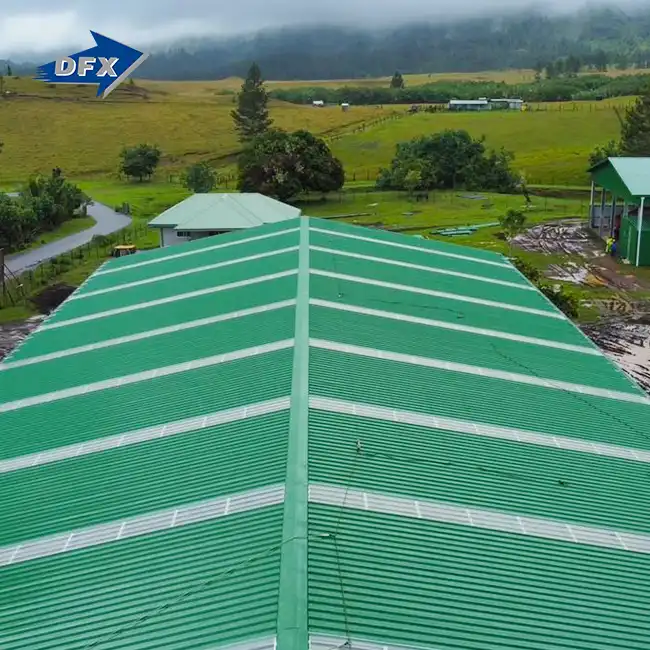
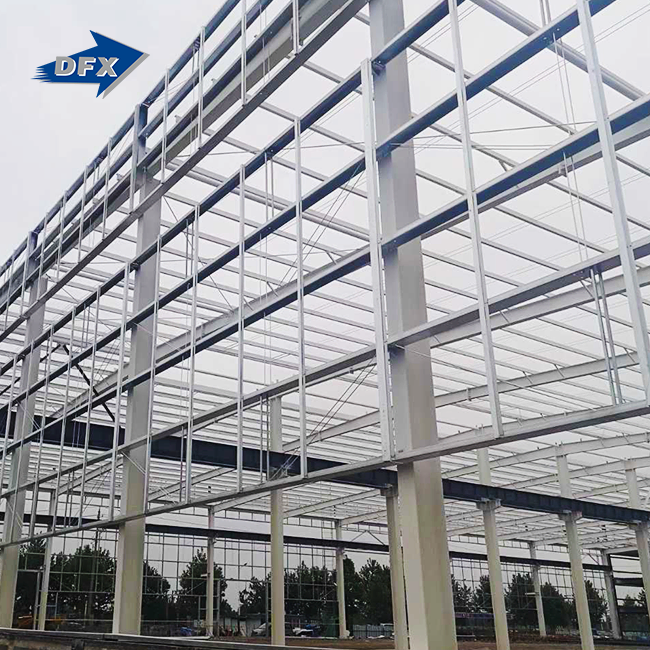
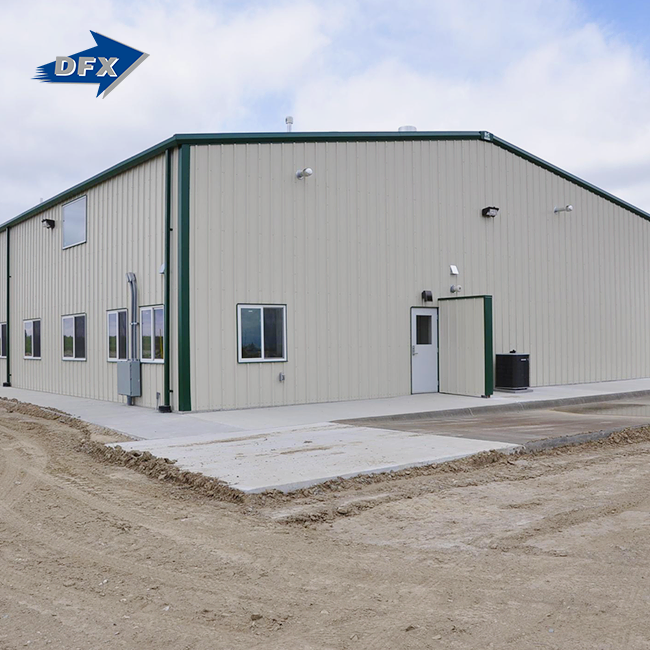
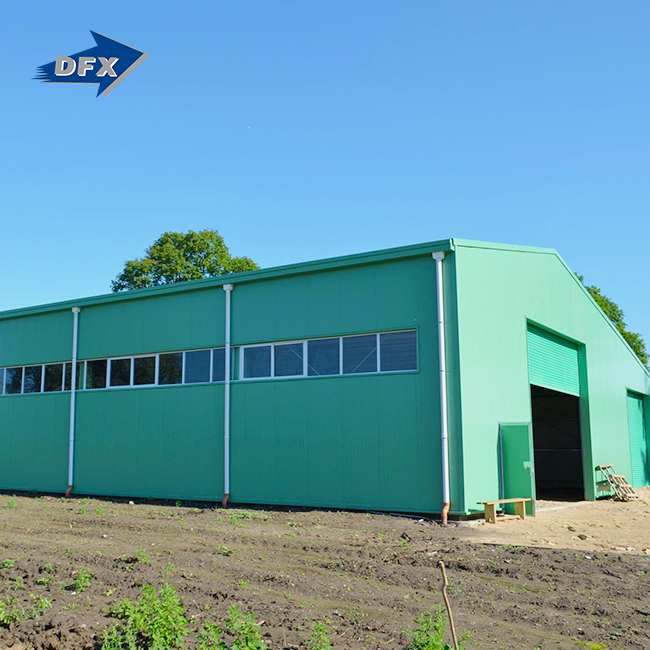
The metal in pig barns rusts fast; thus, they don't survive long. Paint on steel, wood, and rough roads does not appreciate moisture or ammonia. Our DFX enclosed steel livestock shed is constructed with a galvanized steel frame. The structure is designed to resist wind, snow, and the weight of equipment in the region. The thickness of the zinc coating is typically checked using a magnetic gauge according to ISO 1461. And it needs a facility to drill and construct each item to order. And it takes a site to put them together. Therefore, no field welding is required, which might damage the copper layer. Our service includes planning, building, delivering, and helping to assemble buildings.
Longitudinal Ventilation and Insulated Panels
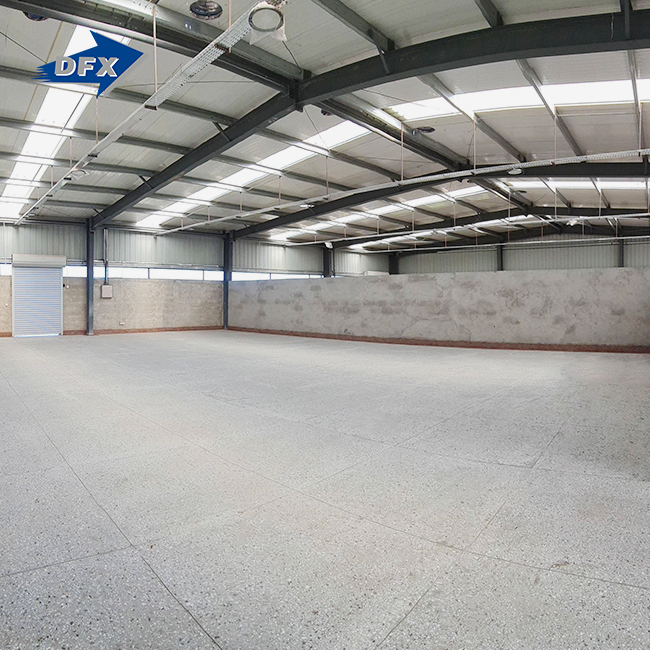
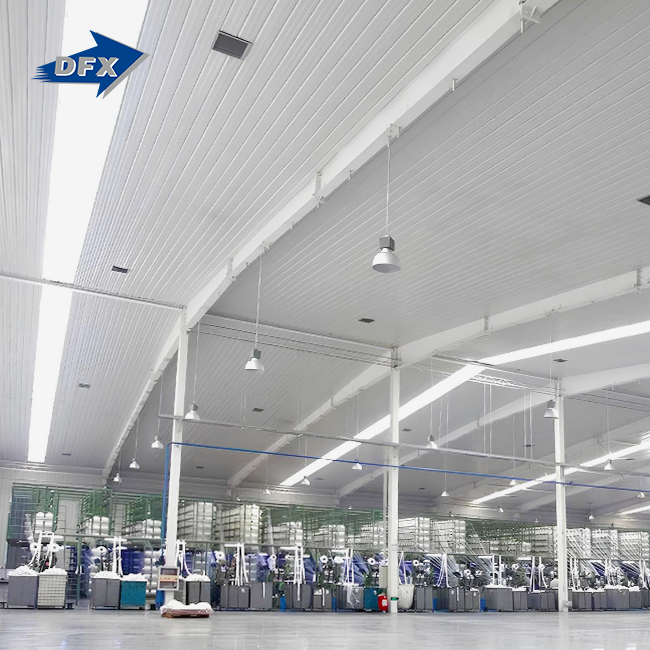
When we seal anything, we employ a linear airflow. Fresh air blows in along the length of the barn from fans. The same quantity of airflow goes to each pen row. This is appropriate for long, thin structures. The roof and walls are enclosed so there are not many variations in temperature. Some pig housing features a PU or EPS sandwich panel core. We make sure the panel specifications are satisfied for every purchase. Babies don’t get cold, and developing pigs don’t get too hot while the temps remain the same. When I design airflow, I still need to consider climate, stocking density, and pig stage. That's why I go over the fan capacity, intake location, and sealing specifications with each customer before I start constructing the parts.
Steel Compared With Concrete, and Prefab With Custom
When you compare buildings, don't just look at the price of the frame; look at the whole work. It could take 3 to 5 times longer to create concrete than to manufacture prefabricated steel sections, depending on the location. Simple projects are completed more quickly using typical prefabricated barns. If you develop from scratch, you have greater control over factors like size, automated connections, challenging sites, etc. Paint on steel doesn’t hold its color as well as a coated steel pig house barn in moist, gas-filled locations. Open-sided barns may be cheaper in warm climates, but closed barns provide a more consistent air and temperature environment. Each barn is built to order by DFX, so it suits the location and strategy for the herd.
Cost, Installation, and Performance After Construction
Cost Factors and Supplier Evaluation
Building a barn is more than simply steel. You have to maintain tabs on shipping, installation, permits, commissioning, floors, feeds, foundations, cladding, insulation, ventilation and feeds. If you are going to purchase anything, ask for a full estimate that tells you exactly what you’re getting for your money, what’s not included, how it will be delivered, what the warranty covers, and how to obtain support after the sale. The buyer should also consider the material certifications, project references, and Incoterms. The creator of DFX has been around since 2011. There is a walled work area of 40,000 square meters with more than 200 people working. It consists of six motorized H-beam lines and two sandwich panel lines. Our goods are certified with ISO9002, CE, COC, and PVOC certifications, among others.
Construction, Installation, and Commissioning
A good procedure starts with looking at the site and learning about the soil, drainage, utilities, and how the foundation will be constructed. The team checks that designs, connection details, ventilation apertures, and equipment interfaces are correct before they are produced. Having items previously produced and labeled reduces the chance of mistakes on the work site.” Then teams inspect to ensure that the bolts are properly torqued, the coating is in excellent condition, the insulation is good, and the air seals are good. Before the pigs arrive, commissioning checks water pressure, feeds, drainage, doors, walls, heaters, temperature control, alerts, and airflow. The crew has been trained too. Your local installers may use the designs as a reference, and DFX is available to address any technical issues that may arise throughout the work.
Tracking Performance After the Barn Opens
There are figures out there backing the proposal. Farm managers may measure things such as the number of animals that die, how fast they develop, how much feed and water they use, temperature, humidity, ammonia levels, energy usage, how many hours they labor, how much time they spend cleaning, and so on. Most bottlenecks are created by factors like lengthy pathways for personnel, uneven airflow, feed waste, moist flooring, and equipment that is hard to get to. Many can be remedied with monitors, written instructions, movable walls, and frequent maintenance. The farm should collect data before and after each alteration to see whether the improvements were worth the trouble. The optimum layout considers the cost, the budget, the biosecurity strategy, the location, the kind of production and the growth ambitions. After this, a final list of all technical and business items is ticked off.
Conclusion
A steel pig house barn should be laid out to follow the phases of the herd’s development, keep clean and unclean traffic separate, and provide quick pathways for personnel. Separate airflow, room, and cleaning designs for each location. Framing, nursery, breeding, and finishing. The size of the gathering will let you know whether you need one structure or multiple. The galvanized frame can cope with the ammonia and dampness that is frequent in pig quarters. The insulated panels and horizontal vents also help to retain a steady temperature inside. Steel may be utilized to construct faster than concrete. Buyers, however, should take into account the whole cost of the project, the supplier’s competence, the documentation, and the aid they may obtain with installation before making their decision. Once the farm is operating, monitoring data on health, feed, energy, and labor tells whether the layout is working and where improvements will make a difference.
FAQ
1. How much space do 100 pigs need?
The pig's health and comfort needs are taken into account along with its weight. First, look at the Ag Guide and the rules in your area. Then add hallways, a place to treat animals, and a place to store feed.
2. Should I choose a prefabricated or custom barn?
Barns that are already built are good for quick, easy jobs. Custom engineering is useful for sites with a lot of moving parts, automation, and stages of growth. The homes that DFX builds are all one-of-a-kind.
3. How does galvanized steel compare with painted steel?
Paint on steel doesn't stand up to ammonia and water as well as galvanized steel does in a wet barn. Our DFX barns' frames are made of stainless steel.
4. Which documents should I request from a supplier?
Get an exact quote, building plans, records of the materials and finishes used, certificates, shipping information, and instructions on how to do the job.
Request a DFX Steel Pig House Barn Layout and Quotation
Please let DFX know about the size of your herd, the stage of production, the location of the site, the weather, the feeding equipment you have, and your plans to grow. Our team will then make a layout and quote that are perfect for your project. Since our business builds steel pig house barns, we can help you plan, build, deliver, and set up enclosed barns with galvanized frames and insulated panels. You can send your question to jason@bigdirector.com to begin right away.
References
1. Guide for the Care and Use of Agricultural Animals in Research and Teaching, Federation of Animal Science Societies, 2020
2. Swine Housing and Equipment Handbook (MWPS-8), MidWest Plan Service, 1983
3. Swine Care Handbook, National Pork Board, 2003
4. ISO 1461: Hot-Dip Galvanized Coatings on Fabricated Iron and Steel Articles, International Organization for Standardization, 2022
5. SHRAE Handbook: HVAC Applications, American Society of Heating, Refrigerating and Air-Conditioning Engineers, 2019
6. Nutrient Requirements of Swine, National Research Council, 2012
Learn about our latest products and discounts through SMS or email